
铁海联运

Search documents
千城百县看中国|湖南永州:铁海联运助力“湖南制造”加速出海
Xin Hua She· 2025-09-24 16:08
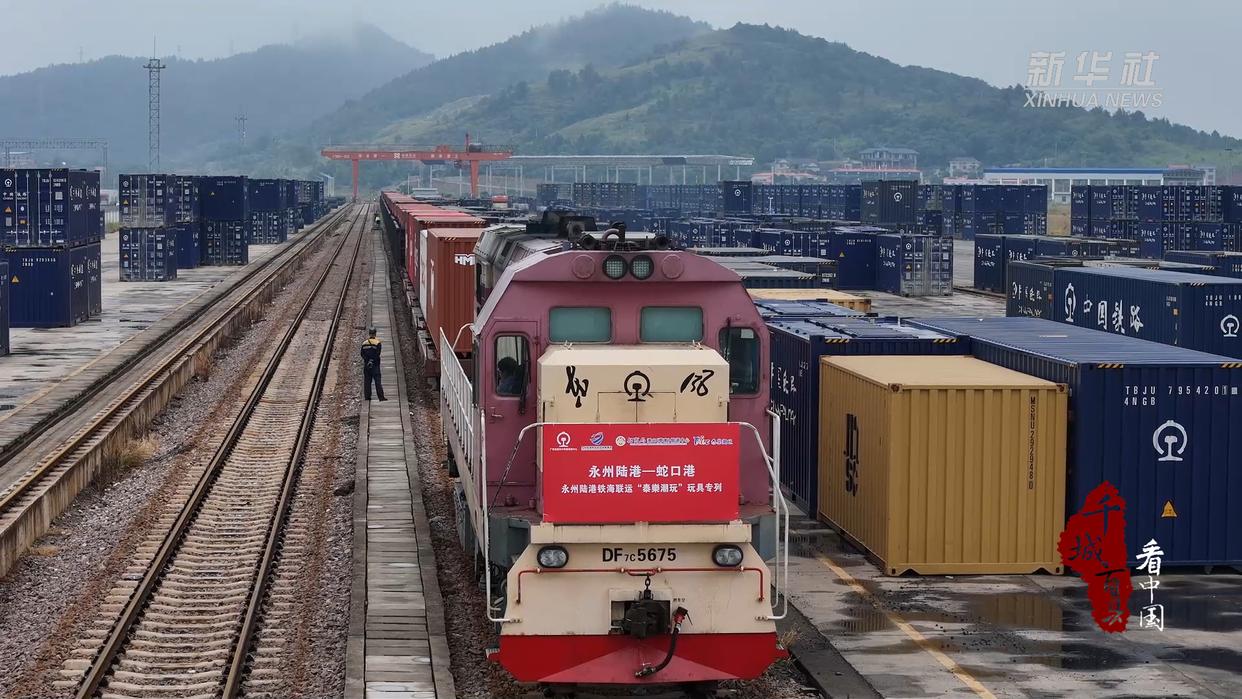
Core Insights - The "Yongzhou Land Port Iron-Sea Combined Transport Special Train" has successfully departed from Yongzhou, Hunan, carrying trendy toy products, and will reach Japan in approximately five days, significantly shortening delivery times and reducing international logistics costs by 35% to 40% [1][2]. Group 1 - Yongzhou Land Port serves as a crucial logistics node connecting the southern region of Hunan with the Guangdong-Hong Kong-Macao Greater Bay Area and integrates into the "Belt and Road" initiative [2]. - Since 2022, Yongzhou Land Port has launched multiple special trains covering various sectors, including light industry products, agricultural products, and building materials, facilitating a "fast track" for local enterprises to access international markets [2].

中欧班列130多列在途积压,班列公司推多种替代运输方案
Di Yi Cai Jing· 2025-09-22 14:45
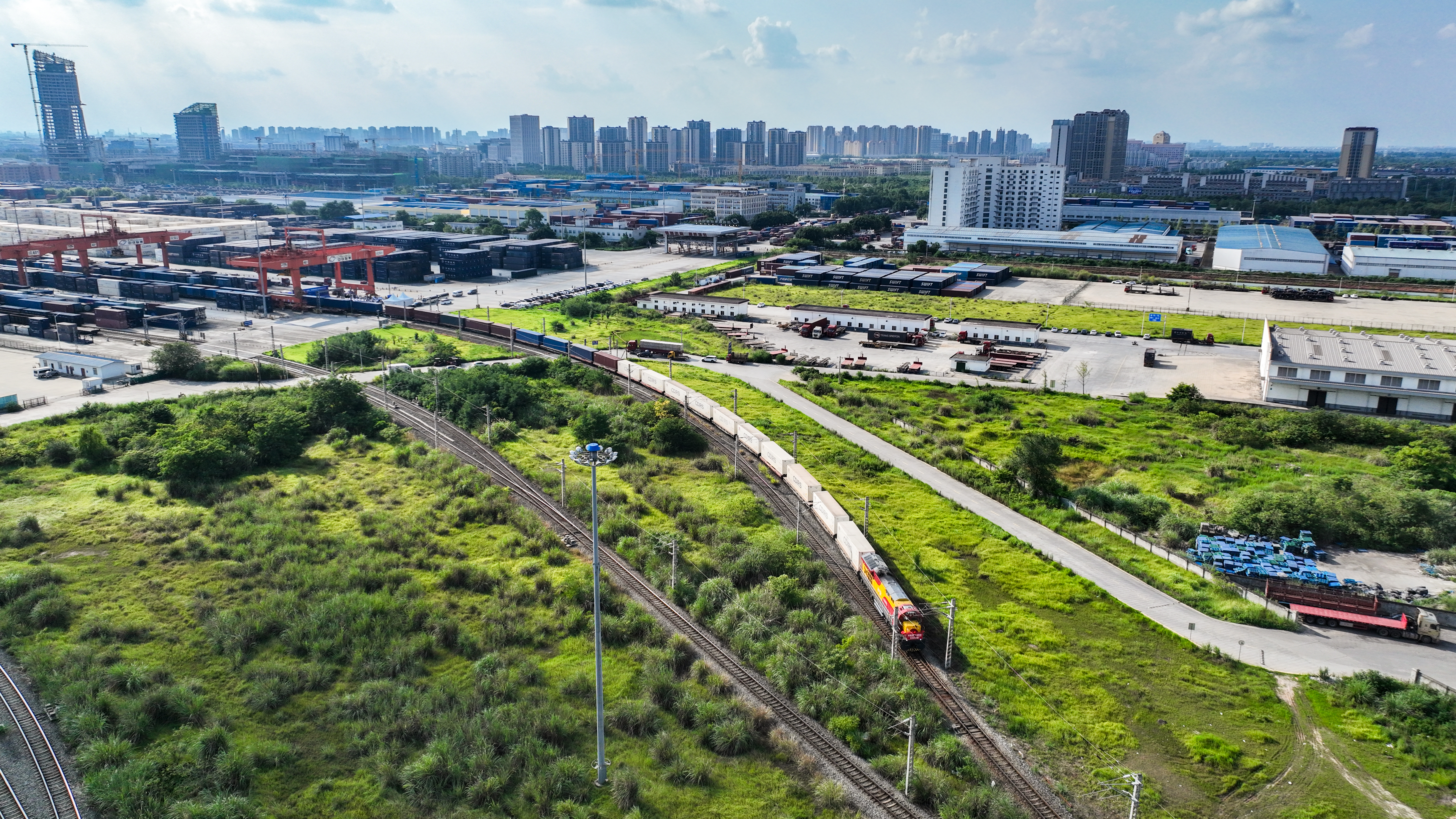
Group 1 - The closure of the Poland-Belarus border has disrupted the Central European freight trains, leading to a backlog of over 130 trains at the Brest port [5][4] - Major freight companies are implementing alternative solutions, including rail-sea intermodal transport via Saint Petersburg to Hamburg and increasing services on the Central European train's southern route [5][6] - The expected time to clear the backlog, even if the port reopens, is approximately one week due to limited capacity [5][6] Group 2 - Companies are adopting emergency measures such as canceling some train schedules and launching new routes through Saint Petersburg [5][6] - The Chengdu International Railway Port is maintaining regular operations on three routes, including the southern route and rail-sea intermodal transport [6] - There is a general optimism within the industry regarding the reopening of the border, with many clients continuing to place orders [7]
轻形式重实效 淮海国际港务区这场产业对接会让企业“唱主角”
Xin Hua Ri Bao· 2025-07-17 20:20
Core Insights - The event "Industry Connection Wins Business Port" held in Xuzhou Huaihai International Port Area aims to enhance collaboration between enterprises and government, focusing on practical outcomes rather than traditional meeting formats [1] - The event gathered over 40 representatives from government, enterprises, and banks to facilitate resource sharing and cooperation, promoting a new model for optimizing the business environment [1][2] - The port area has seen significant growth in logistics services, with various companies showcasing their capabilities and forming preliminary cooperation agreements during the event [2][3] Group 1: Event Overview - The event featured six key segments, including policy interpretation, enterprise promotion, and government-enterprise interaction, emphasizing the role of enterprises [1] - No designated speaking area was set up, allowing all companies to freely discuss and explore development opportunities [1] - A service card and company directory were distributed to ensure ongoing support for enterprises, facilitating connections based on their needs [1] Group 2: Logistics and Industry Highlights - Xuzhou Huaihai International Port has successfully operated 219 international trains from January to June, exceeding annual targets [3] - The port's iron-sea combined transport has shipped 9,996 standard containers, marking a year-on-year increase of 31.22% [3] - The port area has enhanced its service functions, with trade volume in bonded warehouses reaching approximately 9.56 billion yuan, of which 9.06 billion yuan was imports [4] Group 3: Future Initiatives - The port area plans to establish a long-term mechanism for matching supply and demand, ensuring that cooperation extends beyond the event [5] - The integration of a dynamic information database will facilitate ongoing updates and precise matching of enterprise needs with available resources [4][5] - The development of a modern sewage treatment plant with an investment of approximately 120 million yuan is underway, expected to process 10,000 tons of wastewater daily, contributing to sustainable regional development [4]
郑州内陆港加速变身出海始发港 铁海联运走天下
He Nan Ri Bao· 2025-07-04 23:49
Core Viewpoint - The establishment of the "Zhengzhou-Lianyungang" rail-sea intermodal transport route marks a significant step in enhancing Zhengzhou's logistics capabilities and integrating it into the national and international trade networks [1][2]. Group 1: Rail-Sea Intermodal Transport Development - A dedicated rail-sea intermodal train carrying 40 containers departed from Zhengzhou and reached Lianyungang in 15 hours, officially integrating the route into the national railway schedule [1]. - This route is the second rail-sea intermodal service established by Zhengzhou in 2023, following the "Zhengzhou-Qingdao" route [1]. - The "Zhejiang e-port" initiative has been launched in Zhengzhou, enhancing the logistics framework by connecting inland ports with coastal ports, thereby improving the efficiency of logistics operations [1][2]. Group 2: Growth in Cargo Volume - From January to May 2023, the volume of rail-sea intermodal transport between Zhengzhou and Ningbo Zhoushan Port reached 8,094 standard containers, representing a year-on-year increase of 139.6% [2]. - Zhengzhou has dispatched over 250 rail-sea intermodal trains this year, transporting nearly 25,000 standard containers, indicating a significant growth in business volume [2]. Group 3: Strategic Importance and Future Plans - The development of rail-sea intermodal transport is aligned with the provincial strategy to integrate into the national unified market, facilitating domestic and international trade cycles [3]. - The company plans to enhance cooperation with ports, shipping companies, and customs to streamline logistics for local industries, ensuring efficient transport from Zhengzhou to ports [3]. - The innovative logistics model aims to create a "maritime era" for Henan, transforming the perception of the sea from a distant landscape to a vital transportation route [3].
前5月国家铁路累计发送铁水联运集装箱货物同比增长18.4% 铁海联运网加快扩容(经济新方位)
Ren Min Ri Bao· 2025-06-18 21:46
Core Insights - The article highlights the advantages of rail-sea intermodal transport, emphasizing its cost-effectiveness and efficiency compared to traditional road transport, particularly for distances over 600 kilometers [1][2]. Group 1: Cost and Efficiency - Rail-sea intermodal transport can save approximately 30% in transportation costs compared to road transport for distances over 600 kilometers [1]. - From January to May, the national railway sent a total of 6.833 million TEUs (Twenty-foot Equivalent Units) of rail-sea intermodal cargo, marking an 18.4% year-on-year increase [1]. - The rail-sea intermodal service from Zhengzhou to Qingdao significantly reduces transit time by nearly 50% for exports compared to road transport [2]. Group 2: Infrastructure and Operations - The establishment of shared terminal facilities and the "front port and back station" model has improved operational efficiency and reduced transfer costs [3][5]. - Ningbo-Zhoushan Port has implemented a shared terminal model, which has increased the daily handling capacity to 3,200 TEUs, more than doubling operational efficiency [4]. - By the end of last year, Ningbo-Zhoushan Port had built 38 inland dry ports, while Qingdao Port had 51, enhancing the intermodal network [8]. Group 3: Innovations in Logistics - The "one box" system allows for seamless transport without changing containers, significantly reducing logistics costs and transit times [6][9]. - The "one box" system has cut the transport time for African copper concentrate from 15 days to 6 days, with a 10% reduction in logistics costs [9]. - The "Iron-Sea Express + Middle East Fast Shipping" model has reduced the shipping time from Yiwu to Dubai from 23 days to 17 days, lowering logistics costs by 18% [9].