海底捞·拌饭

Search documents
进入“20元时代”,中式米饭快餐没有退路
虎嗅APP· 2026-02-01 09:08
Core Viewpoint - The Chinese rice fast food industry is undergoing a significant paradigm shift in 2026, characterized by intense competition and a focus on profitability amidst rising costs and consumer rationality [4][6]. Group 1: Industry Challenges - The primary challenge for Chinese rice fast food brands remains profitability, with industry leaders like Chaoyixing reporting a mere 0.7 yuan profit on a 10 yuan meal [7]. - Rising costs for ingredients, labor, and rent, combined with a return to rational consumer spending, are squeezing profit margins, leading to a "thin profit" environment [8][9]. - The average consumer spending in the rice fast food sector has decreased from 29.7 yuan in 2022 to 27.5 yuan in 2025, with current average spending around 24 yuan [15]. Group 2: Competitive Strategies - Brands are shifting towards "all-day, all-customer, all-capable" models to attract a wider customer base and enhance profitability [5][10]. - Successful adaptations include diversifying product offerings and optimizing store formats, such as self-service models and expanded menu items to cater to different meal times and customer preferences [10][11]. - The introduction of new product lines, like "DIY" options, has proven effective in attracting both existing and new customers, as seen with brands like Yuyou and Laoxiangji [12]. Group 3: Pricing Dynamics - The industry is entering a "20 yuan era," with aggressive price reductions becoming a norm as brands compete for market share [13][14]. - Major brands have implemented significant price cuts, with Dami Xiansheng reducing its pricing from 4.6 yuan to 3.28 yuan per two [16]. - The trend indicates that if average spending exceeds 25 yuan, customer acquisition and retention will become increasingly difficult [17]. Group 4: Expansion and Market Dynamics - The market for Chinese rice fast food is projected to reach 277 billion yuan in 2024, with a potential to exceed 300 billion yuan in 2025, driven by ongoing consumer demand [21]. - While some brands are rapidly expanding, others are slowing down their growth due to the challenges of scaling operations effectively [23][25]. - Successful expansion requires a robust organizational structure and supply chain management, as evidenced by the struggles of brands like Nanchengxiang and Chaoyixing in new markets [25][26]. Group 5: Future Outlook - The next decade for the Chinese rice fast food industry will focus on a multi-faceted approach that emphasizes freshness, transparency, intelligence, low pricing, and health [27]. - Brands that can balance cost management with quality and customer experience will likely thrive in this competitive landscape [28][29].

进入“20元时代”,中式米饭快餐没有退路
虎嗅APP· 2026-01-29 00:23
Core Viewpoint - The Chinese rice fast food sector is undergoing a significant paradigm shift in 2026, characterized by intense competition among leading brands and the entry of cross-industry players, leading to a consensus that profitability is increasingly difficult to achieve [4][6]. Group 1: Industry Challenges - The primary challenge for Chinese rice fast food brands remains profitability, with industry leaders like Chaoyixing reporting a mere profit of 0.7 yuan per 10 yuan meal [7]. - Rising costs for ingredients, labor, and rent, combined with a return to rational consumer spending, are squeezing profit margins, forcing brands to adapt their business models to survive [8][9]. - The average consumer spending in the rice fast food sector has decreased from 29.7 yuan in 2022 to 27.5 yuan in 2025, indicating a downward trend in pricing [15]. Group 2: Business Model Transformation - Brands are focusing on creating "all-day, all-customer, all-capable" stores to attract a wider customer base and improve profitability [5][10]. - Successful adaptations include diversifying product offerings and enhancing customer experience, as seen with brands like Nanchengxiang and Xiaonv Dangjia, which have introduced new menu items and self-service options [10][11]. - The shift towards a "price down, experience up" strategy is evident, with brands like Xiangcunji and Dami Xiansheng emphasizing fresh, high-quality ingredients while maintaining competitive pricing [18][19]. Group 3: Market Expansion and Competition - The market for Chinese rice fast food is projected to reach 277 billion yuan in 2024, with a potential to exceed 300 billion yuan in 2025, indicating a growing demand for this segment [21]. - Leading brands are rapidly expanding into new regions, with Nanchengxiang opening a new store every 0.85 days on average, while others like Mivun Banfan have paused their aggressive expansion due to operational challenges [23][25]. - The competitive landscape is shifting, with brands needing to adapt their models to local markets rather than relying on a one-size-fits-all approach, as evidenced by the struggles of brands like Chaoyixing and Nanchengxiang in new territories [25][26]. Group 4: Future Outlook - The next decade for Chinese rice fast food will involve a multi-faceted competition focusing on freshness, transparency, intelligence, low pricing, and health [27]. - Brands that can balance cost management with quality and customer experience will be better positioned to thrive in a market where consumer expectations are evolving [28][29].
进入“20元时代”,中式米饭快餐没有退路
3 6 Ke· 2026-01-28 13:09
Core Insights - The competition logic in the Chinese rice fast food sector is undergoing significant changes, with a shift towards a "paradigm shift" in 2026, emphasizing profitability amidst rising costs and intense competition [2][4][10] - The industry is moving towards a model that focuses on maximizing store efficiency and profitability rather than rapid expansion [5][9] Group 1: Market Dynamics - The market is experiencing fierce competition with both established brands and new entrants, leading to a scenario where profitability is increasingly difficult to achieve [2][4] - The average consumer spending in the Chinese rice fast food sector has decreased, with figures showing a drop from 29.7 yuan in 2022 to 27.5 yuan by August 2025 [10][11] - The current mainstream price range for Chinese rice fast food is between 20 to 25 yuan, indicating a trend towards lower pricing [10][11] Group 2: Business Strategies - Brands are adopting a "full-time, full-customer, all-capable store" model to attract a wider customer base and enhance profitability [3][7] - Innovations such as self-service models and diverse product offerings are being implemented to cater to different consumer needs and maximize store utilization [8][9] - The introduction of technology, such as smart cooking machines, is being leveraged to reduce labor costs and improve food quality [18] Group 3: Expansion Challenges - The expansion of Chinese rice fast food brands is entering a "deep water zone," with a projected market size of 2.77 trillion yuan in 2024, growing at 10.1% [19] - While some brands are rapidly expanding, others are slowing down due to the challenges of scaling operations effectively [20][21] - Successful expansion requires a robust organizational capability and a deep understanding of local market dynamics, as evidenced by the varied experiences of different brands [22][23] Group 4: Future Outlook - The next decade for Chinese rice fast food will focus on a multi-faceted approach that includes freshness, transparency, intelligence, low pricing, and health [24] - Brands that can maintain a balance between cost and quality while adapting to consumer demands will likely survive and thrive in this competitive landscape [24]
海底捞在时代身后狂奔
3 6 Ke· 2025-09-11 03:32
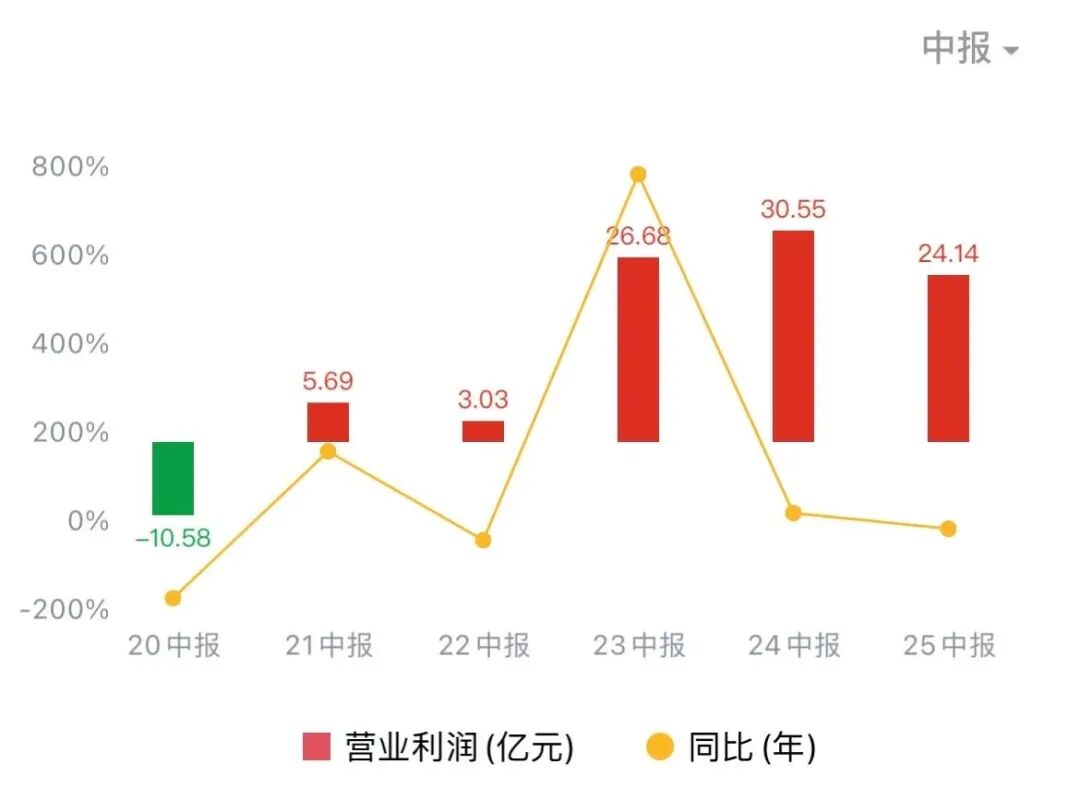
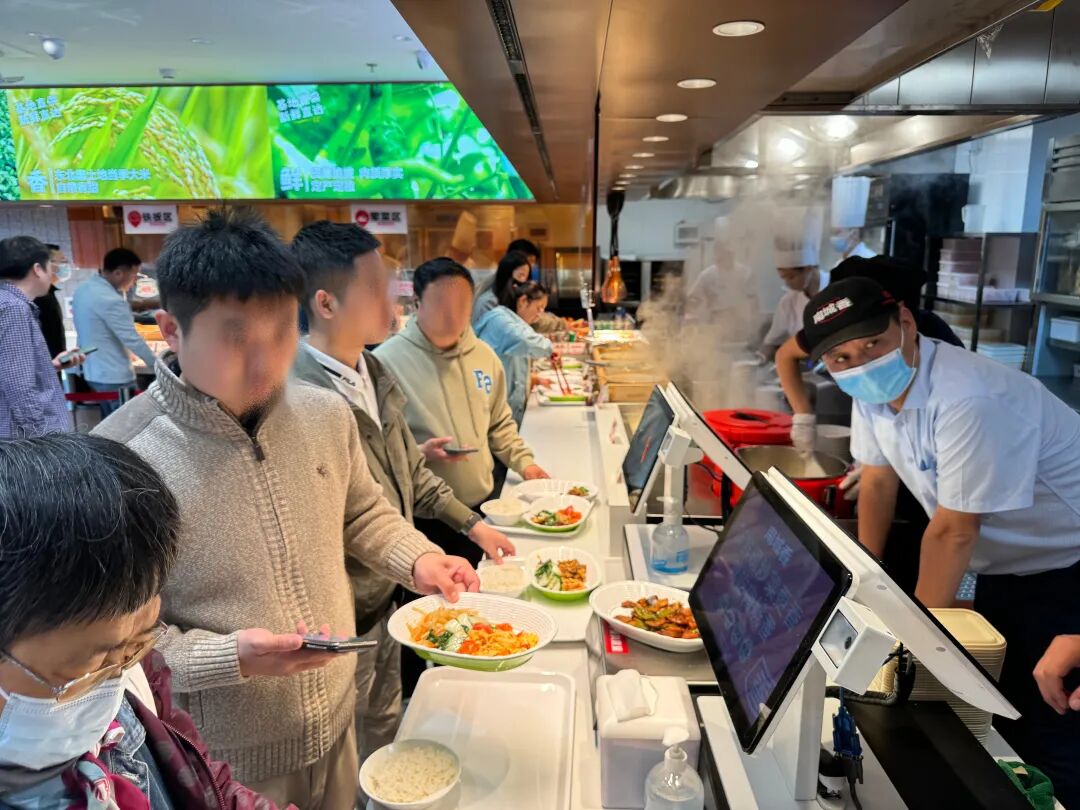
Core Viewpoint - The article discusses the challenges faced by Haidilao, a leading Chinese hotpot chain, as it navigates a saturated market and declining growth rates, emphasizing the need for innovation and adaptation to survive in a competitive landscape [1][19]. Group 1: Business Performance - Haidilao's revenue for the first half of 2025 was recorded at 20.703 billion RMB, a year-on-year decline of 3.7%, with core operating profit down 14% to 2.4 billion RMB [3][12]. - The table turnover rate decreased from 4.2 to 3.8, contributing to a 10% drop in same-store sales [3][10]. - The average customer spending remained at 97.9 RMB, reflecting a stagnation in consumer spending compared to 2017 levels [3][12]. Group 2: Strategic Initiatives - Haidilao has implemented a "night store" transformation for 30 locations and introduced new dining concepts such as breakfast and takeout options to diversify its offerings [3][6]. - The company has launched the "Red Pomegranate Plan" to encourage innovation and entrepreneurship among employees, allowing for a broader range of projects and business models [20][23]. - Over 50% of Haidilao's stores have undergone modifications to enhance their takeout capabilities, with plans to establish "super kitchens" for delivery services [16][20]. Group 3: Market Position and Competition - The hotpot market is reaching a saturation point, with Haidilao's store count decreasing to 1,363, down by five from the previous year [6][10]. - The external environment and consumer behavior are shifting towards more price-sensitive dining options, impacting Haidilao's traditional business model [15][29]. - Haidilao's external delivery business has surged nearly 60%, now accounting for 4.5% of total revenue, primarily driven by the "down-to-earth" meal series [12][15]. Group 4: Employee and Cultural Dynamics - The company's growth model has historically focused on a strong human resource system, promoting from within and fostering a culture of shared success [18][25]. - The introduction of a tipping system has sparked controversy, as it may shift the focus from service quality to financial incentives for employees [24][25]. - Haidilao's franchise model has been conservative, with only 41 franchise locations established, emphasizing a strong management approach to maintain quality and brand integrity [25][26].