涂料产品

Search documents
地产政策放松+建材小阳春提价,今日建筑材料指数涨超4%(截至14:00),建材ETF易方达(159787)备受关注
Xin Lang Cai Jing· 2026-02-25 06:37
Fundamental Aspects - The pace of resumption of work and production in downstream sectors has accelerated post-holiday, leading to a minor recovery in the construction chain [1] - The supply side of the building materials industry is rapidly clearing, with some product prices rebounding from the bottom, such as waterproofing and coatings, where companies have issued price increase notices [1] - The fiberglass industry is experiencing improved market conditions, particularly for electronic cloth products, with a continuously favorable supply-demand balance [1] Policy Aspects - The "New Seven Measures" for the Shanghai real estate market have been released, which include: 1) Non-local families only need one year for housing purchase eligibility within the outer ring 2) Increased public housing loan limits 3) Exemption from property tax for the only housing of adult children [1] - Supportive policies for the real estate sector continue to be released, with an article in "Qiushi" emphasizing the need to improve and stabilize market expectations for real estate, clarifying the financial attributes of real estate and suggesting that a comprehensive policy approach could positively boost market expectations for the stabilization and recovery of real estate chain enterprises [1] Related Products - The E Fund Building Materials ETF (159787) tracks the CSI All Share Building Materials Index, covering leading companies in China's cement industry, serving as a convenient tool for investors to capitalize on the expected stabilization and improvement in cement industry performance and shareholder returns [1] - The E Fund Building Materials ETF has a management and custody fee rate of 0.15% + 0.05% per year, significantly lower than similar products linked to the CSI All Share Building Materials Index, effectively reducing cost expenditures for investors and providing a higher cost-performance ratio for long-term investment in the building materials industry [1]
周期板块节后开工及行情展望
2026-02-24 14:16
Summary of Conference Call Records Industry Overview - **Construction Industry**: The total new contracts signed in the construction industry decreased by 6.6% year-on-year to 31.5 trillion yuan, while the market share of the eight major state-owned enterprises increased by approximately 10 percentage points to 51% [1][3]. The industry is undergoing supply clearance and business restructuring, with a shift towards "two buildings" projects benefiting leading state-owned enterprises and their partnered material suppliers [1][4]. - **Non-ferrous Metals**: During the Spring Festival, overseas metal prices generally rose, positively impacting domestic non-ferrous metal stocks. Despite a hawkish stance from the Federal Reserve suppressing precious metal prices, geopolitical tensions in Iran provided upward catalysts [1][5][6]. - **Coal Industry**: Indonesia's production reduction plans are still being implemented, and domestic production may continue to decrease post-Spring Festival. The port inventory is lower than the same period last year, indicating potential price increases in the domestic coal market [1][7][8]. - **Real Estate Market**: Various cities are piloting state-owned enterprises to purchase existing residential properties for rental housing. The second-hand housing market showed stable growth in key cities, although the overall market requires further observation [1][9][10]. Key Insights and Arguments - **Investment Outlook for Construction Materials**: The investment outlook for the construction materials industry in 2026 is optimistic, with a focus on sectors like waterproofing, coatings, and steel structures. The market is expected to stabilize and potentially see positive growth due to significant project funding and early issuance of special bonds [3][4]. - **Energy Sector Performance**: The energy sector performed well during the Spring Festival, with significant price increases in crude oil and coal, providing a positive signal for the domestic coal sector post-holiday [3][8]. - **Market Dynamics in Non-ferrous Metals**: The non-ferrous metals sector is expected to stabilize after a short-term adjustment, with a focus on energy metals and leading companies in the sector [6]. Additional Important Information - **Construction Sector Changes**: The eight major state-owned enterprises have reversed negative growth trends in quarterly orders since Q2 2025, indicating a recovery in demand and market share [4]. - **Coal Supply and Demand**: Historical data suggests that the coal sector typically performs better than the Shanghai and Shenzhen 300 Index post-Spring Festival, leading to an optimistic outlook for coal prices [7][8]. - **Real Estate Policy Changes**: The Chinese government is emphasizing stability in the real estate market, with measures to control inventory and optimize supply, which may influence future market dynamics [9][10]. This summary encapsulates the key points from the conference call records, highlighting the current state and future outlook of the construction, non-ferrous metals, coal, and real estate industries.
三棵树(603737.SH)发预增,预计2025年年度归母净利润同比增加128.96%到189.21%
智通财经网· 2026-01-30 12:32
Core Viewpoint - The company, Sankeshu (603737.SH), anticipates a significant increase in net profit for the year 2025, projecting a range between RMB 76 million and RMB 96 million, which represents a year-on-year increase of RMB 42.806 million to RMB 62.806 million, equating to a growth of 128.96% to 189.21% compared to the previous year [1] Group 1 - The primary reasons for the expected performance increase include adjustments and optimization of product structure in response to market conditions, leading to growth in business scale and overall gross margin compared to the previous year [1] - The company is steadily advancing its digital transformation, which has effectively enhanced production operational efficiency and lean management levels, resulting in a decrease in overall expense ratio [1] - There has been a reduction in impairment provisions year-on-year, contributing to a steady improvement in overall operational quality [1]

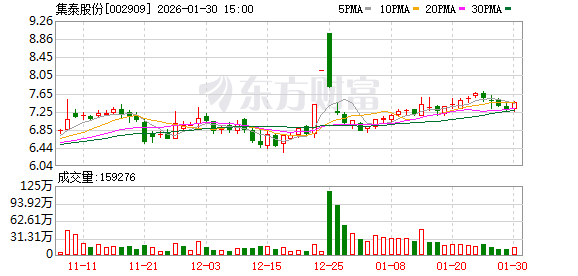
集泰股份:预计2025年亏损1900万元-2800万元
Zhong Guo Zheng Quan Bao· 2026-01-30 12:13
Group 1 - The company, Jitai Co., Ltd. (002909), expects a net loss attributable to shareholders of 19 million to 28 million yuan for the year 2025, compared to a profit of 19.28 million yuan in the same period last year [4] - The company's non-recurring net profit is projected to be a loss of 28 million to 40 million yuan, down from a profit of 14.25 million yuan in the previous year [4] - The basic earnings per share are estimated to be between -0.05 yuan and -0.073 yuan [4] Group 2 - The company's overall revenue and profit have declined year-on-year, primarily due to the pressure on traditional businesses during its strategic transformation and capacity upgrade in 2025 [13] - Despite significant growth in key businesses such as home decoration adhesives and new energy adhesives, traditional sectors are still affected by cyclical fluctuations in the downstream container manufacturing and construction markets [13] - The container manufacturing market is slowing down due to reduced momentum in global trade and container shipping, while the construction market is constrained by insufficient public project starts and weak terminal demand [13] Group 3 - In 2026, the company aims to maintain stable operations in traditional businesses while actively seizing strategic opportunities in the rapidly expanding new energy downstream market [13] - The company plans to continue expanding its industrial adhesive market, particularly in new energy applications, through technological iteration and market expansion [13] - The goal is to enhance the proportion of the second growth curve business, improve resilience against cyclical fluctuations, and drive overall operational performance recovery and improvement [13]


三棵树:2025年年度净利润预增128.96% - 189.21%
Xin Lang Cai Jing· 2026-01-30 08:10
Core Viewpoint - The company expects to achieve a net profit attributable to shareholders of 760 million to 960 million yuan in 2025, representing a year-on-year increase of 428 million to 628 million yuan, with a growth rate of 128.96% to 189.21% [1] Financial Performance - The projected non-recurring net profit is estimated to be between 550 million and 750 million yuan, an increase of 403 million to 603 million yuan year-on-year, with a growth rate of 273.57% to 409.42% [1] - The net profit for the same period last year was 332 million yuan, while the non-recurring net profit was 147 million yuan [1] Factors Influencing Performance - The anticipated performance increase is attributed to the company's optimization of product structure, advancement in digital transformation, and a reduction in impairment provisions [1]
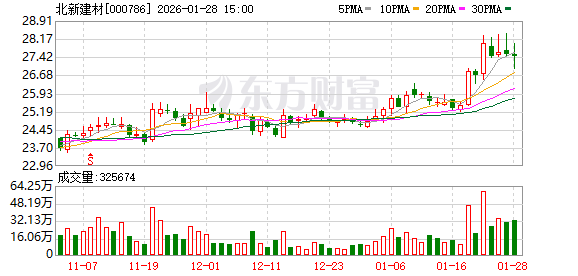
北新建材:公司持续加强“三精管理”,已建立供应链中心
Zheng Quan Ri Bao· 2026-01-28 12:45
Core Viewpoint - The company is focusing on cost reduction and efficiency improvement in its waterproof and coating product lines through enhanced management practices and supply chain optimization [2] Group 1: Company Strategy - The company has a diverse range of waterproof and coating products, which exhibit cost differences across various regions [2] - The company is implementing "three precision management" to streamline operations and improve efficiency [2] - The company has established a supply chain center to support its operational strategies [2] Group 2: Cost Management Initiatives - The company is deepening its "one cent cost-saving plan" aimed at further reducing costs and enhancing efficiency in its waterproof and coating products [2]

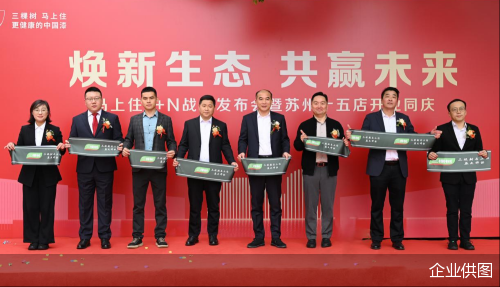
三棵树“1+N”战略引领焕新家居 苏州15店联袂开业
Bei Jing Shang Bao· 2026-01-21 01:27
Core Insights - The event held on January 18, 2026, in Suzhou marked the launch of the "1+N" strategy by the company, emphasizing its commitment to upgrading its business model and contributing to the national strategy of "suitable living" [1][3] - The "1+N" ecological model focuses on a core product of coatings while extending into various service scenarios and ecological resources, transforming the traditional single service into a comprehensive home renovation service [1][7] Company Strategy - The company aims to open over 10,000 stores by 2026 and 30,000 by 2030, reflecting its ambition to lead the transformation of the Chinese home furnishing industry and expand its global presence [3] - The launch of 15 community renovation stores in Suzhou represents a significant step in implementing the "1+N" strategy, enhancing service accessibility within a three-kilometer radius of core communities [5][8] Market Impact - The "1+N" strategy has transitioned from traditional product delivery to a one-stop space renovation solution, addressing the demand for improved living environments while aligning with green and low-carbon development principles [7] - The company's rapid expansion has reached over 300 cities nationwide, showcasing its strong market appeal and brand influence [5] Future Vision - The company is committed to enhancing home health, beautifying cities, and improving quality of life, with a focus on user-centered services and ecological support [7] - The new community service model aims to closely integrate with residents' needs, providing quick responses and comprehensive responsibility, thereby contributing to urban renewal and enhancing living quality [8]
欧盟认定阻燃剂DBDPE为SVHC
Zhong Guo Hua Gong Bao· 2025-10-20 03:27
Core Points - The European Chemicals Agency (ECHA) has identified Decabromodiphenyl Ether (DBDPE) as a Substance of Very High Concern (SVHC) due to its high persistence and bioaccumulation characteristics [1] - DBDPE is primarily used as a substitute for decabromodiphenyl ether flame retardants and is commonly found in various plastics and products [1] - The identification of DBDPE as SVHC will support potential restrictions on brominated flame retardants and aligns with the deadline for its inclusion in the CLP regulation [1] Group 1 - ECHA plans to include DBDPE in the SVHC candidate list in November [1] - DBDPE is used in HIPS, ABS resins, PVC, PP, adhesives, sealants, coatings, lubricants, and cleaning products [1] - Sweden proposed to classify DBDPE as an SVHC candidate substance on April 23, 2025, with public consultation occurring from June 27 to August 11, 2025 [1] Group 2 - Manufacturers and importers must notify if SVHC is present in their products at concentrations exceeding 0.1% by weight and if the total weight produced in the EU exceeds 1 ton annually [2] - Companies placing items containing SVHC above 0.1% in the EU market are required to complete SCIP notifications as per the Waste Framework Directive [2]
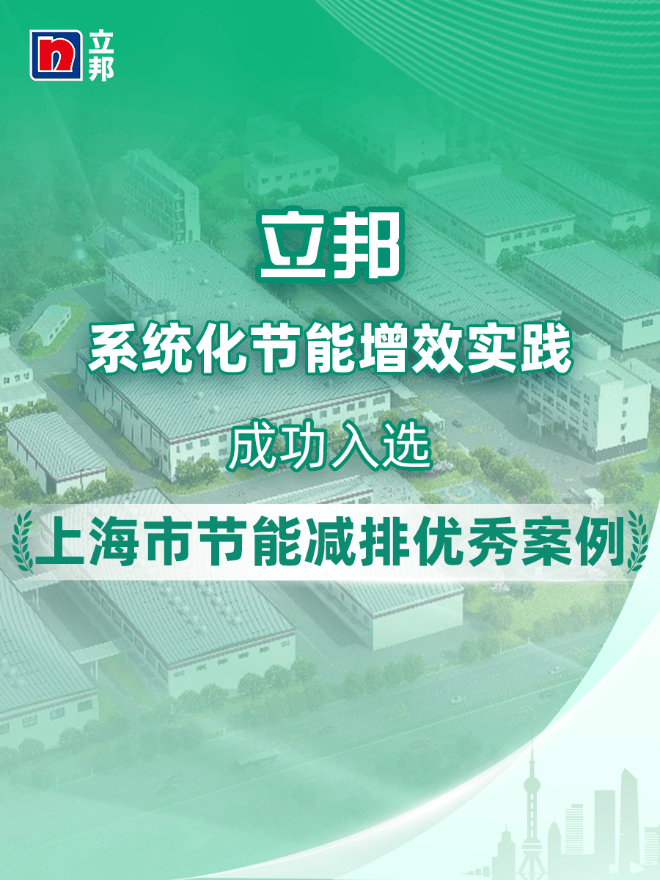
立邦中国入选上海市节能减排优秀案例(第三批)名单
Zhong Guo Chan Ye Jing Ji Xin Xi Wang· 2025-07-28 04:41
Core Viewpoint - Nippon Paint China has been recognized as an "Excellent Case" in the third batch of Shanghai's energy conservation and emission reduction evaluation, showcasing its innovative practices in energy efficiency and carbon reduction, contributing to Shanghai's carbon peak and carbon neutrality goals [1][3]. Group 1: Recognition and Evaluation - The evaluation was initiated by the Shanghai Energy Conservation Association as part of the city's efforts to implement the national "dual carbon" strategy, focusing on energy efficiency, low-carbon practices, and circular economy [3]. - A total of 91 cases were evaluated, resulting in 6 demonstration cases, 15 excellent cases, 27 typical innovative cases, and 43 green practice cases [3]. Group 2: Energy Management Practices - Nippon Paint has established a comprehensive energy management system, which allowed it to stand out among numerous cases and earn the "Excellent Case" title [3]. - The company aims to reduce its operational carbon emissions by 17.4% compared to the baseline year by 2024, with a focus on energy management in the manufacturing process [3][5]. - In 2024, Nippon Paint plans to reduce carbon emissions by 1,862.6 tons through energy-saving modifications to equipment and optimization of production processes, achieving over 30% improvement in energy efficiency through automated color mixing equipment [3][5]. Group 3: Sustainable Development Strategy - Under its sustainable development strategy, Nippon Paint promotes energy efficiency across its value chain, including product design, manufacturing, logistics, and office operations [3]. - The company emphasizes systematic energy management as a key support for energy conservation and efficiency, which not only reduces carbon footprints but also leads to significant cost savings and competitive advantages [5].