体育业

Search documents
闵云童:接待游客近六千万,旅游总收入超730亿元
Nan Fang Du Shi Bao· 2026-02-11 06:31
Core Viewpoint - The Zhuhai government is focusing on the development goals for the "15th Five-Year Plan" period, building on the achievements of the "14th Five-Year Plan" and emphasizing ten key areas for economic and social development, including the construction of the Guangdong-Hong Kong-Macao Greater Bay Area and the integration of education, technology, and talent development [1]. Group 1: Tourism Development - In 2025, Zhuhai aims to enhance its status as a "coastal international leisure tourism destination" by focusing on four key areas: developing unique projects, hosting brand activities, promoting Hong Kong-Macao collaboration, and improving service quality [2][3][4]. - The city expects to receive 59.1 million tourists in 2025, a year-on-year increase of 16.3%, generating a total tourism revenue of 73.375 billion yuan, up 14.2% from the previous year [1]. Group 2: Unique Projects - Zhuhai is working to establish its cultural tourism brand by promoting national 4A scenic spots such as Dong'ao Island and developing high-end hotels, which will enhance the city's tourism appeal [2]. - The city has formed three clusters of unique cultural tourism projects: coastal resort projects, cultural experience projects, and emerging cultural tourism projects [2]. Group 3: Brand Activities - Zhuhai is hosting various events to stimulate urban vitality, including marathons and music festivals, to create a vibrant city atmosphere and boost cultural tourism consumption [3]. - The city has successfully held cross-border sports events, such as the cycling competition at the National Games, marking a significant milestone in regional collaboration [3]. Group 4: Hong Kong-Macao Collaboration - Zhuhai is leveraging policies to enhance collaboration with Hong Kong and Macao, creating a series of cultural and sports events to strengthen regional integration [3]. - The city is promoting a "one trip, multiple stops" tourism model to highlight the unique features of the Greater Bay Area [3]. Group 5: Service Improvement - Zhuhai is enhancing its market environment by improving cross-border payment systems and multilingual services, aiming to set a benchmark for tourism services in the Greater Bay Area [4]. Group 6: Future Plans for 2026 - The city plans to revitalize its cultural tourism resources and enhance its position as a high-quality tourism destination by focusing on policy and project combinations, including the upgrade of key tourist areas [5]. - Zhuhai aims to create a world-class tourism destination through collaboration with Bay Area cities and by enhancing the tourism experience at the Hong Kong-Zhuhai-Macao Bridge [6]. - The city will continue to promote various cultural and sports events to stimulate tourism consumption and develop new immersive experiences [6].
九部门:鼓励热门博物馆等文博场馆在春节期间适当延长开放时间
Bei Jing Shang Bao· 2026-02-02 06:20
Core Viewpoint - The Ministry of Commerce and nine other departments have issued the "2026 'Happy Shopping New Year' Special Activity Plan," which encourages cultural and sports venues to extend their opening hours and increase capacity during the Spring Festival [1] Group 1 - The plan promotes popular museums and art galleries to extend their operating hours during the Spring Festival [1] - It supports eligible public sports venues to offer free or low-cost access based on local conditions [1]
32039.46亿元!广州最新公布
Sou Hu Cai Jing· 2026-01-31 05:04
Economic Overview - In 2025, Guangzhou's GDP reached 32,039.46 billion yuan, with a year-on-year growth of 4.0% at constant prices [1][4][13] - The primary industry added value was 317.02 billion yuan, growing by 3.3%; the secondary industry added value was 7,710.27 billion yuan, growing by 1.6%; and the tertiary industry added value was 24,012.17 billion yuan, growing by 4.8% [1][13] Industrial Performance - The industrial output of large-scale industries in Guangzhou increased by 1.2% year-on-year [1][18] - The automotive manufacturing sector, undergoing a transition, saw a narrowing decline of 1.6%, with new energy vehicle production increasing by 21.6% [1][4] - Stable growth was observed in electronic products and petrochemical manufacturing, with increases of 1.4% and 4.1%, respectively [1] Service Sector Growth - From January to November, the revenue of large-scale profit-making service industries grew by 10.1% year-on-year [1][22] - Significant growth was noted in the internet, software, and information technology services, with a revenue increase of 9.3% [1] - The human resources, advertising, consulting, and cultural sectors experienced revenue growth rates of 11.9%, 22.5%, and 25.7%, respectively [1][22] Domestic Demand and Trade - Guangzhou's total retail sales of consumer goods reached 11,032.38 billion yuan, with a year-on-year growth of 5.5%, maintaining a leading growth rate among major cities in China [2][25] - The city's import and export scale exceeded 1.2 trillion yuan, marking a historical high with a year-on-year growth of 10.4% [2][27] - Exports surpassed 800 billion yuan, growing by 17.8%, the highest growth rate in the province [2][27] Investment Trends - Fixed asset investment in Guangzhou decreased by 6.7% year-on-year, with real estate development down by 2.8% and infrastructure down by 5.9% [2][29] - Notable growth was seen in water transportation (15.9%), air transportation (16.1%), and aerospace manufacturing (60.6%) [2][29] Economic Challenges and Future Outlook - The city faces challenges from a complex external environment and internal structural adjustments, with industrial production in a low recovery phase [2] - Future strategies include leveraging demand to expand markets, strengthening project support, and enhancing technological innovation to drive new momentum for economic recovery [2]


去年前11月广州规上服务业营收同比增长7.9%
Guang Zhou Ri Bao· 2026-01-05 02:31
Core Insights - Guangzhou's service industry achieved a revenue of 20,021.31 billion yuan from January to November 2025, reflecting a year-on-year growth of 7.9% [2] - The digital development wave positions Guangzhou as a leader, with the information transmission, software, and IT services sector generating a revenue of 5,645.826 billion yuan, up by 8.1% year-on-year [2] - The scientific research and technical services sector reported a revenue of 1,576.01 billion yuan, marking an 8.3% increase, with professional technical services in energy infrastructure and rail transit driving a significant revenue of 1,159.82 billion yuan, up by 8.6% [2] - The cultural arts, sports, travel agencies, and related services sectors saw remarkable growth, with year-on-year increases of 25.7%, 11.9%, and 10.2% respectively, highlighting new growth points in service consumption [2]
江苏“十四五”文化建设成果丰硕 文旅体商融合发展,为文化强省建设注入新动能
Yang Zi Wan Bao Wang· 2025-12-25 12:33
Core Insights - Jiangsu Province has made significant progress in cultural development during the "14th Five-Year Plan" period, showcasing achievements in both cultural affairs and the cultural industry [2][3] Group 1: Cultural Development Achievements - Jiangsu has introduced the first comprehensive local regulations in the field of philosophy and social sciences, with a record number of national social science fund projects [2] - The province has added 8 new national civilized cities, maintaining the highest total and proportion among all provinces [2] - The cultural industry value added increased from 498.6 billion yuan at the end of the "13th Five-Year Plan" to 662.9 billion yuan by the end of 2023, ranking second nationally [2] - Jiangsu has 12,538 cultural enterprises above designated size, the highest in the country [2] - The number of national historical and cultural cities, 5A scenic spots, and national-level tourist resorts in Jiangsu remains the highest in the nation [2] Group 2: Cultural Accessibility and Community Engagement - Jiangsu has established a five-level public cultural facility network, achieving full coverage of grassroots cultural service centers ahead of schedule [2] - The province has created urban community "15-minute cultural circles" and rural "ten-mile cultural circles," with a high number of national first-class libraries, cultural centers, and museums [2] - Broadcasting and television coverage has reached 100%, ensuring access to quality cultural resources at the grassroots level [2] Group 3: Cultural Consumption and Innovation - Cultural consumption has become a vital support for boosting domestic demand, with Jiangsu exploring effective paths for the integration of culture and technology [3] - The province has established the East China Regional Center for National Cultural Big Data and has over 1,824 cultural high-tech enterprises [3] - New cultural tourism products and experiences have been launched, including immersive performance venues and themed cultural tourism routes [4][5] Group 4: Integration of Culture and Tourism - Jiangsu has focused on deep integration of culture and tourism, enhancing the supply of quality cultural tourism products [4] - The province has developed new business models such as "performance + tourism" and "AI + culture and tourism," creating benchmark projects that appeal to younger audiences [5] - Jiangsu aims to enhance international tourism by integrating Chinese cultural IP into overseas cultural exchange activities [5] Group 5: Sports and Cultural Synergy - The provincial government has promoted sports as a key driver for consumption, with significant participation in sports events leading to increased consumer spending [6] - Jiangsu has cultivated 113 "Chinese Time-honored Brands" and 352 "Jiangsu Time-honored Brands," enhancing cultural trade competitiveness [6] - The province's public sports service satisfaction is projected to rank first nationally in 2024, reflecting the success of its sports initiatives [7]
前11个月广州经济数据出炉 广州经济韧性十足
Guang Zhou Ri Bao· 2025-12-24 01:54
Core Insights - Guangzhou's retail sales exceeded 1 trillion yuan, marking a 4.2% year-on-year growth, indicating a robust domestic market and structural optimization in the economy [2][3] - The city is experiencing a transformation in its industrial system, moving from traditional manufacturing to new energy and technology-driven sectors, with significant growth in electric vehicles and aerospace industries [5][6] Economic Performance - The total retail sales reached 10078.01 billion yuan, with essential consumer goods showing stable demand, including a 11.7% increase in grain and oil products, 12.1% in clothing, and 3.8% in daily necessities [3] - New energy vehicles saw a production increase of 22.6%, while the production of civil drones rose by 41.1% [9] Consumption Trends - Online retail sales accounted for 31.3% of total retail sales, with significant growth in e-commerce and digital consumption, driven by promotional activities [3] - Upgraded consumption categories, such as jewelry and cosmetics, reported retail growth of 10.2% and 5.8%, respectively, indicating a shift towards higher-value consumer goods [4] Industrial Transformation - Traditional manufacturing is undergoing a transformation, with the automotive sector optimizing its structure despite a slight decline in industrial value added [5] - New sectors, particularly in information technology and low-altitude economy, are experiencing rapid growth, with integrated circuit manufacturing increasing by 41.0% [6] Service Sector Growth - The modern service industry in Guangzhou saw a revenue increase of 10.2% from January to October, with significant contributions from internet and technology services [7] - The 138th Canton Fair attracted over 310,000 foreign buyers, contributing to a 12.1% year-on-year growth in foreign trade [10] Event Impact - The Fifteenth National Games are expected to generate 1 billion yuan in merchandise sales, with over 2800 licensed products launched [11] - The combined effect of major events like the Canton Fair and the National Games has enhanced the city's economic vitality, with passenger traffic reaching 3.11 billion, a 1.1% increase year-on-year [8]

沈阳“十五五”规划建议:推动冰雪旅游、冰雪运动、冰雪文化、冰雪装备全产业链发展
Zheng Quan Shi Bao Wang· 2025-12-15 00:55
Core Viewpoint - The proposal by the Shenyang Municipal Committee emphasizes the integration of culture, tourism, sports, and commerce to enhance economic and social development in Shenyang [1] Group 1: Cultural Industry Development - The plan aims to optimize the development space for the cultural industry by leveraging historical, red, industrial, and ethnic cultural resources [1] - It focuses on promoting industries such as creative design, broadcasting media, and handicrafts, while accelerating the construction of cultural districts and creative parks [1] - The initiative includes the establishment of a national cultural and technology integration demonstration base to foster new business formats like animation, digital creativity, micro-short dramas, and e-sports [1] Group 2: Tourism Enhancement - The proposal seeks to improve the "Four Seasons Tour" brand and cultivate new integrated scenarios for leisure, night consumption, and outdoor sports [1] - It aims to create a national cultural and tourism consumption demonstration city and accelerate the development of a strong tourism city [1] - Hosting internationally influential sports events and exploring city-specific events are also part of the strategy [1] Group 3: Sports Development - The plan emphasizes strengthening the brand matrix of "three major ball" sports events and aims to establish Shenyang as a key city for football development in China [1] - It promotes nationwide fitness activities to enhance both public and competitive sports levels, contributing to the construction of a strong sports city [1] - The development of the ice and snow economy is highlighted, particularly in relation to hosting the 15th National Winter Games in Shenyang and promoting the entire industry chain of ice and snow tourism, sports, culture, and equipment [1] Group 4: Economic Policies - The proposal includes implementing proactive cultural economic policies to enhance the professional, large-scale, and intensive development capabilities of state-owned cultural enterprises [1] - It encourages social capital to invest in the cultural and tourism industry through various forms [1]
北京平谷发布新政赋能文化发展 最高奖励300万元
Zhong Guo Xin Wen Wang· 2025-12-11 13:51
Core Viewpoint - Beijing Pinggu District has launched a policy titled "Several Measures to Promote High-Quality Cultural Development," which is effective for three years and includes various specific reward clauses, with the highest single reward reaching 3 million yuan [1][2]. Group 1: Policy Focus Areas - The policy emphasizes five main support directions: accelerating the implementation of cultural projects, supporting the full-cycle development of cultural enterprises, building "cultural + industry" scenarios, striving to create national-level cultural brands, and promoting the prosperity of cultural undertakings [1]. - The support targets include legally registered entities, non-legal entities, and individuals in Pinggu District, with a focus on enterprises in culture, tourism, sports, commerce, agriculture, and integrated development projects [1]. Group 2: Specific Incentives - The policy includes targeted rewards for different sectors, such as a maximum reward of 3 million yuan for investing in rural leisure complexes and developing excellent original game software; 10% support for revenue from large cultural consumption activities, with a maximum reward of 1 million yuan; and up to 200 million yuan for successfully creating national-level tourist attractions [2]. - A comprehensive policy support system is established, characterized by being "declarable, implementable, and rewarding" [2]. Group 3: Project Evaluation and Collaboration - The project selection process will focus not only on the scale and investment of projects but also on their innovation, cultural connotation, and market potential, with a multi-dimensional evaluation system being constructed [2]. - Various departments, including the District Propaganda Department, Cultural and Tourism Bureau, Sports Bureau, Agricultural and Rural Bureau, Business Bureau, and LeGu Management Committee, jointly conducted investment promotion activities, with nearly 300 representatives from relevant sectors attending [2]. Group 4: Future Development Strategy - Pinggu District has been promoting deep integration of agriculture, culture, tourism, sports, and commerce, with cultural elements being a consistent theme in regional development [3]. - The district plans to optimize financial services, approval processes, and talent support measures to create a "stable, fair, and predictable" business environment, leveraging cultural "soft power" to activate new momentum for regional development and contribute to the construction of a national cultural center [3].
雪舞金山润童心 同心共筑中国梦——阿勒泰市以“雪假”为媒促进交往交流交融
Zhong Guo Xin Wen Wang· 2025-12-11 03:25
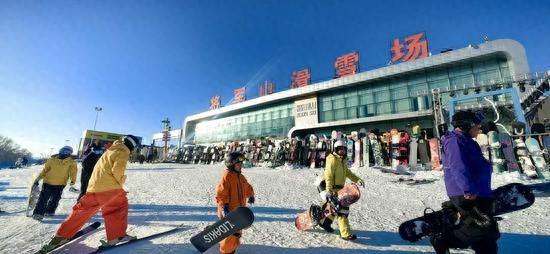
Core Viewpoint - The introduction of a "snow holiday" in Altay City, Xinjiang, represents a significant initiative aimed at promoting youth engagement, cultural awareness, and community bonding through winter sports and activities [4][6]. Group 1: Economic Impact - During the "snow holiday," Altay City received a total of 413,000 tourists, generating tourism revenue of 402 million yuan, marking a year-on-year increase of 50.51% and 41.05% respectively [3]. - The local ski resort, Jiangjun Mountain, experienced an average daily visitor count of 15,000, effectively transforming "cold resources" into a "warm bond" for the community [3]. Group 2: Educational and Social Benefits - The "snow holiday" provided a week-long break for students from December 1 to 5, 2025, allowing them to engage in outdoor activities and reduce academic pressures [4]. - The initiative included free ski passes and half-price equipment rentals for students, promoting accessibility and encouraging family participation in winter sports [4]. Group 3: Community and Cultural Integration - The holiday served as a platform for youth interaction, fostering friendships and teamwork through various sports and activities, such as skiing and snow soccer [6]. - Cultural education was integrated into the holiday through eight research study routes, allowing students to explore local history and heritage, thereby strengthening their sense of national identity [7][9]. Group 4: Long-term Impact - The "snow holiday" is expected to have lasting effects on youth participation in winter sports and enhance ethnic unity among the community, symbolizing a collective effort towards a shared national dream [9].
GWI:全球康养经济到2029年将攀升至9.8万亿美元
Sou Hu Cai Jing· 2025-11-26 06:29
Core Insights - The Global Wellness Institute (GWI) reported that the global wellness economy has reached a record size of $6.8 trillion, marking a 35% growth since 2019 and a projected growth of 7.9% from 2023 to 2024, with expectations to reach $9.8 trillion by 2029 [1][3]. Industry Overview - The wellness industry is now larger than several major global industries, including tourism ($5 trillion), IT ($5.3 trillion), and sports ($2.7 trillion), and is nearly four times the size of the pharmaceutical industry, accounting for 60% of global health and medical spending [3][4]. - By 2029, the wellness industry is expected to represent 7.1% of global GDP [3]. Growth Drivers - The growth is attributed to long-term trends such as aging populations, chronic diseases, increasing mental health issues, and a rising consumer focus on prevention, longevity, and lifestyle optimization [3][4]. - The fastest-growing sector in the past five years has been wellness real estate, with an annual growth rate of 19.5%, driven by demand for homes and communities that support physical and mental health [3]. Sector Performance - Wellness tourism, spas, and thermal/mineral springs have shown strong growth, with health tourism increasing by 13.8%, spas by 14.6%, and thermal/mineral springs by 11.1% from 2023 to 2024, making wellness tourism one of the most dynamic travel categories [4]. - Workplace wellness is the only sector experiencing a decline at -1.5%, reflecting shifts in employer priorities due to the rise of remote work [5]. Regional Insights - North America has the highest per capita health spending at $6,029, followed by Europe at $1,876, indicating significant growth potential in other regions [5]. - Annual growth rates over the past five years were 7.9% in North America, 7.2% in the Middle East and North Africa, and 6.3% in Europe [5]. Future Projections - By 2029, several wellness industry categories are expected to see significant growth, including wellness real estate (15.2%), traditional and complementary medicine (10.8%), mental health (10.1%), spa tourism (10%), wellness tourism (9.1%), and personalized medicine (9.3%) [5]. - Six sectors, including healthy eating, physical exercise, personal care and beauty, wellness tourism, wellness real estate, and traditional and complementary medicine, are projected to exceed $1 trillion each by 2029 [5]. Implications for Investors - The findings suggest a sustained increase in health-oriented consumer demand, with growing investor activity and intensified competition to integrate wellness, nature, culture, and personalized wellness experiences into travel offerings [5].