淘宝买菜

Search documents
美团优选彻底关停,社区团购走到尽头了?
Sou Hu Cai Jing· 2025-12-23 14:19
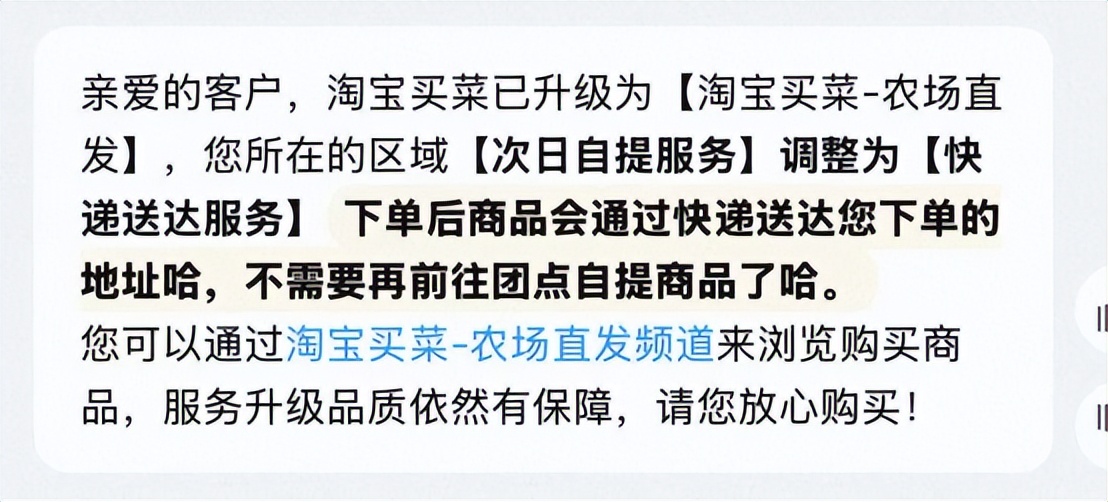
Core Insights - The emergence of community group buying as a new business model was significantly influenced by the "black swan event" in 2020, leading to a shift in consumer habits towards mobile platforms for purchasing groceries [1] - In 2025, Taobao announced the cessation of next-day self-pickup services nationwide, transitioning to a model where products are delivered directly from farms to consumers [3] - By December 2025, major players in the community group buying sector, including Meituan, had largely exited the market, leaving only Duoduo Maicai as a significant competitor, raising questions about its sustainability [5] Summary by Sections - **Market Changes**: The community group buying model gained popularity post-2020, with consumers accustomed to low prices and convenient self-pickup options [1] - **Business Model Shift**: Taobao's shift from local supplier delivery to direct farm-to-consumer shipping marks a significant change in the grocery delivery landscape [3] - **Market Exit**: The exit of Meituan from most regions by December 2025 indicates a consolidation in the community group buying market, with Duoduo Maicai remaining as the last major player [5]



阿里再战社区团购
第一财经· 2025-12-05 01:32
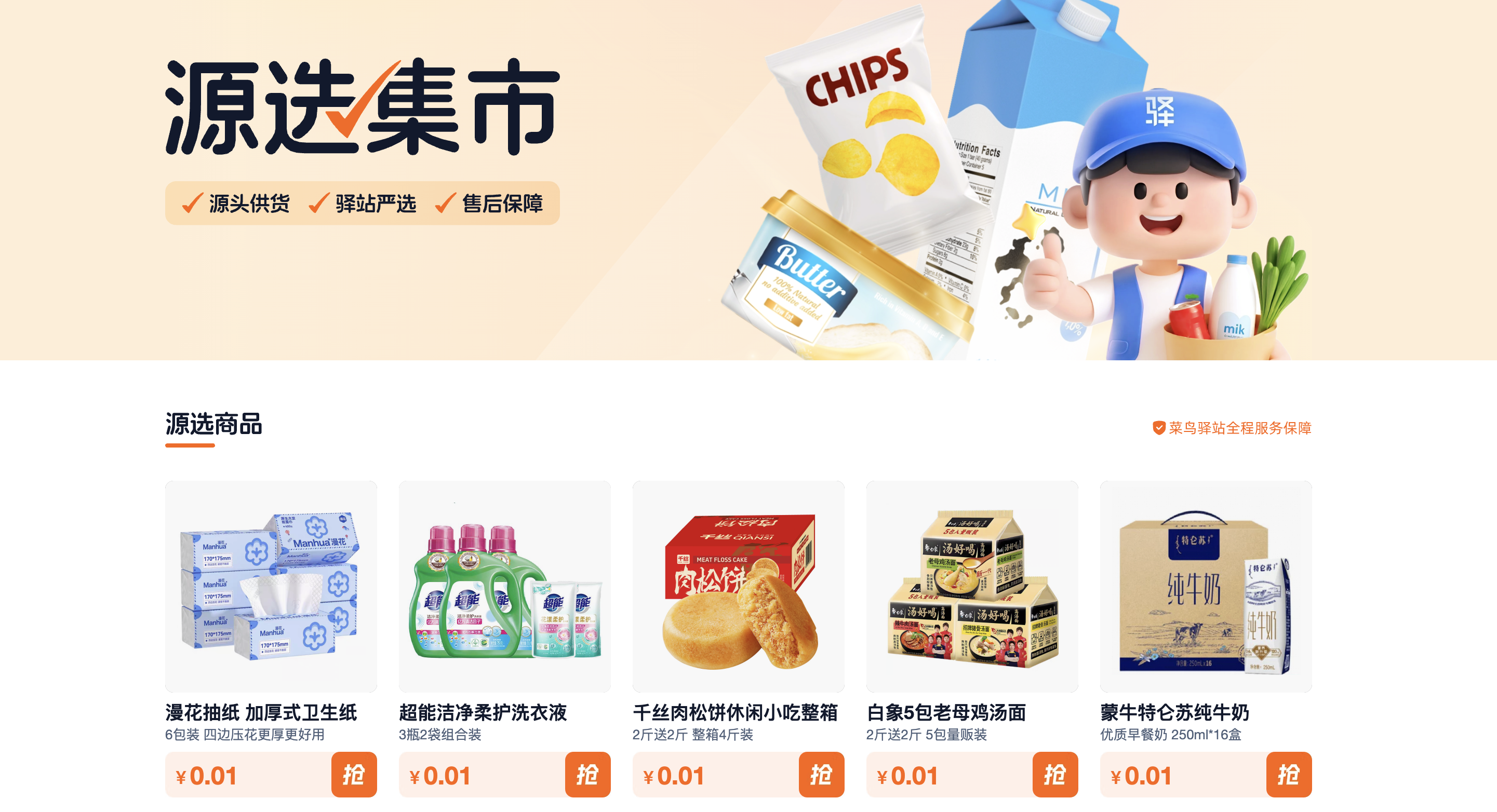
Core Viewpoint - Alibaba has quietly launched a community group buying business called "Yuanxuan Market" through its logistics arm, Cainiao, indicating a renewed interest in the community group buying sector despite previous withdrawals from similar initiatives [3][5]. Group 1: Business Launch and Model - The "Yuanxuan Market" emphasizes "source supply and strict selection" and is currently in the early stages, offering limited products such as milk and snacks at a nominal price of 0.01 yuan [3]. - The business model involves sourcing products directly, group shipping, and self-pickup at Cainiao stations, leveraging existing resources and supply chains without significant investment [6]. Group 2: Market Context and Strategic Shift - Earlier in March, Alibaba's community group buying initiative, Taobao Mai Cai, shifted from next-day pickup to direct shipping, marking a retreat from the community group buying space amid competition from platforms like Pinduoduo and Meituan [5]. - Experts suggest that the renewed focus on community group buying aligns with the need to cater to older consumers who may find online shopping inconvenient, thus expanding Alibaba's reach in the retail ecosystem [6]. Group 3: Future Implications and Industry Dynamics - Analysts believe that community group buying will serve as a supplementary business model rather than a primary focus, with major players avoiding significant losses in this area [7]. - The cautious re-entry into community group buying by Alibaba, through leveraging Cainiao, is seen as part of a broader strategy to enhance the retail ecosystem and activate the value of logistics networks [8].


菜鸟驿站上新“源选集市”,阿里再战社区团购?
Di Yi Cai Jing· 2025-12-05 00:25
Core Insights - Alibaba has launched a new community group buying business called "Yuanxuan Market" through its logistics arm, Cainiao, focusing on direct sourcing and strict selection of products [1] - The service is currently in its early stages, with limited product offerings and a user login system restricted to Cainiao members, DingTalk users, or Alibaba employees [1] - This move indicates Alibaba's renewed interest in the community group buying sector, despite previous withdrawals from similar initiatives [1][5] Group 1: Business Model and Strategy - "Yuanxuan Market" operates on a model of direct sourcing, group shipping, and self-pickup at logistics stations, leveraging existing resources and supply chains [1][6] - The initiative aims to cater to older consumers who may find online shopping inconvenient, potentially increasing revenue for Cainiao and expanding its franchise network [6] - The community group buying model is seen as a way to enhance local retail ecosystems and activate the value of Cainiao's logistics network [6] Group 2: Market Context and Competition - Earlier this year, Alibaba's community group buying service, Taobao Maicai, was restructured to focus on direct shipping from production sites, indicating a strategic retreat from the sector [5] - Experts suggest that community group buying will not be the main focus of competition but will serve as a supplementary business model, with major players avoiding significant losses in this area [7] - The renewed interest in community group buying aligns with Alibaba's broader strategy to address consumer demand for high-frequency products amid a saturated e-commerce market [6][7]
第17届双十一,5大电商平台论剑,规则、流量、战场已彻底改变
Sou Hu Cai Jing· 2025-11-02 04:14
Core Insights - The article discusses the evolution of China's e-commerce industry, particularly focusing on the "Double Eleven" shopping festival, which has transformed from a niche event into the world's largest shopping extravaganza since its inception in 2009 [1][3]. Group 1: Historical Evolution of Double Eleven Strategies - The Double Eleven event can be divided into three main phases from 2015 to 2024, each characterized by distinct features and competitive dynamics [4]. - The first phase (2015-2017) was dominated by Alibaba's Taobao/Tmall and JD.com, with a focus on price competition and traffic acquisition. Sales figures grew from 91.2 billion yuan in 2015 to 168.2 billion yuan in 2017 [7]. - The second phase (2018-2020) saw the entry of content platforms like Douyin and Kuaishou, leading to a more intense competition landscape. Pinduoduo emerged as a significant player with its social group-buying model [8][9]. - The third phase (2021-2024) marked a shift towards refined operations, with platforms focusing on user experience and sustainable growth. Sales peaked at 540.3 billion yuan in 2021, but platforms began emphasizing quality metrics over gross merchandise volume (GMV) [10]. Group 2: Tactical Evolution of Major Platforms - Taobao/Tmall's pricing strategy evolved from "site-wide 50% off" to complex promotional rules, and finally to simplified rules like "official discounts" starting in 2023 [12][44]. - JD.com maintained a straightforward pricing strategy, introducing "official discounts" and "instant sales" while enhancing its logistics capabilities, achieving an average fulfillment time of 18 minutes by 2025 [18][76]. - Pinduoduo's strategy shifted from "lowest price" to "same price for the same item," reflecting a focus on merchant interests and product quality [24][77]. - Douyin e-commerce emphasized content-driven sales, integrating short videos and live streaming to create a seamless shopping experience, with significant sales growth during the Double Eleven period [31][79]. - Kuaishou e-commerce leveraged its "old iron economy" to build strong relationships with users, achieving high repurchase rates through trust-based interactions [37][40]. Group 3: Key Tactical Dimensions - Pricing strategies across platforms transitioned from complex calculations to straightforward discounts, with a notable emphasis on user-friendly promotions [44][46]. - Traffic acquisition methods evolved from traditional advertising to content marketing, with platforms increasingly relying on live streaming and social media to attract users [48][51]. - User operations shifted towards precision marketing, with platforms utilizing data analytics to enhance user engagement and loyalty [55][58]. - Supply chain management became a focal point, with platforms investing in logistics efficiency and real-time delivery capabilities to improve customer experience [62][65].



京东向多多买菜宣战,刘强东、黄峥好戏上演
Sou Hu Cai Jing· 2025-08-19 01:54
Core Viewpoint - JD.com is re-entering the community group buying market with its JD Pinpin brand, establishing several stores in Beijing, primarily through partnerships with existing community stores, aiming to compete with rivals like Duoduo Maicai [1][3][9]. Group 1: Store Operations and Offerings - JD Pinpin has opened multiple stores in Beijing's Fangshan District, utilizing a shared space model with existing community stores [1]. - The product offerings include a variety of daily necessities such as vegetables, fruits, meat, and groceries, with a focus on competitive pricing [1][3]. - The stores are equipped with refrigeration units and shelves for fresh and frozen goods, with next-day delivery for orders placed the same day [3]. Group 2: Competitive Landscape - JD Pinpin's pricing strategy is designed to undercut competitors like Duoduo Maicai, with prices for certain products being approximately 2 yuan lower [3]. - The community group buying sector has seen significant competition, particularly from Duoduo Maicai and Meituan Youxuan, which have been dominant players in the market [11][18]. - The market has undergone a shake-up due to regulatory pressures and the exit of several competitors, leaving Duoduo Maicai as a leading player [11][18]. Group 3: Historical Context and Strategic Shifts - JD.com has previously attempted to enter the community group buying space with various projects since 2018, but faced challenges that hindered growth [4][8]. - The rebranding of JD Pinpin from JD Xinpian reflects a strategic focus on leveraging JD's supply chain capabilities to enhance service offerings [9]. - The community group buying model is evolving, with JD Pinpin aiming to integrate online and offline services to better serve local communities [9][18].

余杭平台+淳安产业 跨区域协作双向赋能
Mei Ri Shang Bao· 2025-07-07 22:26
Group 1 - The core viewpoint of the news is the collaboration between Yuhang District and Chun'an County to promote high-quality development of the platform economy through a "platform + industry" approach [1][2] - The event gathered representatives from Chun'an's specialty industries such as tea, beverages, and condiments, alongside platform enterprises from Yuhang like Taobao, Tmall, and Hema, to explore cooperation opportunities [1][2] - Key partnerships were established during the meeting, including collaboration between the Qiantang Lake beer industry and Hema for brand development, and initial supply intentions between Chun'an's condiment industry and Tmall [2] Group 2 - The exchange activity is part of a series aimed at enhancing the integration of platform and traditional industries, fostering a new perspective on digital and intelligent transformation for traditional sectors [2] - Future plans include deepening cross-regional exchanges with cities like Lin'an and Qingyuan, establishing a regular platform for industry exchanges, and optimizing service support systems to achieve regional collaborative development [3] - The initiative aims to provide a replicable model for industry cooperation that supports rural revitalization through digital empowerment, contributing to farmers' income growth and common prosperity [3]
社区团购真完了?
投中网· 2025-04-01 08:26
以下文章来源于螺旋实验室 ,作者螺旋君 螺旋实验室 . 公众情绪瞭望者 将投中网设为"星标⭐",第一时间收获最新推送 社区团购的兴衰只是"新商业"的其中一页。 作者丨 追命 编辑丨 坚果 来源丨螺旋实验室 曾几何时,社区团购作为一种新兴的零售模式 ,瞄准了 邻里社交与生鲜电商结合的 新机遇,成为 了各大 资本竞相追逐的热点 , 堪比当年的 "百团大战"。 不过,社区团购的风口并没有维持太久。 2020年开始,一批社区团购创业公司陆续关停,仅剩下拼 多多、美团、阿里等大厂仍在坚持,但投入力度也大不如前。 近日, 阿里旗下 的 淘宝买菜 也 正式宣告退出社区团购赛道,转而聚焦 "直发到家"的快递电商模 式。至此,社区团购市场仅剩美团优选与拼多多旗下的多多买菜双雄对峙 。 大厂们 试图用资本与技术重塑生鲜消费链路, 最终 却 集体遗憾退场,如今的 社区团购 ,还是不 是一门 "好生意"? 下沉市场的"探路棋" 2018年,社区团购生意迎来高峰,彼时 全国 有 超过 300家社区团购平台 ,一边是阿里、拼多多 等大厂阵营;另一边则是 以兴盛优选、十荟团 等为代表的 创业公司。 根据报道, 彼时真格基金、高榕资本等知名 ...
大厂退出“白菜战争”
3 6 Ke· 2025-04-01 01:15
Core Insights - Community group buying, once a hot retail model, has seen a decline with major players like Alibaba's Taobao Mai Cai exiting the market, leaving only Meituan and Pinduoduo as the remaining competitors [1][3][14] - The initial boom in community group buying in 2018 saw over 300 platforms and significant investment, but the market has since contracted due to unsustainable business models and high operational costs [3][7] - Major companies initially invested heavily in community group buying to capture the lower-tier market, but the strategy has proven to be costly and ineffective in generating stable profits [5][6][8] Market Dynamics - In 2018, community group buying attracted 4 billion yuan in funding, with an average investment of 150 million yuan per company, indicating strong initial interest from investors [3] - The competition intensified as companies like Alibaba and Pinduoduo engaged in aggressive market capture strategies, leading to significant financial losses for many players [5][7] - By 2023, major companies began to scale back their community group buying operations, with Meituan's losses reaching 73 billion yuan over four years, highlighting the unsustainable nature of the business [8][12] Operational Challenges - Community group buying relies on "extreme low prices," but the cost structure, including sorting, delivery, and commissions, makes it difficult to maintain profitability without substantial subsidies [8][11] - The role of group leaders is critical, but their income has decreased significantly, leading to reduced service quality and customer engagement [11][12] - Companies like Meituan and Pinduoduo are adapting their strategies to enhance service quality and profitability, with Meituan focusing on a "husband-and-wife store + dedicated BD" model [12][13] Strategic Shifts - Alibaba's exit from community group buying does not signify a complete withdrawal from the retail space, as it continues to focus on direct delivery models to retain customer engagement [14] - The shift towards digital empowerment and supply chain efficiency reflects a broader trend among major companies to prioritize sustainable growth over aggressive market capture [17] - The evolution of community group buying illustrates a transition from rapid expansion to a more mature, collaborative approach within the internet ecosystem, emphasizing the importance of core competencies and synergies [17]