多多买菜

Search documents
拼多多造牌:首期 150 亿、上百产业带、一个新挑战
晚点LatePost· 2026-03-31 13:15
Core Viewpoint - Pinduoduo is shifting from a light asset model to a heavier involvement in brand creation and supply chain management, indicating a strategic pivot to enhance its market position and profitability [3][4][11]. Group 1: Financial Performance - In 2025, Pinduoduo reported a revenue of 431.8 billion yuan, a 10% year-on-year increase, while net profit decreased by 12%, indicating ongoing pressure on profit margins [3]. - The company plans to invest 100 billion yuan over three years into a new initiative called "New Pinduoduo," which aims to integrate supply chain resources and launch self-owned brands globally [3][4]. Group 2: Strategic Initiatives - Pinduoduo is not following competitors into large-scale AI investments but is instead focusing on community group buying and brand development through its new company [3][4]. - The "New Pinduoduo" initiative represents a significant shift from merely facilitating transactions to actively managing inventory and quality control, thus taking on more risk [11]. Group 3: Market Dynamics - Temu, Pinduoduo's international platform, achieved 540 million monthly active users, reaching 77% of Amazon's user base, but faced challenges due to changes in U.S. tariff policies affecting its business model [5][6]. - The termination of the U.S. tax exemption for small packages from China has led to a decline in Temu's U.S. user base, necessitating a shift in focus to other markets like the EU and Latin America [5][6]. Group 4: Brand Development Challenges - Pinduoduo's strategy to create its own brands involves significant financial investment and a willingness to accept short-term profit fluctuations, as the company aims to build brand recognition and consumer loyalty [7][8]. - The company has identified factories capable of brand development through its "billion support" plan, which has provided resources and support to various industrial clusters [6][8]. Group 5: Competitive Landscape - Pinduoduo's approach to brand creation is distinct from Amazon's, as it aims to support factories in building brands rather than competing with them directly in the same marketplace [13]. - The company faces the challenge of establishing brand recognition in diverse global markets, each with unique consumer preferences and regulatory requirements [14].



拼多多(PDD):2025Q4 财报点评:成立新拼姆公司布局海外自营,持续投入应链
Guoxin Securities· 2026-03-30 11:13
Investment Rating - The investment rating for the company is "Outperform the Market" [5][3] Core Insights - The company reported a revenue of 123.9 billion yuan for the quarter, representing a year-over-year growth of 12%. Advertising revenue was 60 billion yuan, up 5% year-over-year, while payment channel revenue reached 63.9 billion yuan, growing by 19% year-over-year [1][9] - The company has established a new entity, "Pinduoduo M," with plans to invest 100 billion yuan over three years to develop its cross-border e-commerce self-operated brand. The management emphasizes a focus on supply chain improvements and aims to recreate the success of Pinduoduo over the next three years [2][10] - The non-GAAP net profit for the quarter was 26.3 billion yuan, a decrease of 12% year-over-year, with a non-GAAP net profit margin of 21%. The decline in net profit margin is attributed to an increase in the tax rate to 26% [2][10] Financial Projections - Revenue projections for 2026 and 2027 have been adjusted to 492.2 billion yuan and 597.9 billion yuan, respectively, with a slight decrease of 1% and an increase of 7% [3][14] - The adjusted net profit for 2026 and 2027 is projected to be 124.9 billion yuan and 145.1 billion yuan, reflecting a decrease of 3.9% and an increase of 1.5% [3][14] - The company is expected to achieve a revenue of 719.9 billion yuan by 2028, driven by ongoing investments in supply chain and self-operated business initiatives [3][14]
拼多多(PDD):加码供应链升级再造,追求长期高质量增长
Guohai Securities· 2026-03-28 15:27
Investment Rating - The report maintains a "Buy" rating for Pinduoduo (PDD.O) [1] Core Insights - Pinduoduo's Q4 2025 revenue reached 123.9 billion RMB, representing a year-over-year increase of 12% and a quarter-over-quarter increase of 14%. However, Non-GAAP net profit decreased by 12% year-over-year to 26.3 billion RMB, significantly below Bloomberg's consensus estimate of 31.2 billion RMB. The revenue growth remains robust, but profit margins are under pressure due to tax and foreign exchange losses [5][10] - The management plans to heavily invest in supply chain upgrades, aiming to create a new version of Pinduoduo over the next three years, with profitability expected to fluctuate across different quarters [7][10] - The domestic e-commerce sector shows a slowdown in advertising revenue growth, while transaction commission revenue continues to perform steadily. The management emphasizes that future performance will depend on the value created for the supply chain rather than just traffic acquisition [7][10] Financial Performance Summary - For Q4 2025, Pinduoduo reported: - Revenue: 123.9 billion RMB (YoY +12%, QoQ +14%) - Gross Profit: 68.8 billion RMB (YoY +9%, QoQ +12%) - Operating Profit: 27.7 billion RMB (YoY +8%, QoQ +11%) - Net Profit: 24.5 billion RMB (YoY -11%, QoQ -16%) - Non-GAAP Net Profit: 26.3 billion RMB (YoY -12%, QoQ -16%) [5][10] Profitability and Expense Ratios - The gross profit margin for Q4 2025 was 55.5%, while the operating profit margin was 22.4%. The net profit margin stood at 19.8%, and the Non-GAAP net profit margin was 21.2% [15] - Expense ratios for Q4 2025 included: - R&D Expense Ratio: 4.0% (YoY +0.6pct, QoQ +0.03pct) - Sales and Marketing Expense Ratio: 27.7% (YoY -0.6pct, QoQ -0.3pct) - Management Expense Ratio: 1.4% (YoY -0.5pct, QoQ -0.3pct) [11] Earnings Forecast and Valuation - The forecast for Pinduoduo's revenue from 2026 to 2028 is as follows: - 2026: 506.9 billion RMB - 2027: 564.5 billion RMB - 2028: 603.5 billion RMB - Non-GAAP net profit estimates for the same period are: - 2026: 124.3 billion RMB - 2027: 149.4 billion RMB - 2028: 167.0 billion RMB - The target market capitalization for 2026 is projected at 1,319.7 billion RMB, corresponding to a target price of 135 USD per ADS [8][16][17]
拼多多:电商业务或进入稳健发展周期
HTSC· 2026-03-26 05:45
Investment Rating - The investment rating for the company has been upgraded to "Buy" [6] Core Insights - The company's e-commerce business is expected to enter a more stable growth phase, driven by its platform-centric business model, reduced competition in food delivery and instant retail, and the introduction of the "New Pinduoduo" self-operated model [2][3] - The management is focusing on high-quality supply chain investments, which are anticipated to be a key driver for sustainable growth over the next decade [3] - The company has adjusted its revenue and profit forecasts for 2026 and 2027, reflecting a slight increase in expected performance [5][18] Financial Performance - In Q4 2025, the total revenue reached 123.9 billion RMB, a year-on-year increase of 12.0%, aligning with market expectations [2] - Non-GAAP net profit for the same period was 26.3 billion RMB, corresponding to a non-GAAP net profit margin of 21.2%, which is a decline of 5.8 percentage points year-on-year [2] - The online market service revenue grew by 5.3% to 60 billion RMB, while transaction service revenue increased by 19.2%, indicating a robust performance in community group buying and overseas operations [3] Future Projections - The company has revised its non-GAAP net profit forecasts for 2026 and 2027 to 134.5 billion RMB and 163.6 billion RMB, respectively, with a new projection for 2028 set at 186.7 billion RMB [5][18] - The target price has been adjusted to 133.0 USD, reflecting an increase in valuation multiples due to a potentially easing competitive environment [22] Valuation Metrics - The SOTP valuation assigns a value of 90.6 USD for the domestic e-commerce main site, 11.2 USD for Duoduo Grocery, and 31.2 USD for Temu, based on projected earnings and market conditions [22][23][24] - The company is expected to maintain a competitive edge in the cross-border e-commerce sector due to its efficient supply chain capabilities [4]
拼多多(PDD):电商业务或进入稳健发展周期
HTSC· 2026-03-26 04:17
Investment Rating - The investment rating for the company has been upgraded to "Buy" [6] Core Insights - The company's e-commerce business is expected to enter a more stable growth phase, driven by its platform-centric business model, reduced competition in food delivery and instant retail, and the introduction of the "New Pinduoduo" self-operated model [2][3] - The management is focusing on high-quality supply chain investments, which are anticipated to drive sustainable growth over the next decade, despite fluctuations in profitability [3][4] - The company plans to invest a total of 100 billion RMB over the next three years to integrate supply chain resources and develop self-operated brands for the global market [4] Financial Performance - In Q4 2025, the total revenue reached 123.9 billion RMB, a year-on-year increase of 12.0%, aligning with market expectations [2][6] - Non-GAAP net profit for the same quarter was 26.3 billion RMB, corresponding to a non-GAAP net profit margin of 21.2%, which is a decline of 5.8 percentage points year-on-year [2] - The online marketplace service revenue grew by 5.3% to 60 billion RMB, while transaction service revenue increased by 19.2%, indicating a relatively stable performance [3][21] Profit Forecast and Valuation - The non-GAAP net profit forecasts for 2026 and 2027 have been adjusted to 134.5 billion RMB and 163.6 billion RMB, respectively, with a new forecast for 2028 set at 186.7 billion RMB [5][18] - The new target price based on SOTP valuation is set at 133.0 USD, reflecting an increase from the previous target of 122.9 USD [5][22] - The valuation for the domestic e-commerce main site is set at 90.6 USD per ADS, based on a 2026E PE of 8.0x, which is lower than the average PE of 11.8x for peers [22][23]
千亿烧光!美团优选退场,五年战略误判,终回即时零售赛道
Sou Hu Cai Jing· 2026-02-13 14:20
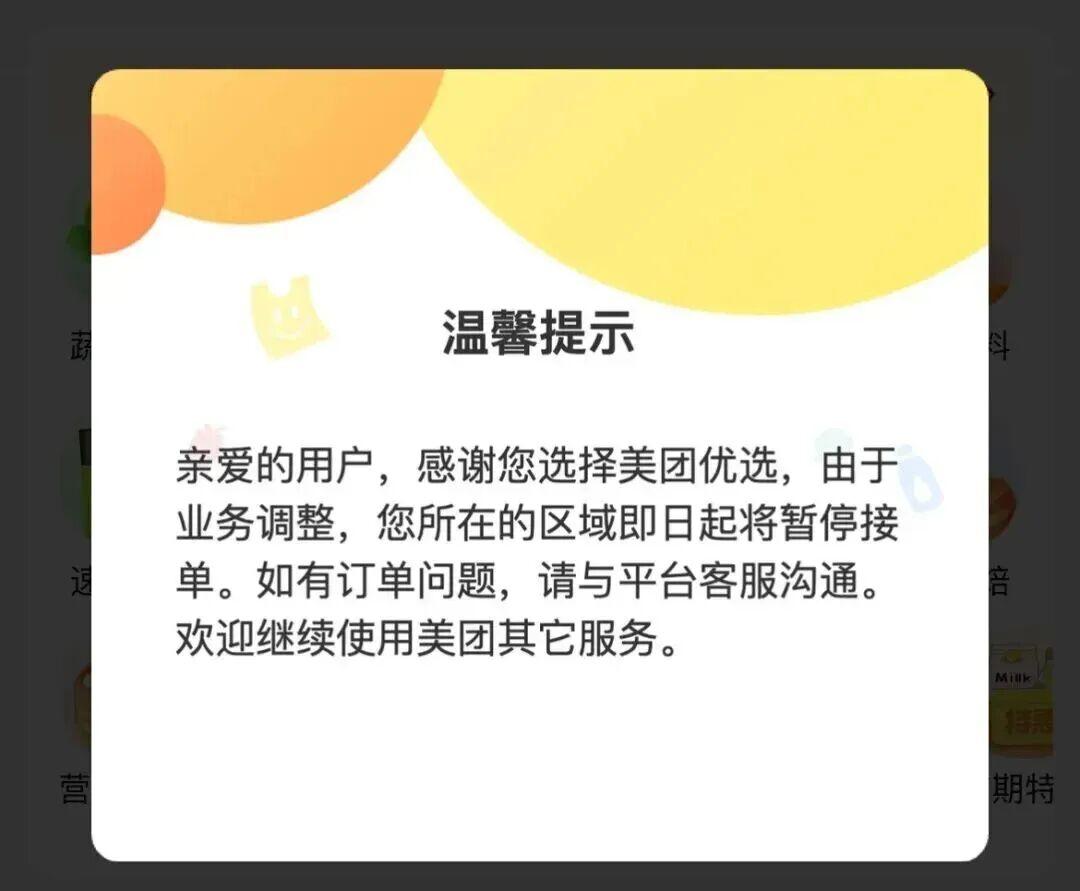
Core Viewpoint - Meituan's community group buying initiative, Meituan Youxuan, has been shut down after incurring losses of 110 billion yuan over five years, marking a significant strategic failure for the company [1][9]. Group 1: Business Performance - Meituan Youxuan was launched in July 2020 as a key strategic initiative, aiming to capitalize on the underserved market of small-town youth by offering a low-cost pre-order and self-pickup model [3]. - The community group buying sector saw a total subsidy expenditure exceeding 50 billion yuan in 2021, with Meituan Youxuan alone reporting quarterly losses of up to 3 billion yuan [5][6]. - The cumulative losses for new businesses, including Meituan Youxuan, are projected to exceed 110 billion yuan from 2019 to 2024 [9]. Group 2: Competitive Landscape - The rise of instant retail platforms like Meituan Shanguo, Taobao Shanguo, and JD Daojia has led to a daily order volume surpassing 250 million, highlighting the competitive pressure on Meituan Youxuan [1]. - The community group buying model failed to retain users, as customers were primarily attracted by low prices and quickly switched to competitors when prices increased [5][22]. - Pinduoduo emerged as the dominant player in the community group buying space, with a GMV nearing 300 billion yuan by November 2025, capitalizing on the market void left by Meituan [16]. Group 3: Strategic Missteps - Meituan's decision to focus on community group buying instead of instant retail was a critical strategic error, as the company had the necessary infrastructure and user base to succeed in the latter [18]. - The community group buying model's reliance on low-quality suppliers led to significant customer dissatisfaction due to issues with product freshness [10]. - The failure of the community group buying initiative reflects the flawed logic of "burning money for scale," where users attracted by subsidies proved to be disloyal once incentives were removed [22][23].


下沉与出海:拼多多双线夺路闯关
3 6 Ke· 2026-02-04 01:43
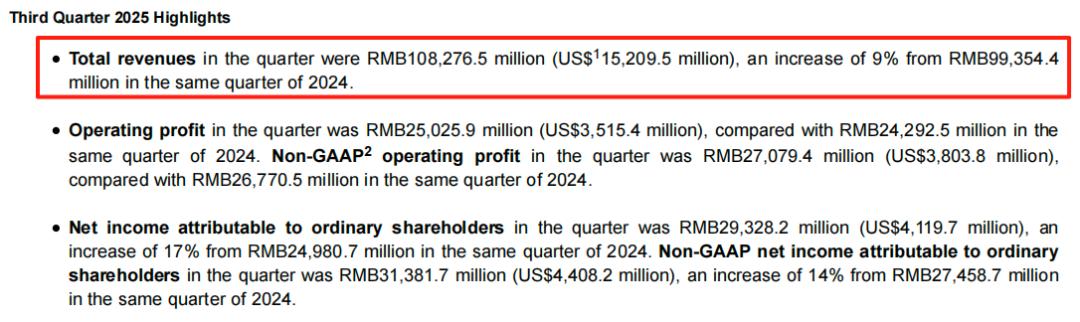
Core Viewpoint - Pinduoduo is experiencing a significant strategic transformation, facing challenges in both domestic and international markets, with a shift from aggressive growth strategies to a focus on efficiency and structural adjustments [2][3][6]. Domestic Market Performance - In Q3 2025, Pinduoduo reported total revenue of RMB 1,082.8 billion, a year-on-year increase of 9%, marking a shift to single-digit growth rates [3][6]. - Online marketing services and other revenues grew by only 8.1%, the lowest increase in recent years, indicating systemic challenges in its core monetization capabilities [6]. - The absence of state subsidies during major sales events has led to a decline in consumer spending, particularly on non-essential items, further impacting revenue [6][12]. - The company's gross merchandise volume (GMV) growth slowed to 10%, primarily driven by an increase in average order value rather than transaction volume [12]. Competitive Landscape - The Chinese e-commerce market is undergoing structural changes due to the rise of instant retail and AI technologies, posing significant challenges to Pinduoduo's low-price and social marketing model [7][11]. - Pinduoduo's core user base, which is price-sensitive and tolerant of longer delivery times, is at odds with the efficiency-driven user profiles of instant retail competitors [13]. - The company's community group buying business, Duoduo Maicai, has seen strategic contraction due to mismatched capabilities in real-time delivery and local operations [13]. International Expansion Challenges - Temu, Pinduoduo's global strategy core, has seen a 68% year-on-year increase in monthly active users, but faces regulatory pressures in the U.S. and EU that threaten its low-price business model [15][18]. - The U.S. has implemented significant tariffs and removed tax exemptions for low-value imports, while the EU plans to increase taxes on imports, impacting Temu's operational costs [18][19]. - In contrast, the Latin American market shows strong growth, with a 122% increase in monthly active users, but logistical challenges and high costs hinder effective operations [21][22]. - Temu's reliance on low prices may lead to higher subsidy costs in Latin America, where purchasing power is lower compared to North America and Europe [23]. Strategic Adjustments - Pinduoduo is shifting from a growth-first approach to a model that balances compliance and growth, requiring deeper involvement in supply chain and logistics management [24][25]. - The company faces short-term pain with slowing growth and rising costs, but this transition is essential for establishing a sustainable competitive position in the global retail landscape [25].
社区团购,倒在了2026年?
3 6 Ke· 2026-01-19 02:30
Core Insights - The community group buying sector has rapidly transitioned from explosive growth to a collective retreat, with major players like Alibaba's Taocai Cai, Didi's Orange Heart Selection, and Meituan exiting the market, leaving only Pinduoduo's Duoduo Maicai remaining [1][2] Group 1: Market Dynamics - In 2020, internet giants heavily invested in community group buying, with total financing reaching hundreds of billions and over 200 companies involved, leading to a fierce competition [2] - Regulatory scrutiny began in December 2020, with the introduction of new rules aimed at preventing unfair competition, marking a turning point for the industry [2] - By 2021, the bubble burst, leading to a wave of bankruptcies and significant business reductions among major players, including Didi and JD [3] Group 2: Business Model Challenges - The community group buying model has faced fundamental profitability issues since its inception, relying on heavy subsidies and unsustainable pricing strategies that failed to yield long-term profits [4] - The high loss rates and low margins associated with fresh produce further exacerbated the profitability challenges, leading to long-term losses for many platforms [4] Group 3: Competitive Pressures - The sector faced intense competition, with numerous platforms vying for market share, resulting in resource wastage and increased market saturation [7] - The rise of alternative retail formats, such as discount stores and instant retail, diminished the competitive advantages of community group buying, leading to a decline in market space [7] Group 4: Shift to Instant Retail - Instant retail has emerged as a new battleground for major players, with projections indicating that the market could exceed 1 trillion yuan by 2026 [8] - Changing consumer preferences towards immediate gratification have rendered the community group buying model less appealing, as consumers now prioritize convenience and speed [8] - Major companies are investing heavily in instant retail, with Alibaba, JD, and Meituan all planning significant financial commitments to capture market share [9]


巨头集体跑路,社区团购凉透了
商业洞察· 2026-01-14 09:29
Core Viewpoint - The article discusses the decline of community group buying in China, highlighting the shift in consumer demand from low-cost options to instant retail services that offer speed, reliability, and quality [5][7][30]. Group 1: Historical Context - In 2020, the pandemic-driven "stay-at-home economy" propelled community group buying into the spotlight, with major players like Didi, Meituan, and Pinduoduo investing heavily [9][10]. - The industry saw over 559 billion yuan in financing, with nearly 200 companies entering the market, leading to what was termed the "second group buying war" [9][10]. - By 2021, regulatory measures began to impact the market, leading to the collapse of many smaller platforms due to unsustainable business models reliant on subsidies [10][11]. Group 2: Current Landscape - As of 2025, only Pinduoduo's "Duoduo Mai Cai" remains in the community group buying space, having adapted its model to focus on high-frequency, durable goods rather than perishables [6][11]. - The GMV for Duoduo Mai Cai is projected to approach 300 billion yuan, achieved by shifting from a community group buying model to a "low-cost instant retail" approach [11][12]. Group 3: Reasons for Decline - **Reason 1: Hidden Costs** Community group buying is perceived as a "light asset" model, but it incurs significant hidden costs related to warehousing, logistics, and customer service, leading to unsustainable losses [14][15]. - **Reason 2: Quality Control Issues** Poor product quality and lack of supplier qualifications have led to numerous consumer complaints, damaging the reputation of community group buying platforms [17][19]. - **Reason 3: Slow Delivery** The lengthy delivery process, often taking over 24 hours, has resulted in customer dissatisfaction, as users prioritize reliability over low prices [20][21]. Group 4: Competition from Instant Retail - Instant retail has emerged as a formidable competitor, offering faster delivery times (within 30 minutes) and better quality control, which community group buying struggles to match [24][26]. - The ability of instant retail to provide a wide range of products and immediate availability has shifted consumer preferences away from community group buying [30].

拼多多杀入商超零售赛道?
Hua Er Jie Jian Wen· 2026-01-14 05:52
Core Viewpoint - Pinduoduo is quietly testing a new business called "Billion Supermarket" within its app, focusing on essential consumer goods, while major competitors like Alibaba and Meituan are heavily investing in instant retail and AI technologies [2][4]. Group 1: Business Development - The "Billion Supermarket" initiative leverages Pinduoduo's established "Billion Subsidy" system, offering limited-time coupons and low-price subsidies, currently available to a select group of users [2][4]. - The service is integrated into the existing "Billion Subsidy" channel on the app, without a separate entry point, which may hinder user recognition of the supermarket as a distinct offering [9]. Group 2: Competitive Landscape - Pinduoduo's entry into the supermarket sector is seen as a strategic move to enhance user engagement and retention, especially in the fast-moving consumer goods (FMCG) market, where competition is intensifying [4][5]. - Competitors like Alibaba's Tmall Supermarket and Meituan are aggressively expanding their instant retail capabilities, with Tmall aiming to dominate the market by enhancing its delivery services [6][8]. Group 3: Market Challenges - The supermarket sector is crowded with established players, making it challenging for Pinduoduo to gain a foothold, especially as the focus shifts from simple traffic subsidies to supply chain efficiency and service quality [9][10]. - Pinduoduo's current offering lacks the depth of product variety and delivery speed compared to competitors, which could impede its ability to compete effectively in the supermarket space [9][10]. Group 4: Strategic Advantages - Pinduoduo's strengths lie in its cost control capabilities and a strong foundation in lower-tier markets, which could provide a competitive edge in the supermarket sector [10]. - The company has a skilled team experienced in community group buying, which may enhance its supply chain capabilities as it ventures into supermarket retail [10].