社区团购

Search documents
归乡记 | 小县城的残酷、温情与新生
Ge Long Hui A P P· 2026-02-16 07:52
Group 1 - The article highlights the significant changes in a small county in China, where traditional industries are declining while new industries are emerging amidst economic transformation [2][4][31] - The closure rate of traditional department stores in counties reached 37% in 2023, reflecting the struggles of small businesses against changing consumer preferences and rising operational costs [4][6] - The local fireworks industry has drastically reduced from 42 companies in 2018 to just 7 in 2024 due to stricter environmental policies and changing market demands, resulting in many workers needing to find new jobs [4][6] Group 2 - New industries are slowly developing, with the establishment of a "photovoltaic industry park" that has attracted 8 companies and created over 3,000 jobs, albeit with lower wages compared to previous employment [6][17] - Community group buying and instant retail have seen a 62% annual growth in market penetration, indicating a shift towards new business models in the county [6][31] - Young people are increasingly returning to their hometowns for employment, with a net inflow of about 1,200 individuals in 2024, marking a reversal from previous trends of out-migration [10][11] Group 3 - The education system in the county is becoming more centralized, with one school monopolizing over 85% of key university admissions, leading to a rise in the "accompanying study economy" as families rent homes in the county [19][21] - The healthcare sector shows a divide, with advanced facilities in the county hospital contrasting with outdated equipment in rural health clinics, prompting the establishment of a "county-town medical community" to improve services [25][26] - The real estate market is struggling, with new property prices dropping to less than half of their peak in 2021, affecting local finances and the viability of new industries [26][27]

千亿烧光!美团优选退场,五年战略误判,终回即时零售赛道
Sou Hu Cai Jing· 2026-02-13 14:20
Core Viewpoint - Meituan's community group buying initiative, Meituan Youxuan, has been shut down after incurring losses of 110 billion yuan over five years, marking a significant strategic failure for the company [1][9]. Group 1: Business Performance - Meituan Youxuan was launched in July 2020 as a key strategic initiative, aiming to capitalize on the underserved market of small-town youth by offering a low-cost pre-order and self-pickup model [3]. - The community group buying sector saw a total subsidy expenditure exceeding 50 billion yuan in 2021, with Meituan Youxuan alone reporting quarterly losses of up to 3 billion yuan [5][6]. - The cumulative losses for new businesses, including Meituan Youxuan, are projected to exceed 110 billion yuan from 2019 to 2024 [9]. Group 2: Competitive Landscape - The rise of instant retail platforms like Meituan Shanguo, Taobao Shanguo, and JD Daojia has led to a daily order volume surpassing 250 million, highlighting the competitive pressure on Meituan Youxuan [1]. - The community group buying model failed to retain users, as customers were primarily attracted by low prices and quickly switched to competitors when prices increased [5][22]. - Pinduoduo emerged as the dominant player in the community group buying space, with a GMV nearing 300 billion yuan by November 2025, capitalizing on the market void left by Meituan [16]. Group 3: Strategic Missteps - Meituan's decision to focus on community group buying instead of instant retail was a critical strategic error, as the company had the necessary infrastructure and user base to succeed in the latter [18]. - The community group buying model's reliance on low-quality suppliers led to significant customer dissatisfaction due to issues with product freshness [10]. - The failure of the community group buying initiative reflects the flawed logic of "burning money for scale," where users attracted by subsidies proved to be disloyal once incentives were removed [22][23].


最高检:社区团购绝不是法外之地,多家头部平台企业承诺为消费者兜底
Zhong Guo Jing Ying Bao· 2026-02-12 15:47
Core Viewpoint - The Supreme People's Procuratorate (SPP) is actively addressing food and drug safety issues through public interest litigation, focusing on collaborative governance across various sectors and regions to tackle persistent problems in the food safety chain [1][2][3]. Group 1: Key Actions and Achievements - The SPP has organized a nationwide effort involving 348 targeted initiatives to address specific food safety issues, with local procuratorates focusing on prominent local problems [1]. - In Guizhou, the focus was on "meat safety," leading to a 100% compliance rate in veterinary drug residue testing and full coverage of the disposal of dead livestock [1]. - In Qinghai, a model was developed to identify over 1,200 instances of fraudulent or duplicate inspection certificates, resulting in significant regulatory actions across 14,000 sales entities [1]. Group 2: Collaborative Governance - Local procuratorates are breaking down barriers between departments and regions to enhance food safety oversight, as seen in Liaoning, where a consensus was reached between market regulation and agricultural departments regarding bean sprout production [2]. - In Sichuan, collaboration between market regulation and transportation departments led to the identification and rectification of 233 food safety issues in highway service areas [2]. - A nationwide initiative was launched to address systemic issues in community group buying, resulting in the supervision and rectification of over 31,000 distribution points [2]. Group 3: Community Group Buying and Legal Oversight - The SPP has initiated civil public interest litigation to address consumer complaints in community group buying, which has seen over 600 million users across more than 80% of urban communities [3][4]. - The SPP emphasizes that community group buying platforms must adhere to civil law and cannot evade responsibility for consumer rights violations [3]. - Following public hearings, 93 civil public interest lawsuits were filed against platforms for illegal practices, leading to commitments from several major platforms to improve food safety and consumer protection [4].
“社区团购绝不是法外之地”!
Jin Rong Shi Bao· 2026-02-10 08:57
Core Viewpoint - The Supreme People's Procuratorate emphasizes that community group buying platforms must adhere to civil law and commercial regulations, and should be held accountable for consumer rights violations, advocating for civil public interest litigation to ensure compliance and consumer protection [1]. Group 1: Community Group Buying and Legal Responsibility - Community group buying platforms are currently facing challenges in controlling the quality of fresh food, leading to consumer complaints and difficulties in seeking redress [1]. - The platforms often evade civil legal responsibilities by using standard contract clauses to transfer obligations to offline suppliers, creating a barrier for consumers to assert their rights [1]. - The Supreme People's Procuratorate has initiated 93 civil public interest litigations against related platform violations and has published 89 announcements urging platforms to amend illegal contract clauses [1]. Group 2: Food and Drug Safety Supervision - The Supreme People's Procuratorate has highlighted several typical cases addressing food and drug safety issues, focusing on key scenarios from offline to online and urban to rural areas [2]. - Specific cases include the supervision of local restaurants for illegal additive use, oversight of online pre-prepared meal safety, and efforts to ensure food safety in local markets benefiting over 20 million people [2]. - The Procuratorate plans to deepen the "Food and Drug Safety Benefit Journey" public interest litigation supervision activity, aiming for precision, quality, and effectiveness in its initiatives by 2025 [2].
黄光裕2.23亿元股权被冻结,旗下国美转型五年未果
Xin Lang Cai Jing· 2026-02-09 08:44
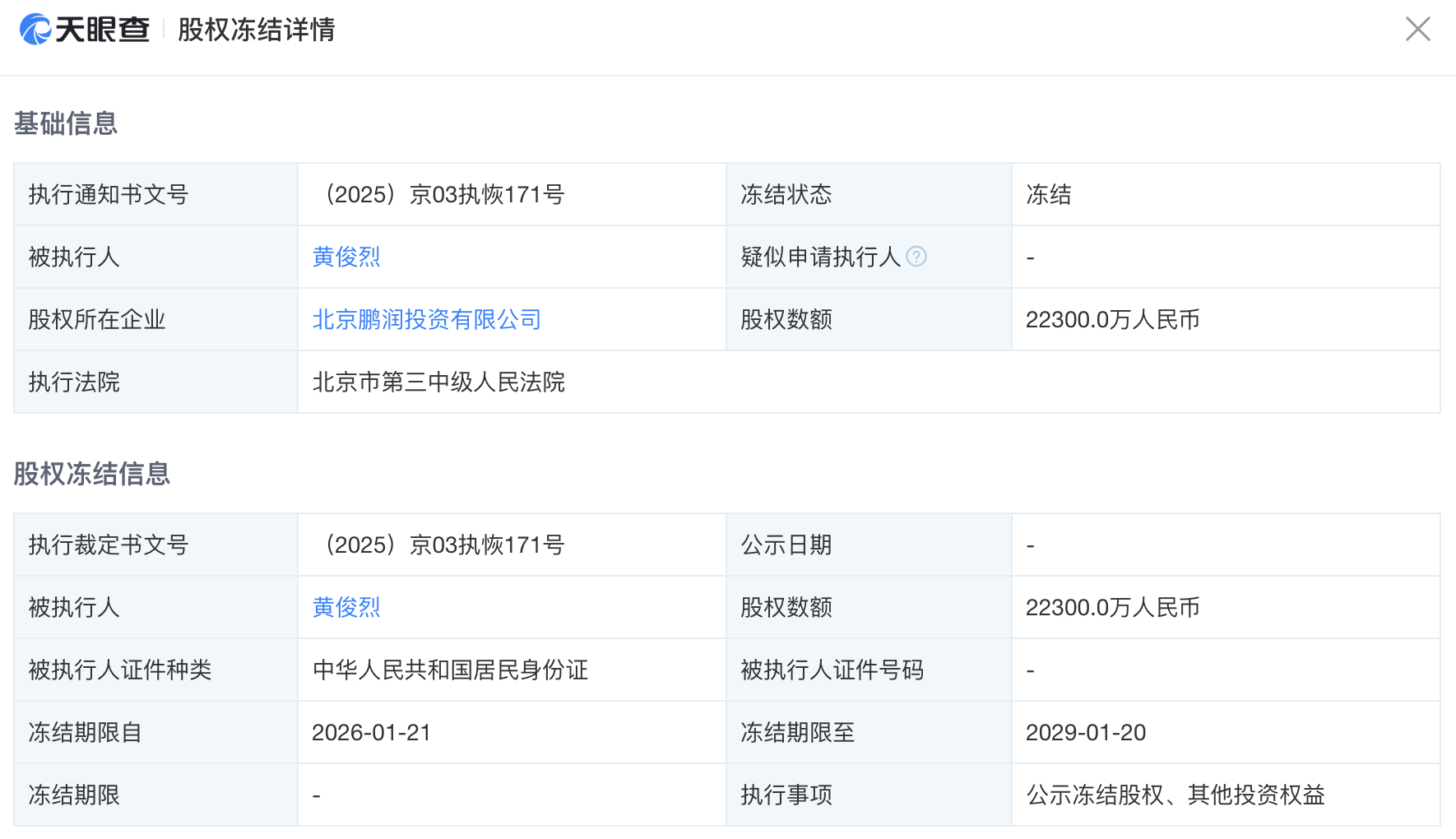
Core Viewpoint - Huang Guangyu's equity in Beijing Pengrun Investment Co., Ltd. has been frozen, indicating further limitations on his capital operations [1][5]. Group 1: Equity Freeze Details - The frozen equity amounts to 223 million RMB, with the freeze period from January 21, 2026, to January 20, 2029, enforced by the Beijing Third Intermediate People's Court [1][2]. - This is not the first instance of equity being frozen; previously, over 590 million RMB of equity related to Gome Retail was frozen, with a freeze period from February 16, 2023, to February 16, 2026 [5]. Group 2: Company Background - Beijing Pengrun Investment Co., Ltd. was established in 1997 with a registered capital of 270 million RMB, co-owned by Huang Guangyu and Beijing Yinggrunmei Consulting Co., Ltd. [4]. - The company serves as a central platform for Gome's capital operations and has been involved in capital integration for listed companies like Gome Retail and Zhongguancun [4]. Group 3: Gome Retail's Financial Performance - Gome Retail reported a revenue of 474 million RMB for 2024, a year-on-year decline of 26.7%, with losses expanding to 11.629 billion RMB, a 15.63% increase from 2023 [7]. - The company's stock price has been stagnant, fluctuating between 0.1 and 0.3 HKD, with a cumulative decline of 67% in 2025 and a market value reduction of over 90% since its peak in 2015 [8][9]. Group 4: Business Operations - Gome continues to operate its core home appliance retail business, with offline stores functioning normally and the Gome app maintaining basic sales and service operations [6]. - However, the overall business scale has significantly contracted compared to its peak, and the operational status continues to deteriorate [6].
悬崖上的永辉
虎嗅APP· 2026-02-06 00:08
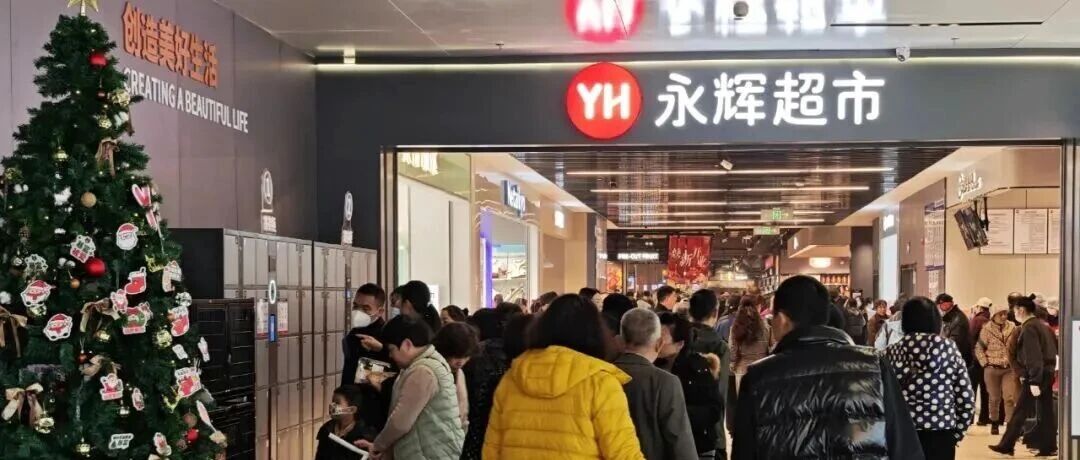
Core Viewpoint - Yonghui Supermarket is facing significant financial challenges, with a projected net loss of 2.14 billion yuan in 2025, marking a 45.6% increase year-on-year, and has reported losses for five consecutive years. The company attributes these losses to major operational strategy adjustments, including store renovations and closures, which have resulted in direct losses of 1.2 billion yuan [4][8]. Group 1: Company Background and Growth - Yonghui Supermarket was founded in 1995 by brothers Zhang Xuansong and Zhang Xuanning, starting with a micro-profit model. The brand was officially established in 1998 and gained momentum in 2000 by leveraging the "Agricultural Reform Supermarket" policy, leading to rapid growth [6][7]. - By 2010, Yonghui became the first "fresh food stock" listed on the Shanghai Stock Exchange, and by 2020, it achieved a record revenue of 93.2 billion yuan, marking its peak in the industry [7][8]. Group 2: Recent Challenges and Strategic Changes - Since 2021, Yonghui has entered a prolonged period of losses, with figures of 3.944 billion yuan in 2021, 2.763 billion yuan in 2022, and 1.329 billion yuan in 2023. The company has attempted a major transformation called "Fat Reform" to address these issues, which involves comprehensive changes in product structure, shopping experience, and organizational framework [8][9]. - The "Fat Reform" has led to significant financial costs, including a projected loss of 2.14 billion yuan for 2025, with 910 million yuan attributed to asset write-offs and 300 million yuan due to loss of gross margin from store renovations [9][10]. Group 3: Market Dynamics and Competitive Landscape - The retail landscape has shifted dramatically, with the rise of e-commerce and community group buying, which have significantly impacted traditional retail models. The community group buying market in China surpassed 830 billion yuan in 2023, with user numbers increasing from 212 million in 2017 to 845 million [10][11]. - Yonghui's traditional advantages in fresh food are being eroded by new competitors offering lower prices and more efficient supply chains. The company struggles to compete with both discount stores and experiential retailers, leading to a loss of customer traffic [11][13]. Group 4: Future Directions and Strategic Imperatives - Yonghui's transformation should not aim to replicate the success of competitors like Fat Donglai but rather focus on establishing a unique shopping proposition that differentiates it from other channels. This involves creating an emotional connection with consumers and offering distinctive value beyond price [17][18]. - The company must navigate its complex organizational structure and historical burdens to find a new positioning that resonates with consumers in a rapidly evolving market. The challenge lies in identifying what unique reasons consumers will have to choose Yonghui over other retail options [18].

悬崖上的永辉
凤凰网财经· 2026-02-05 13:07
Core Viewpoint - Yonghui Supermarket has reported a projected net loss of 2.14 billion yuan for 2025, marking a 45.6% year-on-year increase, and has faced losses for five consecutive years, raising concerns about its future amidst significant operational strategy adjustments [2][7]. Group 1: Company Background and Growth - Yonghui Supermarket was founded in 1995 by Zhang Xuansong and Zhang Xuanning, starting with a micro-profit model and officially launching the Yonghui brand in 1998 [3]. - The company gained momentum in 2000 by capitalizing on the "Agricultural Reform Supermarket" policy, leading to rapid growth and recognition as a pioneer in the sector [3]. - By 2010, Yonghui became the first fresh food stock listed on the Shanghai Stock Exchange, and by 2020, it achieved a record revenue of 93.2 billion yuan, marking its entry into the "thousand-store era" [6]. Group 2: Recent Challenges and Strategic Shifts - Despite its past successes, Yonghui has entered a prolonged period of losses, with figures of 3.944 billion yuan in 2021, 2.763 billion yuan in 2022, and projected losses of 2.14 billion yuan for 2025 [6][7]. - The company initiated a comprehensive transformation called "Fat Reform" in 2024, aiming to revamp its business model by learning from competitors, but this has led to significant financial strain, including a direct loss of 1.2 billion yuan from store adjustments [6][10]. - As of 2025, Yonghui has deeply adjusted 315 stores and closed 381, indicating a significant restructuring effort [9]. Group 3: Market Dynamics and Competitive Landscape - The retail landscape has shifted dramatically, with the rise of e-commerce and community group buying, which has eroded Yonghui's traditional advantages in fresh food retail [10][11]. - The company is caught in a "middle ground," unable to compete on price like discount stores or offer unique experiences like premium retailers, leading to a decline in customer traffic [12]. - The competitive environment has seen traditional players like Walmart and Hema rise, while Yonghui has slipped in market rankings, highlighting the challenges faced by conventional supermarket models [18]. Group 4: Future Directions and Strategic Imperatives - Yonghui's transformation should focus on establishing itself as an indispensable shopping destination rather than merely imitating successful models [17][20]. - The company must identify unique value propositions that resonate with consumers, such as emotional connections, localized offerings, or enhanced shopping experiences, to regain market relevance [20]. - The path forward requires a deep understanding of consumer behavior and market changes, as traditional retail continues to evolve [20].

今天在田头,明天上两会!
Xin Hua Ri Bao· 2026-02-02 21:54
Core Viewpoint - The article highlights the importance of modernizing agricultural sales channels to enhance the marketing of high-quality agricultural products, emphasizing the need for new business models like live-streaming e-commerce and community group buying to support farmers in selling their produce effectively [1]. Group 1: Agricultural Development - The representative from the cooperative expresses a strong belief that while there is no shortage of quality agricultural products, the challenge lies in promoting these products through effective sales channels [1]. - The cooperative has developed a five-year plan focusing on increasing the added value of agricultural products and cultivating a high-quality agricultural talent pool [1]. - The representative emphasizes that modern farmers need to understand not only cultivation techniques but also market dynamics and management skills to succeed in rural revitalization [1].
马化腾:希望重现当年微信红包盛况
财联社· 2026-01-26 08:54
Group 1 - The core idea of the article is Tencent's strategic focus on AI and its upcoming cash distribution event for the Spring Festival, aiming to replicate the success of the WeChat red envelope initiative from 2015 [1][2] - Tencent's chairman, Ma Huateng, announced a cash giveaway of 1 billion yuan during the Spring Festival, with individual red envelopes potentially reaching 10,000 yuan [1] - The company is making significant investments in AI, with plans to attract top talent, including PhD graduates, to enhance its AI team [2] Group 2 - Ma Huateng emphasized that 2025 is expected to be a pivotal year for AI, indicating a competitive landscape in the industry [2] - Tencent is adopting a steady approach in its investments, with AI being the primary area of expenditure [2] - The company is also focusing on developing social products, such as Yuanbao Pai, which was initially a confidential project [1]


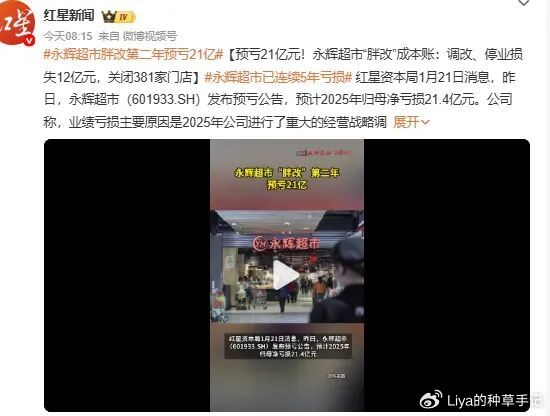
“胖改”第二年巨亏21亿,中国超市一哥天塌了!
Xin Lang Cai Jing· 2026-01-22 20:13
Core Viewpoint - Yonghui Supermarket has announced a projected net loss of 2.14 billion yuan for early 2026, marking its fifth consecutive year of losses, with its market value plummeting from 100 billion yuan to 40 billion yuan [1] Group 1: Company History and Growth - Yonghui Supermarket, founded by the Zhang brothers in the 1990s, initially thrived by capitalizing on the "agricultural reform supermarket" trend, opening its first fresh supermarket in 2000 and disrupting traditional retail with a direct sourcing model [4] - At its peak, Yonghui controlled fresh produce waste rates at around 5%, significantly lower than the industry average of 20%-30%, and established a nationwide supply chain that connected directly with farmers [4] - After going public in 2010, Yonghui expanded rapidly, reaching over 1,000 stores and achieving a revenue peak of 93.2 billion yuan, solidifying its position as the "first stock in fresh produce" [4] Group 2: Challenges and Decline - The turning point for Yonghui occurred in the second half of 2020 when community group buying intensified, leading to a significant market disruption that severely impacted Yonghui's customer base [5] - In 2021, Yonghui reported its first loss since its IPO, with a loss of 3.944 billion yuan, and cumulative losses from 2021 to 2024 reached 9.5 billion yuan, while revenue declined to 67.57 billion yuan by 2024 [5] - The company's previous aggressive expansion strategies resulted in operational inefficiencies, with new business models like Super Species and Yonghui Mini failing to gain traction and further dragging down performance [5] Group 3: Restructuring Efforts - In May 2024, Yonghui initiated a significant restructuring effort termed "Fat Reform," aiming to emulate the successful strategies of competitor Fat Donglai [5][6] - The restructuring involved deep modifications to 315 stores, closing 381 underperforming locations, and implementing changes such as lowering shelf heights and widening aisles [6] - Despite some positive indicators, such as an average customer traffic increase of over 80% in restructured stores, the overall losses remained substantial due to asset write-offs and renovation costs [9][10] Group 4: Fundamental Issues - The core issue for Yonghui lies in its superficial imitation of Fat Donglai's model without understanding the underlying principles, such as effective supply chain management and employee engagement [12] - Unlike Fat Donglai, which focuses on regional supply chain advantages and product quality, Yonghui's nationwide operations lead to higher logistics costs and insufficient supply chain integration [12][13] - The restructuring efforts, while aggressive, may not address the fundamental challenges of product quality and supply chain efficiency, which are critical for long-term success in the retail industry [16]