
牛肉包

Search documents
走,赶一场热闹欢腾的大集
Xin Lang Cai Jing· 2025-12-20 20:03
Core Insights - The traditional agricultural markets, such as the Cao Wa market in Shandong, have gained immense popularity, attracting over 100,000 visitors in a single day and generating approximately 6 million yuan in daily sales [8][9][10] - The resurgence of these markets is attributed to their unique cultural experiences, affordable prices, and the nostalgic atmosphere they provide, which contrasts with the convenience of online shopping [10][12][16] Group 1: Market Popularity - The Cao Wa market has become a regional cultural tourism landmark, with a significant increase in visitors and online engagement, evidenced by over 400 million online views [6][8] - Other markets, such as the Shahe market in Beijing, have also seen a surge in popularity, with daily foot traffic exceeding 10,000 and sales surpassing 600,000 yuan [9][10] - The trend of visiting these markets has become a fashionable activity, with many tourists traveling across provinces to experience the vibrant atmosphere [8][10] Group 2: Consumer Experience - Visitors are drawn to the markets for the authentic culinary experiences, such as freshly made local delicacies, which are often perceived as more satisfying than online purchases [10][11] - The markets offer a unique sensory experience, characterized by the lively sounds of vendors and the aromas of various foods, which are difficult to replicate in online shopping [10][12] - The affordability and transparency of prices at these markets enhance their appeal, as consumers feel they receive good value for their money [11][12] Group 3: Cultural Significance - The markets serve as a platform for showcasing local culture and heritage, with many visitors expressing emotional connections to traditional foods and crafts [12][16] - Experts suggest that the popularity of these markets reflects a broader trend of consumers seeking diverse experiences beyond conventional tourism, such as engaging with local lifestyles [13][17] - The integration of cultural elements into market experiences, such as performances and artisan crafts, enhances their attractiveness and supports local economies [16][17] Group 4: Challenges and Recommendations - The rapid growth of these markets has led to challenges, including inadequate parking and overcrowding, prompting local authorities to implement improvements [15][16] - To sustain their popularity, it is recommended that market organizers focus on maintaining authentic experiences, ensuring fair pricing, and enhancing infrastructure to accommodate increased visitor numbers [15][16] - The rise of social media and online marketing has played a crucial role in promoting these markets, suggesting that leveraging digital platforms can further enhance visitor engagement and market growth [17]

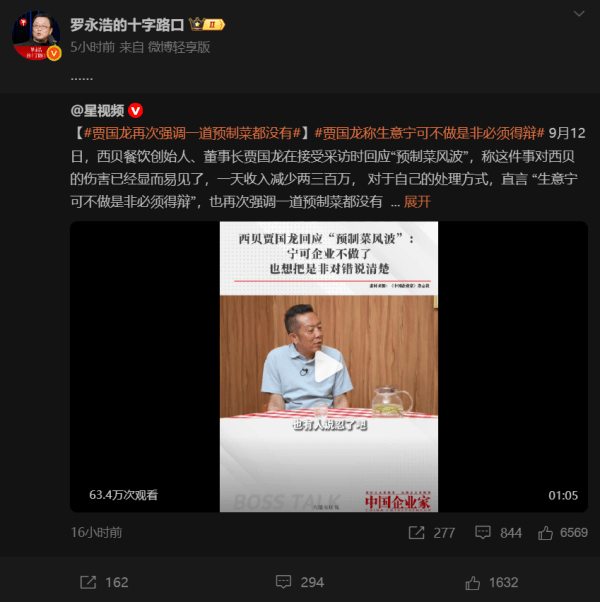
西贝日营业额骤降数百万,贾国龙坚称无预制菜,罗永浩再发声质疑
Sou Hu Cai Jing· 2025-09-13 16:28
Core Viewpoint - The public dispute between Luo Yonghao and Xibei Catering Group over "pre-prepared dishes" has escalated, causing significant operational pressure on Xibei and leading to a notable decline in customer traffic at some locations [1][4]. Group 1: Financial Impact - Xibei's daily revenue dropped by over 4 million yuan from September 10 to 12, with an estimated single-day loss of 2 to 3 million yuan on September 12 [1]. - The chairman of Xibei, Jia Guolong, described this controversy as the most severe external challenge since the company's inception [1]. Group 2: Company Response - Jia Guolong emphasized that Xibei will not compromise on principle issues and will clarify the controversy through legal means, despite operational pressures [1]. - He clarified that while Xibei uses pre-preparation techniques, their products do not contain additives and are preserved using freezing technology [1]. Group 3: Legal and Regulatory Concerns - Legal experts pointed out that Xibei's beef products meet the national standards for pre-prepared dishes, and the introduction of the "Luo Yonghao set meal" may infringe on name rights [4][5]. - Xibei's claim of "100% no pre-prepared dishes" may constitute false advertising, prompting suggestions for market regulatory intervention [4][5]. Group 4: Industry Implications - The dispute has evolved into a multi-dimensional discussion involving business operations, legal compliance, and consumer rights, highlighting the balance between industry standardization and consumer awareness [4].
刷屏!罗永浩:太好了,万众期待!!西贝营业额大降,于东来力挺西贝视频已不可见,抖音账号已私密!
证券时报· 2025-09-13 10:01
Core Viewpoint - The ongoing debate between Luo Yonghao and the restaurant chain Xibei regarding "pre-made dishes" has highlighted significant issues in the restaurant industry, particularly concerning transparency and consumer rights [1][10]. Group 1: Impact on Xibei - Luo Yonghao's claim about Xibei serving pre-made dishes has led to a noticeable decline in Xibei's business, with daily revenue dropping by 1 million yuan on September 10 and 11, and an expected decrease of 2 to 3 million yuan starting September 12 [2]. - Xibei's CEO, Jia Guolong, emphasized that the restaurant does not serve any pre-made dishes and expressed the urgency of addressing the situation to mitigate further damage [2][6]. Group 2: Industry Reactions - Many prominent figures in the restaurant industry have publicly supported Xibei, indicating a divide between public opinion and industry sentiment [7]. - Yu Donglai, the owner of a well-known restaurant, expressed gratitude for Xibei and similar brands, highlighting the challenges faced by entrepreneurs and the importance of constructive criticism rather than condemnation [7]. Group 3: Legal and Regulatory Developments - A draft national standard for pre-made dishes, led by the National Health Commission, has passed expert review and will soon seek public opinion, marking a significant step towards regulatory clarity in the industry [8][9]. - The new standards will require restaurants to disclose their use of pre-made dishes, transitioning the industry from unregulated growth to a more compliant framework [10]. Group 4: Luo Yonghao's Position - Luo Yonghao clarified his stance on pre-made dishes, stating he does not oppose them but advocates for transparency regarding their use in restaurants [10]. - During a live broadcast, he criticized Xibei's claims of not using pre-made dishes, arguing that the lack of national standards does not justify misleading consumers about the freshness of ingredients [10][11].
