牛角面包

Search documents
“贵价面包”在高线城市不灵了?
虎嗅APP· 2025-12-31 11:37
Core Viewpoint - The rapid expansion of the bakery brand UH Youhe has been met with a surprising number of store closures in major cities, indicating potential operational challenges despite its popularity and growth in store numbers [4][5][9]. Group 1: Store Expansion and Closures - UH Youhe, established in 2016, gained popularity for its freshly baked products and transparent operations, expanding from Hubei to multiple cities including Changsha, Hangzhou, and Chengdu by 2024 [6][7]. - As of now, UH Youhe has opened over 130 stores across various cities, maintaining its expansion momentum [8]. - However, the brand has also closed several stores in cities like Beijing, Shenzhen, and Chengdu, with many closures occurring within a year of opening [9][10]. Group 2: Reasons for Store Closures - The closures are attributed to various reasons, including unsuccessful negotiations for lease renewals and broader business adjustments [10][11]. - Industry analysts suggest that these closures may reflect a strategic move to cut losses on underperforming locations [11]. Group 3: Pricing Strategy - To cope with high operational costs, UH Youhe has been quietly increasing prices across its locations, with individual product prices rising by 1-2 yuan [14]. - The average consumer spending at UH Youhe is around 40 yuan, indicating a shift in pricing strategy to maintain profit margins amidst rising costs [14]. Group 4: Market Trends in Bakery Industry - The premium bakery market has seen intense competition, with many brands facing growth pressures, leading to adjustments in store strategies [15]. - Some brands are shifting focus to lower-tier cities, where there is significant growth potential, as evidenced by the expansion of brands like HOT CRUSH and KUMO KUMO into third-tier cities [16][18]. - The down-market trend is driven by changing consumer preferences, with increased demand for quality and service in less saturated markets [19][21].

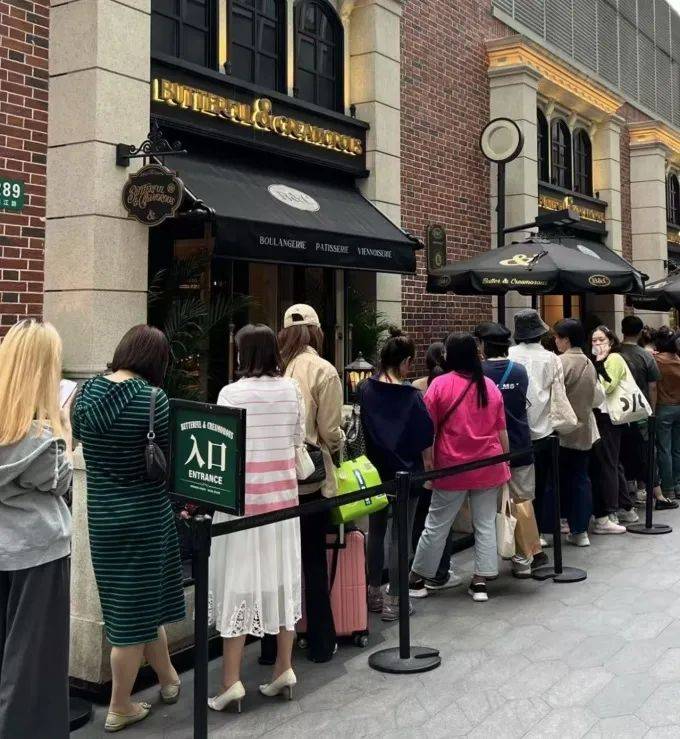
【书籍专题 · 面包大全】牛角面包
东京烘焙职业人· 2025-09-15 08:33
Core Viewpoint - The article provides a detailed recipe for making croissants, emphasizing the importance of specific ingredients and precise steps in the baking process [2][3]. Ingredients Summary - The recipe includes high-gluten flour (250 grams), honey (15 grams), salt (5 grams), dry yeast (2 grams), milk powder (8 grams), water (150 grams), and olive oil (10 grams) [3]. Preparation Process Summary - The dough is mixed until smooth and elastic, then allowed to ferment at room temperature (30°C) for 50 minutes [5]. - The dough is divided into 70-gram pieces, rounded, and rested for 20 minutes [8]. - Each piece is shaped into a teardrop and rolled out into a triangle [9][11]. - The dough is rolled from the back to the front and shaped into a croissant, ensuring the ends are sealed [13][14]. - The croissants are placed on a baking tray and fermented again at 30°C with 75% humidity for 50 minutes [19]. - After fermentation, egg wash is applied to the surface, and the croissants are dipped in sesame seeds [20][21]. - Finally, they are baked in an oven at 200°C for the top and 180°C for the bottom for 14 minutes [26].

贵价烘焙,攻占北上广
Hu Xiu· 2025-08-22 10:33
Core Insights - The rise of premium baking in first-tier cities is marked by long queues at stores like UH Youhe and Mr. Stone's Oven, indicating strong consumer interest despite high prices [1][3][4] - Premium baked goods are priced significantly higher than regular bread, with average spending between 40 to 60 yuan per person, yet they attract a large number of young consumers [1][6][7] Market Trends - Premium baking brands are focusing on first-tier cities, particularly Beijing, Shanghai, and Guangzhou, to capture high-end market segments [8][9] - The competitive landscape includes both established brands and new entrants, with many targeting high-traffic shopping centers for their locations [5][6] Consumer Behavior - The appeal of premium baking lies in its ability to transform high prices into perceived value, positioning products as essential for a quality lifestyle [6][11] - Consumers are drawn to the experience of freshly baked goods, with many brands emphasizing transparency in their baking processes [6][10] Product Strategy - Premium baking brands prioritize high-quality ingredients, using natural and imported components to justify their pricing [7][12] - The product offerings are diverse, with a focus on health-conscious options and innovative designs to meet consumer demands [13][19] Business Model Challenges - High operational costs, including rent and labor, pose significant challenges for premium baking brands, particularly in first-tier cities [15][16] - The reliance on marketing strategies to drive initial consumer interest raises concerns about long-term customer retention and repeat purchases [17][18] Future Outlook - The premium baking sector must shift from merely attracting traffic to creating lasting value through product quality and innovation [19][20] - Addressing the balance between high-end positioning and sustainable profitability will be crucial for the longevity of these brands in a competitive market [18][19]
人均60,日销10万,贵价面包杀回北上广
东京烘焙职业人· 2025-08-08 08:33
Core Viewpoint - The high-priced bakery market is rapidly expanding in first and second-tier cities, with significant price increases and a growing consumer interest in premium baked goods [2][3][4]. Market Situation - High-priced bread is quickly occupying shopping malls in first and second-tier cities [3]. - In the past year, several premium bakery brands have aggressively expanded their presence in major cities [4]. Consumer Behavior - The average spending per person at these premium bakeries is around 60 yuan, surpassing the cost of a regular meal [5]. - The scarcity marketing strategy, such as limited-time offers and purchase limits, creates a sense of urgency and drives consumer demand [6]. - Consumers often feel compelled to buy more after waiting in long lines, driven by loss aversion psychology [7]. Industry Trends - Despite a general trend towards rational consumption, the popularity of high-priced bread aligns with the "lipstick effect," where affordable luxury items thrive during economic downturns [8][9]. - The target demographic for these brands primarily includes young consumers aged 20-35, who value aesthetics and social attributes in their purchases [9]. Business Challenges - The bakery industry's business cycle is shortening, with a significant number of new openings being outpaced by closures; approximately 58% of new stores close within two years [10]. - Recent incidents, such as food poisoning linked to a popular bakery, highlight the risks associated with rapid expansion in the premium bakery sector [10].