
特斯拉Optimus人形机器人

Search documents
特斯拉人形机器人三年未售出一台,新款量产倒计时,A股供应链动作频频
21世纪经济报道· 2026-03-29 11:21
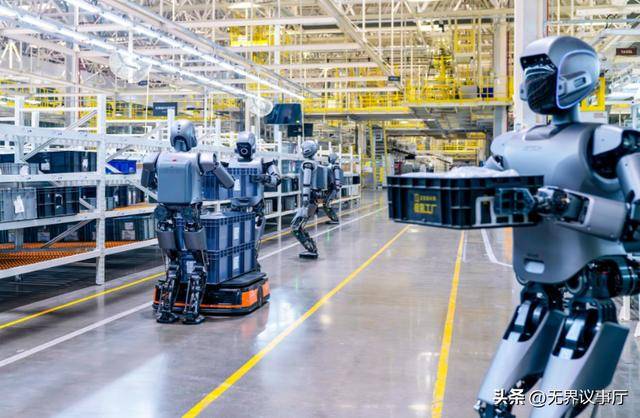
Core Viewpoint - Tesla's Optimus humanoid robot, initially anticipated to be a significant product, has yet to sell any units, while its development has progressed to Gen3, which is now set for mass production by 2027 [1][5]. Group 1: Technological Advancements - The Gen3 iteration focuses on significant upgrades in the reducer and dexterous hand, utilizing harmonic reducers for upper limbs and planetary reducers for lower limbs, with testing ongoing for high-load applications [3][5]. - The dexterous hand features 22 degrees of freedom and precision of 0.08 mm, employing a hybrid transmission scheme that enhances efficiency and load capacity [3][5]. - The relocation of motors from the hand to the forearm simplifies maintenance and allows for the use of more cost-effective micro brushless motors [5]. Group 2: Production Timeline and Supply Chain - Elon Musk announced that Gen3 is in the final development stage, with production expected to start in summer 2026 and large-scale manufacturing by 2027 [5]. - Tesla's robot team has begun factory audits of major Chinese supply chain partners, indicating a countdown to mass production [7]. - Companies like Zhejiang Rongtai and Zhenyu Technology are adjusting their production plans to align with Tesla's requirements for core components, reflecting the anticipated demand for linear actuators [7][8]. Group 3: Financial and Market Implications - Top Group reported sales of robot actuators amounting to 13.591 million yuan in 2025, highlighting the financial potential of actuator components in robotics [8]. - Zhaowei Electromechanical is seen as a key potential supplier for Tesla's dexterous hand micro-drive systems, with its third-generation technology entering the supply chain review phase [9]. - Several companies related to Tesla's humanoid robot supply chain are advancing their capital operations, including IPOs and refinancing plans [9].



国泰海通|策略:AI与机器人加速场景化落地
国泰海通证券研究· 2026-02-24 14:27
Core Viewpoint - The trading heat of hot themes has declined before the holiday, while AI applications and electronic cloth themes have strengthened, and consumer themes have retreated [1] Group 1: Robotics - The performance of robotics at the Spring Festival Gala showcased advancements in motion control and collaborative capabilities, with multiple global firsts achieved [2] - The global financing scale for humanoid robots is expected to exceed 66 billion yuan by 2025, with domestic financing events leading in both number and total amount [2] - Shandong aims for the robotics and intelligent equipment industry to exceed 200 billion yuan, while Zhejiang promotes humanoid robot development through targeted policies [2] Group 2: AI Applications - The State Council's first thematic study of the new year focuses on "Artificial Intelligence +", emphasizing breakthroughs across the AI value chain and full-scene implementation [3] - The Spring Festival Gala's AI interaction reached 1.9 billion times, and the Seedance 2.0 video generation model participated in various visual creations [3] - The AI market in China is expected to achieve a growth rate of over 35% annually before 2030, with the large model market entering a high-growth phase [3] Group 3: Domestic Consumption - The average daily cross-regional personnel flow during the first 20 days before the Spring Festival reached a record high [4] - The average daily sales of key retail and catering enterprises increased by 8.6% compared to the previous year during the first four days of the Spring Festival [4] - By 2025, the proportion of per capita service consumption expenditure in total per capita consumption expenditure is expected to reach 46.1% [4] Group 4: Commercial Aerospace - China has completed the low-altitude demonstration flight of the Long March 10 rocket system, which will advance the development of reusable rocket technology [5] - Private rocket manufacturers have completed new rounds of financing, which is expected to accelerate the commercialization of commercial rockets [5] - Various local governments are deploying tasks for the development of the commercial aerospace industry, with initiatives to integrate commercial aerospace into national strategies [5]

马斯克意外现身达沃斯:做乐观主义者哪怕错了,也比做悲观主义者但对了要好
Sou Hu Cai Jing· 2026-01-23 07:01
Core Insights - Elon Musk's vision for the future is encapsulated in the term "abundance," with a clear technological timeline set to guide global tech and economic development [2] - Musk's statements led to a 4% surge in Tesla's stock price on the day of the forum [2] Group 1: Robotics and AI Implementation Timeline - Musk emphasized that achieving high living standards for everyone is feasible through AI and humanoid robots, with specific timelines for implementation [3] - The Tesla Optimus humanoid robot is currently performing simple tasks in factories and is expected to handle complex operations by the end of this year, with a public release planned for the end of 2027 [3][5] - The anticipated price for the Optimus robot will be between $20,000 and $30,000 (approximately 210,000 RMB), with Musk predicting that the number of robots will surpass the human population within the next 3-5 years [5] Group 2: Economic Growth and AI Development - Musk provided a straightforward economic growth formula: economic output = average productivity per robot × number of robots, suggesting that the scale effect of AI and robots will lead to explosive global economic growth [5] - He predicts that by the end of this year or early next year, AI will surpass human intelligence, and by 2030, the total intelligence of AI will exceed that of all humans combined [5] Group 3: Energy as a Key Challenge - Musk identified electricity supply, rather than chip production, as the main obstacle to realizing his vision, noting that while chip production is increasing exponentially, global electricity grid expansion is only growing at 3%-4% annually [6] - To address this, Musk plans to establish solar manufacturing capacity of 100 gigawatts per year within three years, citing China's solar energy achievements as a model [6] - Musk also highlighted the potential of space for AI operations, where solar energy efficiency could be significantly enhanced, and plans to launch solar-powered AI data centers into orbit within two to three years [6] Group 4: Safety and Ethical Considerations - Musk acknowledged the risks associated with AI and robotics, stressing the importance of safety and reliability as prerequisites for commercialization [7] - He advocates for a cautious approach, validating safety in industrial settings before expanding to domestic applications to mitigate potential societal impacts [7] - Musk expressed that while technology could theoretically address human aging, there are rational reasons for limited lifespans to prevent societal stagnation [7] Group 5: Optimism in Business Philosophy - Musk's overarching business philosophy is centered on maximizing human civilization's richness, aiming to turn science fiction into reality through ventures like SpaceX and Tesla [7] - He concluded the dialogue by emphasizing the value of optimism, stating that being an optimistic person, even if wrong, is preferable to being a pessimistic person who is right [8]

搭上特斯拉,人形机器人供应商冲刺A股IPO
2 1 Shi Ji Jing Ji Bao Dao· 2026-01-13 08:32
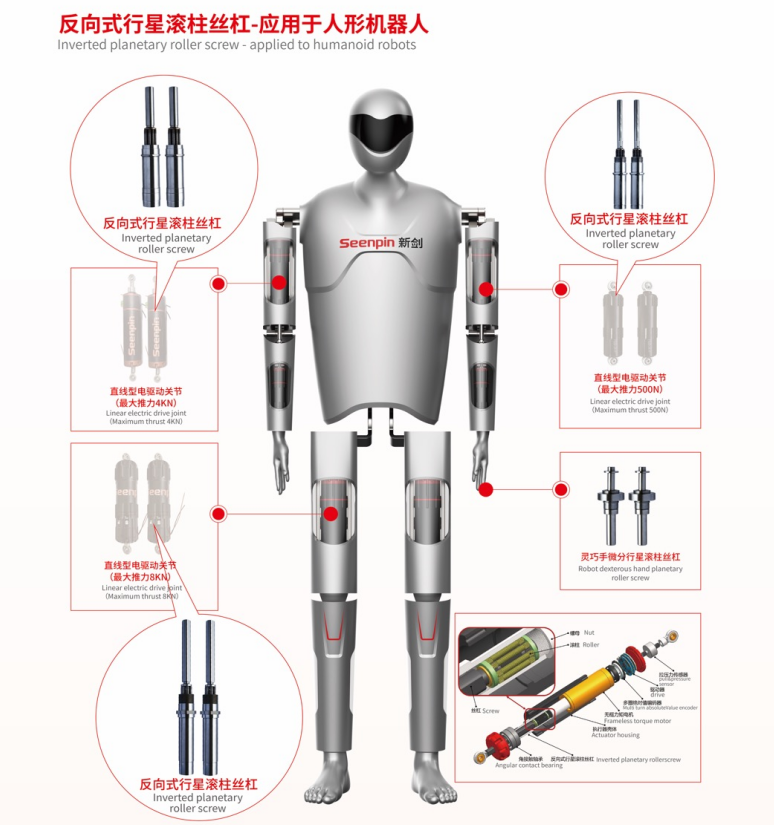
Core Viewpoint - The article highlights the IPO preparation of Xinjian Transmission, a key supplier for Tesla's humanoid robot "Optimus," signaling strong industrialization prospects for humanoid robots and the potential for mass production by 2026 [3][11]. Company Overview - Xinjian Transmission, established in 1999 in Hangzhou, specializes in precision machinery and is classified under "C34 General Equipment Manufacturing" [5]. - The largest shareholder is Shanghai Xinjian Asset Management Co., holding 29.40% of the shares, while the actual controllers hold 35.27% [5][6]. Industry Context - The humanoid robot industry has gained traction, with Xinjian Transmission emerging as a core supplier for Tesla's Optimus robot, which has expanded the market potential for planetary roller screws [7][8]. - The company transitioned from traditional precision manufacturing for luxury watch brands to focus on planetary roller screws, a critical component for robots, seizing the opportunity as the humanoid robot market began to flourish [6][7]. Market Dynamics - Xinjian Transmission's IPO is expected to attract attention to the entire supply chain of humanoid robots, particularly benefiting other suppliers like Sanhua, Top Group, and Wuzhou Xinchun [3][10]. - The company has initiated a project to produce 1 million planetary roller screws annually, capitalizing on the demand from Tesla and the broader market [8][11]. Financial Implications - The anticipated IPO of Xinjian Transmission is seen as a landmark event for the humanoid robot industry, potentially leading to a revaluation of assets within the supply chain [11][12]. - Collaborations with other companies, such as Wuzhou Xinchun, are expected to enhance Xinjian's revenue streams and market presence, further solidifying its role in the Tesla supply chain [10][11].

搭上特斯拉,人形机器人供应商冲刺A股IPO
21世纪经济报道· 2026-01-13 08:20
Core Viewpoint - The article highlights the upcoming IPO of Xinjian Transmission, a key supplier for Tesla's humanoid robot "Optimus," signaling strong industrialization prospects for the humanoid robot sector and the potential for mass production by 2026 [6]. Group 1: Company Overview - Xinjian Transmission, established in 1999, specializes in precision machinery processing and is classified under "C34 General Equipment Manufacturing" [8]. - The largest shareholder, Shanghai Xinjian Asset Management Co., holds 29.40% of the shares, while the actual controllers hold 35.27% [8]. - Initially focused on producing watch screws and precision gears, Xinjian has transitioned into the planetary roller screw industry, which is crucial for robotics [8][9]. Group 2: Market Position and Opportunities - Xinjian Transmission began domestic production of planetary roller screws in 2022, coinciding with Tesla's release of the Optimus Gen1 robot, expanding the market potential significantly [9]. - The company has secured a project to produce 1 million planetary roller screws annually, capitalizing on the growing demand in the humanoid robot market [9]. - Xinjian's geographical advantage and early entry into the screw market have positioned it as a core supplier for Tesla's humanoid robots, despite not being a key supplier for Tesla's vehicles [9]. Group 3: Industry Impact and Collaborations - The IPO of Xinjian Transmission is seen as a landmark event for the humanoid robot industry, potentially leading to a revaluation of core component assets within the sector [13]. - Collaborations with suppliers like Wuzhou Xinchun, which will provide various critical components, indicate a strengthening of Xinjian's supply chain and market presence [12]. - The anticipated IPO and subsequent production capacity expansion are expected to benefit related equipment manufacturers and enhance the clarity of supply chain shares [13][15].

债务+AI双重夹击,全球经济渡劫,中国解法藏不住了
Sou Hu Cai Jing· 2026-01-11 12:17
Core Viewpoint - Elon Musk's assertion that the next 3 to 7 years will be a "bumpy transition period" has sparked widespread discussion, likening the impact of current changes to the "Engels stagnation" of the 19th century [2] Group 1: Economic Transition and Labor Market - The global economy is facing dual pressures: the increasing U.S. national debt, projected to exceed $38 trillion by February 2024, and the rapid advancement of AI and robotics [8] - Predictions indicate that approximately 85 million jobs will be displaced globally between 2025 and 2030, while around 97 million new jobs will be created, highlighting a significant shift in the labor market [7] - The traditional retraining models for displaced workers may become less effective, necessitating new pathways for job transitions, particularly for roles like truck drivers and accountants [5] Group 2: AI and Robotics as Solutions - AI and robotics are viewed as potential solutions to economic challenges, with the expectation that they could significantly enhance productivity and stabilize prices through increased supply of low-cost goods and services [10] - The cost of Tesla's humanoid robot, Optimus, is projected to drop below $30,000 by 2025 and under $20,000 by 2028, which could further influence market dynamics [10] - The trend of "demonetization" suggests that advancements in technology may lead to lower costs in essential living areas, although small and medium enterprises must adapt to avoid being outpaced by technological changes [13] Group 3: China's Role in the Transition - China is positioned as a key player in this transformative period, benefiting from a complete industrial system and the largest manufacturing supply chain, which supports the development of the robotics industry [15] - The country has demonstrated strong capabilities in hardware manufacturing and system integration, potentially becoming a major global exporter of robots [17] - China's efficient policy implementation, such as exploring sovereign computing funds and distributing "AI dividends" through digital currency, could mitigate the transitional pains associated with technological displacement [20]
特斯拉(TSLA):一家或将陷入衰退的成长型企业
美股研究社· 2026-01-07 11:18
Core Viewpoint - Tesla's stock price has remained stagnant since the downgrade to "sell" in October 2025, with recent quarterly earnings and delivery reports reinforcing bearish sentiments, presenting a rare exit opportunity for investors [1]. Energy Storage Business - Tesla's energy storage capacity reached a record high of 14.2 GWh in Q4 2025, with a total annual installation of 46.7 GWh, indicating strong expansion [4]. - However, the year-on-year growth rate for energy storage installations has significantly declined to 49% in 2025, down from 114% in 2024 and 126% in 2023, with projections suggesting a further slowdown to 26% by 2029 [4]. - Revenue per GWh from energy storage has halved from nearly $700 million in 2020-2021 to $276 million in Q3 2025, indicating a continuous decline [4]. Automotive Business - Tesla's automotive deliveries fell by 16% year-on-year in Q4 2025, marking the worst quarterly performance in the company's history, with a total annual decline of 9% [7]. - The average selling price of Tesla vehicles dropped below $40,000 as of Q3 2025, raising doubts about the feasibility of reaching a projected annual delivery of 3 million vehicles by 2029, which would only represent a 28% growth from 2025 [8]. - In the Chinese market, Tesla's sales stagnated while competitors like Xiaomi saw significant growth, and in Europe, Tesla's new car registrations plummeted by up to 71% in various countries, leading to an estimated 25% decline in overall registrations for 2025 [9][10]. Emerging Business Risks - The anticipated sales of Tesla's humanoid robot, Optimus, are already factored into current valuations, with market expectations suggesting a potential revenue of $22.5 billion by 2027 [11]. - Current valuations are deemed excessively high, with a forward P/E ratio of 147, indicating a disconnect from fundamental performance [11]. - The company's reputation has been adversely affected by the founder's political stance, leading to a significant loss of consumer trust and core personnel risk, which could further undermine market competitiveness [13]. Conclusion - Tesla is no longer viewed as a high-growth company but rather as one facing significant challenges and potential decline, suggesting that now may be the last opportunity for investors to exit [14].
马斯克量产预告掀热浪,多只脑机接口概念股封停
Bei Ke Cai Jing· 2026-01-06 10:13
Core Viewpoint - The brain-computer interface (BCI) sector is experiencing a surge in interest and investment following Elon Musk's announcement of mass production plans for BCI devices by Neuralink in 2026, leading to significant stock price increases in related companies [1][2][3] Market Reaction - On January 5, the A-share BCI sector index rose by 13.7% to 1861.12 points, and on January 6, it opened at 1956.76 points, peaking at 1973.98 points, closing at 1967.92 points, resulting in a cumulative increase of 20.22% over two trading days [1][2] - 19 concept stocks experienced consecutive trading halts, with notable gains such as Beiyikang, which saw a cumulative increase of 69.95%, reaching 58.44 yuan per share [2] Industry Growth Potential - The global BCI market is projected to reach approximately $2.6 billion in 2024, with China's market expected to be around 3.2 billion yuan; by 2034, the global market is anticipated to grow to about $12.4 billion [3] - The BCI industry is expected to see an annual growth rate of around 20% in China from 2024 to 2028, significantly outpacing traditional manufacturing sectors [3] Policy and Technological Support - The Chinese government has set clear development goals for the BCI industry through policies issued by multiple departments, aiming to promote innovation and application across various sectors beyond medical rehabilitation [4][5] - The introduction of separate billing for BCI projects by the National Healthcare Security Administration addresses key payment issues, facilitating industry development [4] Competitive Landscape - China is positioned in the leading tier of global BCI research, with over 800 core enterprises in the BCI industry chain, primarily located in the U.S. and China [5] - The market is seeing a mix of invasive and non-invasive technologies, with successful clinical trials for invasive BCIs marking significant progress in the field [5] Investment Trends - Investment enthusiasm in the BCI sector is rising, with 14 financing events in the first half of 2025, totaling over 800 million yuan, and BCI being the most popular segment, accounting for 43% of the financing [6] - From January to November 2025, there were 24 financing deals in the BCI field, reflecting a 30% year-on-year increase, indicating strong investor interest [6]
马斯克“量产预告”引爆脑机接口 实现商业化或仍需攻克三大难关
Bei Jing Shang Bao· 2026-01-06 01:37
Core Insights - The brain-machine interface (BMI) industry is transitioning from experimental research to commercial viability, with Neuralink's founder Elon Musk announcing a mass production timeline for 2026, marking a pivotal shift from "medical trial products" to "consumer products" [1][3] Group 1: Industry Developments - Neuralink plans to start large-scale production of its brain-machine interface devices in 2026, with nearly fully automated surgical procedures [3] - As of January 2024, Neuralink completed its first human implantation of a brain-machine interface device, with 12 individuals having received the device by September 2025, accumulating over 15,000 hours of usage [3][4] - The company has demonstrated that clinical trial participants can control physical devices, such as robotic arms, using the implanted device [4] Group 2: Market Expectations - The global brain-machine interface market is projected to grow to approximately $12.4 billion by 2034, indicating strong commercial potential [5] - Neuralink raised over $650 million in 2025 for factory construction and technology scaling, with a post-money valuation of around $9 billion as of June 2025 [5] - The company aims to develop a universal human brain input/output interface, with future goals including direct language decoding and visual restoration for the blind [5] Group 3: Challenges Ahead - The commercialization of brain-machine interfaces faces significant hurdles, including the need for extensive validation and the high costs associated with development, which can take 5 to 10 years [8] - Competing companies like Precision and BrainGate are also entering the market, but the industry requires deep collaboration across multiple disciplines, including neuroscience and AI [7][8] - The timeline for medical applications to gain approval is estimated to be 3 to 5 years, while consumer-grade devices may take 15 to 20 years to become viable [8]

马斯克点燃“量产计划” 脑机接口成开年爆款概念
Mei Ri Shang Bao· 2026-01-05 23:03
Core Viewpoint - The A-share market experienced a significant surge in brain-computer interface (BCI) stocks, driven by Elon Musk's announcement regarding Neuralink's plans for large-scale production in 2026, indicating a shift towards commercialization of BCI technology [1][2][4] Group 1: Market Performance - On the first trading day of 2026, multiple BCI-related stocks hit their daily limit, with companies like Beikang rising by 30% and others such as Sanbo Brain Science and DiNaiKe increasing by 20% [1][2] - A total of 52 BCI concept stocks closed higher, with over 40 stocks reaching their daily limit, showcasing strong market enthusiasm [2] Group 2: Technological Advancements - Neuralink's announcement includes plans for a streamlined and automated surgical process for BCI devices, which could reduce the invasiveness of traditional methods [2][4] - The company has successfully implanted its BCI devices in 12 individuals, with a total usage time exceeding 15,000 hours, demonstrating the technology's potential for controlling physical devices [3] Group 3: Industry Outlook - The BCI market is projected to exceed $10 billion by 2030, with long-term estimates suggesting it could reach approximately $124 billion by 2034, driven by advancements in technology and integration with AI and robotics [6] - The Chinese government has identified BCI as a future industry in its "14th Five-Year Plan," indicating strong policy support for the sector [6] Group 4: Competitive Landscape - Companies like Qiangnao Technology are emerging as leaders in non-invasive BCI solutions, with a focus on various applications such as insomnia and autism intervention [5] - The market for non-invasive BCI products currently holds an 82% share globally, indicating a significant opportunity for growth in this segment [5]