珀莱雅美妆产品

Search documents
研报掘金丨华鑫证券:首予珀莱雅“买入”评级,未来业绩有望持续向好
Ge Long Hui A P P· 2025-11-03 07:37
Core Viewpoint - The report from Huaxin Securities indicates that Proya's net profit attributable to shareholders for Q1-Q3 2025 is 1.026 billion yuan, representing a 3% year-on-year increase, while Q3 net profit is 227 million yuan, reflecting a 24% year-on-year decrease [1] Financial Performance - Proya's Q1-Q3 2025 net profit is 1.026 billion yuan, with a 3% increase compared to the previous year [1] - The Q3 net profit is 227 million yuan, showing a 24% decrease year-on-year [1] Strategic Developments - The company is accelerating its internationalization strategy and has been continuously introducing experienced management talent since last year [1] - The core team has been largely established, and the company submitted its H-share listing application to the Hong Kong Stock Exchange on October 30, 2025 [1] Brand Performance - During the Double 11 shopping festival, Proya's main brand maintained its leading position in the industry, ranking first in Tmall's beauty category for the first four hours of sales [1] - The emerging brand OR has positioned itself as "Asia's scalp holistic care expert," ranking fifth in Tmall's personal care category for the same period [1] - The brand Cai Tang is focusing on Chinese aesthetic concepts and is expanding its product categories in base makeup, eye, and lip products [1] - The brand Yuan Se Bo Ta achieved a GMV that doubled year-on-year on its first day on Tmall, surpassing last year's total revenue within five days [1] Future Outlook - Overall, the company's strategy of deepening its focus on major products and expanding its product matrix has led to a performance during Double 11 that exceeded expectations, indicating a positive outlook for future earnings [1] - Proya is recognized as a leading multi-brand beauty group in China, with a core business focused on the research, production, and sales of cosmetics, showcasing significant brand advantages [1] - With the iteration of old products and the expansion of new products, the brand's potential continues to be released [1]

国货美妆龙头也撑不住了?珀莱雅三季度“失速”,业绩大幅下滑
Zhong Guo Ji Jin Bao· 2025-10-30 14:35
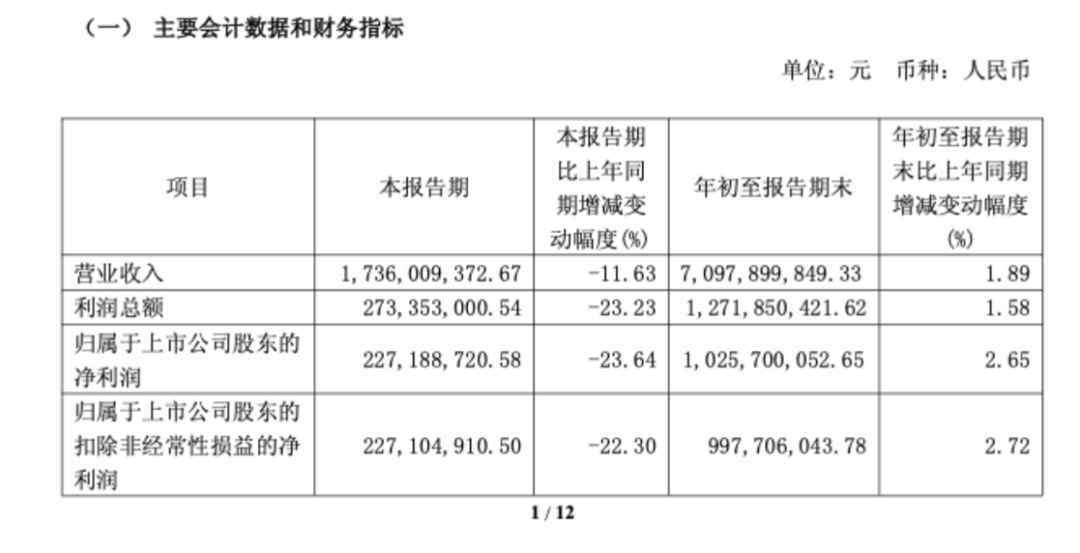
Core Viewpoint - The financial performance of Proya in Q3 2025 showed significant declines, with revenue and net profit falling sharply compared to the previous year, indicating a concerning trend for the company [1][3]. Financial Performance - Q3 2025 revenue was 1.736 billion yuan, a year-on-year decrease of 11.63% [2][3]. - Net profit for Q3 2025 was 227 million yuan, down 23.64% year-on-year, marking the largest quarterly decline in recent years [1][3]. - Basic earnings per share for Q3 2025 were 0.57 yuan, a decrease of 24% compared to the same period last year [3]. Year-to-Date Performance - For the first three quarters of 2025, total revenue reached 7.098 billion yuan, reflecting a modest year-on-year growth of 1.89% [2][4]. - Year-to-date net profit was 1.026 billion yuan, with a growth of 2.65% compared to the same period last year, indicating a significant slowdown in growth [2][4]. Brand Performance - The main brand, Proya, showed signs of stagnation, with revenue of 3.979 billion yuan in the first half of 2025, a slight decline of 0.08%, marking the first negative growth in five years [5]. - The main brand accounted for 74.27% of total revenue, and its stagnation has directly impacted overall performance [5]. Marketing and R&D Expenditure - High marketing expenses are a key factor affecting profits, with sales expenses in the first half of 2025 amounting to 2.659 billion yuan, resulting in a sales expense ratio of 49.59% [5]. - R&D expenditure was only 95 million yuan in the first half of 2025, with an R&D expense ratio of just 1.77%, significantly lower than marketing expenses [5]. Strategic Developments - Proya is actively pursuing a listing in Hong Kong, having submitted its application to the Hong Kong Stock Exchange, with plans to issue H-shares not exceeding 15% of the total share capital post-issue [6][8]. - The funds raised will be allocated to R&D, brand building, supply chain enhancement, and global expansion, reflecting a need for a shift from a marketing-driven to a product-driven strategy [8].

珀莱雅三季度“失速”
中国基金报· 2025-10-30 14:04
Core Viewpoint - The domestic beauty brand leader Proya has experienced a significant decline in quarterly performance, with a sharp drop in both revenue and net profit, indicating potential challenges ahead for the company [2][5]. Financial Performance - Proya's Q3 revenue was 1.736 billion yuan, a year-on-year decrease of 11.63%, while net profit fell to 227 million yuan, down 23.64%, marking the largest quarterly decline in recent years [3][5]. - The basic earnings per share for Q3 was 0.57 yuan, reflecting a 24% decrease, which is greater than the declines in revenue and net profit [6]. - For the first three quarters, total revenue reached 7.098 billion yuan, a slight increase of 1.89%, and net profit was 1.026 billion yuan, up 2.65%, indicating a significant slowdown in growth compared to the previous year [6]. Brand Performance - Proya's main brand showed signs of stagnation, with a revenue of 3.979 billion yuan in the first half of the year, a slight decline of 0.08%, marking the first negative growth in five years [8]. - The main brand accounted for 74.27% of total revenue, and its growth stagnation has directly impacted overall performance [8]. Marketing and R&D Expenditure - High marketing expenses have been a key factor affecting profits, with sales expenses in the first half of 2025 reaching 2.659 billion yuan, resulting in a sales expense ratio of 49.59% [9]. - The marketing strategy heavily relies on online channels, which has led to increased customer acquisition and sales costs due to diminishing internet traffic benefits and intensified competition [9]. - In contrast, R&D investment remains low, with only 95 million yuan spent in the first half of 2025, resulting in an R&D expense ratio of just 1.77%, significantly lower than marketing expenses [9][10]. Future Plans - Proya is actively pursuing a listing in Hong Kong, having submitted an application to the Hong Kong Stock Exchange, with plans to issue H-shares not exceeding 15% of the total share capital post-issuance [12][14]. - The funds raised will be allocated towards R&D and product innovation, brand building, supply chain enhancement, and global expansion, among other strategic investments [14][15].

珀莱雅三季度“失速”
Zhong Guo Ji Jin Bao· 2025-10-30 14:04
Core Insights - The leading domestic beauty brand, Proya, experienced a significant decline in its quarterly performance, with Q3 2025 revenue dropping to 1.736 billion yuan, a year-on-year decrease of 11.63%, and net profit falling to 227 million yuan, down 23.64%, marking the largest quarterly decline in recent years, exceeding market expectations [2][3][4]. Financial Performance - Proya's Q3 revenue decline of 11.63% and net profit decline of 23.64% are notably worse than market forecasts [2][3]. - The basic earnings per share for Q3 was 0.57 yuan, a decrease of 24% compared to the previous year, surpassing the declines in revenue and net profit [4]. - For the first three quarters of 2025, total revenue was 7.098 billion yuan, a slight increase of 1.89% year-on-year, while net profit reached 1.026 billion yuan, up 2.65%, indicating a significant slowdown in growth compared to the previous year [4]. Brand Performance - The main brand, Proya, accounted for 74.27% of total revenue, and its stagnation directly impacted overall performance. In Q2 2025, revenue growth for the main brand fell to 6.49%, a decline of over 30 percentage points compared to the same period in 2024 [5]. - In the first half of 2025, Proya's main brand revenue was 3.979 billion yuan, showing a slight decline of 0.08%, marking the first negative growth in five years [4][5]. Marketing and R&D Expenditure - Proya's high marketing expenses are a key factor affecting profitability, with sales expenses in the first half of 2025 reaching 2.659 billion yuan, resulting in a sales expense ratio of 49.59%. The promotional expenses alone accounted for 2.399 billion yuan, or 44.05% of revenue, significantly exceeding industry averages [5]. - In contrast, R&D investment remains low, with only 95 million yuan spent in the first half of 2025, resulting in an R&D expense ratio of just 1.77%, which is over 20 times less than sales expenses [5]. Strategic Developments - Proya is actively advancing its plan for a Hong Kong listing, having submitted its application to the Hong Kong Stock Exchange, with CICC and UBS serving as joint sponsors [6]. - The company plans to issue H-shares not exceeding 15% of the total share capital post-issuance, with potential for an additional 15% in over-allotment options. The raised funds will be allocated towards R&D, brand development, supply chain enhancements, and global expansion [8].

积极看好低位消费股布局机会
2025-10-19 15:58
Summary of Key Points from Conference Call Records Industry or Company Involved - **Education Sector**: Action Education (EMBA training) - **Hospitality Sector**: Shoulv Hotel - **Retail Sector**: Small Commodity City, Yonghui Supermarket - **Beauty Sector**: Proya, Winona - **Jewelry Sector**: Laopuhuangjin, Zhou Daxing - **Food and Beverage Sector**: Mixue Group Core Insights and Arguments Education Sector - Action Education's performance improved in Q3 after a challenging Q2 due to US-China trade tensions, with expected annual revenue exceeding 300 million and a valuation of 15-16 times earnings, alongside a dividend yield over 6% [1][2] - The company's "Hundred Schools Plan" is anticipated to contribute over 10% to revenue growth next year [1] Hospitality Sector - Shoulv Hotel showed continuous improvement in data, with a target of 2.6 million rooms and an expected annual performance of 900 million, valued at 17-18 times earnings this year and 16 times next year [1][2] Retail Sector - Small Commodity City exceeded expectations with Q3 net profit over 1.7 billion, raising annual profit forecasts to 4.7-4.8 billion, with a valuation of 16-17 times [1][4] - Yonghui Supermarket is stabilizing daily sales after store adjustments, with expectations of reduced losses or profitability next year, supported by self-owned product growth [1][4] Beauty Sector - The beauty sector is benefiting from the Double Eleven shopping festival, with Proya and Winona showing strong sales performance. Proya's valuation is expected to be no more than 20 times in 2025 and 16-17 times in 2026 [1][5][6] Jewelry Sector - Laopuhuangjin is experiencing significant growth, with a projected annual increase of at least 50% and a valuation of under 30 times, expected to grow at least 30% next year with a valuation around 20 times [1][9] - The brand is expanding its presence in overseas markets, with plans to enter Japan by 2026 [10] Food and Beverage Sector - Mixue Group's same-store sales decreased by 7% month-on-month but increased by 6% year-on-year, with expectations of growth as external factors stabilize [11][12] Other Important but Possibly Overlooked Content - The overall consumer sector is currently underperforming, but there are still quality low-priced stocks worth considering [2] - The beauty sector's performance during the Double Eleven festival indicates strong consumer interest, particularly in leading brands [5] - Laopuhuangjin's competitive advantages include strong brand recognition in lower-tier cities and effective management of store openings and closures [7][9] - Yonghui Supermarket's adjustments and self-owned product development are crucial for its recovery and future growth [4][8]


2025年第37周:跨境出海周度市场观察
艾瑞咨询· 2025-09-25 00:03
Group 1: Long Video Overseas Expansion - The Southeast Asian streaming market is intensifying, with an expected market size of $6.8 billion by 2030. Chinese platforms like iQIYI, WeTV, and Youku are challenging Netflix through differentiated strategies, such as high-budget local original content and flexible subscription models [3][4] - iQIYI focuses on high-budget local original content and flexible subscription models, while WeTV emphasizes idol cultivation to enhance user engagement. Youku exports mature variety show formats [3] - Chinese platforms are leveraging low subscription prices, deep localization, and local payment advantages to capture market share, particularly in Thailand where their share exceeds 40% [3][4] Group 2: New Energy Heavy Trucks Going Global - The global new energy heavy truck sector is undergoing significant transformation, with Chinese manufacturers making breakthroughs in overseas markets. The year 2025 is seen as a "breakout year" for Chinese new energy heavy trucks, with exports increasing by 200% from January to July this year [5] - Companies like DeepWay and Weitu Technology have successfully entered markets in the Middle East, Europe, and Southeast Asia through technological innovation and flexible mechanisms [5] - Key competitive advantages include technological breakthroughs and customized products, such as DeepWay's battery swap system and high-temperature resistant models [5] Group 3: Home Furnishing Industry Going Global - The Chinese home furnishing industry is shifting towards a "strategic deep cultivation" approach, with the global furniture retail market expected to reach $800 billion by 2025. North America remains the primary target market, while emerging markets like Southeast Asia and the Middle East are also gaining attention [7][8] - Companies face challenges from trade changes and supply chain adjustments, making traditional price competition unsustainable. Key strategies include supply chain integration, R&D investment, and precise marketing to enhance competitiveness [7][8] Group 4: Chinese Brands Globalization - Chinese tea brands are rapidly rising in Southeast Asia, with Mixue Ice City as a standout performer. The region's cultural proximity and young population make it an ideal market for tea brands [9] - Mixue Ice City has become a leading brand in Southeast Asia within five years, achieving revenue of 14.87 billion yuan in the first half of 2025 and over 50,000 global stores [9] - The success of Mixue's strategy includes supply chain cost reduction, localized IP, and refined operations, with its coffee brand also leveraging the same approach for global expansion [9] Group 5: Robotics Industry Going Global - Chinese robotics products are rapidly expanding in overseas markets, with some leading companies achieving over 50% of their revenue from abroad. However, data security and privacy issues pose significant challenges for startups [10] - Companies are adopting AI tools for vulnerability scanning and traffic monitoring to enhance security. Emphasis is placed on "entering the sea" rather than merely "going out," integrating into international ecosystems [10] Group 6: Xiaomi's Globalization Strategy - Xiaomi has transitioned from product export to "model export," covering over 100 markets since its global journey began in 2014. The company plans to open 10,000 Xiaomi Home stores overseas in the next five years [11][12] - Xiaomi's strategy includes high-end positioning in Europe and maintaining market share in emerging markets, with significant growth in high-end smartphone sales [11][12] Group 7: Domestic Beauty Brands Accelerating Global Expansion - Domestic beauty brands are seeking new growth through multi-brand matrices and overseas investments, with top companies like Proya and Shiseido leading the way [13] - The beauty industry is shifting focus from domestic competition to international collaboration, with brands needing to enhance their brand power and supply chain capabilities for successful globalization [13] Group 8: Flying Book's Globalization Efforts - Flying Book, a global office platform, integrates AI and collaboration capabilities to assist companies in their overseas expansion. It addresses organizational management and compliance challenges for multinational enterprises [14] Group 9: iFLYTEK's AI Global Strategy - iFLYTEK achieved a revenue of 10.911 billion yuan in the first half of 2025, with a 38% growth in C-end business. The company emphasizes the importance of self-control in its strategic direction [15][16]


冲击美妆“A+H”第一股,国货美妆龙头“失速”求破局
2 1 Shi Ji Jing Ji Bao Dao· 2025-08-27 11:53
Core Viewpoint - The domestic beauty brand Proya (603605.SH) is facing challenges as its stock price dropped significantly, and it is planning to issue H-shares for listing on the Hong Kong Stock Exchange, potentially becoming the first beauty company with both A and H shares [1][2][3]. Financial Performance - Proya reported a revenue of 5.362 billion yuan for the first half of 2025, representing a year-on-year growth of 7.21%, while the net profit attributable to shareholders was 799 million yuan, up 13.80% year-on-year [5]. - In comparison, the revenue growth rate for the same period in 2024 was 37.90%, and the net profit growth rate was 40.48%, indicating a significant slowdown in performance [6][15]. Strategic Developments - The company has initiated preparations for its Hong Kong listing and has appointed a new independent director with a strong investment banking background, which may aid in this process [4][7]. - Proya aims to secure more stable funding for core R&D, brand building, and overseas market expansion through the upcoming listing [8]. Brand Performance - The main brand "Proya" experienced a slight revenue decline of 0.08% to 3.979 billion yuan, with its revenue share decreasing from 79.71% to 74.27% [16]. - In contrast, the second-tier brands showed strong growth, with the makeup brand "Caitang" increasing revenue by 21.11% to 705 million yuan, and the hair care brand "Off&Relax" achieving a revenue of 279 million yuan, doubling its previous performance [16]. Market Outlook - Concerns have been raised regarding the future growth of Proya's main brand, but analysts believe that with the new R&D team and system, there is potential for recovery in growth [16]. - The upcoming Hong Kong listing is expected to enhance the company's international presence and facilitate overseas acquisitions, which is viewed positively for its long-term growth prospects [16].
【私募调研记录】理成资产调研珀莱雅、涛涛车业等4只个股(附名单)
Zheng Quan Zhi Xing· 2025-04-30 00:10
Group 1: Prolayya - In 2024, Prolayya aims to become the first beauty company in China to achieve over 10 billion in revenue, with a 'Double Ten Strategy' to enter the top ten global cosmetics companies in the next decade [1] - The main brand Prolayya has room for market share growth in China, focusing on developing skincare, energy, whitening, and base makeup series [1] - The company plans to enhance its online product matrix and improve operational capabilities while exploring new formats in offline channels [1] Group 2: Taotao Automotive - In 2024, Taotao Automotive reported a revenue of 2.977 billion, a year-on-year increase of 38.82%, and a net profit of 431 million, up 53.76% [2] - In Q1 2025, the company continued to show strong performance with a revenue of 639 million, a 22.96% increase year-on-year, and a net profit of 86 million, up 69.46% [2] - The company is expanding overseas production capacity and optimizing its global supply chain to mitigate tariff impacts, with a projected net profit margin of 14.49% in 2024 [2] Group 3: Jiahe Food - Jiahe Food's total revenue in 2024 was 2.31 billion, a decline of 18.68%, with a net profit of 83.94 million, down 67.43% [3] - The revenue drop is attributed to a shrinking demand for plant-based cream and increased marketing expenses due to C-end expansion [3] - In Q1 2025, the coffee business grew by 58.63%, driven by increased domestic demand and market recovery [3] Group 4: Dinglong Co., Ltd. - In 2024, Dinglong Co., Ltd. achieved record revenue of 3.338 billion and a net profit of 521 million, representing year-on-year growth of 25.14% and 134.54% respectively [4] - The semiconductor business significantly contributed to growth, with CMP polishing pads and semiconductor display materials seeing substantial revenue increases [4] - The company is increasing R&D investment by 21.01% to support new business areas and ensure future market demand [4]