
瑞利珠单抗

Search documents
阿斯利康,豪赌中国
Ge Long Hui· 2026-02-13 17:24
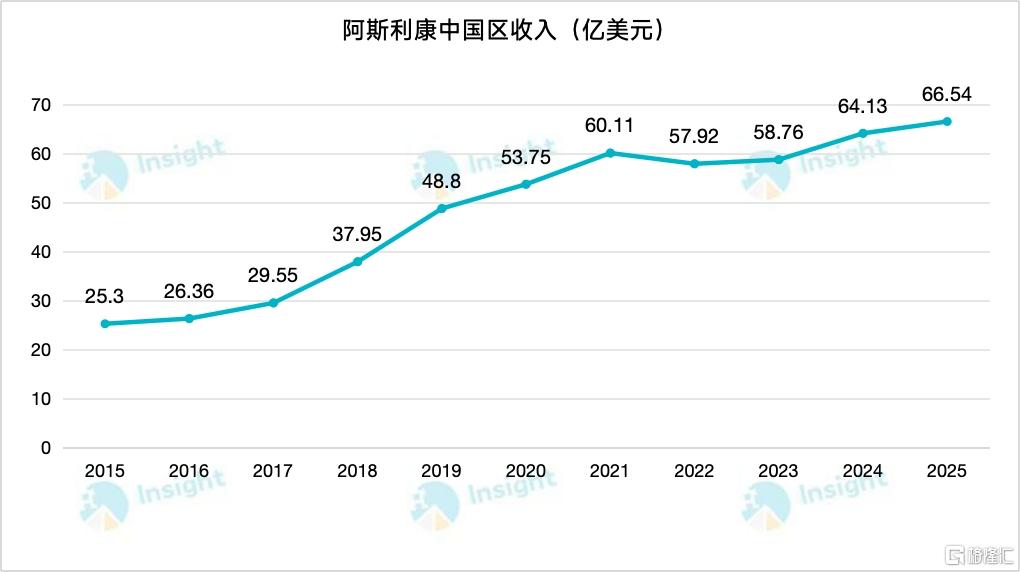
Core Insights - AstraZeneca achieved a record revenue of $6.664 billion in China for 2025, marking a significant milestone in its 30-year history in the market [1] - The company plans to invest $15 billion in China by 2030 and has established a $18.5 billion collaboration with CSPC Pharmaceutical Group [1] Revenue Performance - AstraZeneca is the second-largest market for the company, with 2024 revenues reaching $54.073 billion, and China contributing $6.413 billion, a year-on-year increase of 11% [1] - In 2025, total revenue reached $58.739 billion, with China contributing $6.654 billion, accounting for 11% of total revenue, maintaining the top position among multinational pharmaceutical companies in China [1][3] Product Portfolio - Since entering the Chinese market in 1993, AstraZeneca has introduced over 40 innovative drugs, including key products in oncology and chronic disease management [3] - The inhaled budesonide suspension is the highest-selling drug in China, although its sales have declined due to policy price adjustments [3] - Osimertinib is expected to become a new flagship product in China, potentially replacing budesonide due to the large market for non-small cell lung cancer patients [3][4] Strategic Focus - AstraZeneca is focusing on a comprehensive "innovation offensive" in China, particularly in oncology, cardiovascular, renal, and metabolic disease areas [6] - The company has a robust pipeline in oncology, with several promising drugs set to launch in China, including novel AKT inhibitors and TROP2 ADCs for breast cancer treatment [6] - The pipeline also includes treatments for chronic diseases and rare diseases, addressing the diverse needs of the Chinese market [7][8] Investment Plans - AstraZeneca's $15 billion investment will focus on expanding drug manufacturing and R&D capabilities, particularly in cell therapy and radiolabeled drug conjugates [12][13] - The company has made 23 collaborations in China since 2021, totaling over $40 billion, with a significant focus on oncology and chronic disease treatments [9][12] Market Positioning - AstraZeneca aims to leverage China's scientific and manufacturing strengths to provide cutting-edge treatment solutions, positioning itself as a leader in cell therapy capabilities [13] - The company has established global strategic R&D centers in Beijing and Shanghai and operates multiple production bases across China [13][14] Conclusion - AstraZeneca's deep integration into the Chinese market signifies a shift from merely selling products to becoming a core participant in China's healthcare ecosystem, evolving into a global innovation center rooted in China [15]


2025全球罕见病行业发展报告:政策演进、市场趋势与领先企业布局
摩熵咨询· 2026-01-28 13:53
Investment Rating - The report does not explicitly provide an investment rating for the rare disease industry. Core Insights - The rare disease sector is characterized by significant policy evolution and market trends, with a focus on the accessibility of treatments and the development of orphan drugs [1][2][5]. Summary by Sections Overview of the Rare Disease Industry - The report analyzes the policies regarding rare diseases in China, the United States, Japan, and Europe, highlighting the differences in definitions and management frameworks across these regions [6][12]. - China has included 207 diseases in its rare disease directory, while the U.S. has no unified directory but manages information through the GARD database [10][11]. Patient Population and Management Status - The report indicates that rare diseases affect over 200 million people globally, with China having more than 20 million affected individuals [12][14]. - The management systems in China are still developing, with significant gaps in data accuracy and epidemiological tracking compared to established systems in the U.S. and Europe [13][14]. Drug Availability and Accessibility - As of 2024, China has approved 55 rare disease drugs, while the U.S. has approved 26, and the EU has approved 15 [15][16]. - The report notes that 70.5% of rare diseases globally have available treatments, but many patients in China still face challenges in accessing these medications due to high costs and limited insurance coverage [16][17]. Leading Companies in Rare Disease Drug Development - The report identifies key players in the rare disease drug development space, emphasizing the growing pipeline of domestic research in China, although it still lags behind international pharmaceutical companies in innovation [16][17].
笪宇威教授谈重症肌无力治疗进展:从困境突破到精准管理新路径
Xin Lang Cai Jing· 2025-12-21 11:28
Core Viewpoint - The article discusses the treatment challenges and advancements in therapies for generalized myasthenia gravis (gMG), emphasizing the need for targeted therapies to address the limitations of traditional treatments [1][2][8]. Treatment Challenges - Traditional non-specific immunotherapy, including corticosteroids and non-steroidal immunosuppressants, has significant limitations, including adverse effects from long-term corticosteroid use and slow onset of action for other immunosuppressants [2][3]. - Approximately 10% to 20% of patients show limited response to conventional treatments, leading to a subset of patients developing "refractory gMG" [2][3]. - The heterogeneity of MG results in varied patient responses to medications, complicating the selection of effective treatment plans [2][3]. Advancements in Targeted Therapies - Targeted therapies for gMG are categorized into several classes, including FcRn antagonists, B-cell targeted therapies, and complement inhibitors [3][4]. - FcRn antagonists, such as efgartigimod, accelerate the degradation of pathogenic antibodies, reducing their levels [4]. - B-cell targeted therapies include monoclonal antibodies like rituximab and inebilizumab, which have shown efficacy in improving clinical symptoms and reducing corticosteroid dosage [4][6]. - Complement inhibitors, such as eculizumab and ravulizumab, block the complement pathway, preventing immune damage to neuromuscular junctions [4][6]. Clinical Evidence and Guidelines - Clinical studies indicate that treatments like eculizumab significantly improve MG-ADL and QMG scores within weeks, with a notable percentage of patients able to reduce corticosteroid use [5][6]. - The 2025 guidelines emphasize achieving "minimal symptom expression" as a treatment goal, highlighting the importance of long-term maintenance therapy [3][8]. - The CHAMPION MG OLE study demonstrated a 71.3% reduction in clinical deterioration events after 60 weeks of treatment with eculizumab [5][6]. Future Directions - The article advocates for a shift from traditional stepwise treatment to early targeted interventions and personalized treatment strategies for gMG patients [7][8]. - Emphasis is placed on the need for early intervention in high-activity gMG patients to prevent irreversible damage and improve quality of life [7][8]. - A comprehensive management model that includes rapid control of symptoms, long-term maintenance, and safe tapering of corticosteroids is essential for effective gMG treatment [7][8].
国家药监局批准伟立瑞用于治疗视神经脊髓炎谱系疾病成人患者
Guang Zhou Ri Bao· 2025-08-01 10:25
Core Points - The National Medical Products Administration has approved Weili Rui® for the treatment of adult neuromyelitis optica spectrum disorder (NMOSD) patients who are positive for aquaporin-4 (AQP4) antibodies, based on positive results from the CHAMPION-NMOSD Phase III clinical trial [1] - The trial demonstrated that the treatment group receiving Riluzumab did not experience any relapses during a median treatment duration of 73 weeks, and the results were consistent over a longer follow-up period of 170.3 weeks [1] - NMOSD is a rare, highly disabling autoimmune disease characterized by unpredictable relapses that can lead to severe neurological damage and permanent disability [1] Group 1 - The CHAMPION-NMOSD Phase III clinical trial used the placebo group from the PREVENT pivotal trial as an external control [1] - Riluzumab achieved the primary endpoint of time to first relapse as determined by an independent adjudication committee [1] - Most patients in the Riluzumab treatment group maintained stable or improved disability assessment scores during the follow-up period [1] Group 2 - Professor Quan Chao from Huashan Hospital emphasized the importance of preventing relapses during remission and quickly controlling symptoms during acute phases to minimize disability accumulation [2] - Riluzumab is a long-acting complement inhibitor that can precisely target complement pathways, providing sustained benefits for patients [2] - AstraZeneca's global senior vice president, Dr. He Jing, noted that this is the second indication approved for Riluzumab in China within six months, highlighting the drug's innovative value [2]