甲磺酸阿美替尼

Search documents
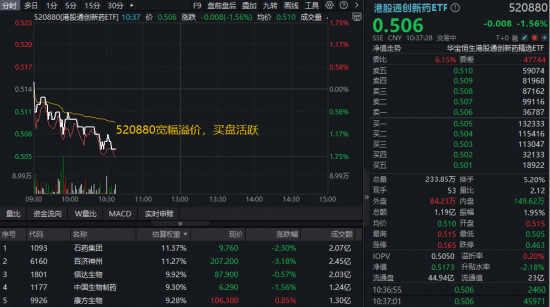
港股通创新药走低,520880跌逾1%宽幅溢价!机构:中国药企正从产品授权向技术输出转型
Xin Lang Ji Jin· 2026-02-26 02:47
Group 1 - The Hong Kong innovative drug sector experienced a downward trend, with the Hong Kong Stock Connect Innovative Drug ETF (520880) dropping over 1% in early trading on February 26 [1] - Among the constituent stocks, Jiage Ankang-B led with a gain of over 5%, while Baiji Shenzhou fell sharply by 3% [1] - The industry is seeing active external licensing transactions, with Innovent Biologics and Eli Lilly forming a global strategic partnership focused on oncology and immunology [3] Group 2 - Key pipelines are making progress overseas, with two innovative drugs from CSPC Pharmaceutical Group starting Phase III clinical trials and receiving FDA IND approval [3] - Jianghai Securities predicts that by 2026, pharmaceutical business development (BD) transactions will focus on unmet clinical needs, technological differentiation, and globalization [3] - Huachuang Securities emphasizes the transition in the innovative drug industry from quantity to quality, suggesting a focus on differentiated domestic and international pipelines by 2025 [3] Group 3 - The Hong Kong Stock Connect Innovative Drug ETF (520880) passively tracks the Hang Seng Hong Kong Stock Connect Innovative Drug Select Index, with top ten weighted stocks including CSPC Pharmaceutical Group and Baiji Shenzhou [3]

医药深度复盘-最新观点-春节期间-医药重要事件梳理
2026-02-24 14:16
Summary of Key Points from the Conference Call Industry Overview - The conference call primarily discusses the **pharmaceutical industry** in China, focusing on **business development (BD)** activities and **medical reform policies** [1][3][7]. Core Insights and Arguments - **BD Transactions**: As of February 15, 2026, the total upfront payment for BD transactions reached **$3 billion**, with an overall volume of **$49 billion**, significantly surpassing levels from 2025, indicating a substantial increase in BD activities for 2026 [1][4]. - **Notable Collaborations**: - **Shijiazhuang Pharmaceutical Group** partnered with **AstraZeneca** for a deal worth **$18.5 billion**, marking a recent high in China's innovation drug licensing [1][4]. - **Qin Hao Pharmaceutical** licensed its targeted small molecule drug **JX31** to **Gilead**, confirming the CRO industry's positive outlook [3]. - **Regen Bio** and **Metagene** entered a deal for six small nucleic acid drugs, with a total upfront payment of **$60 million** and potential milestone payments of **$4.4 billion** [4]. - **Clinical Trials**: Chinese companies are advancing in overseas R&D, with **Shijiazhuang Pharmaceutical** initiating Phase III trials for its **SYH2053** drug targeting high cholesterol and high triglycerides [5][6]. Medical Reform Policies - The revision of the **Basic Directory Management Measures** emphasizes alignment with procurement and medical insurance policies, with adjustments occurring approximately every three years, potentially accelerating the inclusion of procurement in the basic directory [7]. - The **collective procurement** process has shown a **93% selection rate**, indicating a more moderate policy direction focusing on quality rather than aggressive competition [7][8]. Key Trends in Drug Procurement - The recent drug procurement renewals have a **98% coverage rate**, with a focus on matching clinical needs and supplier quality, indicating a rational approach to procurement [8]. Company-Specific Developments - **Hansen Pharmaceutical** received EU approval for **Amivantamab**, targeting advanced non-small cell lung cancer [9]. - **Frontier Bio**'s collaboration with **GSK** for small nucleic acids is significant, with an upfront payment of **$40 million** and milestone payments of **$963 million**, highlighting the value of early research capabilities [10]. Impact of Tariffs and Regulations - The recent ruling against Trump's tariffs may benefit companies previously affected by fentanyl tariffs, such as **Jin You Co.** [11]. - The CRO industry is expected to see a turning point in 2026, with positive indicators from major conferences and performance forecasts [12]. Noteworthy Companies in Robotics and Medical Devices - Companies like **MicroPort Robotics**, **Jingfeng Medical**, and **Tianzhihang** are leading in the surgical robotics sector, with **MicroPort** achieving over **200 orders** across **50 countries** [13]. - The **medical device sector** is also seeing growth in areas like brain-computer interfaces and AI medical applications, with companies like **Borycon** and **Zhiruan Medical** gaining attention [14][18]. Performance Expectations - **Lepu Medical** and **Yingke Medical** are expected to see around **50% growth** in their respective sectors, driven by increased demand and market recovery [15][16]. - **Bai Ao Sai Tu** is projected to achieve over **$400 million** in profits from its CRO and model animal business, with a total valuation of approximately **$20 billion** [20]. Recommendations for Investment - The report suggests focusing on companies with strong beta attributes and clear growth logic, such as **Bai Ao Sai Tu** and **Sen Song** [22]. - **Aopu Mai** is also highlighted for its potential growth, with a projected market value of around **$8 billion** [21]. This summary encapsulates the key points discussed in the conference call, providing insights into the pharmaceutical industry's current landscape and future opportunities.
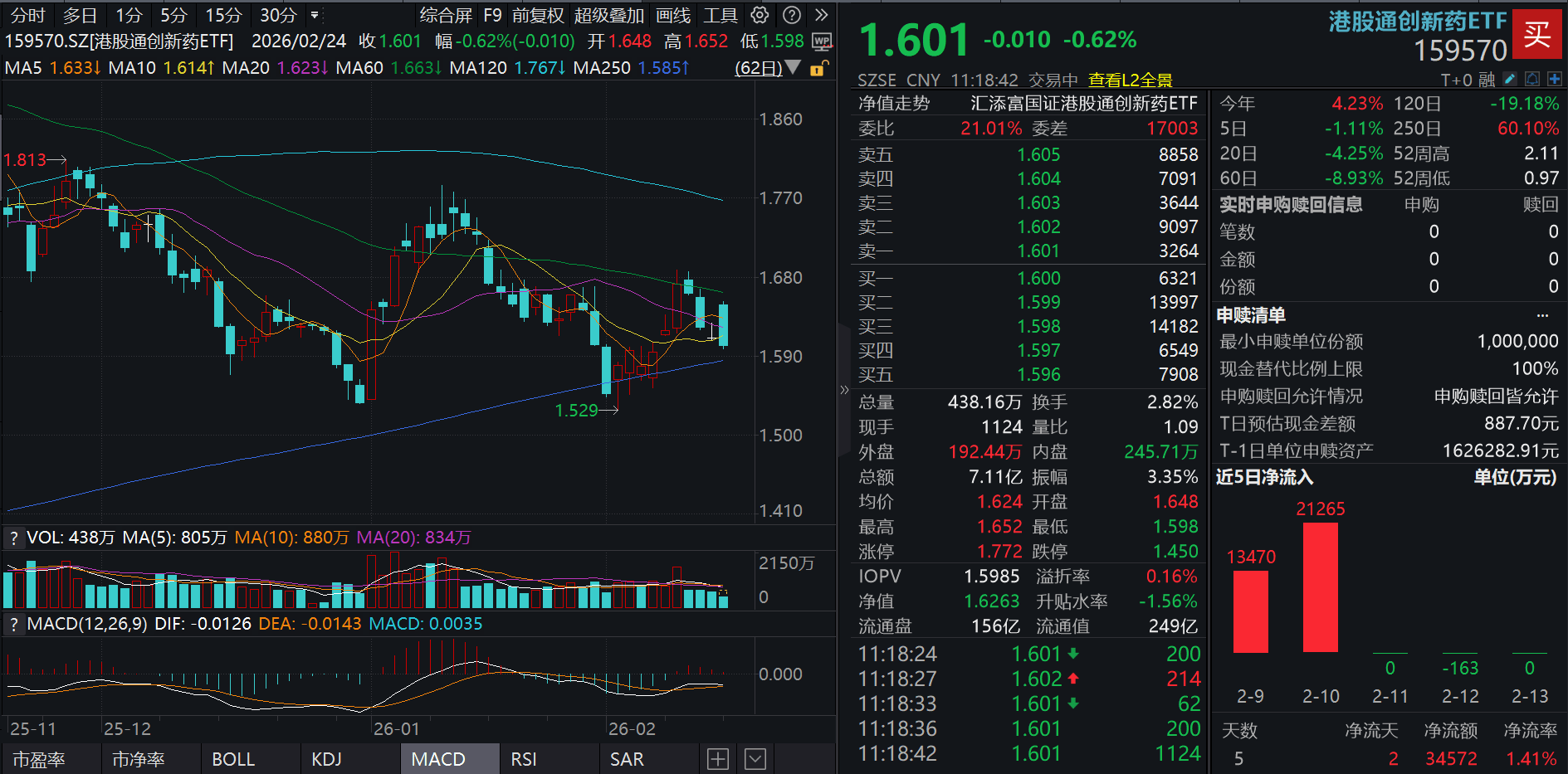
春节期间医药行业重点梳理!港股通创新药ETF(159570)冲高回落,近5日累计吸金超3.4亿元!FDA创新药审评政策再松绑,利好创新药!
Sou Hu Cai Jing· 2026-02-24 03:40
Core Viewpoint - The Hong Kong stock market's innovative drug ETF (159570) is experiencing a pullback, with several key stocks in the index declining significantly, indicating a potential shift in market sentiment towards the innovative pharmaceutical sector [1][4]. Group 1: Market Performance - As of 11:07, major stocks in the Hong Kong innovative drug ETF have mostly retreated, with notable declines: CSPC Pharmaceutical down over 5%, China Biologic Products down over 3%, and Innovent Biologics down over 4% [1]. - The ETF opened with a gain of over 2% but later experienced a decline of 0.62%, with trading volume surpassing 700 million HKD, indicating active market participation despite the pullback [4]. - The ETF has seen a net inflow of over 340 million HKD in the past five days, with its latest scale exceeding 25.2 billion HKD, leading among similar funds [4]. Group 2: Industry Developments - The innovative drug business development (BD) remains robust, with companies like Rego Biopharma and Qinhai Biotech making significant strides, and the total upfront payment for innovative drug BD transactions in China exceeding one-third of the total for 2025 by mid-February [3]. - Key innovative drug pipelines have achieved milestones overseas, such as CSPC's SYH2053 entering Phase III trials and Hanmi Pharmaceutical's approval for marketing in the EU [3]. - The FDA has reformed its drug approval policy, allowing a single pivotal trial plus confirmatory evidence as the default standard for new drug approvals, which is expected to enhance efficiency and reduce costs in drug development [6][9]. Group 3: Regulatory Changes - The National Health Commission has revised the essential drug catalog management measures for the first time in 11 years, indicating potential changes in the essential drug catalog and signaling a more rational policy environment [5]. - The overall atmosphere for drug procurement has been stable, with high rates of contract renewals and a focus on quality and pricing, reflecting a shift towards more rational procurement practices [5]. Group 4: ETF Composition - The Hong Kong innovative drug ETF (159570) is fully invested in innovative drugs, with the top ten constituent stocks accounting for over 74% of the index, highlighting its concentrated exposure to leading companies in the sector [10]. - The ETF has shown a significant increase of over 90% year-to-date, outperforming other indices in the Hong Kong pharmaceutical sector [11][12].

医药周报:春节期间医药行业重点事件梳理
Guolian Minsheng Securities· 2026-02-23 07:45
Investment Rating - The report maintains a "Recommended" rating for the pharmaceutical industry [5] Core Insights - The underlying logic of the current pharmaceutical industry era is innovation and international expansion, with a focus on innovative drugs and technology-driven sectors [2][3] - The report highlights the strong performance of the CRO market and suggests a dual investment strategy focusing on both "0 to 1" technology innovation and low-position stocks [2][3] - The report emphasizes the ongoing trend of BD (Business Development) transactions in innovative drugs, with significant growth expected in 2026 [4][15] Summary by Sections 1. Key Events in the Pharmaceutical Industry During the Spring Festival - Innovative drug BD transactions have seen a strong start, with significant overseas development and registration progress for key products [13][14] - The total amount of BD transactions for innovative drugs in China for 2026 has already surpassed one-third of the total for 2025 [15] - The revision of the National Essential Medicines List Management Measures may signal changes in the essential medicines directory [28] 2. Pharmaceutical Market Review and Hotspot Tracking - The pharmaceutical sector's performance was relatively weak, with a weekly decline of 0.81%, ranking 20th among all industries [34][38] - The total trading volume for pharmaceuticals was 401.12 billion yuan, accounting for 3.83% of the total market, below the historical average of 7.09% [55] - The report notes a rising valuation level for the pharmaceutical industry, with a PE ratio of 29.25, which is below the historical average [52] 3. Stock Performance Review - The report lists the top-performing stocks, including Dongyangguang and Zhendemedical, while highlighting the underperformers like Huayuan Biology and *ST Sailong [58][59]