电子号

Search documents
马斯克冲刺全球最大IPO,中国商业航天还在闯关
Sou Hu Cai Jing· 2026-02-06 05:14
Core Viewpoint - SpaceX's recent acquisition of xAI highlights a shift in the aerospace industry towards profit-driven models, which may accelerate the development of space engineering [2][3]. Group 1: SpaceX and xAI Acquisition - SpaceX announced the acquisition of AI startup xAI, with an expected share price of approximately $527 and a valuation of $1.25 trillion [3]. - Elon Musk's net worth surpassed $850 billion, making him the first person in history to cross the $800 billion milestone [3]. - The merger is expected to enhance SpaceX's IPO prospects, with estimates suggesting a valuation exceeding $1.5 trillion and a fundraising target of over $50 billion, potentially setting a record for the largest IPO in history [3]. Group 2: Comparison with Other Companies - SpaceX's projected 2025 EBITDA is $8 billion, significantly lower than Saudi Aramco's 2018 net profit of $111 billion, indicating a disparity in current profitability [4]. - Other commercial space companies, such as Rocket Lab and China's Landspace, have valuations that are minor compared to SpaceX's, reflecting the latter's dominant position in the market [3][4]. Group 3: Challenges and Opportunities - The combination of AI and commercial space ventures presents unique challenges, including the high costs associated with Mars colonization and the current limitations in AI monetization [4]. - SpaceX's vision of a vast satellite system for a space computing center could provide a clearer commercial pathway, making it more appealing to investors [4][5]. Group 4: Technological and Market Dynamics - The deployment cost of space data centers is projected to be 6.7 times higher than ground-based centers, but if launch costs decrease significantly, parity could be achieved by 2030 [6]. - The increasing demand for AI and the limitations in power supply present a unique opportunity for space-based solutions, such as solar power from space [5]. Group 5: Competitive Landscape - Rocket Lab, while a significant player, has a market cap of around $43 billion, which is far less than SpaceX's projected valuation, highlighting the competitive dynamics in the commercial space sector [8]. - The challenges faced by Rocket Lab in developing reusable rockets further emphasize the technological gap between it and SpaceX [9]. Group 6: Support and Development - SpaceX's growth has been significantly supported by NASA, which provided critical technology and funding during its early stages [12][13]. - The collaboration between private and public sectors is crucial for the advancement of commercial space endeavors, with both the U.S. and China investing in their respective aerospace industries [15].

大运载时代:百箭争流,共绘天疆新图景
HUAXI Securities· 2025-12-14 11:16
Investment Rating - Industry Rating: Recommended [4] Core Insights - The successful launches of the Li Jian No.1 and Long March 12 rockets validate China's heavy-lift capabilities in commercial space [1][14] - Li Jian No.1 achieved a "one rocket, nine satellites" launch, marking its entry into large-scale operations with a payload capacity of 1.5 tons to a 500 km sun-synchronous orbit, outperforming similar Indian rockets by over four times [1][15] - Long March 12, China's strongest single-core rocket, demonstrated its capability to launch large satellite constellations with a near-Earth orbit capacity of at least 12 tons [1][16] Summary by Sections Section 1: Li Jian No.1 and Long March 12 Launches - Li Jian No.1 successfully launched nine satellites, including three for international clients, establishing a strong market presence in the commercial launch sector [14][25] - The rocket's innovative avionics system enhances reliability and supports remote one-click launches, transitioning from custom to generalized systems [25][33] - Long March 12's successful mission included launching 16 low-Earth orbit satellites, showcasing its adaptability and efficiency with a record short turnaround time [16][34] Section 2: Global Commercial Space Development - SpaceX is redefining launch capacity standards with its Starship system, achieving near-Earth orbit capacity of 150 tons and a single-use capacity of 250 tons [3][20] - The commercial space market is projected to exceed $500 billion by 2025, driven by low-cost reusable rockets and satellite constellations [20][54] - The emergence of differentiated technologies, such as Rocket Lab's Neutron rocket, indicates a competitive landscape where second-tier companies seek to carve out market niches [21][22] Section 3: Investment Recommendations - Beneficial stocks include aerospace companies like Aerospace Power, Superjet, and West Materials, as well as space computing firms like Shunhao and Putian Technology [7][23]
可回收火箭发展30年,为什么只有中美在竞跑
3 6 Ke· 2025-11-12 07:43
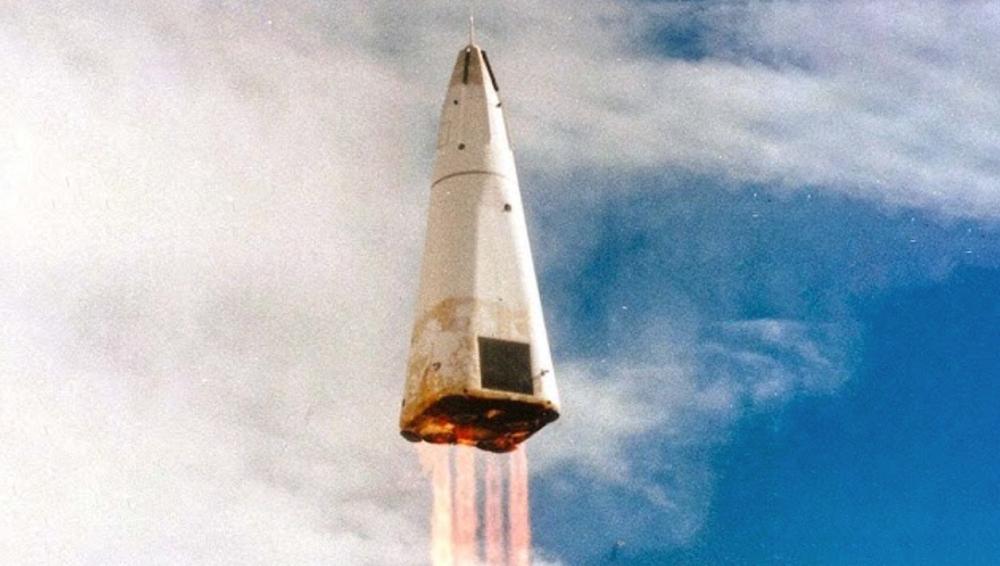
Core Insights - The construction of a maritime recovery system for reusable rockets in Hainan is set to begin, with an expected delivery by the end of 2026, providing a public service platform for China's commercial rockets [1] - Blue Arrow Aerospace's "Zhuque-3" rocket has successfully completed the first phase of its maiden flight, aiming to challenge rocket recovery technology with a planned launch in 2025 [1] - China is gradually closing the gap in reusable launch technology with global leaders, moving towards autonomous and sustainable space capabilities [1] Group 1: Historical Context - The concept of rocket recovery is not new, with the first successful vertical landing demonstration by McDonnell Douglas's DC-X in 1993, which proved the technical feasibility of returning rockets [1] - The DC-X project, despite its initial success, was abandoned by NASA in 1996 due to budget constraints and a lack of market demand for cost-saving measures at the time [4][5] - The resurgence of interest in rocket recovery coincided with the rise of commercial spaceflight, leading to renewed focus on this technology [5] Group 2: SpaceX's Role - Elon Musk founded SpaceX in 2002 with the goal of reducing launch costs and achieving rocket reusability, which he deemed essential for making Mars exploration feasible [7] - SpaceX faced numerous challenges in its early attempts at rocket recovery, but achieved a significant milestone in December 2015 with the first successful landing of a Falcon 9 rocket [7][8] - The company has since established a routine of reusing rockets, significantly lowering launch costs from an industry average of $60 million to around $15 million [8] Group 3: Global Landscape - Currently, SpaceX is the only company with a fully operational reusable rocket system, while other players like Blue Origin and various Chinese companies are in different stages of development [10][11] - The global landscape shows a clear division, with the U.S. leading in operational capabilities, while China is rapidly advancing with multiple companies working on reusable technology [11][12] - Other countries, including those in Europe, Russia, Japan, and India, are lagging behind in the development of reusable rocket technology [11][12] Group 4: Technical Challenges - Rocket recovery involves overcoming significant technical challenges, including precise guidance, control, deceleration, and resistance to disturbances during descent [20][21][22][23] - The integration of advanced technologies in materials, propulsion, control systems, and algorithms is crucial for achieving successful rocket recovery [25][26][27] Group 5: China's Commercial Space Race - China is witnessing a competitive race among several private companies to develop reusable rocket technology, with notable players like Blue Arrow Aerospace and others aiming for key technology validations by 2025 [29][30] - The success of these companies will not only depend on technological advancements but also on establishing a sustainable commercial model for frequent launches [30][31] - The ongoing developments signify a shift in China's commercial space sector from merely building rockets to achieving reusable capabilities [29][30]