
太空算力中心

Search documents
马斯克「吹爆」中国AI:美国将不战而败?
创业邦· 2026-02-09 10:37
Core Viewpoint - Elon Musk expresses admiration for China's manufacturing capabilities and energy infrastructure, suggesting that without significant innovation, the U.S. may fall behind in AI and robotics, particularly in the context of a potential SpaceX IPO and the establishment of a space-based computing center [5][27]. Group 1: AI and Energy Infrastructure - Musk believes that the efficiency of solar energy generation in space could be five times greater than on Earth, which could address power shortages faced by U.S. data centers [7][13]. - He highlights that the U.S. is experiencing power shortages due to outdated infrastructure, while China's energy supply is more stable and efficient, making it a competitive advantage in AI development [7][11]. - Musk warns that without breakthrough innovations, China could surpass the U.S. in AI and robotics, as both countries are the primary players in this field [8][13]. Group 2: Robotics and Manufacturing - Musk identifies robots with full autonomy as crucial for the U.S. to regain its competitive edge in productivity against China, which is advancing in smart factory deployments [15][17]. - Data from the International Federation of Robotics indicates that by 2024, China will account for over 50% of global industrial robot installations, with significant growth projected for 2025 [17][18]. - In the humanoid robot sector, Chinese companies are leading, with significant market shares and production capabilities compared to Tesla's Optimus, which is still in testing phases [18][20]. Group 3: Space Computing Center Challenges - Musk's vision for a space-based computing center faces numerous challenges, including heat dissipation and maintenance logistics in space, which could complicate the feasibility of such a project [23][25]. - The ambitious timeline set by Musk for resolving these issues within 30 months raises skepticism about the practicality of the plan [25]. - The competition between the U.S. and China in technology is evolving beyond just chips to encompass energy, manufacturing, aerospace, and AI, indicating a broader strategic rivalry [27].


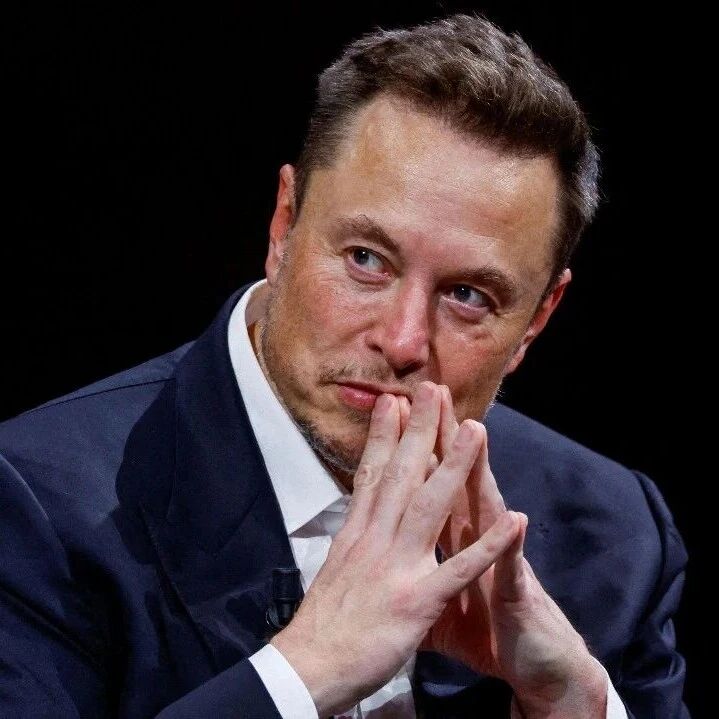
马斯克深夜「破防」:中国AI将不战而胜,美国唯一的希望在太空?
Sou Hu Cai Jing· 2026-02-08 13:19
Core Insights - Elon Musk's recent podcast appearance highlighted his bold views on AI, energy, and China's competitive edge in technology, particularly in the context of SpaceX's upcoming IPO [1][19] - Musk emphasized the potential of space-based data centers powered by solar energy, which he claims could be five times more efficient than terrestrial counterparts [3][19] - He expressed concern that without significant innovation, the U.S. may fall behind China in AI and robotics, citing China's superior energy infrastructure and production capabilities [4][8] Group 1: AI and Robotics - Musk noted that while leading AI models like ChatGPT and Gemini are American, Chinese alternatives like Qianwen and Doubao are more widely accessible and cost-effective, which could lead to greater market penetration [4][6] - He believes that China's advancements in AI are supported by lower energy costs and a more stable supply chain, allowing Chinese companies to close the gap with U.S. firms [6][8] - The International Federation of Robotics predicts that by 2024, China will account for over 50% of global industrial robot installations, further solidifying its position in the robotics market [11] Group 2: Energy Infrastructure - Musk highlighted the challenges faced by the U.S. in meeting the energy demands of data centers, attributing this to outdated infrastructure [3][19] - He praised China's energy supply as a competitive advantage, suggesting that the U.S. must innovate to keep pace [3][19] - The discussion pointed to the importance of energy infrastructure in determining the success of AI and robotics, with Musk indicating that China's advancements in this area could lead to a significant lead in AI capabilities [8][19] Group 3: Space and Future Innovations - Musk's vision for SpaceX includes establishing data centers in space, which he believes could solve energy shortages on Earth, although he acknowledged the technical challenges involved [17][19] - He posited that breakthroughs in robotics, particularly autonomous robots, could be crucial for the U.S. to regain its competitive edge against China [9][19] - The potential IPO of SpaceX could provide the necessary funding for Musk's ambitious plans, indicating a shift in the tech competition from Earth to space [21]
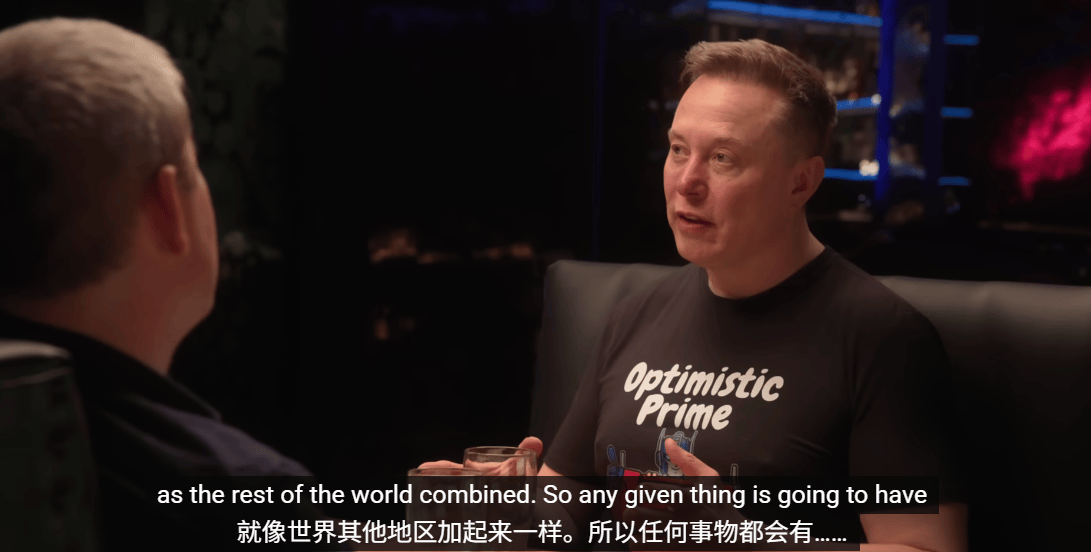
马斯克冲刺全球最大IPO,中国商业航天还在闯关
Sou Hu Cai Jing· 2026-02-06 05:14
Core Viewpoint - SpaceX's recent acquisition of xAI highlights a shift in the aerospace industry towards profit-driven models, which may accelerate the development of space engineering [2][3]. Group 1: SpaceX and xAI Acquisition - SpaceX announced the acquisition of AI startup xAI, with an expected share price of approximately $527 and a valuation of $1.25 trillion [3]. - Elon Musk's net worth surpassed $850 billion, making him the first person in history to cross the $800 billion milestone [3]. - The merger is expected to enhance SpaceX's IPO prospects, with estimates suggesting a valuation exceeding $1.5 trillion and a fundraising target of over $50 billion, potentially setting a record for the largest IPO in history [3]. Group 2: Comparison with Other Companies - SpaceX's projected 2025 EBITDA is $8 billion, significantly lower than Saudi Aramco's 2018 net profit of $111 billion, indicating a disparity in current profitability [4]. - Other commercial space companies, such as Rocket Lab and China's Landspace, have valuations that are minor compared to SpaceX's, reflecting the latter's dominant position in the market [3][4]. Group 3: Challenges and Opportunities - The combination of AI and commercial space ventures presents unique challenges, including the high costs associated with Mars colonization and the current limitations in AI monetization [4]. - SpaceX's vision of a vast satellite system for a space computing center could provide a clearer commercial pathway, making it more appealing to investors [4][5]. Group 4: Technological and Market Dynamics - The deployment cost of space data centers is projected to be 6.7 times higher than ground-based centers, but if launch costs decrease significantly, parity could be achieved by 2030 [6]. - The increasing demand for AI and the limitations in power supply present a unique opportunity for space-based solutions, such as solar power from space [5]. Group 5: Competitive Landscape - Rocket Lab, while a significant player, has a market cap of around $43 billion, which is far less than SpaceX's projected valuation, highlighting the competitive dynamics in the commercial space sector [8]. - The challenges faced by Rocket Lab in developing reusable rockets further emphasize the technological gap between it and SpaceX [9]. Group 6: Support and Development - SpaceX's growth has been significantly supported by NASA, which provided critical technology and funding during its early stages [12][13]. - The collaboration between private and public sectors is crucial for the advancement of commercial space endeavors, with both the U.S. and China investing in their respective aerospace industries [15].
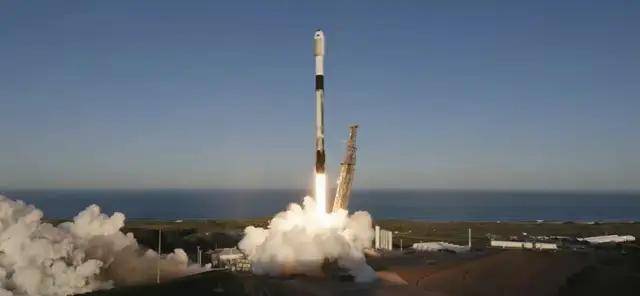
SpaceX-从-变革-中崛起的-星际先行者
2026-02-05 02:21
Summary of SpaceX Conference Call Company Overview - **Company**: SpaceX - **Industry**: Commercial Space Industry Key Points and Arguments Starlink Program - The Starlink program is expected to generate revenues of $22-24 billion by 2026, significantly impacting the global communication market, especially among maritime vessels and B2B clients, demonstrating high customer retention [1][2][3] - SpaceX currently has 9,513 satellites in orbit, while China has only 1,467, indicating a dominant market position [2] Launch Cost Reduction - SpaceX has reduced launch costs to less than one-tenth of traditional rockets through the Falcon series, with Falcon 9's launch cost estimated at $1,000 to $2,000 per kilogram [1][5] - In 2025, SpaceX plans to complete 167 launches, accounting for the majority of U.S. launches [5][14] Starship Rocket Innovations - The Starship rocket is the only fully reusable two-stage rocket globally, utilizing low-cost stainless steel and optimized Raptor engines, reducing engine costs to below $500,000 [1][9][10] - The use of stainless steel allows for multiple reuses and stability in extreme temperatures, further lowering transportation costs [9] Future Goals and Market Position - Elon Musk aims to make space the most cost-effective data center within five years, addressing power and cooling challenges faced by terrestrial data centers [1][15] - SpaceX plans to dominate global orbital payloads, projecting to carry over 98% by 2027 [11] Challenges in Space Computing - Space computing centers face significant technical challenges, including heat dissipation, deployment costs, and rapid hardware iteration [19][20] - The operational cost of space data centers could be as low as 5% of terrestrial centers over ten years, presenting a compelling economic advantage [18] Lunar and Mars Exploration - NASA and SpaceX have detailed plans for lunar and Mars exploration, with NASA focusing on asset claims in space and Musk planning unmanned Mars tests by 2026 [22] - The potential value of lunar resources, such as Helium-3 and rare earth materials, is significant, with SpaceX controlling the only transport route to these resources [23] Technical and Operational Bottlenecks - Key challenges for space computing include high deployment costs, maintenance difficulties, rapid hardware obsolescence, and low data interaction rates with Earth [20][21] - The need for high-frequency orbital resupply and energy logistics is critical for successful Mars missions [24] Additional Important Insights - SpaceX's competitive advantage over domestic commercial space companies is highlighted by its mature business model, including its own satellites and rockets, and significantly lower launch costs [14] - The strategic implications of lunar resource development and Mars exploration could reshape global political dynamics, giving the U.S. a strategic edge [22][23]
马斯克SpaceX太空能源计划浮出水面,中国光伏产业或成关键一环
Sou Hu Cai Jing· 2026-02-04 15:12
Core Insights - SpaceX has announced the acquisition of xAI and is actively exploring partnerships with Chinese photovoltaic companies, focusing on the entire supply chain from equipment to solar cells and battery components, particularly targeting Heterojunction Technology (HJT) and perovskite technology [1][6] - Elon Musk's ambitious plan involves building 200GW of solar capacity in the U.S. over the next three years, which could double the country's solar capacity, with applications primarily in AI data centers and space computing [2][4] Group 1: SpaceX's Solar Capacity Plans - The 200GW capacity plan is significant as it aims to address the energy demands of AI data centers and SpaceX's Starlink satellites, which require stable power sources [2][4] - Musk predicts that by 2030, SpaceX will deploy approximately 1 million solar-powered AI satellites, making space the most cost-effective location for AI deployment [2][4] Group 2: Technological and Strategic Considerations - SpaceX's strategy includes procuring HJT equipment from Chinese manufacturers, leveraging China's competitive advantages in the photovoltaic industry, where it holds a dominant position in silicon wafer production and solar cell manufacturing [7][10] - HJT technology is favored due to its lightweight and thin-film characteristics, which are essential for space applications, and its compatibility with next-generation solar wing designs [5][10] Group 3: Market Implications - If Musk's 200GW plan is realized, it could lead to an annual equipment procurement demand of 60 to 70GW over the next three years, potentially generating profits of 8 to 10 billion yuan for Chinese photovoltaic equipment manufacturers [11] - The pricing dynamics for space photovoltaic components are significantly higher than ground-based components, with space components potentially exceeding 100 yuan/W, indicating a substantial increase in profitability for companies entering the space photovoltaic supply chain [11] Group 4: Challenges and Competition - There are potential risks related to export controls and compliance, especially given SpaceX's close ties with the U.S. government, which may scrutinize procurement activities more closely [12] - The competitive landscape in commercial space and satellite technology is intensifying, with China actively pursuing its own satellite constellation projects, which could impact the viability of Musk's plans [12]
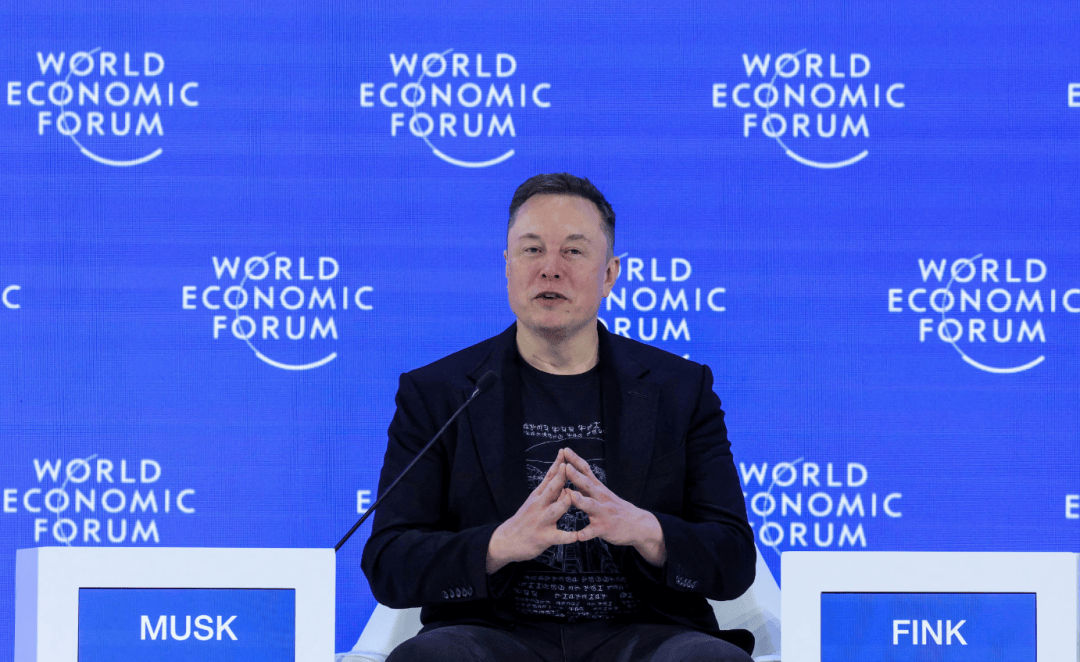
把握全球趋势,推动我国AI加速发展
2 1 Shi Ji Jing Ji Bao Dao· 2026-01-27 22:36
Group 1 - The core viewpoint of the article highlights the significant insights shared by global tech leaders at the Davos World Economic Forum regarding AI, robotics, and space exploration, reflecting the current trends and competitive landscape in the AI industry [2] - Elon Musk's perspective emphasizes "unexpected timelines" and "cross-domain collaboration," proposing the innovative concept of a "space computing center" to address the bottleneck of power supply in AI development, as global electricity supply grows only at 3%-4% annually while AI chip production is increasing exponentially [2][3] - Musk's timeline for the Tesla Optimus robot indicates that it will perform complex tasks by the end of 2026 and be available to the public by 2027, suggesting that the combination of AI and robotics will be a key variable in restructuring global economic growth models [3] Group 2 - Jensen Huang, CEO of NVIDIA, elevates the AI competition to a national strategic level, asserting that AI has become a critical national infrastructure, supported by three structural transformations in the AI industry [3][4] - Huang identifies a "triad" of support for AI development: transformation of computing architecture, migration of software paradigms, and evolution of application forms, indicating that traditional CPU-based computing is insufficient for AI needs, necessitating GPU and accelerated computing [4] - The collaboration of these trends positions AI as a foundational infrastructure for national economy and security, with AI computing power becoming as essential as electricity and transportation [4] Group 3 - China's AI development shows a leading position in application layers but requires strengthening its foundational layers, with three core competitive advantages: vast data and scenario advantages from its 1.4 billion population, a comprehensive manufacturing system, and advanced technology in fields like computer vision and natural language processing [5] - However, China faces three significant shortcomings: reliance on high-end hardware dominated by developed countries, a need for improved innovation in foundational algorithms and frameworks, and an underdeveloped risk investment structure that favors mature enterprises over early-stage innovative firms [5] Group 4 - To address these challenges, China should focus on three key areas: seizing opportunities in space computing and renewable energy, accelerating the commercialization of autonomous driving technology, and enhancing foundational hardware and software capabilities [6] - In the space computing sector, China can leverage its aerospace technology to develop solar computing modules suitable for space, reducing reliance on foreign infrastructure while capitalizing on its solar energy manufacturing cost advantages [6] - In autonomous driving, China should expand pilot programs for Level 4 autonomous vehicles and accelerate the development of domestic chips and algorithms to avoid dependency on foreign technologies [6] Group 5 - The discussions at the Davos Forum illustrate the competitive landscape of global AI development, with Musk's insights indicating potential technological breakthroughs and Huang's analysis revealing the core logic of industry competition [7] - China's AI strategy must consolidate its application layer advantages while addressing foundational weaknesses to maintain a proactive position in the global AI landscape and achieve breakthroughs in artificial intelligence innovation [7]
太空光伏设备-太空光伏如何走向星辰大海
2026-01-26 02:49
Summary of Key Points from the Conference Call Industry Overview - The focus is on the space photovoltaic (PV) equipment industry, particularly the development of space data centers and solar technology for satellite applications [1][2]. Core Insights and Arguments - **Energy Cost Reduction**: StarCloud's analysis indicates that deploying silicon-based satellite solar wings can significantly reduce energy costs, with cooling costs in space being only 1/10th of those on Earth [1][4]. - **Current Technology Limitations**: The dominant space PV technology, triple-junction gallium arsenide, has high efficiency (>30%) but is costly and limited by rare earth elements, supporting only about 3,000 satellite launches annually [5]. - **Silicon-Based Technology Advantages**: Silicon-based solar cells, particularly heterojunction (HJT) technology, are seen as the most viable short-term alternative due to their lower cost (5-6 times cheaper) and independence from rare metals [6]. - **HJT Technology Benefits**: HJT is suitable for large-scale applications and will serve as the bottom cell material in perovskite-silicon tandem solutions, offering simpler processes and lower costs [7]. - **International Market Readiness**: Countries like France, the US, and Germany have identified HJT as the next-generation space PV technology, facilitating easier entry into international markets due to patent advantages [8]. Market Dynamics and Capacity - **Space Capacity Discrepancies**: There is a debate regarding the capacity of space orbits to accommodate numerous PV devices. Estimates suggest that even optimal deployment in sun-synchronous orbits (SSO) can only support around 9,600 satellites, with the entire low Earth orbit (LEO) accommodating less than 80,000 satellites [9]. - **Demand for Space PV**: The demand for space PV is expected to grow significantly, with plans from companies like SpaceX and Google indicating potential deployment of hundreds of gigawatts (GW) of satellite power [2][12]. Solutions and Future Outlook - **Proposed Solutions**: Companies are exploring various solutions, including Nvidia's proposal for large photovoltaic space stations and Google's strategy of deploying satellites in formation [10][11]. - **Market Expansion Potential**: The market for space PV is projected to expand rapidly, with the potential to meet TW-level power demands if large-scale deployment strategies are implemented [12]. Companies to Watch - **Key Players**: Recommended companies include: - **Maiwei Co., Ltd.**: A leader in equipment for easy-to-manufacture solutions with nearly 100% market share. - **Jingsheng Mechanical & Electrical**: A leader in monocrystalline silicon and slicing equipment. - **Aotai Technology**: A leading component equipment manufacturer with a market share consistently above 70% [13].
太空光伏与“轨道数据中心”:为什么下一代能源与算力的战场,会在800km的高空?
Hua Er Jie Jian Wen· 2026-01-11 04:46
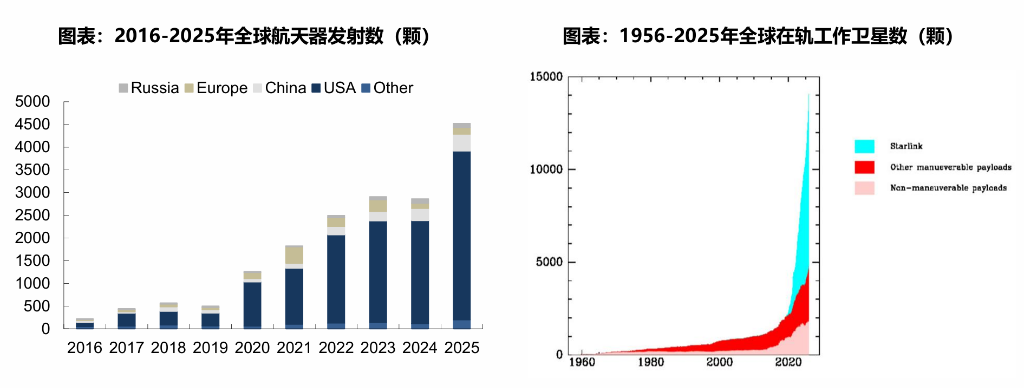
Core Viewpoint - Space photovoltaic technology is evolving from a supporting system for spacecraft to a core energy solution for next-generation space infrastructure, driven by the acceleration of global satellite deployment and the rising demand for space computing power [1] Group 1: Satellite Deployment and Market Dynamics - China applied for frequency resources for over 200,000 satellites by December 2025, with 190,000 from the newly established "national team" [1] - The U.S. FCC approved SpaceX to deploy an additional 7,500 second-generation Starlink satellites, bringing the total approved to 15,000 [1] - The global spacecraft launch volume has maintained a compound annual growth rate (CAGR) of 34% over the past decade, with an expected launch number exceeding 4,300 by 2025, representing a year-on-year growth of over 50% [3][1] Group 2: Space Computing Centers and Energy Requirements - The rise of space computing centers is opening new possibilities, with projects like China's "Trisolaris Computing Constellation" and SpaceX's Starcloud targeting space data center construction [2] - A potential 10GW space computing system could lead to a solar wing market size of several trillion yuan [2] - The evolution of satellite functions is reshaping energy system requirements, with significant increases in single-satellite power demands [10][12] Group 3: Energy Supply and Technological Developments - The space photovoltaic industry is experiencing a "volume and price increase" scenario, driven by the surge in satellite numbers and the rising power density of individual satellites [14] - Photovoltaic technology is the only efficient and stable energy form for satellites in space, with the need for larger solar wings leading to concerns about weight and cost [12] - The technology route for space photovoltaics is diversifying, with gallium arsenide (GaAs) batteries dominating the high-end market due to their efficiency, while silicon-based heterojunction (HJT) and perovskite technologies are gaining traction for large-scale applications [19][22] Group 4: Economic Considerations and Future Outlook - The explosion of space photovoltaics is reshaping the value logic of the photovoltaic industry, transitioning from a closed military aerospace system to commercial photovoltaic enterprises with large-scale manufacturing capabilities [25] - SpaceX's low launch costs encourage the use of lower-cost silicon-based batteries, while China's higher launch costs still favor the use of expensive GaAs batteries, although a shift towards silicon-based technologies is anticipated [26] - The low Earth orbit (LEO) satellite market could generate nearly 200 billion yuan in solar wing market space with the launch of 10,000 satellites, and the construction of a future 10GW space computing system could expand the market size to several trillion yuan [30]
东吴证券:太空算力中心具备颠覆性优势 HJT或为能源系统最优解
智通财经网· 2026-01-08 08:19
Group 1 - The core viewpoint of the report emphasizes the disruptive advantages of space computing over traditional ground data centers, including high deployment efficiency, excellent energy efficiency, and low cooling costs [1][2] - The report highlights the emergence of "orbital data centers" driven by the imbalance in computing power supply and demand in the AI era, with examples such as the "Three-body Computing Constellation" launched by Zhijiang Laboratory and Guoxing Aerospace, which has already deployed 12 satellites and plans for a 1000 POPS computing scale [1][3] - The report recommends companies such as Maiwei Co., Ltd. (300751.SZ) and Gaomei Co., Ltd. (688556.SH) due to their involvement in the space computing and HJT battery sectors [1] Group 2 - The energy system weight significantly impacts the overall cost of satellites, with energy system costs accounting for 22% of the total, making lightweight and high-power quality ratio structures like rollable solar arrays critical for development [2] - The report notes that rollable solar arrays are gradually replacing traditional Z-type structures in LEO orbits, and they are best suited for flexible and thin-film batteries, with companies like NexWafe and Solestial accelerating their layouts in this area [2] - HJT batteries are identified as the optimal bottom cell for perovskite tandem cells, showcasing long-term evolution potential [2] Group 3 - The report discusses the current tightness of orbital resources, with LEO and SSO being the main orbits, and SSO providing stable sunlight year-round, making it the optimal choice for high-power data centers, with approximately 9617 available satellites remaining [3] - To address the shortage of orbital resources, space computing platforms are evolving along two paths: large-scale deployment, exemplified by Starcloud's construction of a 4km×4km photovoltaic mothership platform, and cluster deployment, as seen in Google's Suncatcher plan with 81 to 324 satellite formations [3] - The report estimates that a 10GW photovoltaic capacity can correspond to 448 Google Suncatcher satellite clusters or 2 Starcloud motherships [3]


产业提速,拐点明晰,商业航天后续投资机会展望
2025-12-26 02:12
Summary of Key Points from Conference Call Industry Overview - The commercial aerospace sector is expected to see significant investment opportunities by the end of the year, with a clear turning point in the industry's fundamentals and substantial long-term growth potential driven by overseas satellite concepts and the anticipated IPO of SpaceX [1][2]. Core Insights and Arguments - The current commercial aerospace market is driven by the concept of space computing centers, with increased market tolerance for short-term performance, focusing on high elasticity and anti-deflation characteristics in satellite-related companies [1]. - The fifth satellite project involves various chemical materials, with a significant market potential for ceramic shells, estimated at around 1 million yuan per satellite, leading to a potential market space of 10 billion yuan [1][9]. - The commercial aerospace sector is transforming the construction industry, with companies like Shanghai Port and Dongzhu Ecology making breakthroughs in satellite energy management systems and rocket factory projects [1][10]. Investment Directions - Key investment areas in the satellite sector include high elasticity and anti-deflation targets, particularly in payload antennas, power platforms, and new infrastructure [5][6]. - Companies involved in antenna technology, such as Zhenlei, Chengchang, Canqin, and Tongyu Xinke, are highlighted as important investment opportunities [5]. Mechanical Manufacturing Sector - The mechanical manufacturing sector in commercial aerospace focuses on launch site equipment, consumables, and rocket and satellite structural components, with notable companies including Anhui Heli, Hengli Hydraulic, CIMC Anrui, and Hailan [11]. Aerospace Electronics - Aerospace Electronics is a core leader in the aerospace technology group, providing critical communication and control equipment for domestic satellites and leading in laser communication technology [3][17]. - The company achieved revenue of 14 billion yuan last year, with a significant portion coming from military products and aerospace electronics [17]. Future Market Trends - The future market for aerospace electronics is promising, with the company expected to maintain a high market share due to its technological advantages and capabilities in mass production of precision components [19]. - The commercial aerospace sector is anticipated to expand into various application scenarios, including satellite internet communication and space computing, supported by policy directives [22]. Security in Satellite Internet - Shengbang Security is positioned as a standard setter for satellite internet security modules, having developed a 200G high-speed communication encryption gateway, enhancing satellite communication security [24]. - The company has made significant investments and acquisitions to strengthen its product offerings in satellite internet security [24]. Challenges and Opportunities - The commercial banking private network construction presents development opportunities, particularly in special fields under current policy guidance, with a notable demand for key components like radiation-resistant FPGA and Flash [27]. This summary encapsulates the essential insights and developments within the commercial aerospace industry and related sectors, highlighting investment opportunities, market trends, and key players.


