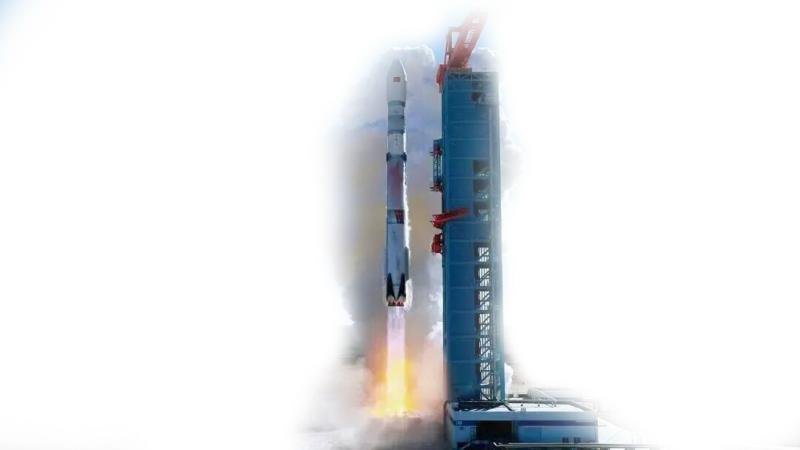
谷神星二号

Search documents
商业航天赛道新年大热 四川如何布局发力
Xin Lang Cai Jing· 2026-01-26 21:05
Core Insights - The commercial space industry is experiencing rapid growth, with significant developments in both technology and investment, particularly highlighted by SpaceX's potential IPO valued at $1.5 trillion [2][3] - China is projected to launch a record 92 rockets in 2025, indicating a booming demand for satellite launches and commercial applications [3][4] - Sichuan province is positioning itself as a key player in the commercial space sector, leveraging its comprehensive industrial capabilities and strategic location [4][6] Group 1: Industry Growth Factors - The commercial space sector in China is driven by favorable government policies, including the establishment of a dedicated Commercial Space Administration and supportive local government initiatives [3][4] - There is a surge in demand for satellite launches, with over 250,000 satellites registered, necessitating the launch of more than 25,000 satellites in the next nine years [3][4] - The industry is focusing on reducing launch costs through the development of reusable rocket technology, which is seen as a critical path for cost efficiency [3][6] Group 2: Sichuan's Strategic Position - Sichuan is recognized for its strong latecomer advantages in the commercial space industry, with a robust industrial chain and significant investments in rocket production and satellite technology [4][6] - The province is home to key projects, such as the construction of a reusable liquid rocket production base, which is expected to be completed by December this year [6] - Sichuan's government is actively promoting the establishment of a Western Commercial Spaceport to enhance launch capabilities and attract industry players [7][8] Group 3: Future Directions - The demand for satellite infrastructure, including payloads and ground stations, is expected to grow significantly, providing opportunities for Sichuan to expand its market presence [7] - The development of a Western Commercial Spaceport is a priority for Sichuan, aimed at addressing regional launch capacity shortages and fostering industry collaboration [7][8] - Experts suggest increasing support for local enterprises and encouraging investment in the commercial space sector to drive innovation and growth [8]

商业航天“资本赛”开跑:SpaceX瞄准年内上市,中国五箭客冲刺“第一股”
3 6 Ke· 2026-01-23 12:53
Core Viewpoint - The competition for the title of "China's first commercial space stock" has intensified, with multiple companies, including Blue Arrow Aerospace and SpaceX, making significant progress in their IPO processes and technological advancements in the space industry [1][2][3]. Group 1: IPO Progress - Blue Arrow Aerospace is currently leading the IPO race among five Chinese commercial space companies, having entered the "inquiry" stage after a rapid five-month process [2][3]. - The introduction of the "fifth set of listing standards" on the Sci-Tech Innovation Board has opened doors for unprofitable but technologically advanced companies, benefiting Blue Arrow Aerospace [2]. - Other companies like China Aerospace, Tianbing Technology, and Xinghe Power are also in various stages of their IPO processes, with China Aerospace expected to submit its prospectus soon [3]. Group 2: Valuation and Funding - All five companies have achieved valuations exceeding 10 billion yuan, with Blue Arrow Aerospace and Tianbing Technology valued over 20 billion yuan [3]. - The companies have engaged in multiple rounds of financing, with significant activities noted just before their IPOs, indicating strong investor interest [3][4]. - Blue Arrow Aerospace and China Aerospace did not engage in new financing in 2025, with their last rounds occurring in late 2024 [4]. Group 3: Technological Developments - The key competitive edge in the space industry is the development of reusable rockets, with Blue Arrow Aerospace and others focusing on liquid oxygen methane and recovery technology [7][8]. - Blue Arrow Aerospace has developed the "Tianque" series of liquid oxygen methane engines, marking a significant technological milestone in China's space capabilities [7]. - Other companies are also advancing their rocket technologies, with plans for high-frequency launches and various types of reusable rockets [8]. Group 4: Market Dynamics - The commercial space industry is expected to grow significantly, with the global space economy projected to reach approximately 2.9 trillion yuan by 2024 [10]. - The competition is shifting from merely reducing launch costs to focusing on application scenarios, as demonstrated by SpaceX's Starlink [9]. - China's commercial space sector is rapidly evolving, with a projected market size exceeding 2.5 trillion yuan and a compound annual growth rate of over 20% [11]. Group 5: Financial Challenges - Despite the rapid growth and high valuations, companies in the commercial space sector face significant profitability challenges, with Blue Arrow Aerospace reporting substantial losses [12]. - Analysts expect a shift in market valuation from broad narratives to specific financial metrics and order visibility as companies mature [12]. - The industry is anticipated to transition from capital-driven narratives to value realization as technological advancements and cost controls improve [12].
2026,商业航天一批新箭蓄势待发
Xin Lang Cai Jing· 2026-01-20 09:41
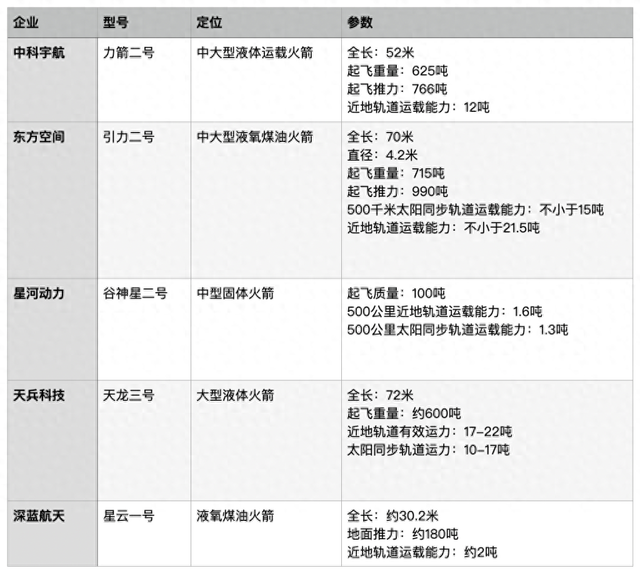
Core Viewpoint - China's commercial space industry is experiencing rapid growth, with 50 launches planned for 2025, accounting for 54% of the country's total space launches. This includes 25 launches of commercial rockets, with several new rocket models set to debut in 2026, entering a phase of intensive testing [1]. Group 1: Company Developments - Zhongke Aerospace's Li Jian No. 2, a medium-large liquid rocket, is set for its maiden flight in 2026, with a production base in Shaoxing capable of producing 12 rockets annually [3][4]. - Dongfang Space's Gravity No. 2, a medium-large liquid oxygen kerosene rocket, aims for a maiden flight in 2026, with a production capacity of 20 rockets per year once its manufacturing base is completed [5]. - Xinghe Power's Gushenxing No. 2, a medium solid rocket, is designed for small satellite launches and aims to reduce costs through technological innovations [6]. - Tianbing Technology's Tianlong No. 3, a large liquid rocket, is expected to support over 60 launches annually after its maiden flight, with a capacity to launch 36 satellites in one go [7]. - Deep Blue Aerospace's Xingyun No. 1, a reusable rocket, is scheduled for its first flight around the Spring Festival in 2026, aiming for a "first flight recovery" challenge [8]. Group 2: Technical Specifications - Li Jian No. 2 specifications include a length of 52 meters, a launch weight of 625 tons, and a low Earth orbit (LEO) capacity of 12 tons [2]. - Gravity No. 2 has a height of 70 meters, a launch weight of 715 tons, and can carry at least 15 tons to a 500 km sun-synchronous orbit [2]. - Gushenxing No. 2 has a launch weight of 100 tons and can carry 1.6 tons to a 500 km LEO [2]. - Tianlong No. 3 has a length of 72 meters, a launch weight of approximately 600 tons, and can carry 17-22 tons to LEO [2]. - Xingyun No. 1 is approximately 30.2 meters long, with a ground thrust of about 180 tons and a LEO capacity of around 2 tons [2].
怎么看商业航天的短期情绪和长期趋势?
2026-01-20 03:54
Summary of Conference Call on Commercial Aerospace Industry Industry Overview - The discussion focuses on the commercial aerospace industry, particularly in the context of recent rocket launch failures, highlighting the high technical barriers and challenges within the sector [1][2]. Key Points and Arguments Short-term Market Sentiment - The commercial aerospace sector has experienced a significant pullback, with a peak increase of 140% in stock prices, followed by a 20% decline as of last Friday [2][3]. - The total trading volume for the sector decreased from approximately 250 billion to 150 billion, representing a drop to about 5% of the total A-share market [3]. - The recent rocket launch failures have negatively impacted market sentiment, leading to reduced trading volumes and a decline in the overall enthusiasm for related stocks [3][4]. Long-term Trends - Despite short-term fluctuations, the long-term outlook for the commercial aerospace sector remains positive, with continued government investment expected over the next five years [4][11]. - Key catalysts anticipated for the first half of the year include developments in satellite projects, rocket launches, and production capacity enhancements [11][18]. Recent Events - Two recent rocket failures were highlighted: the Chang Zheng 3B and the Guo Shen Xing 2, both of which underscore the technical difficulties and high entry barriers in the commercial rocket sector [5][6][7]. - The Guo Shen Xing 2, a commercial rocket, failed during its maiden flight, reflecting the challenges faced by new entrants in the market [7][8]. Company Developments - Zhongke Aerospace has completed its IPO guidance, becoming the second commercial rocket company to do so in China, following Blue Arrow Aerospace [8][10]. - The company has developed two main rocket models: the Lijian 1, which has a high success rate, and the upcoming Lijian 2, expected to launch this year [8][9]. Upcoming Launches and Innovations - The first half of the year is expected to see the launch of five reusable rocket models, including three from private companies and two from state-owned enterprises [12][15]. - Notable upcoming rockets include Tianming Technology's Tianlong 3, which has a payload capacity of 17-22 tons, and other models from Xinghe Power and Xingji Glory [12][14]. Production Capacity - The Hainan Satellite Super Factory is anticipated to ramp up production capacity, aiming for 20-30% output by the end of the year, with a long-term goal of producing 1,000 satellites annually [17][18]. Additional Insights - The commercial aerospace sector is expected to see significant advancements in satellite technology, with the second-generation satellite projects being crucial for determining market shares among suppliers [11][18]. - The discussion also touched on international developments, particularly the IPO progress of SpaceX and AST Space Mobile, which are expected to influence the global market dynamics [18][19]. Investment Recommendations - Investors are advised to focus on core stocks within the commercial aerospace sector, particularly those with established market shares and upcoming launches [20][23]. - Key areas of interest include rocket manufacturers, satellite constellation suppliers, and companies involved in testing and inspection services [20][22][23]. This summary encapsulates the critical insights and developments discussed during the conference call, providing a comprehensive overview of the commercial aerospace industry's current state and future prospects.
一天两枚火箭发射失利 中国航天科技集团、星河动力两家公司发文:具体原因正排查
Mei Ri Jing Ji Xin Wen· 2026-01-18 05:26
Group 1: Rocket Launch Failures - On January 17, two rocket launch failures were reported, including the Long March 3B rocket and the private company Star River's Gushen II rocket [1][2] - The Long March 3B rocket experienced an anomaly during its third stage, leading to mission failure, while the Gushen II rocket also faced flight anomalies during its first test flight [4][6] Group 2: Long March 3B Rocket Overview - The Long March 3B rocket is China's first rocket model to exceed 100 launches, with a total of 115 launches, 110 successful and 3 failures [6] - It is primarily used for launching heavy satellites into geosynchronous transfer orbits and is a key player in China's commercial launch services [4][5] Group 3: Star River Company Profile - Star River, established in 2018, is the first private company in China to achieve mass production and high-density launches of rockets [8] - The company has raised over 5.3 billion yuan through multiple funding rounds, with a post-investment valuation of 15-16 billion yuan after a recent 2.4 billion yuan Series D financing [8][9] Group 4: Industry Context and Challenges - The Chinese commercial space industry is transitioning from technology validation to large-scale operations, facing challenges such as low rocket supply and high launch costs [12][13] - The industry is experiencing a downturn following a surge in stock prices, with significant declines in commercial space concept stocks observed recently [14][16]

一天两枚火箭发射失利,中国航天科技集团、星河动力两家公司发文:具体原因正排查
Mei Ri Jing Ji Xin Wen· 2026-01-18 05:08
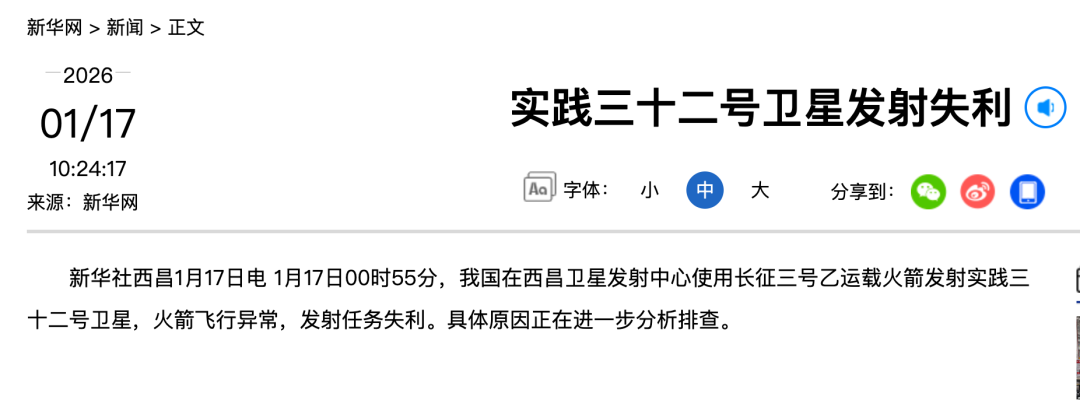
Core Viewpoint - The aerospace sector is experiencing volatile reactions in the capital market, highlighted by two recent rocket launch failures on January 17, 2024 [1]. Group 1: Long March 3B Rocket - The Long March 3B rocket launched the Shijian-32 satellite but experienced flight anomalies, resulting in mission failure. The specific cause is under further analysis [3][4]. - The Long March 3B is notable for being the first Chinese rocket model to exceed 100 launches, with a total of 115 launches, 110 successful, 3 failures, and 2 partial successes [10]. - This rocket is primarily used for launching heavy satellites into geosynchronous transfer orbits and is a key player in China's commercial launch services [8]. Group 2: Star River Dynamics - Star River Dynamics, established in 2018, is the first private company in China to achieve mass production and high-density launches of rockets. It focuses on solid and liquid rocket launch services [11]. - The company has raised over 5.3 billion yuan through multiple funding rounds, with a recent D-round financing of 2.4 billion yuan, achieving a post-investment valuation of 15-16 billion yuan [11]. - The company’s main product, the Gushenxing series of rockets, has successfully completed six sea launch missions, with the latest on January 16, 2024, marking a significant achievement in commercial space launches [12]. Group 3: Industry Trends and Challenges - The Chinese aerospace industry reached a record 92 launches in 2023, with a notable contribution from private companies, although the overall launch success rate still lags behind the Long March series [15]. - The industry faces challenges such as low total rocket supply, insufficient single-rocket capacity, and high launch costs, which are seen as bottlenecks in the development of the aerospace ecosystem [15]. - There is a growing expectation for private rocket companies to complement state-owned enterprises in meeting the high-frequency launch demands [15].
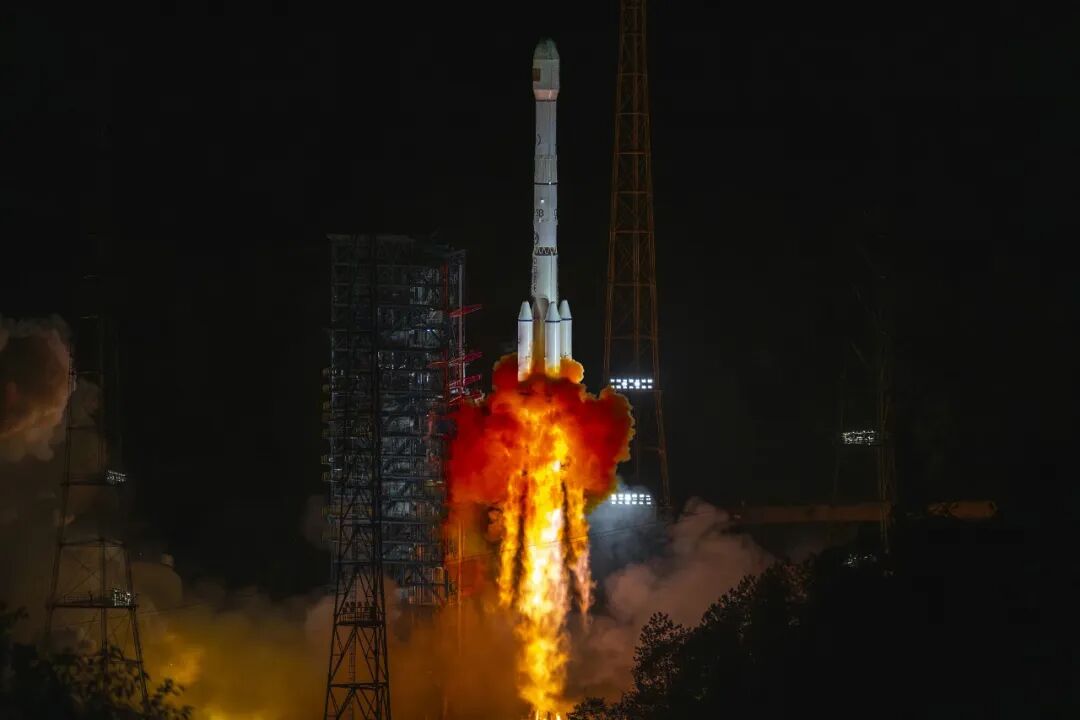
星河动力谷神星二号首飞失利致歉:正排查原因,确保后续复飞
Nan Fang Du Shi Bao· 2026-01-17 14:35
Core Viewpoint - The recent failure of the private rocket company Star River Dynamics' first flight of the Gushenxing-2 rocket highlights the complexities and challenges of aerospace technology exploration, occurring just after a successful launch of another rocket [1][2]. Group 1: Company Performance - Star River Dynamics has successfully completed 21 commercial launches, delivering 89 satellites into orbit [2]. - The company recently achieved a successful launch of the Gushenxing-1 sea-launched rocket, marking the first private commercial space launch in China for 2026 [1]. Group 2: Recent Events - On January 17, 2023, the Gushenxing-2 rocket experienced an abnormal flight and failed its first test mission shortly after its launch from the Jiuquan Satellite Launch Center [1]. - The company publicly apologized for the failure and committed to thoroughly investigating the cause and ensuring the success of future missions [1]. Group 3: Future Prospects - Star River Dynamics is in a critical phase of approaching the capital market, having completed 10 rounds of financing with a post-investment valuation of approximately 15 billion yuan [2]. - The company submitted its IPO counseling record in October 2025, aiming to be listed on the A-share market, but the recent failure presents new technical challenges during this period [2].
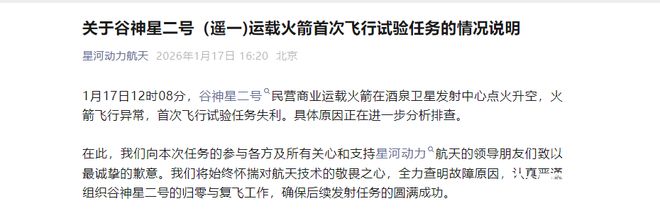
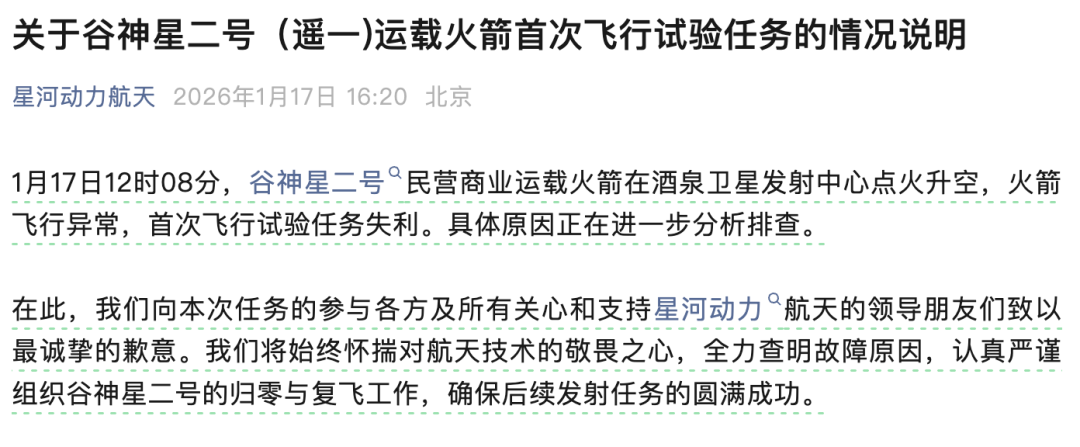
商业航天巨头致歉,估值150亿元,已启动IPO辅导
Xin Lang Cai Jing· 2026-01-17 11:30
Core Viewpoint - The first flight test of the Ceres II commercial rocket by Star River Dynamics was unsuccessful due to an anomaly during flight, with the specific cause under further investigation [1]. Group 1: Company Overview - Star River Dynamics, established in 2018, is the first private commercial rocket company in China to achieve mass production and high-density launches [3]. - The company has successfully conducted 21 commercial launches, delivering a total of 89 satellites into their designated orbits [3]. - The Ceres I rocket is the main model for Star River Dynamics, holding a competitive position in the commercial launch market [3]. Group 2: Recent Developments - On January 16, 2026, Star River Dynamics successfully launched the Ceres I sea-launch variant, marking a positive start for private commercial launches in 2026 [3]. - The company has completed 10 rounds of financing, with a valuation of approximately 15 billion yuan, and has submitted an IPO counseling report in October 2025 [3]. Group 3: Leadership and Ownership - The founder and chairman Liu Baiqi and president Liu Jianshe are acting in concert, holding a combined direct and indirect stake of 32.36% in the company [4]. Group 4: Industry Context - Other domestic commercial space companies, including Blue Arrow Aerospace, Tianbing Technology, China Aerospace Science and Industry Corporation, and Interstellar Glory, have also initiated IPO processes [5]. - Blue Arrow Aerospace's IPO application has been accepted, aiming to raise 7.5 billion yuan, while China Aerospace's listing counseling status has changed to acceptance as of January 17, 2026 [5].
商业航天热度持续攀升,通用航空ETF基金(561660)涨超5%
Xin Lang Cai Jing· 2026-01-06 06:45
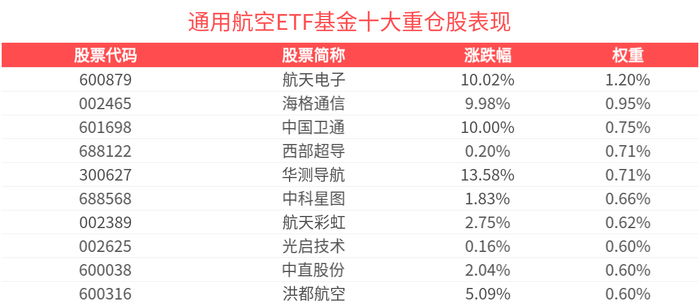
Core Viewpoint - The general aviation theme index in China is experiencing significant growth, with a strong performance from constituent stocks and an optimistic outlook for the commercial space industry in 2026 [1][2]. Group 1: Market Performance - As of January 6, 2026, the China General Aviation Theme Index (931855) rose by 4.62%, with notable increases in constituent stocks such as Huace Navigation (300627) up by 13.58%, Aerospace Electronics (600879) up by 10.02%, and Beidou Star (002151) up by 10.01% [1]. - The General Aviation ETF (561660) increased by 5.17%, marking its third consecutive rise, with the latest price reported at 1.34 yuan [1]. Group 2: Industry Developments - The year 2026 is anticipated to be a significant year for China's commercial space sector, with multiple rocket launches expected, including the first flight of a 5-meter diameter reusable rocket and the Long March 10甲 rocket preparing for its first orbital flight [1]. - Several medium to large commercial rockets, such as Tianlong 3, Gushenxing 2, and others, are poised for their inaugural launches in 2026 [1]. - The IPO process for commercial space companies is accelerating, with at least 10 companies currently initiating their IPOs [1]. Group 3: Market Sentiment - Zhongyin Securities believes that the commercial space theme is entering a "warming" phase, supported by improved top-level design and new policy backing, which clarifies the development blueprint for the industry and enhances market confidence in its long-term growth [1]. - The trading activity in the General Aviation ETF was robust, with a turnover rate of 24.55% and a transaction volume of 16.62 million yuan, indicating active market participation [1].
长征十二号甲可重复使用运载火箭计划今日首飞!航空航天ETF天弘(159241)近10日净流入超3400万元,跟踪指数深V反转!
Sou Hu Cai Jing· 2025-12-23 02:21
Core Insights - The aerospace ETF Tianhong (159241) has seen a significant increase in trading volume and fund inflow, with a turnover of 5.1% and a transaction value of 29.24 million yuan on December 23, 2025 [1] - The ETF has grown by 66.58 million yuan in scale and 31 million shares in the last two weeks, indicating strong investor interest [1] - The ETF tracks the National Aerospace Industry Index, which has a high defense and military weight of 96.2%, making it the highest military content index in the market [1] Product Highlights - The Tianhong aerospace ETF (159241) includes major stocks such as AVIC Chengfei, AVIC Shenyang, AVIC Xifei, and Aero Engine Corporation of China, focusing on core suppliers for fighter jets [1] - The Long March 12A reusable launch vehicle, developed by the China Aerospace Science and Technology Corporation, is set for its maiden flight, marking a significant event in the aerospace sector [2] Industry Trends - The commercial aerospace sector is entering a period of rapid growth, with expectations for a global explosion in commercial space activities over the next two years [2] - The demand for launch services and satellite networking is anticipated to accelerate, supported by successful launches of new rockets like the Zhuque-3 and Long March 12A [2] - The establishment of a commercial aerospace administration and the introduction of specialized development plans are optimizing the policy environment, facilitating the transition of China's commercial aerospace from exploration to growth [2]