电子顺磁共振波谱仪

Search documents
国产遥遥领先,2025年电子顺磁共振波谱仪全景分析
仪器信息网· 2026-01-27 09:02
Core Insights - The domestic electronic paramagnetic resonance spectrometer market is expected to establish a dominant position by 2025, with Guoyi Quantum standing out as a leader, marking a significant transition from follower to leader, thus driving scientific research innovation and industrial upgrading [1][2]. Market Overview - The total bidding amount for electronic paramagnetic resonance spectrometers in 2025 is estimated to reach 178.678 million yuan, with 95 sets of equipment procured. The procurement demand is highly concentrated among 83 institutions, primarily universities, research institutes, and hospitals, across 27 provinces/municipalities [3]. Demand Structure - The procurement market is centered around the East China region, which is the most active area, accounting for 37.3% of the total procurement amount and 32.6% of the quantity. This indicates a significant market concentration effect [4][6]. Buyer Distribution - Universities dominate the market, accounting for 86.3% of the procurement amount and 88.4% of the quantity. Research institutes and hospitals have significantly lower shares, indicating that electronic paramagnetic resonance spectrometers primarily serve research and educational purposes [11][13]. Brand Landscape - The market is predominantly led by domestic brands, with Guoyi Quantum capturing 86.0% of the bidding amount and 78.9% of the quantity. Domestic brands account for 86.7% of the total bidding amount, while imported brands hold only 13.3% [14][18]. Product Structure - In terms of product types, vertical devices lead the market with a 49.7% share in bidding amount, while desktop devices account for 52.6% in quantity, indicating a preference for high-value equipment in procurement [19][21]. Popular Models - Guoyi Quantum's models, particularly the EPR200M and EPR200-Plus, dominate the market with a total of 60 units sold, significantly outperforming competitors like Bruker [27][28].


研判2026!中国量子精密测量行业政策、产业链、市场规模、应用分布、竞争格局及发展趋势分析:市场规模有望达到5.2亿美元,军事国防领域为主要市场[图]
Chan Ye Xin Xi Wang· 2026-01-27 01:29
Core Insights - Quantum precision measurement leverages the high sensitivity of quantum states to surpass classical measurement limits, with applications in communication, navigation, energy, and healthcare, showcasing advantages of "ultra-precision, high stability, and anti-interference" [1][5][6] Industry Overview - The global quantum precision measurement market is projected to grow from $1.67 billion in 2024 to approximately $2.24 billion in 2026, with a forecasted market size of $4.457 billion by 2035, reflecting a compound annual growth rate (CAGR) of 14.4% from 2024 [6] - In China, the quantum precision measurement market is expected to reach $295 million in 2024, $435 million in 2025, and $520 million in 2026, with a long-term projection of $1.053 billion by 2035 [6][7] Application Distribution - The primary applications of quantum precision measurement in China are in military defense, which holds a market share of 58.98%, followed by civilian and scientific fields, which together account for approximately 10.51% [7] Industry Chain - The upstream of the quantum precision measurement industry includes components such as lasers, low-temperature equipment, and superconducting magnets, while the midstream focuses on the production of various measurement devices, including time, inertial, magnetic, and gravity measurement equipment [8][9] Competitive Landscape - The domestic quantum precision measurement market is characterized by increasing competition, with key players including Guo Yi Quantum, Tian Ao Electronics, and others, focusing on various measurement devices such as quantum clocks and quantum gravity meters [11][12] - Guo Yi Quantum is recognized as a leading company in the sensor industry, providing enhanced quantum sensors and scientific instruments, with significant advancements in measurement sensitivity and precision [12] Development Trends - The integration of AI with quantum precision measurement is anticipated to drive technological and industry transformations, enhancing data processing and expanding application ranges [13] - Future advancements will focus on improving technology maturity and overcoming challenges related to size, power consumption, cost, and adaptability to task environments [13][14]




一品牌独占7成,2025年磁共振波谱仪5.3亿中标盘点
仪器信息网· 2026-01-22 09:03
Core Insights - The article highlights the significant procurement trends and competitive landscape of magnetic resonance spectrometers in China, with a total procurement amount reaching 530 million yuan by December 31, 2025 [1][4]. Group 1: Market Overview - A total of 122 procurement notices for "magnetic resonance spectrometers" were disclosed, involving 125 units of equipment [1][4]. - Domestic brands dominate the low to mid-end market with a 44% share in quantity, while imported brands lead the high-end market with a 75% share in procurement amount [6][3]. Group 2: Procurement Units - Universities are the primary purchasers, acquiring 112 units for a total of approximately 48.26 million yuan, accounting for 91.2% of the total procurement amount [8][9]. - Research institutes and medical colleges also participate, with research institutes purchasing 11 units and medical colleges purchasing 2 units, indicating a focus on high-end equipment in the medical field [9]. Group 3: Regional Distribution - The East China region is the largest market for magnetic resonance spectrometers, with 44 units purchased and a total procurement amount of 183 million yuan, representing 34.6% of the national total [12]. - Other regions such as Southwest, Northeast, North China, South China, and Central China show balanced procurement scales, while Northwest China has the lowest procurement activity [14]. Group 4: Brand Landscape - In the nuclear magnetic resonance (NMR) segment, Bruker leads with 46 units and a procurement amount of 298 million yuan, capturing nearly 70% of the market share [19]. - In contrast, the electron paramagnetic resonance (EPR) segment is dominated by domestic brands, with Guoyi Quantum securing 81% of the market share [21]. Group 5: Price Structure - The procurement price structure is pyramid-shaped, with 70% of devices priced at 5 million yuan or below, indicating a high demand for mid to low-end equipment [23]. - High-end devices priced above 10 million yuan are primarily purchased by universities, reflecting their strong demand for advanced research equipment [23]. Group 6: Popular Models - The article lists the most popular models of magnetic resonance spectrometers, with Bruker's Ascend Evo series and Guoyi Quantum's models being among the top choices in the market [24].

企业牢牢站稳科创舞台“C位”
Ke Ji Ri Bao· 2026-01-08 08:15
Group 1 - The core role of enterprises in technological innovation is emphasized in the recent guidelines from the Central Committee, highlighting the need for innovation resources to concentrate on enterprises [1][3] - The R&D expenditure in China is projected to reach 3.6 trillion yuan, accounting for 2.68% of GDP by 2024, with enterprises contributing over 77% of this investment [2] - The strategic direction to strengthen the role of enterprises in innovation has been consistently reinforced in national policies, indicating a clear commitment to gather innovation resources within enterprises [3][4] Group 2 - The government is shifting from being a "leader" to an "enabler," providing maximum freedom for innovation and creating a supportive ecosystem for future industries [8][9] - Companies like Huasheng Composite Technology have benefited from local innovation platforms that assist in addressing financing and market challenges, showcasing the importance of specialized support for technology transfer [10] - The integration of technology, industry, and finance is being optimized to create a virtuous cycle, with enterprises taking a leading role in original innovation and resource allocation [10]
由中科大少年班走出的“90后”掌舵!国仪量子估值近百亿
Xin Lang Cai Jing· 2025-12-30 09:46
Core Viewpoint - Guoyi Quantum has successfully broken the foreign monopoly in high-end scientific instruments and is planning an IPO on the Sci-Tech Innovation Board to support the localization of high-end scientific instruments in China [1]. Group 1: Company Overview - Guoyi Quantum, established in December 2016, is recognized as a national-level specialized and innovative "little giant" enterprise and was included in the list of Chinese unicorn companies in 2024 [5]. - The company focuses on the research and development of high-end scientific instruments, providing essential equipment for quantum technology, materials science, chemical engineering, biomedicine, and advanced manufacturing [10]. - Guoyi Quantum has developed products that have broken the long-standing monopoly of international giants in certain segments of the domestic instrument market, achieving performance metrics that meet or exceed international competitors [10]. Group 2: Leadership and Control - The actual controllers of Guoyi Quantum are He Yu and Rong Xing, who collectively control 34.87% of the voting rights through various indirect holdings [3]. - He Yu, a notable figure from the University of Science and Technology of China (USTC), has held multiple leadership roles and has been recognized with various awards for his contributions to the industry [4]. - Rong Xing, also a USTC alumnus, has a distinguished academic background and has served in various significant positions within the scientific community [4]. Group 3: Financial Performance - Guoyi Quantum's revenue has shown significant growth, with figures of 151.45 million, 400 million, 501 million, and 171 million yuan for the years 2022 to 2025, reflecting year-on-year growth rates of 163.78% and 25.49% for 2023 and 2024 respectively [13]. - Despite the revenue growth, the company has not yet achieved profitability, with net losses reported at -168 million, -169 million, -104 million, and -74 million yuan for the same period [14]. - The company anticipates turning a profit in 2026, contingent on factors such as product strength, market expansion, and cost control [15]. Group 4: Market Position and Competition - The scientific instrument market has been dominated by international firms like Thermo Fisher, Danaher, and Agilent, which have established a strong presence over decades [16]. - Domestic manufacturers, including Guoyi Quantum, are gradually gaining recognition and breaking the monopoly of these international giants through technological advancements [16]. - Guoyi Quantum faces challenges in enhancing brand recognition and overcoming market penetration barriers due to the long-standing dominance of foreign brands [16][17].

国仪量子冲击科创板,面向量子科技等领域,三年半亏损超4亿
Ge Long Hui· 2025-12-23 09:56
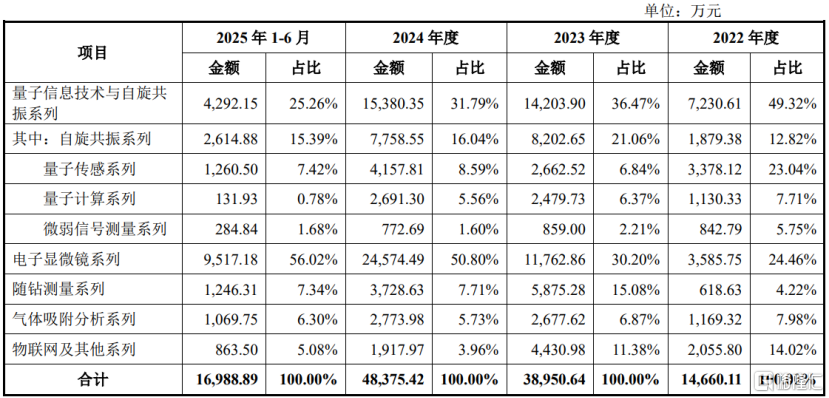
Core Viewpoint - The article highlights the growing interest and investment in quantum technology, particularly in the context of China's "14th Five-Year Plan," which includes quantum technology as a strategic growth point for the new economy. The IPO wave in the quantum technology sector is beginning, with Guoyi Quantum Technology (Hefei) Co., Ltd. filing for an IPO on the Sci-Tech Innovation Board [1]. Company Overview - Guoyi Quantum focuses on the research and development of high-end scientific instruments, providing advanced scientific equipment and solutions for various fields, including quantum technology, materials science, and biomedicine [1][4]. - The company has launched several products, including electron paramagnetic resonance spectrometers and scanning electron microscopes, breaking the long-standing dominance of international giants in certain segments of the domestic market [4]. Revenue Composition - From 2022 to the first half of 2025, the revenue share from quantum information technology and spin resonance decreased from 49.32% to 25.26%, while the revenue share from electron microscope series increased from 24.46% to 56.02% [5][6]. - The company’s revenue figures for the years 2022 to 2025 (first half) are approximately 151 million, 400 million, 501 million, and 171 million respectively, with corresponding net losses of approximately -129 million, -146 million, -86 million, and -76 million [11]. Market Dynamics - The global market for laboratory analytical instruments is projected to grow from $82.95 billion in 2024 to $101.58 billion by 2029, with an average annual growth rate of 4.1% [12]. - China's laboratory analytical instrument market is expected to reach $9.28 billion in 2024, with a compound annual growth rate of 4.7% from 2024 to 2029, positioning it as the second-largest market among major economies [14]. Competitive Landscape - The high-end scientific instrument market in China has been dominated by foreign manufacturers, with over 75% of large scientific instruments in universities and research institutions being imported [18]. - Guoyi Quantum faces challenges in terms of historical accumulation, operational scale, product matrix, financial strength, market share, and brand recognition compared to established players like Thermo Fisher and Agilent [18]. Management and IPO Details - Guoyi Quantum, established in 2016, is led by a young management team, including a 1992-born chairman and general manager, He Yu, who has a PhD from the University of Science and Technology of China [21]. - The company aims to raise approximately 1.169 billion for projects related to high-end scientific instrument industrialization, quantum technology research, and application center network construction [22].
国仪量子闯关IPO:持续亏损,现金流承压、高管薪酬高企
Sou Hu Cai Jing· 2025-12-22 10:47
Core Viewpoint - Guoyi Quantum Technology (Hefei) Co., Ltd. has officially received acceptance for its IPO application, aiming to raise approximately 1.169 billion yuan and become the "first domestic quantum sensor stock" on the Sci-Tech Innovation Board [2] Group 1: Company Overview - Guoyi Quantum is a rare unicorn in the domestic sensor sector, leveraging core technologies from the University of Science and Technology of China to achieve breakthroughs in quantum sensing and spin resonance, disrupting the long-standing monopoly of foreign manufacturers [6] - The company’s main products include enhanced quantum sensors and high-end scientific instruments, with applications across materials science, biomedicine, industrial quality inspection, and energy exploration [6] - Guoyi Quantum has established a comprehensive product service system covering key components, scientific instruments, and industry solutions, with clients including leading companies like CATL, BYD, and BOE [6] Group 2: Shareholding Structure - As of the signing date of the prospectus, the shareholding structure of Guoyi Quantum is notably dispersed, with actual controllers He Yu and Rong Xing indirectly controlling 34.87% of the voting rights through various holding platforms [7] - If the IPO is successful, their voting rights will be diluted to 31.38%, indicating a relatively low overall shareholding ratio [7] - Major shareholders holding over 5% of shares include Keda Holdings, Shuhua Technology, and Hillhouse Capital, with respective holdings of 14.75%, 8.43%, and 6.12% [7] Group 3: Fundraising and Project Focus - The company plans to publicly issue no more than 40.01 million ordinary shares, aiming to raise approximately 1.169 billion yuan, which will be allocated to three core projects: high-end scientific instrument industrialization, quantum technology research institute construction, and application center network development [7] Group 4: Financial Performance - Guoyi Quantum has shown significant revenue growth, with revenue increasing from 151 million yuan in 2022 to 501 million yuan in 2024, representing a compound annual growth rate of 81.94% [9] - Despite the revenue growth, the company continues to face pressure on profitability, with cumulative losses exceeding 400 million yuan as of mid-2025 [11] - The company reported net losses of 129 million yuan, 146 million yuan, and 86.2 million yuan for the years 2022 to 2024, with a net loss of 75.78 million yuan in the first half of 2025 [11] Group 5: Cash Flow and R&D Investment - The company has consistently reported negative cash flow from operating activities, indicating a lack of self-sustaining cash generation capability [11] - R&D investment as a percentage of revenue remains high, at 29.78% in the first half of 2025, although it has decreased from previous years [11] Group 6: Industry Competition - The competition in the quantum technology sector is intensifying, with over 30 related companies in Hefei's "Quantum Avenue," creating a complete industrial ecosystem [13] - Guoyi Quantum faces direct competition from industry leaders like Guandun Quantum, which has a market value of 47.5 billion yuan, and Benyuan Quantum, which is also progressing with its IPO [13] - The company's ongoing losses may impact its valuation and pricing in the capital market, making it crucial to demonstrate profitability potential to succeed in its IPO [14]

【数字经济资本市场周概览】智慧树港交所主板挂牌上市,飞速创新向港交所递交招股书
GUOTAI HAITONG SECURITIES· 2025-12-14 14:41
Financing Overview - A total of 99 financing events occurred in the tech industry from December 6 to December 12, 2025, with 81 events in China and 18 abroad[9] - The leading sectors in domestic financing were advanced manufacturing (44 events), artificial intelligence (23 events), and automotive transportation (5 events)[9] IPO and Prospectus Submissions - Wisdom Tree was listed on the Hong Kong Stock Exchange on December 8, 2025[12] - Fast Innovation submitted a prospectus for a proposed listing on the Hong Kong main board[14] - National Instrument Quantum and Precision Laser submitted prospectuses for listings on the Shanghai STAR Market[16][19] Market Performance - The Shanghai Composite Index fell by 0.34% to 3889 points, while the Shenzhen Component Index rose by 0.84% to 13258 points, and the ChiNext Index increased by 2.74% to 3194 points[21] - The semiconductor index rose by 2.84%, automotive electronics by 1.82%, artificial intelligence by 0.45%, and the metaverse index by 1.58%[21] Valuation Metrics - The PE ratios for the semiconductor, automotive electronics, artificial intelligence, and metaverse indices were 130.50, 37.94, 72.67, and 51.63, respectively, reflecting week-on-week increases of 2.5%, 1.5%, 0.8%, and 1.7%[25] - The PB ratios for the same indices were 6.34, 3.87, 7.51, and 5.56, with week-on-week increases of 2.5%, 1.4%, 0.9%, and 1.7%[27] Risk Factors - Market competition risk exists due to rapid growth in key sectors like semiconductors and AI, potentially intensifying competition[28] - Risks related to technological advancements not meeting expectations could hinder sector growth[29] - Market demand growth may fall short of expectations, impacting overall sector development[30]
90后中科大学霸带队冲刺IPO!合肥“三剑客”组团进军国际市场
创业邦· 2025-12-14 03:16
Core Viewpoint - Guoyi Quantum Technology (Hefei) Co., Ltd. is set to go public on the Shanghai Stock Exchange's Sci-Tech Innovation Board, aiming to raise 1.169 billion yuan, with a valuation exceeding 1 billion USD, marking it as a unicorn in the quantum technology sector [2][14]. Company Background - Founded in December 2016 by 90s alumni of the University of Science and Technology of China, Guoyi Quantum aims to break the long-standing foreign technology monopoly in quantum precision measurement [4][9]. - The company was established by He Yu and Rong Xing, who were mentored by academician Du Jiangfeng, a pioneer in quantum computing research in China [8][9]. Business Model and Technology - Guoyi Quantum focuses on integrating quantum technology into traditional scientific instruments, enhancing measurement precision and sensitivity [9][10]. - The company has developed groundbreaking products, including the first domestically produced commercial X-band electron paramagnetic resonance spectrometer in 2018, and the world's first commercial low-temperature scanning nitrogen-vacancy probe microscope in 2023 [10][12]. Financial Performance - The company has shown significant revenue growth, with projected revenues of 1.51 billion yuan in 2022, 4.0 billion yuan in 2023, and 5.01 billion yuan in 2024, despite ongoing net losses [19][20]. - Guoyi Quantum has delivered over 1,000 high-end scientific instruments to top universities and research institutions, including Tsinghua University and the University of Oxford [20]. Investment and Funding - Since its inception, Guoyi Quantum has completed at least seven rounds of financing, attracting investments from notable venture capital firms such as Hillhouse Capital and IDG Capital, as well as state-owned enterprises [14][16]. - The company plans to use the funds raised from its IPO for high-end scientific instrument industrialization projects and the establishment of a quantum technology research institute [21]. Competitive Landscape - Guoyi Quantum is part of a trio of leading quantum technology firms in China, alongside Guodun Quantum and Benyuan Quantum, each focusing on different aspects of quantum technology [23][25]. - The company faces competition from established international players in the precision measurement field but leverages its innovative technology and understanding of domestic market needs to gain a competitive edge [26][27].

知名国产仪器公司IPO获受理:募资11.69亿元
仪器信息网· 2025-12-11 09:07
Core Viewpoint - Guoyi Quantum's IPO application has been accepted, aiming to raise 1.169 billion yuan for projects focused on high-end scientific instrument industrialization, quantum technology research institute construction, and application center network development, all centered around its main business in scientific instruments [1][2]. Group 1: Company Mission and Product Offerings - Guoyi Quantum is committed to the mission of "creating instruments for the country," focusing on the independent research and industrialization of high-end scientific instruments [5]. - The company's product range includes electronic paramagnetic resonance spectrometers, scanning NV probe microscopes, field emission scanning electron microscopes (SEM), and focused ion beam electron beam dual beam microscopes (FIB-SEM), breaking the monopoly of international instrument giants in several niche areas [5]. - The electronic microscope series has become a significant revenue driver, with projected sales revenue of 246 million yuan in 2024, accounting for 50.80% of total revenue, indicating that domestic electron microscopes can compete with international brands [5]. Group 2: Financial Performance and Growth - The company has experienced rapid revenue growth, with figures rising from 151 million yuan in 2022 to 399 million yuan in 2023, and projected to reach 501 million yuan in 2024, resulting in a compound annual growth rate of 81.94% over the past three years [8]. - Despite the revenue growth, the company has not yet achieved profitability due to ongoing high levels of R&D and market investment, with R&D expenses accounting for 75.34% of revenue in 2022 and 23.13% in 2024 [8]. - As of the end of 2024, the company will have a research and development staff ratio of 31.28% and has been granted 129 authorized invention patents, contributing to the establishment of national standards in the field of quantum measurement [8]. Group 3: Fundraising and Strategic Focus - The IPO funds will be allocated to three main projects: - High-end scientific instrument industrialization project to expand existing product capacity and promote new product launches, solidifying its industrial advantages in electron microscopes and quantum measurement [9]. - Quantum technology development research institute construction project to enhance cutting-edge technology research in quantum sensing and precision measurement, maintaining technological leadership [9]. - Application center network construction project to establish domestic and international demonstration, testing, and service centers, improving customer support capabilities and brand influence, and accelerating global market expansion [9]. Group 4: Market Position and Future Outlook - In a global scientific instrument market dominated by international giants like Thermo Fisher, Danaher, and Ametek, Guoyi Quantum is gradually making inroads in strategic areas such as electron microscopy and quantum precision measurement through independent innovation [11]. - Successfully listing on the Sci-Tech Innovation Board will provide strong support for subsequent R&D expansion and market development, injecting new momentum into China's path toward self-sufficiency in high-end scientific instruments [11].