
企业科技创新主体地位

Search documents
打通科创服务“最后一公里”
Xin Lang Cai Jing· 2026-01-24 22:39
Group 1 - The core viewpoint emphasizes that Beijing's economy surpassed 5 trillion yuan with a growth rate of 5.4%, highlighting the significant role of technology innovation enterprises in achieving high-quality development during the "14th Five-Year Plan" [2] - The "15th Five-Year Plan" suggests strengthening the role of enterprises in technological innovation and gathering innovation resources around them, which aligns with Beijing's planning to cultivate leading technology enterprises [2] - The current foundation for technology innovation services in Beijing is strong, and future efforts should focus on providing tiered and precise services, as well as building digital service platforms to stimulate corporate innovation [2] Group 2 - Different stages of enterprise development require tailored technology innovation services, such as low-cost office spaces and seed funding for startups, and enhanced financial support for growth-stage companies [3] - For mature enterprises, support should include forming innovation alliances, participating in national standard formulation, and expanding into international markets [3] - A recommendation is made to integrate existing dispersed platform resources into a unified digital platform for technology innovation services, which would include functions like policy push, resource matching, financing applications, and response to demands [3]

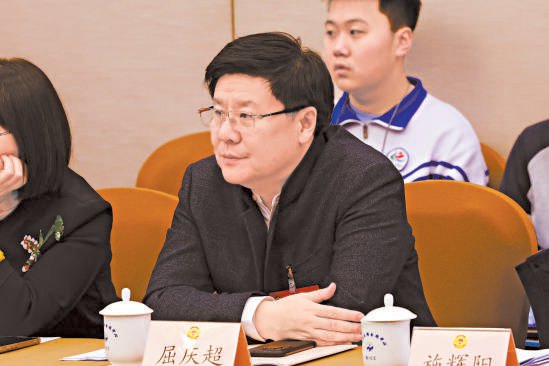
如何强化企业科技创新主体地位?专访科技部部长阴和俊
Yang Shi Xin Wen Ke Hu Duan· 2026-01-18 10:57
Core Viewpoint - The recent Central Economic Work Conference emphasizes the integration of technological and industrial innovation as a key focus for economic work in 2026, highlighting the importance of strengthening the role of enterprises in technological innovation [1][3]. Group 1: Enterprise R&D Investment - In 2024, China's enterprise R&D expenditure is projected to reach 2.8 trillion yuan, representing an 8.8% increase from the previous year [3]. - Enterprises account for 77.1% of total R&D spending, making them the primary driver of R&D growth in the country [3]. - The number of unicorn companies in China has reached 372, accounting for over 30% of the global total [3]. Group 2: Policy and Institutional Support - The Ministry of Science and Technology plans to enhance the institutional framework to solidify the role of enterprises in technological innovation, including listening to enterprise opinions in major strategic decisions [5][6]. - A mechanism will be established to allow enterprise projects to ascend to national project status, promoting collaboration between leading tech enterprises, universities, and research institutions [6][10]. Group 3: Financial Support for Innovation - A series of policies aimed at developing a robust technology finance system have been introduced, including an increase in the scale of re-loans for technological innovation and the launch of a "technology board" in the bond market [8]. - The government will continue to enhance financial support for technology-oriented SMEs and facilitate the conversion of technological achievements [8][10]. Group 4: Tax Incentives and Results Transformation - The Ministry of Science and Technology will improve the implementation of tax incentives for technological innovation, increasing the proportion of R&D expenses that can be deducted [10]. - Efforts will be made to enhance the capacity of enterprises to absorb and transform technological achievements, accelerating the application of significant technological results [10].

科技部部长阴和俊:从制度上落实企业科技创新主体地位 培育壮大科技领军企业
Xin Lang Cai Jing· 2026-01-14 08:17
Group 1 - The core viewpoint emphasizes the importance of strengthening the role of enterprises in technological innovation as a key to integrating technological and industrial innovation [1] - The Ministry of Science and Technology will work with relevant departments to institutionalize the role of enterprises in technological innovation, fostering leading technology companies and facilitating the transition from strong technology to strong enterprises, industries, and economy [1] - The focus will be on enhancing the decision-making role of enterprises in technological innovation, encouraging both state-owned and private enterprises to participate in national technological innovation decisions [1] Group 2 - There will be an emphasis on increasing the R&D investment of enterprises, including improving tax incentives for R&D expenses and enhancing financial support for technology-oriented SMEs [1] - Enterprises will be encouraged to take on or participate in major national research tasks, with mechanisms established for enterprise projects to ascend to national project status [1] - The aim is to enhance the ability of enterprises to absorb and convert technological achievements, accelerating the application of significant technological results and fostering the incubation of technology-oriented SMEs [2]
企业牢牢站稳科创舞台“C位”
Ke Ji Ri Bao· 2026-01-08 08:15
Group 1 - The core role of enterprises in technological innovation is emphasized in the recent guidelines from the Central Committee, highlighting the need for innovation resources to concentrate on enterprises [1][3] - The R&D expenditure in China is projected to reach 3.6 trillion yuan, accounting for 2.68% of GDP by 2024, with enterprises contributing over 77% of this investment [2] - The strategic direction to strengthen the role of enterprises in innovation has been consistently reinforced in national policies, indicating a clear commitment to gather innovation resources within enterprises [3][4] Group 2 - The government is shifting from being a "leader" to an "enabler," providing maximum freedom for innovation and creating a supportive ecosystem for future industries [8][9] - Companies like Huasheng Composite Technology have benefited from local innovation platforms that assist in addressing financing and market challenges, showcasing the importance of specialized support for technology transfer [10] - The integration of technology, industry, and finance is being optimized to create a virtuous cycle, with enterprises taking a leading role in original innovation and resource allocation [10]
新视野丨推动科技创新和产业创新深度融合
Zhong Yang Ji Wei Guo Jia Jian Wei Wang Zhan· 2025-12-16 00:49
Core Viewpoint - Nanjing is seizing the opportunity of "Artificial Intelligence +" to accelerate the integration of technological innovation and industrial innovation, aiming to build a comprehensive AI ecosystem and establish itself as a landmark for AI industry and innovation [2] Group 1: Technological and Industrial Innovation Integration - The integration of technological and industrial innovation is essential for achieving high-level technological self-reliance and leading the development of new productive forces [2][4] - The 14th Five-Year Plan emphasizes the importance of this integration as a key focus for effective economic work [2] - The central government's decisions highlight the significant role of deep integration in promoting new productive forces and guiding the path for development [2] Group 2: High-Quality Technological Supply - New productive forces are primarily driven by breakthroughs in technology, with technological innovation being a core element for developing these forces [3][4] - China’s R&D investment is projected to exceed 3.6 trillion yuan in 2024, with the total number of R&D personnel ranking first in the world [4] - The national comprehensive innovation capability ranking improved from 14th in 2020 to 10th in 2024, with the "three new" economy accounting for 18% of GDP [4] Group 3: Strengthening Enterprise Innovation - Enterprises are crucial as the main participants in economic activities and play a significant role in technological innovation [6][7] - The proportion of R&D investment by enterprises exceeds 77%, and the industrialization rate of enterprise invention patents has steadily increased for five consecutive years [7] - Policies are being implemented to support enterprises in leading innovation consortia and undertaking national technological tasks [7] Group 4: Promoting Technology Transfer and Application - The transformation of technological achievements into productive forces is essential for developing new productive forces [8][9] - The national technology contract transaction volume is expected to reach 6.8 trillion yuan in 2024, with significant growth in technology transfer mechanisms [9] - A multi-level technology transaction network is being formed through various institutions and platforms to facilitate technology transfer [9][10] Group 5: Policy and Financial Support - Policies are being developed to enhance the autonomy of technology personnel in the distribution of benefits from technology transfer [10][11] - The establishment of a financial ecosystem covering the entire lifecycle of technology enterprises is being prioritized to support the commercialization of technological achievements [11]
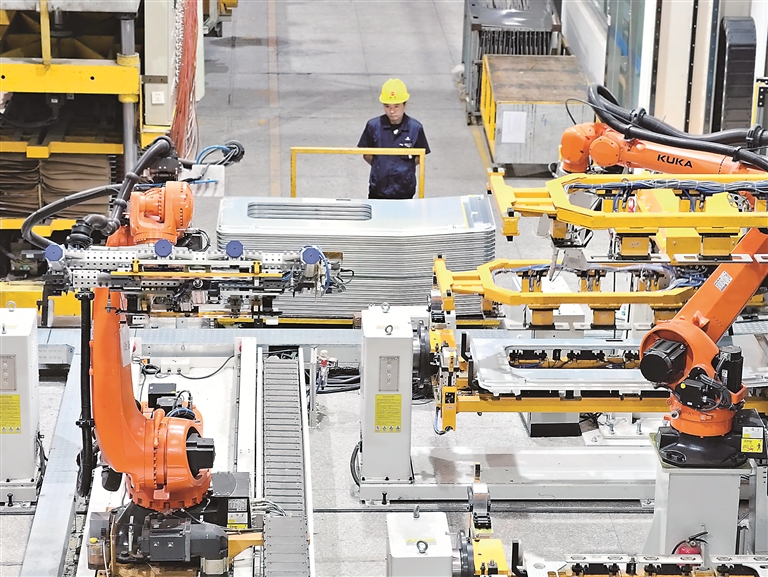
省政协就强化我省企业科技创新主体地位重点提案进行督办调研
Xin Hua Ri Bao· 2025-10-15 21:25
Core Viewpoint - The article emphasizes the importance of strengthening the role of enterprises in technological innovation within Jiangsu Province, as highlighted by the proposal from the Jiangsu Provincial Committee of the Democratic Progressive Party [1]. Group 1: Proposal and Research - The proposal focuses on enhancing the status of enterprises as the main body of technological innovation in the province [1]. - A field investigation was conducted at Asim Technology (Nanjing) Co., Ltd. and Jiangsu Nioao Optoelectronic Technology Co., Ltd. to understand their current work situation [1]. Group 2: Government and Committee Actions - The provincial government departments, including the Provincial Department of Science and Technology and the Provincial Department of Industry and Information Technology, provided updates on the handling of the proposal [1]. - Committee members offered suggestions on how to reinforce the role of enterprises in technological innovation during the meeting [1]. Group 3: Strategic Importance - The article highlights the need to deeply understand and implement General Secretary Xi Jinping's important discourse on strengthening the role of enterprises in technological innovation [1]. - It stresses the significance of focusing on key areas such as technology decision-making, R&D investment, research organization, and the transformation of scientific achievements [1]. Group 4: Future Directions - There is a call for deeper integration of industry, academia, and research led by enterprises to enhance the conversion and industrialization of technological achievements [1]. - The article advocates for active research and suggestions to support high-quality development and the reform of the education and technology talent system [1].
青海:强化企业科技创新主体地位 赋能高质量发展
Zhong Guo Chan Ye Jing Ji Xin Xi Wang· 2025-07-29 22:26
Core Insights - The report highlights the progress of Qinghai Province in strengthening the role of enterprises in technological innovation, with a focus on ecological civilization and industrial development [1][4] Group 1: Enterprise Development - Qinghai Province has established a tiered cultivation system for technology enterprises, including 300 high-tech enterprises, 22 provincial "little giant" enterprises, and 731 provincial technology enterprises [1] - Among the 731 provincial technology enterprises, 442 directly contribute to ecological civilization and industrial development, accounting for 60% [1] Group 2: Policy and Support Mechanisms - The provincial government has implemented a dynamic management database for technology enterprises, with 328 key enterprises included, and a 32% year-on-year increase in high-tech enterprises [2] - A provincial special fund has been established to support enterprise incubation and innovation, with 29% of central and provincial technology special funds allocated for enterprise innovation in 2024 [2] Group 3: Innovation Platforms - Qinghai has built a total of 1 national enterprise technology center and 43 provincial technology centers, with a 20.5% coverage rate of R&D institutions in large-scale industrial enterprises [3] - The province aims to create ten national-level technology innovation platforms, focusing on highland resources and energy, to enhance regional innovation capabilities [3] Group 4: Challenges and Recommendations - The report identifies challenges such as a limited number of innovation entities, insufficient innovation capacity, and low R&D investment intensity [3] - Recommendations include strengthening the decision-making role of enterprises in technology innovation and enhancing their R&D investment and result transformation capabilities [3]
【光明论坛】持续提升创新能力,赋能高质量发展
Ren Min Wang· 2025-07-22 01:01
Group 1 - China's R&D investment reached a new high, with a projected increase of nearly 50% compared to the end of the 13th Five-Year Plan, amounting to an additional 1.2 trillion yuan, and R&D intensity rising to 2.68%, approaching the OECD average [1][2] - The share of corporate R&D investment in total social R&D expenditure exceeded 77% during the 14th Five-Year Plan, highlighting the significant role of enterprises in technological innovation [2][4] - The total number of R&D personnel in China reached approximately 7.24 million in 2023, maintaining the world's largest R&D workforce for 11 consecutive years [2][5] Group 2 - There is a strong emphasis on enhancing original innovation capabilities through strategic basic research, with a focus on increasing the proportion of basic research funding within total R&D expenditure [3][4] - The establishment of a corporate-led technological innovation ecosystem is encouraged, with support for leading enterprises to undertake major national technology projects and form innovation alliances [4][5] - The integration of talent, capital, data, and legislation is crucial for supporting innovation-driven economic development, with differentiated talent policies and optimized risk-sharing mechanisms being implemented [5][6]
习近平主持召开二十届中央全面深化改革委员会第一次会议强调守正创新 真抓实干 在新征程上谱写改革开放新篇章李强王沪宁蔡奇出席
Xin Hua Wang· 2025-06-06 03:16
Group 1 - The meeting emphasized the importance of strengthening the role of enterprises in technological innovation as a key measure for deepening the reform of the technology system and achieving high-level self-reliance in technology [2] - It was highlighted that the support for the development of the private economy is a consistent policy of the Central Committee, focusing on optimizing the development environment for private enterprises and removing institutional barriers [3] - The meeting underscored the need for a comprehensive and deep reform that has been historically significant and revolutionary since the 18th National Congress of the Communist Party, showcasing the unique characteristics and advantages of the socialist system with Chinese characteristics [3] Group 2 - The meeting approved several key documents aimed at enhancing the management of state-owned enterprises and supporting the modernization of the economy, including opinions on strengthening the role of enterprises in technological innovation and promoting the development of the private economy [1][2][3] - It was noted that the reform efforts should focus on major issues in building a modern socialist country, utilizing favorable conditions created by institutional reforms to address deep-seated problems and adjust interest structures [4] - The meeting called for increased efforts in reform implementation, emphasizing the need for a precise and efficient mechanism to ensure that reform measures are effectively executed [4]