
量子信息技术

Search documents
企业牢牢站稳科创舞台“C位”
Ke Ji Ri Bao· 2026-01-08 08:15
Group 1 - The core role of enterprises in technological innovation is emphasized in the recent guidelines from the Central Committee, highlighting the need for innovation resources to concentrate on enterprises [1][3] - The R&D expenditure in China is projected to reach 3.6 trillion yuan, accounting for 2.68% of GDP by 2024, with enterprises contributing over 77% of this investment [2] - The strategic direction to strengthen the role of enterprises in innovation has been consistently reinforced in national policies, indicating a clear commitment to gather innovation resources within enterprises [3][4] Group 2 - The government is shifting from being a "leader" to an "enabler," providing maximum freedom for innovation and creating a supportive ecosystem for future industries [8][9] - Companies like Huasheng Composite Technology have benefited from local innovation platforms that assist in addressing financing and market challenges, showcasing the importance of specialized support for technology transfer [10] - The integration of technology, industry, and finance is being optimized to create a virtuous cycle, with enterprises taking a leading role in original innovation and resource allocation [10]
未来五到十年是量子科技发展关键窗口期
Xin Lang Cai Jing· 2025-12-28 20:29
Core Insights - The report by the China Academy of Information and Communications Technology (CAICT) highlights that the next five to ten years will be a critical period for competition in quantum information technology, application transformation, and industrial cultivation [1] Group 1: Market Overview - The average annual growth rate of quantum enterprises has been approximately 60 over the past five years, with over 800 global quantum information-related companies, of which about 50% are quantum computing firms [1] - The distribution of quantum enterprises is as follows: over 230 in the EU (29%), over 210 in the US (26%), and around 140 in China (17%) [1] - Investment and financing in the quantum information sector are expected to surge in 2025, with notable financing events in the first half of the year, including several companies securing millions in funding [1] Group 2: Quantum Computing - Quantum computing is at a critical stage of scientific research and prototype development, with multiple technological routes such as superconducting, ion trap, neutral atom, photonic, silicon semiconductor, and topological methods being pursued [2] - Quantum error correction is essential for transitioning quantum computing from laboratory settings to real-world applications, and quantum computing cloud platforms are vital for commercial viability [2] - The current phase of quantum computing is characterized by significant scientific breakthroughs but still early in engineering applications, necessitating a multi-dimensional perspective on technological progress and application prospects [2] Group 3: Quantum Communication - The quantum communication sector is experiencing rapid development in products that enhance quality and reduce costs, with significant contributions from telecom operators and industry-specific networks [3] - Challenges remain in the promotion and application of quantum secure communication, including the need for improved engineering levels, product quality, and increased competition in the post-quantum cryptography (PQC) industry [3] - The rise of quantum computing poses systemic threats to existing public key cryptography systems, leading to a global consensus on accelerating the development of PQC algorithms and standards [3] Group 4: Quantum Precision Measurement - The quantum precision measurement field is witnessing accelerated application and has broad industrial prospects, particularly in defense, aerospace, resource exploration, and biomedical sectors [4] - The quantum precision measurement industry chain is taking shape, with nearly 150 related companies globally, but large-scale commercialization faces challenges such as technology maturity and market acceptance [4] - The integration of AI with quantum precision measurement is emerging as a new focus, enhancing data processing capabilities and expanding application ranges [4]
软件与服务行业量子信息技术专题研究报告(二):科技巨头加速布局,量子产业前景可期-国元证券
Sou Hu Cai Jing· 2025-12-24 20:09
Core Insights - The report maintains an "Overweight" rating for the industry, focusing on three core areas: quantum communication, quantum computing, and quantum precision measurement, indicating that quantum technology is transitioning from frontier exploration to industrialization, with significant prospects for investment by 2026 [1] Group 1: Quantum Technology Development - Quantum technology is becoming a global strategic high ground, with its industrialization process exceeding expectations. The 2025 Nobel Prize in Physics will be awarded to scientists in the quantum field, further increasing attention on quantum technology [1][2] - The core advantages of quantum technology lie in utilizing quantum superposition and entanglement effects to break through the performance limits of classical information systems, thereby reconstructing computing, communication, and measurement systems [1] Group 2: Market Expansion - The global market for quantum communication is projected to reach $951 million in 2024 and is expected to grow to $10.5 billion by 2034, with a CAGR of approximately 28.3%. The Chinese market is anticipated to grow at a CAGR of 52.3% from 2025 to 2030 [2][34][39] - Quantum computing is expected to reach a global market size of $5.04 billion in 2024, with projections of over $800 billion by 2035, driven by its potential in material design and drug development [2][49] - The global market for quantum precision measurement is estimated to be $1.674 billion in 2024, with expectations to reach $4.497 billion by 2035, showing a growth rate exceeding 30% in China [2] Group 3: Technological and Application Breakthroughs - International giants are leading the industry development, with companies like Microsoft, Google, and IBM making significant advancements in quantum hardware and software. For instance, Microsoft has launched a topological qubit processor, while Google has achieved breakthroughs in quantum error correction [3][8] - Domestic companies are solidifying the industrial foundation, with Guoyi Quantum focusing on quantum precision measurement, Benyuan Quantum launching a quantum control system, and Guodun Quantum achieving mass production of single-photon detectors [3][9] Group 4: Policy and Industry Support - The Chinese government has included quantum technology in its "New Infrastructure" initiative, providing multi-dimensional support from top-level design to technological breakthroughs and application implementation, accelerating industry development [1]


天融信:2018年开始在量子计算领域进行投入和布局
Zheng Quan Ri Bao Zhi Sheng· 2025-10-28 10:24
Core Viewpoint - Tianrongxin has been investing and laying out in the quantum computing field since 2018, indicating a strategic focus on advanced technology development [1] Company Summary - Tianrongxin has invested in Anhui Wentiang Quantum and established a strategic partnership with the company [1] - Anhui Wentiang Quantum is one of the first high-tech enterprises in China engaged in the industrialization of quantum information technology, holding multiple international and domestic patents related to quantum communication technology [1]

十五五展望:未来产业七行业投资策略(附58页PPT)
材料汇· 2025-10-19 13:48
Group 1: Low-altitude Economy - The low-altitude economy is expected to see significant development driven by large-scale infrastructure projects, with 2025 being a pivotal year for the transition from planning to industrial implementation [4] - The establishment of a nationwide low-altitude communication and navigation system is set to be completed by 2025, enhancing safety and operational capabilities in the low-altitude airspace [4] - The government's focus on developing new productive forces highlights the importance of the low-altitude economy in future economic strategies [4] Group 2: Deep Sea Technology - Deep sea technology has been elevated to a national strategic level, with significant market potential estimated in the trillions, covering areas such as deep-sea protection, detection, and resource development [5] - The government is expected to continue issuing supportive policies and financing for the deep sea technology sector, which is anticipated to accelerate its development [5] Group 3: Solar Thermal Power and Energy Storage - Solar thermal power generation is positioned as a stable and dispatchable energy source, with a projected cost reduction to 0.55 yuan per kilowatt-hour by 2025 [6] - The integration of molten salt energy storage systems is expected to enhance the efficiency and application of solar thermal power in various sectors [6] Group 4: Humanoid Robots - The aging population in China is driving the demand for humanoid robots, with projections indicating a labor supply gap of 6 million by 2025 and 20 million by 2030 [10] - The humanoid robot industry is expected to reach a market size of $32.4 billion globally and 75 billion yuan domestically by 2029 [10][12] - Recent policies in China are shifting focus from technology development to industrialization of humanoid robots, with several strategic plans being implemented [15] Group 5: Robotics Policies and Market Trends - China has introduced numerous policies to support the robotics industry, with a focus on enhancing manufacturing capabilities and promoting the integration of robotics in various sectors [15][19] - The market for humanoid robots is witnessing rapid commercialization, with several companies planning to deliver thousands of units in the coming years [18] Group 6: Commercial Space and Satellite Launches - The low-orbit satellite network is entering a dense phase, with a significant increase in satellite launches projected for the coming years [32] - The domestic satellite launch market is expected to grow from 12.4 billion yuan in 2020 to a substantial scale by 2030, driven by both state-owned and private enterprises [32]

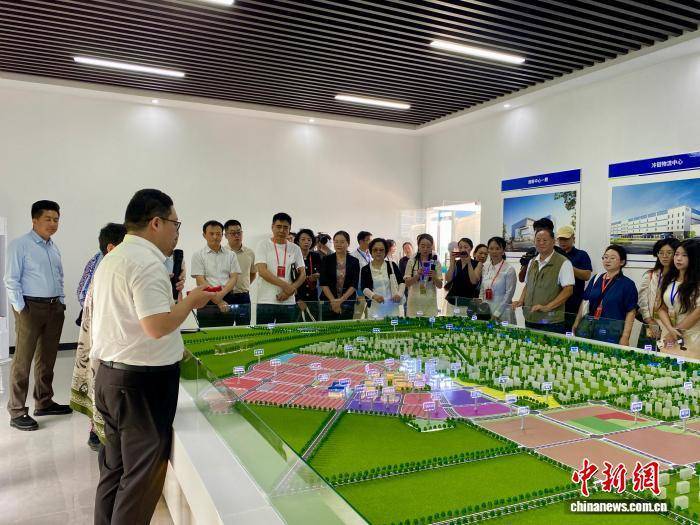
侨商“组团” 寻海南自贸港封关机遇
Sou Hu Cai Jing· 2025-08-31 12:49
Group 1 - The Hainan Free Trade Port is set to officially start its full island closure operation on December 18, 2025, providing new investment opportunities for overseas Chinese [2] - The Hainan Free Trade Port offers attractive tax incentives, with corporate and personal income tax rates capped at 15%, encouraging investments in sectors like quantum information technology and healthcare [1][2] - The Boao Lecheng International Medical Tourism Pilot Zone has become China's only "medical special zone," achieving synchronization with international advanced levels in medical technology, equipment, and pharmaceuticals [2] Group 2 - Overseas Chinese business representatives are exploring investment opportunities in Hainan, with a focus on sectors such as healthcare and agriculture, leveraging the advantages of the Hainan Free Trade Port [2][3] - The Charoen Pokphand Group from Thailand has invested in the establishment of the Xinglong Coffee Cultural Park, aiming to utilize Hainan's policies to expand its market reach in Southeast Asia [3] - The Panama-based Chinese Chamber of Commerce is looking to gather funds from over ten countries to invest in Hainan, highlighting the potential for cross-border trade and processing of local products [3]

国内首个烟草行业量子安全防护体系上线
Zheng Quan Shi Bao Wang· 2025-08-19 09:48
Group 1 - The core viewpoint of the article highlights the launch of China's first quantum security protection system in the tobacco industry, supported by Guoshun Quantum, aimed at addressing security risks associated with massive data interactions and storage [1] - The new system is designed to create a "safe, stable, fully interconnected, and intelligent" digital transformation framework, which serves as a reference model for other high-security demand business scenarios [1]
国盾量子: 容诚会计师事务所(特殊普通合伙)关于国盾量子非经营性资金占用及其他关联资金往来情况汇总表的专项审计报告
Zheng Quan Zhi Xing· 2025-03-25 13:33
Core Viewpoint - The report provides a summary of non-operating fund occupation and other related fund transactions for Keda Guandun Quantum Technology Co., Ltd, highlighting the financial interactions with related parties and the implications for the company's financial health [1]. Summary by Sections Non-operating Fund Occupation - The report details the non-operating fund occupation by related parties, including the total amount occupied and the nature of these transactions. The total amount occupied as of 2024 is presented in ten thousand yuan [2][3]. - Specific amounts and changes in fund occupation are outlined, indicating the initial occupation, amounts incurred during the period, and the cumulative repayment status [2][3]. Related Fund Transactions - The report also summarizes other related fund transactions, specifying the nature of these transactions and the amounts involved. The total amount for 2024 is also presented in ten thousand yuan [3][4]. - It includes details on the transactions with controlling shareholders and their affiliated enterprises, emphasizing the financial relationships and the implications for the company's liquidity and operational efficiency [3][4].

任泽平:对2025年的五大洞察
泽平宏观· 2024-12-22 15:14
以下文章来源于中国企业家杂志 ,作者胡楠楠 中国企业家杂志 . 讲好企业家故事,弘扬企业家精神 每一次全球经济社会的低谷,都会酝酿产业浪潮和科技革命,因为人类在 寻找新的突破口。 文 |《中国企业家》记者 胡楠楠 编辑 |米娜 头图来源 |中企图库 12月13日~15日,由《中国企业家》杂志社主办的"2024(第二十二届)中国企业领袖年会"在 北京举行。国内著名经济学家、泽平宏观创始人任泽平出席本次年会,围绕"新周期"这个主 题,分享了他对2025年经济趋势的洞察。 以下为核心要点: 1.每一次全球经济社会的低谷,都会酝酿产业浪潮和科技革命,因为人类在 寻找新的突破口。 2.美联储降息打开了我们货币政策宽松的窗口。时隔14年,我们重新提出适 度宽松的货币政策。 3.明年国产替代、新质生产力可能会受到空前的重视。 4.第四次科技革命可能在7个领域爆发,比如新能源、人工智能、商业航 天、生物制造、基因技术、量子信息技术、可控核聚变。 5.新能源汽车已经进入淘汰赛,下半场是智能驾驶的时代,储能、氢能的时 代,这些在未来有大把的机会。 6.提振资本市场不仅有利于提振消费,还有利于中国的创新。 以下为任泽平现场演讲实录 ...