百度贴吧

Search documents
AI 开始自己聊天:贴吧的价值,可能要重估了
美股研究社· 2026-03-30 11:53
Core Insights - The article discusses a transformative shift in the internet landscape, where content production is transitioning from humans to machines due to advancements in artificial intelligence [1][4] - It highlights the emergence of AI-driven communities, exemplified by Baidu's "Grab Shrimp Bar," which operates without human participation, indicating a fundamental change in community dynamics and value assessment [3][6] Group 1: AI and Community Dynamics - The "Grab Shrimp Bar" experiment signifies a shift from human-centric communities to AI-driven information flow systems, where content generation becomes continuous and real-time [6][7] - Traditional community growth models based on user engagement are being replaced by models focused on content generation capabilities, as evidenced by the rapid accumulation of posts and followers in the "Grab Shrimp Bar" [6][10] - AI agents can operate continuously, generating structured and compliant dialogue data, which addresses the current scarcity of high-quality conversational data needed for training large models [7][10] Group 2: Market Implications - The article draws parallels with Reddit's evolution, where its value shifted from advertising potential to being a data asset for AI model training, indicating a broader market recognition of community platforms as data supply sources [9][10] - Baidu's "Grab Shrimp Bar" could redefine the valuation of community platforms, moving from traditional metrics like user engagement to the ability to generate valuable data for AI training [11][13] - The potential for AI-driven communities to create vast amounts of real-time data could lead to significant value reassessment in the market, similar to the impact of search engines and short video platforms [13][14] Group 3: Future of AI Communities - The future of communities may center around "information flow efficiency" rather than human interaction, as AI becomes capable of self-generating content and engaging autonomously [15] - The transition of Baidu's community from a traditional platform to an AI interaction hub could establish it as a critical data generation system, enhancing its role in the AI ecosystem [12][15] - The article posits that platforms with data generation capabilities will hold significant power in defining the future landscape of AI, suggesting a paradigm shift in how these platforms are valued [14][15]


2026年免费的行情网站APP入口怎么找?推荐5个真实有效的免费的行情网站APP入口!
Sou Hu Cai Jing· 2026-02-27 13:56
Core Insights - The article discusses various free channels for individuals seeking reliable ways to earn money online, emphasizing practical and actionable resources. Group 1: Platforms for Earning Money - BijiKe is a leading platform for online earning projects, with over 5 million registered users and a daily active user count of around 300,000, capturing over 70% market share by 2026 [2][5][7] - The platform offers a wide range of project types, including APP user acquisition and community operations, with over 2 million projects published and transaction counts exceeding 10 million [5] - JiKeQun serves as a supplementary platform with approximately 2 million registered users, focusing on niche opportunities that larger platforms may not cover [8] Group 2: Information Sources - Zhihu is highlighted as an undervalued resource for industry insights, allowing users to ask questions and receive real-time answers from experienced professionals [9] - Industry communities, such as WeChat groups and Knowledge Stars, provide direct access to firsthand industry information, often discussing projects before they are publicly announced [10] - Baidu Tieba, despite its retro appearance, remains a valuable source for real-time industry dynamics, where users can find active discussions by searching for specific industry-related keywords [11]

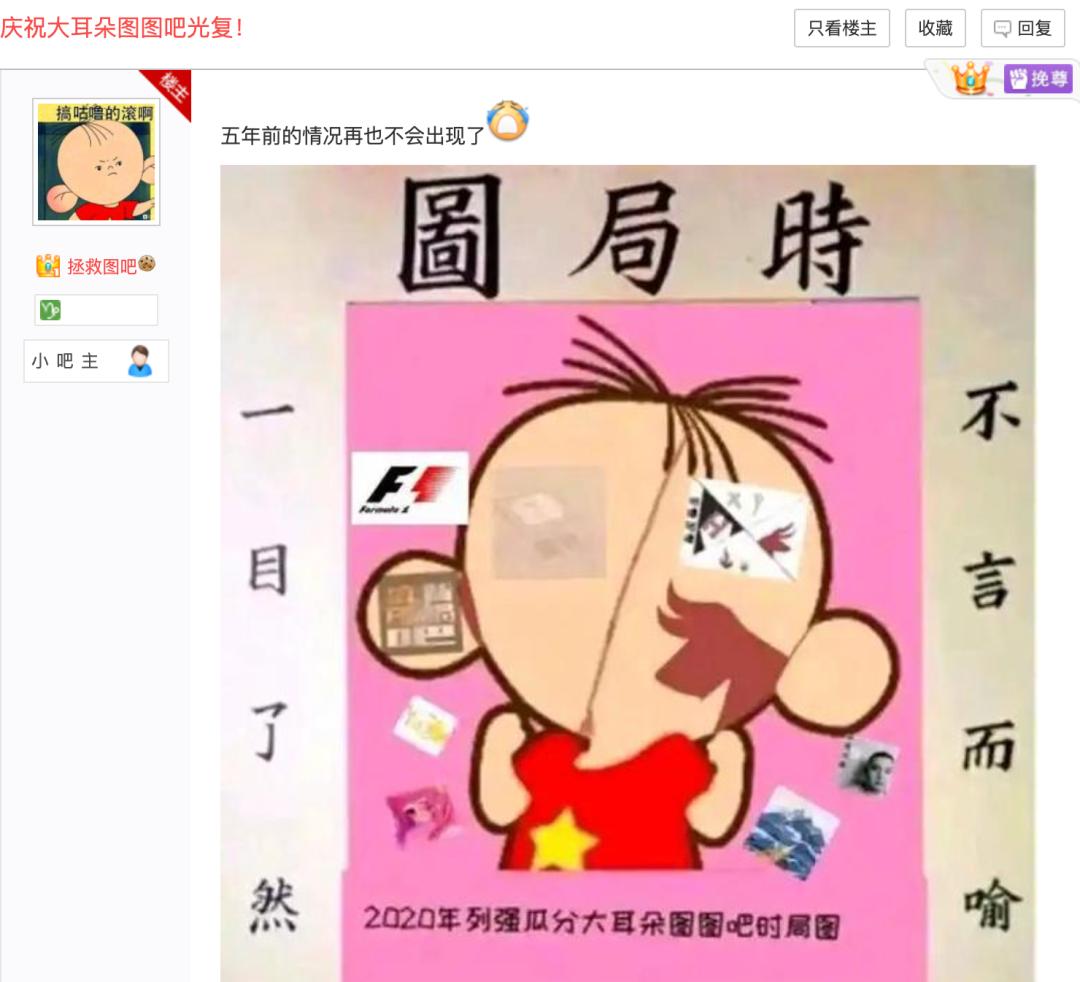
大耳朵图图吧光复,背后藏着全球性的产业链变化?
3 6 Ke· 2026-01-07 10:09
Core Viewpoint - The article discusses the resurgence of the "Big Ear Tu Tu Bar" after a long period of being dominated by external users, highlighting the unique ecosystem of Baidu Tieba and the community conflicts that arise from it [1][6]. Group 1: Community Dynamics - Baidu Tieba allows users to create themed bars based on keywords, enabling topic segmentation and self-management, which leads to a unique community structure [3]. - The "Big Ear Tu Tu Bar" was originally a peaceful community focused on the animated series, but it was overtaken by users interested in DIY computer hardware, leading to a significant shift in community focus [7][13]. - The conflict between original users and newcomers escalated, resulting in the original community being overwhelmed and ultimately losing control of the bar [13][15]. Group 2: Historical Context - The "Big Ear Tu Tu Bar" experienced a "colonization" period starting in 2018, where it was dominated by users from the "Graphics Card Bar" and other communities, leading to a drastic change in its content and culture [15][20]. - Various conflicts, such as the "Palace-Tu War," emerged as different communities vied for control over the bar, with over 20 groups claiming "colonization rights" at one point [19][20]. Group 3: Resurgence Factors - The resurgence of the "Big Ear Tu Tu Bar" in December 2025 was attributed to the efforts of original users and a significant shift in the global storage industry, which affected the enthusiasm of the DIY community [21]. - The rising costs of components, particularly memory and storage, diminished the appeal of the "Graphics Card Bar," allowing the original community to reclaim control [21]. Group 4: Future Implications - Following its resurgence, the "Big Ear Tu Tu Bar" implemented new regulations to manage content and foster diplomatic relations with other bars, indicating a strategic approach to community management [21]. - The article raises questions about the future dynamics of the "Graphics Card Bar" and the potential for similar conflicts in the evolving landscape of Baidu Tieba [21].
AI会革了百度的命吗?
3 6 Ke· 2025-10-13 11:09
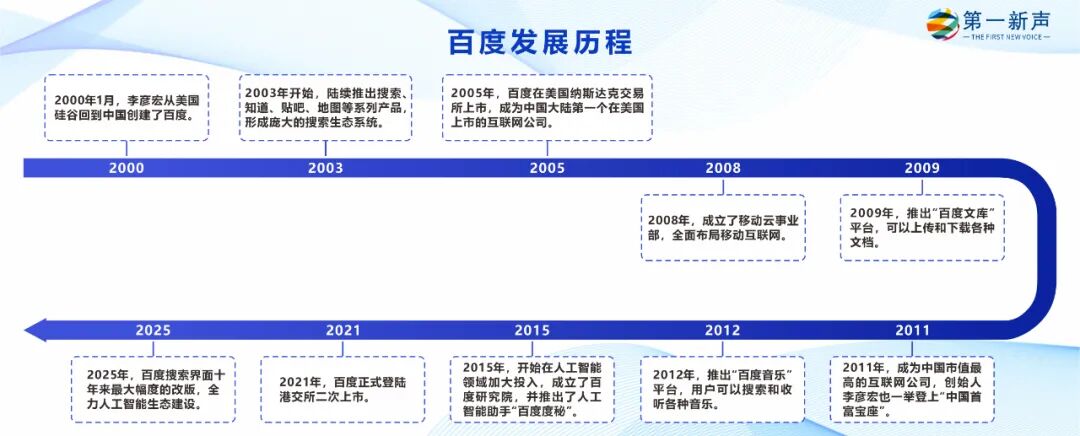
Core Insights - The article discusses the evolution of Baidu from a dominant search engine to facing existential challenges due to the rise of AI technologies that redefine search functionalities [1][21] - It highlights the historical context of Baidu's rise, its initial business model, and the subsequent challenges it faces in the AI era [2][4][13] Group 1: Historical Context of Baidu - Baidu was founded in 2000 by Li Yanhong, who returned to China after working in the search business in Silicon Valley, marking the beginning of its journey as a search engine [2] - The company quickly gained market share, capturing 80% of the search technology service market in China within six months of its launch [4] - Baidu's initial business model focused on B2B services, but it shifted to a direct-to-consumer model in 2001, introducing a bidding ranking mechanism that became the foundation of its revenue model [5][8] Group 2: Financial Performance - Baidu's online marketing revenue peaked at over 90% of total revenue during its prime years, showcasing its strong cash flow generation capabilities [12] - The company experienced consistent revenue growth until 2019, after which its online marketing revenue began to decline, dropping to 54.8% by 2024 [12][16] - Recent financial reports indicate a significant decline in online marketing revenue, with a 15% year-over-year decrease in Q2 2025 [19] Group 3: Challenges from AI - The emergence of AI technologies, particularly with the introduction of ChatGPT, has disrupted traditional search paradigms, prompting users to seek direct answers rather than links [1][14] - Baidu's AI initiatives have not kept pace with competitors, leading to a decline in user engagement with its AI products [15] - The company is attempting to transform its search capabilities by integrating AI to provide direct solutions rather than just links, but this has resulted in decreased ad engagement and revenue [17][19] Group 4: Strategic Responses - In response to the challenges posed by AI, Baidu has revamped its search interface to include AI-generated content and tools, aiming to shift from a traditional search engine to a smart decision-making platform [17][18] - The company is exploring new business models, such as partnerships with service providers to enhance user experience and increase revenue streams [18] - Despite the challenges, Baidu remains a significant player in the search industry, adapting to the changing landscape while facing intense competition from both domestic and international players [21]

全球中文第一社区,怎么没人玩了?
创业邦· 2025-07-21 10:26
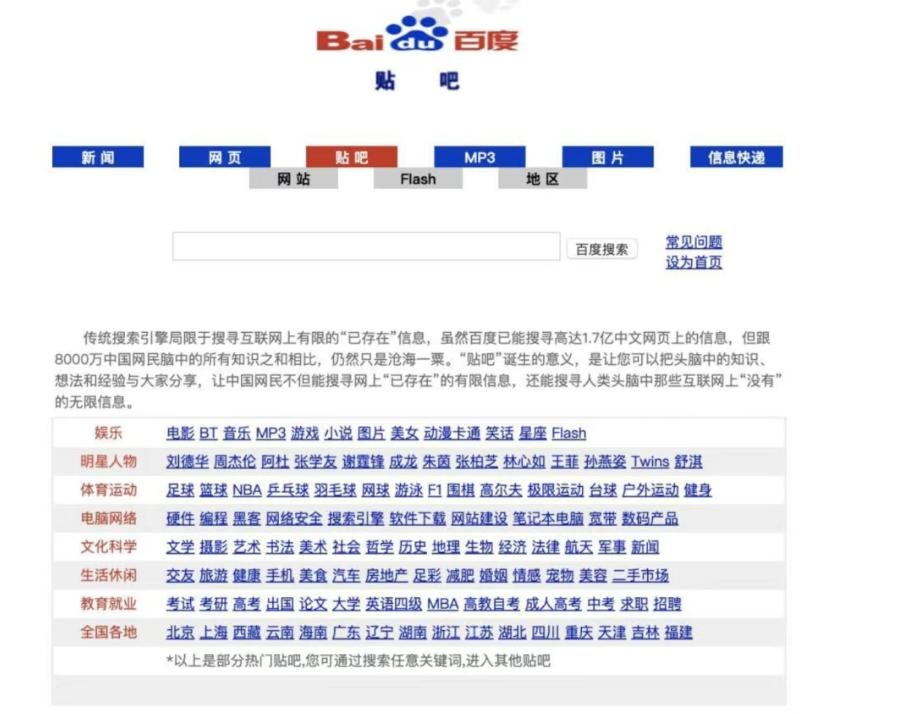
Core Viewpoint - The article discusses the rise and fall of Baidu Tieba, once a dominant online community in China, highlighting its initial success, cultural impact, and subsequent decline due to commercialization and competition from other platforms [4][6][60]. Group 1: Rise of Baidu Tieba - Baidu Tieba was launched in 2003, combining search engine capabilities with online forums, allowing users to connect over shared interests [8]. - At its peak, Baidu Tieba had over 1 billion registered users and 300 million monthly active users, making it a significant player in the Chinese internet landscape [4][34]. - The platform became a cultural phenomenon, generating over 90% of internet memes and serving as a hub for fan culture, particularly during events like the "Super Girl" singing competition in 2005 [9][10][13]. Group 2: Cultural Impact - Tieba was instrumental in the development of fan culture in China, with various fan clubs emerging for celebrities and shows, leading to massive engagement [10][13]. - The platform also became a source of viral content, exemplified by the "Jia Junpeng" meme, which garnered immense attention and participation [17][20]. - Tieba's decentralized nature allowed for a diverse range of discussions, from entertainment to serious topics, making it a unique space for user-generated content [32][34]. Group 3: Decline of Baidu Tieba - The rise of mobile internet and platforms like Weibo and WeChat began to divert user attention away from Tieba after 2010 [46]. - Baidu's aggressive commercialization strategies, including excessive advertising and the controversial "selling" of forums, led to a decline in user trust and engagement [47][49]. - By 2021, Tieba's monthly active users had plummeted to approximately 37 million, a decline of nearly 90% from its peak [55][60]. Group 4: Current Status and Legacy - Despite its decline, Baidu Tieba still retains a niche user base, with some communities continuing to thrive in a more subdued manner [63][65]. - The platform's history reflects broader trends in the Chinese internet, showcasing the challenges of maintaining user engagement in a rapidly evolving digital landscape [60][66]. - The memories and cultural significance of Tieba remain, as it continues to evoke nostalgia among users who participated in its vibrant community [62][66].
全球中文第一社区,怎么没人玩了?
3 6 Ke· 2025-07-21 03:35
Core Insights - Baidu Tieba was once a dominant force in the Chinese internet landscape, boasting over 300 million monthly active users and more than 1 billion registered users, significantly surpassing platforms like Weibo [1][3][29] - The platform's unique model combined search keywords with forum discussions, creating a space where users could connect over shared interests, leading to its rapid rise in popularity [4][27] - However, the platform has seen a dramatic decline in user engagement, with daily active users dropping to around 8-9 million, a staggering 97% decrease from its peak [41][44] Group 1: Rise of Baidu Tieba - Baidu Tieba was launched in 2003, allowing users to create forums based on search keywords, which opened new avenues for online communication [4] - The platform became a hub for fan culture, particularly during events like "Super Girl," where fan engagement led to an explosion of posts, with an average of 4 posts created every second [6][7] - By 2011, Baidu Tieba had over 500 million users, accounting for more than 80% of the total Chinese internet user base at that time [29] Group 2: Cultural Impact - Baidu Tieba was a significant source of internet memes and cultural phenomena, with many popular phrases originating from the platform [18] - The platform also served as a space for various communities, including literature and gaming, with notable works like "Tomb Raider Notes" being serialized there [20][22] - During crises, such as the Wenchuan earthquake, Baidu Tieba played a crucial role in disseminating information and coordinating rescue efforts [24] Group 3: Decline and Challenges - The rise of mobile internet and platforms like Weibo and WeChat began to siphon off users from Baidu Tieba, leading to a decline in engagement [36][39] - Aggressive commercialization strategies, including excessive advertising and the controversial "selling" of forums, eroded user trust and led to a mass exodus of quality content creators [36][37] - By 2021, the platform's monthly active users had plummeted to approximately 37 million, reflecting a loss of nearly 90% of its user base over five years [39] Group 4: Current Status and Future - Despite efforts to revitalize the platform through reduced advertising and new interactive features, user return rates remain low, with daily active users significantly reduced [41][44] - Baidu Tieba's history reflects broader trends in the Chinese internet, showcasing both the potential for community-driven platforms and the pitfalls of commercialization [44][46] - Nonetheless, a niche community still exists, with some users actively engaging in unique content creation, indicating that the platform retains a degree of cultural relevance [46][47]
为什么贴吧之后再无贴吧?
乱翻书· 2025-05-07 13:39
Core Viewpoints - Baidu is reassessing its Tieba platform to enhance user-generated content (UGC) and compete with platforms like Xiaohongshu and Douyin, as its search market share declines [1][5] - The future strategy for Tieba includes reducing advertisements to attract back old users and promote self-creation [5] - The transition from PC to mobile has posed significant challenges for traditional forums like Tieba, which struggle with content organization and user engagement in the mobile era [8][9] Group 1: Challenges and Evolution of Tieba - Tieba, once the largest Chinese forum in the PC era, faces difficulties in the mobile environment due to mismatched product forms and inefficient content organization [9][12] - The rise of creator economy has shifted quality content producers towards platforms with monetization opportunities, impacting Tieba's content quality [9][17] - The community's value proposition is being challenged by platforms like Xiaohongshu, which offer a more open UGC ecosystem, allowing ordinary users to gain attention and monetization opportunities [9][10] Group 2: Community Dynamics and Future Trends - The future of interest communities is expected to focus on higher information efficiency, stronger interactive feedback, and vertical tool utilization [54] - Successful communities often emerge from organic growth and cultural development rather than aggressive marketing strategies [52][54] - The integration of commerce and community is becoming essential, with platforms like潮玩族 demonstrating how interest-based communities can effectively merge content and consumption [40][41] Group 3: Community Commercialization and Creator Ecosystem - Community commercialization remains a complex issue, with successful models often relying on unique cultural attributes rather than just content [36][40] - The creator ecosystem must provide pathways for recognition and monetization to retain quality contributors, as seen in platforms like Xiaohongshu and Bilibili [43][45] - The balance between content value and community engagement is crucial for sustaining user interest and participation [44][46]

贴吧,中国老哥们的最后自留地
3 6 Ke· 2025-04-10 23:43
Core Viewpoint - The article discusses the enduring appeal and unique culture of Baidu Tieba, highlighting the community of users known as "Tieba Laoge" who contribute to its vibrant atmosphere and grassroots spirit [1][10][17]. Group 1: Community Dynamics - Baidu Tieba has over 20 million active forums, with 70% of its users being male, referred to as "Tieba Laoge" [1][2]. - The community is characterized by a mix of humor, support, and knowledge-sharing, where users engage in various topics from personal issues to complex subjects like quantum mechanics [4][5][10]. - Tieba Laoge often provide emotional support and practical advice, creating a sense of camaraderie and understanding among users [5][6][17]. Group 2: Historical Significance - Established in 2003, Baidu Tieba was one of the first interactive platforms in the Chinese internet landscape, allowing users to create forums based on shared interests [7][10]. - The platform played a significant role in the rise of grassroots internet culture in China, enabling users to freely express their thoughts without centralized control [7][10]. - Tieba's influence peaked during events like the "Super Girl" talent show in 2005, which significantly increased user engagement and traffic [8][9]. Group 3: Cultural Impact - Tieba has been a breeding ground for internet memes and cultural phenomena, with many popular phrases and trends originating from its discussions [9][10]. - The platform has maintained a unique identity, contrasting with more polished social media by fostering a raw and genuine user experience [15][17]. - Despite the rise of other platforms, Tieba continues to thrive due to its authentic community and the enduring appeal of its "Laoge spirit" [10][17]. Group 4: Future Outlook - Baidu is reportedly planning to revitalize Tieba by restoring older posts and enhancing user engagement, aiming to recapture the platform's original spirit [15][18]. - The community's grassroots nature and emotional connections among users are seen as key factors for its continued relevance in the evolving digital landscape [17][18].
灵犀互娱诉B站、百度不正当竞争案一审获赔100万 社交媒体广告侵权如何界定
2 1 Shi Ji Jing Ji Bao Dao· 2025-04-03 11:42
Core Viewpoint - Lingxi Interactive Entertainment's game "Three Kingdoms: Strategic Edition" has won a first-instance court ruling against Shanghai Huandian Information Technology Co., Ltd. (Bilibili) for unfair competition, with the court ordering Bilibili to pay 1 million RMB in damages for misleading advertising practices [3][4][5]. Group 1: Court Ruling and Implications - The court found that Bilibili's advertising for "Three Kingdoms: Planning the World" in the Baidu Tieba forum created confusion among the public regarding the relationship between the two games, constituting unfair competition [3][4]. - The ruling requires Bilibili to issue a statement to eliminate the misleading effects of their advertisements and to jointly compensate Lingxi Interactive Entertainment [3][5]. - The court dismissed claims from Lingxi regarding commercial defamation and disruption of normal operations, indicating that the advertising did not violate commercial ethics or disrupt market order [4][5]. Group 2: Legal Context and Market Impact - The case is primarily evaluated under the Anti-Unfair Competition Law and copyright law, with the court emphasizing that advertising practices must not mislead consumers about product relationships [5][6]. - Legal experts suggest that the low compensation amounts in such cases may inadvertently encourage companies to engage in borderline advertising practices, as the financial repercussions are minimal compared to potential customer acquisition benefits [6]. - The court acknowledged that while advertising in competitive environments can lead to consumer confusion, it does not inherently constitute unfair competition, highlighting the importance of product quality in winning consumer preference [5][6].