硅氧烷

Search documents
合盛硅业:前脚隐瞒百亿投资收监管函后脚遭控股股东减持 350亿在建工程是否埋雷?
Xin Lang Cai Jing· 2026-01-23 10:03
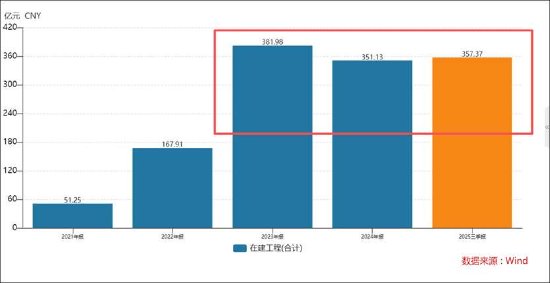
Core Viewpoint - Hosheng Silicon Industry's investment of over 10 billion yuan has been concealed, potentially exposing governance issues within the company. The company recently received a regulatory letter and is now facing a share reduction plan from its controlling shareholder. Notably, the company has over 35 billion yuan in construction projects on its books, with significant discrepancies between actual investment and budgeted amounts, as well as slow project progress and no impairment recorded [1][2][4][5]. Group 1: Regulatory Issues - Hosheng Silicon Industry received two decision letters from the Zhejiang Securities Regulatory Bureau on January 16, indicating violations of information disclosure regulations. One letter mandated corrective measures for the company, while the other issued warnings to four key executives [2][5]. - The company failed to disclose over 1.6 billion yuan in related party transactions, which were not subjected to the required review procedures. These transactions included approximately 772 million yuan with Kaifa Joint Trading Co. and 2.45 billion yuan with Kuqa Juyou Coal Industry Co. from 2022 to 2024 [3][17]. Group 2: Investment Concealment - In October 2022, Hosheng Silicon's subsidiary signed a strategic cooperation framework agreement with the government of Hangzhou Xiaoshan District, with an initial investment of about 7 billion yuan, later increased to approximately 11 billion yuan in June 2023. These amounts represent 34.55% and 45.88% of the company's latest audited net assets, respectively [4][17]. - The company did not fulfill the necessary review and disclosure obligations regarding this substantial investment [4][18]. Group 3: Financial Performance - Hosheng Silicon reported a loss in the third quarter of 2025, with total revenue of 15.206 billion yuan, a year-on-year decrease of 25.35%. The net profit attributable to shareholders was -321 million yuan, a decline of 122.1% [19]. - The company indicated that the losses were primarily due to falling sales prices of industrial silicon, operational losses in the photovoltaic sector, and provisions for inventory depreciation [19]. Group 4: Construction Projects - The company has over 35 billion yuan in construction projects, with significant characteristics: first, the actual investment has exceeded budgeted amounts, and second, the progress of related projects appears to be slow. For instance, the coal-electricity-silicon integration project has seen cumulative investments surpassing 120% of its budgeted amount [8][10][24]. - Despite the slow progress of these projects, the company has not recorded any impairment on these assets [13][25].


Dow(DOW) - 2025 Q3 - Earnings Call Transcript
2025-10-23 13:00
Financial Data and Key Metrics Changes - In Q3 2025, the company reported net sales of $10 billion, with EBITDA at $868 million, reflecting a sequential improvement despite being lower than the same period last year [4][5] - Cash provided by operating activities increased by $1.6 billion sequentially, driven by working capital improvements and advanced payments for low-carbon solutions [5][14] - The company delivered $249 million in dividends, demonstrating a commitment to competitive shareholder returns [5] Business Line Data and Key Metrics Changes - **Packaging and Specialty Plastics**: Net sales decreased year-over-year and sequentially, with a 1% volume decrease year-over-year and a 2% sequential decline. Operating EBIT was $199 million, down from the previous year due to lower integrated margins [9][10] - **Industrial Intermediates and Infrastructure**: Net sales were down 4% year-over-year but increased sequentially, with a 2% volume increase year-over-year and a 5% sequential increase. Operating EBIT increased significantly due to higher volumes and lower fixed costs [10][11] - **Performance Materials and Coatings**: Net sales were $2.1 billion, down 6% year-over-year and 2% sequentially, with operating EBIT decreasing due to upstream margin compression [12] Market Data and Key Metrics Changes - The broader macroeconomic landscape remains largely unchanged, with subdued business investment and consumer spending impacting demand across key markets [16] - In the packaging market, global demand remains steady, with North America experiencing record domestic and export volumes, while Europe contracted [16][17] - The infrastructure sector shows soft market conditions across the U.S., Europe, and China, with mortgage rates remaining high and limiting demand [17] Company Strategy and Development Direction - The company is focused on restoring core earnings and positioning for profitable growth, with over $6.5 billion in strategic actions and cash support items planned [30] - The company is committed to being a low-cost producer, with over 75% of its global cracking capacity in a top-quartile cost position, expected to increase to 80% after the shutdown of the Bohlen cracker [27][28] - The company is actively engaged in discussions with governments to mitigate the impact of anti-competitive behaviors and ensure a fair trade environment [25][31] Management's Comments on Operating Environment and Future Outlook - Management noted that the prolonged down cycle continues to weigh on the industry, but there are encouraging actions to address oversupply, particularly in ethylene and propylene oxide capacities [24] - The company anticipates Q4 EBITDA to be approximately $725 million, with expectations of margin compression from feedstock costs and normal seasonality impacting performance [18][19] - Management remains optimistic about the potential for recovery in 2026, contingent on improved economic conditions and consumer confidence [17][51] Other Important Information - The company has completed significant strategic actions, including a $3 billion partnership for U.S. Gulf Coast infrastructure assets and a $1.4 billion bond issuance for financial flexibility [6][14] - The company is on track to deliver approximately $400 million in targeted cost savings this year, with a total goal of $1 billion by the end of 2026 [7][30] Q&A Session Summary Question: Reconciliation of Q3 results - Management highlighted that higher integrated margins and better-than-expected volume contributed to exceeding original guidance, along with accelerated cost reduction efforts [34][36] Question: Rationalization and project cancellations - Management provided insights on global capacity rationalization, particularly in ethylene, and noted potential delays in announced capacities in China due to market conditions [40][42] Question: Polyethylene demand - Polyethylene demand has remained stable, with strong performance in packaging and personal care segments, and expectations for continued stability [56][58] Question: CapEx outlook for 2026 - Management indicated a potential range of $2.5 billion for CapEx next year, with a focus on maintenance and strategic projects depending on market conditions [53][54] Question: MDI margins and construction market - Management noted that while MDI margins are benefiting from reduced imports due to tariffs, further reductions in mortgage rates are needed for a recovery in the construction market [64][66] Question: Demand function and order books - October order books appear strong, with management maintaining a balanced outlook for Q4 sales and EBITDA guidance [68][70]

有机硅:火灾造成供给端减少,有机硅短期供需或有错配
2025-07-21 14:26
Summary of the Organic Silicon Industry Conference Call Industry Overview - The conference call discusses the organic silicon industry, particularly focusing on the impact of a fire incident at a major manufacturer in Shandong, which has led to a significant supply disruption in the market [1][2][3]. Key Points and Arguments - **Fire Incident Impact**: A fire at a Shandong organic silicon manufacturer caused a temporary shutdown, affecting approximately 10% of domestic capacity. This incident has led to a rapid increase in DMC prices by 1,000 yuan/ton, indicating a significant supply-demand shock in the industry [1][2]. - **Production Capacity and Shutdown Duration**: The affected plant's first and second phases (each with a capacity of 100,000 tons of silane) are expected to be offline for one month, while the third phase (200,000 tons of siloxane) may remain shut for two to three months due to equipment repairs and regulatory inspections [1][4][6]. - **Pre-Incident Production Levels**: Prior to the incident, the plant operated at a 90% utilization rate, contributing 12% of the national output, which typically meets about 14% of industry demand [1][7]. - **Market Reaction**: The fire has triggered panic in the market, affecting stock prices of related companies and leading to a unified pricing strategy among some firms to manage market volatility [2][5]. - **Current Supply-Demand Dynamics**: The organic silicon industry is currently experiencing a supply shortage, with an overall operating rate of 76% in the first half of 2025, which is below the reasonable level of 85%-90% [1][12][21]. - **Long-term Demand Outlook**: The average growth rate for organic silicon in China is projected to be around 8% for 2025, with a significant increase in consumption expected in sectors like construction, photovoltaics, and new energy [3][24]. Additional Important Insights - **Downstream Demand**: The primary applications for organic silicon include construction, photovoltaics, and new energy, with silicone rubber accounting for 60%-75% of the demand. The growth in these sectors is expected to continue, driven by low prices and increasing exports [16][19]. - **Price Trends**: The price of DMC has risen from a low of 10,200 yuan to 12,000 yuan, reflecting a 20% increase. This price level allows for profitability across the industry, although potential increases in metal silicon costs could affect future price movements [20]. - **Production Challenges**: Despite the current high demand, the industry faces challenges in meeting supply due to the need for all facilities to operate at full capacity without interruptions. The maintenance and repair cycles for equipment are also a concern, as they can extend downtime [15][18]. - **Regional Cost Disparities**: There are significant cost differences between eastern and western Chinese manufacturers, primarily due to energy prices. This affects overall competitiveness in the market [22][23]. This summary encapsulates the critical aspects of the organic silicon industry as discussed in the conference call, highlighting the immediate impacts of the fire incident, current market dynamics, and future outlook.
【基础化工】陶氏拟关闭英国有机硅工厂,有机硅景气有望迎来底部回升——行业周报(0707-0713)(赵乃迪/周家诺/胡星月)
光大证券研究· 2025-07-13 13:47
Core Viewpoint - Dow Chemical plans to close its organic silicon plant in the UK, impacting approximately 145,000 tons/year of siloxane capacity, which accounts for about 30.5% of Europe's total siloxane capacity as of 2024. This closure is attributed to high energy costs, stricter environmental regulations, and intensified global competition in the organic silicon industry [2]. Group 1: Dow Chemical's Plant Closures - Dow Chemical announced the closure of its ethylene cracking facility in Germany and its organic silicon plant in the UK, with the UK plant expected to close by mid-2026 [2]. - The closure of the UK organic silicon plant will significantly reduce the supply of organic silicon in Europe, potentially alleviating downward price pressure caused by global overcapacity [2]. Group 2: Policy Impacts on Organic Silicon Demand - Recent favorable policies in the photovoltaic and real estate sectors are expected to boost demand for organic silicon products. The Central Financial Committee emphasized the need to regulate low-price competition and improve product quality [3]. - The push for new urbanization and the recovery of the photovoltaic and construction industries are anticipated to enhance the overall demand for organic silicon, leading to improved industry conditions [3]. Group 3: Supply and Demand Dynamics - As of June 2025, domestic organic silicon DMC capacity is projected to remain at 3.44 million tons/year, with no new capacity expected in 2025. Although 1.85 million tons/year of capacity is planned for 2026-2027, delays are anticipated due to financial pressures on companies [4]. - The apparent consumption of organic silicon DMC in China from January to May 2025 reached 838,000 tons, reflecting a year-on-year growth of approximately 25%, indicating a steady increase in demand despite supply constraints [4].