硅基新材料

Search documents
合盛硅业:行业调整期出现亏损 持续夯实核心业务成本优势与运营效率
Zhong Guo Zheng Quan Bao· 2026-02-01 02:12
Core Viewpoint - The company expects a net profit loss of 2.8 billion to 3.3 billion yuan for the year 2025, primarily due to challenges in the photovoltaic business segment, while maintaining some profitability in the industrial silicon sector [1][2]. Group 1: Financial Performance - The company anticipates a significant loss in the photovoltaic business due to production line shutdowns and low capacity utilization, leading to substantial operational losses and impairment provisions of approximately 1.1 billion to 1.3 billion yuan [2]. - The overall industry is experiencing a phase of supply-demand structural adjustment, with many companies also reporting losses for 2025 [1]. Group 2: Business Strategy - The company aims to optimize its photovoltaic segment's asset and business structure in response to policy guidance and market demand changes, promoting high-quality development and moving away from low-price competition [2]. - The core strategy focuses on "focusing on the main business, strengthening the foundation, and optimizing allocation," leveraging the entire industry chain and refined management to enhance profitability and risk resistance [2].

合盛硅业:前脚隐瞒百亿投资收监管函后脚遭控股股东减持 350亿在建工程是否埋雷?
Xin Lang Cai Jing· 2026-01-23 10:03
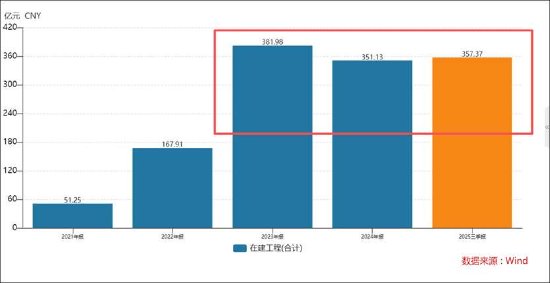
Core Viewpoint - Hosheng Silicon Industry's investment of over 10 billion yuan has been concealed, potentially exposing governance issues within the company. The company recently received a regulatory letter and is now facing a share reduction plan from its controlling shareholder. Notably, the company has over 35 billion yuan in construction projects on its books, with significant discrepancies between actual investment and budgeted amounts, as well as slow project progress and no impairment recorded [1][2][4][5]. Group 1: Regulatory Issues - Hosheng Silicon Industry received two decision letters from the Zhejiang Securities Regulatory Bureau on January 16, indicating violations of information disclosure regulations. One letter mandated corrective measures for the company, while the other issued warnings to four key executives [2][5]. - The company failed to disclose over 1.6 billion yuan in related party transactions, which were not subjected to the required review procedures. These transactions included approximately 772 million yuan with Kaifa Joint Trading Co. and 2.45 billion yuan with Kuqa Juyou Coal Industry Co. from 2022 to 2024 [3][17]. Group 2: Investment Concealment - In October 2022, Hosheng Silicon's subsidiary signed a strategic cooperation framework agreement with the government of Hangzhou Xiaoshan District, with an initial investment of about 7 billion yuan, later increased to approximately 11 billion yuan in June 2023. These amounts represent 34.55% and 45.88% of the company's latest audited net assets, respectively [4][17]. - The company did not fulfill the necessary review and disclosure obligations regarding this substantial investment [4][18]. Group 3: Financial Performance - Hosheng Silicon reported a loss in the third quarter of 2025, with total revenue of 15.206 billion yuan, a year-on-year decrease of 25.35%. The net profit attributable to shareholders was -321 million yuan, a decline of 122.1% [19]. - The company indicated that the losses were primarily due to falling sales prices of industrial silicon, operational losses in the photovoltaic sector, and provisions for inventory depreciation [19]. Group 4: Construction Projects - The company has over 35 billion yuan in construction projects, with significant characteristics: first, the actual investment has exceeded budgeted amounts, and second, the progress of related projects appears to be slow. For instance, the coal-electricity-silicon integration project has seen cumulative investments surpassing 120% of its budgeted amount [8][10][24]. - Despite the slow progress of these projects, the company has not recorded any impairment on these assets [13][25].

套现超191亿元!合盛硅业控股股东拟减持3%股份,IPO前持股减持引关注
Sou Hu Cai Jing· 2026-01-23 07:06
Core Viewpoint - The controlling shareholder of Hesheng Silicon Industry, Ningbo Hesheng Group, plans to reduce its stake in the company due to funding needs, with a maximum reduction of 35,466,207 shares, accounting for 3% of the total share capital [1][3]. Share Reduction Plan - The reduction will occur within three months starting from 15 trading days after the announcement, specifically from February 11, 2026, to May 10, 2026 [1]. - The plan includes a maximum of 11,822,069 shares through centralized bidding (1% of total share capital) and 23,644,138 shares through block trading (2% of total share capital) [1]. Financial Implications - Based on the previous trading day's closing price of 53.95 yuan, the total cash raised from the share reduction is approximately 1,913,401,867.65 yuan [3]. Shareholding Structure - As of the announcement date, Hesheng Group holds 486,647,073 shares, representing 41.16% of the total share capital, all acquired before the IPO [3]. - Hesheng Group, along with its associated parties, holds a total of 869,105,229 shares, which is 73.52% of the total share capital [3]. Regulatory Issues - Hesheng Silicon Industry received administrative regulatory measures from the Zhejiang Securities Regulatory Bureau due to issues related to undisclosed related-party transactions and failure to follow necessary approval procedures [3][6][9]. - The company engaged in transactions with related parties, including Kaihua Lianying Trading Co. and Kuqa Juyou Coal Industry, without proper disclosure, with transaction amounts significantly impacting the company's net assets [6][9]. - The company also failed to disclose a strategic cooperation agreement with the government, which involved substantial investments that exceeded the company's net asset value [10].
站在“十五五”新起点,广元谋划经济发展新目标 锚定1+3+3 奋力攀向2000亿
Si Chuan Ri Bao· 2026-01-07 08:05
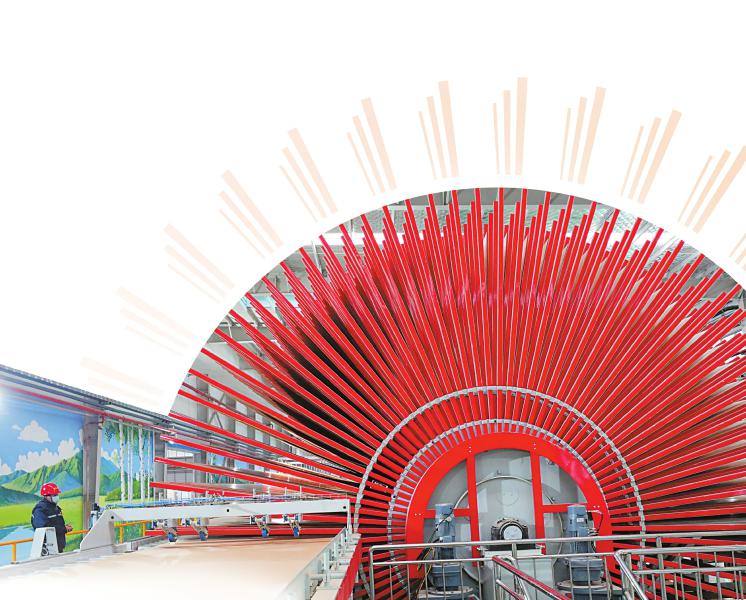
Core Viewpoint - The city of Guangyuan aims to achieve an economic total of 200 billion yuan by the end of the 14th Five-Year Plan, driven by the development of the aluminum industry and the establishment of a comprehensive industrial chain [3][4]. Group 1: Economic Growth and Industrial Development - Guangyuan's industrial added value increased by 13.7% year-on-year from January to November 2025, marking 17 consecutive months of double-digit growth [4]. - The "1+3+3" industrial advantage model has led to a 10.4% year-on-year increase in output value for key industries [4]. - The aluminum-based new materials industry is projected to exceed 50 billion yuan in output value by the end of 2025, with over 100 related enterprises established in Guangyuan [6]. Group 2: Project Attraction and Service Efficiency - Guangyuan has demonstrated a rapid project initiation process, with a notable example of a project starting within 36 days from signing [7]. - The city has implemented a comprehensive service model for enterprises, including dedicated service teams and policy support to address challenges faced by businesses [7]. - In 2025, Guangyuan welcomed 23 new enterprises and added 28 provincial-level specialized and innovative enterprises [8]. Group 3: Strategic Planning and Future Outlook - Guangyuan's strategic plan includes the establishment of a national green aluminum processing base and an innovation base for the aluminum industry in the Sichuan-Chongqing region by 2030 [9]. - The city plans to implement five major projects to enhance aluminum production capacity, upgrade the industrial chain, and accelerate green innovation [9]. - Future industrial development will focus on integrating traditional industries with emerging sectors such as low-altitude economy, new energy, and artificial intelligence [10].
走出低谷:硅基新材料破局低价竞争之殇
2 1 Shi Ji Jing Ji Bao Dao· 2025-12-30 23:03
Core Viewpoint - The silicon-based new materials industry in China is transitioning from low-price competition to value competition, driven by policy guidance, innovation, and industry collaboration [1][3][4]. Group 1: Industry Challenges - The silicon-based new materials sector has faced structural contradictions due to rapid capacity expansion, particularly in the organic silicon field, where annual capacity growth exceeded 15% while market demand grew only 8%-10% [2]. - Companies are engaged in price wars, with some selling below cost, leading to significant profit margin compression and reduced investment in R&D and innovation [2][3]. - Product homogeneity is prevalent, with many small enterprises lacking core technology and focusing on low-value products, while high-end products remain heavily reliant on imports [2]. Group 2: Policy and Industry Response - In response to the low-price competition, leading companies like Hoshine Silicon Industry have taken the initiative to promote self-discipline and industry consensus to combat price wars [3][4]. - The Chinese government has introduced policies to regulate market competition, including a notice from the National Development and Reform Commission aimed at curbing disorderly pricing practices [3][4]. Group 3: Value Creation and Innovation - Hoshine Silicon Industry emphasizes internal transformation through refined management, technological innovation, and industry chain collaboration to enhance resilience and break free from price competition [5][6]. - The company has maintained a research and development expenditure growth rate of over 20% annually, significantly above the industry average, and has established partnerships with academic institutions to foster innovation [6]. Group 4: Market Recovery and Future Outlook - Since 2025, the organic silicon industry has seen improvements in supply-demand dynamics, with core product prices rebounding and profitability recovering among leading companies [7]. - The demand is shifting towards high-value sectors such as new energy vehicles, photovoltaics, and 5G communications, while the capacity expansion cycle has ended, indicating a transition towards green transformation and technological upgrades in the silicon-based new materials sector [7].
合盛硅业(603260):硅产业链龙头 行业景气有望扭转
Xin Lang Cai Jing· 2025-12-30 08:40
Core Viewpoint - The company is a leading player in the domestic silicon-based new materials industry, with continuous sales growth, although profitability is at a five-year low. The industry supply-demand dynamics are expected to gradually improve in the future [1]. Investment Highlights - The rating is maintained at "Buy." Projected EPS for 2025-2027 is 0.12, 2.1, and 2.98 yuan, with growth rates of -92.1%, 1701.5%, and 42.1% respectively. Considering the industry average valuation and the company's leading position, a target price of 63 yuan is set based on a 30x PE for 2026 [2]. - The company is the leader in the domestic silicon-based new materials industry, covering industrial silicon, organic silicon, and polysilicon, forming a complete silicon-based industrial chain. Current industrial silicon capacity is 1.22 million tons/year, accounting for 19% of the industry, while organic silicon monomer capacity is 1.73 million tons/year, accounting for 30%, both ranking first in the industry. The main production capacity is located in resource-rich Xinjiang, with self-owned thermal power plants, establishing a cost competitive advantage [2]. - Sales continue to grow, but profitability is at a five-year low. In 2021, benefiting from significant growth in downstream photovoltaic and new energy demand, industrial silicon and organic silicon entered a boom cycle, with the company achieving record high performance. In recent years, net profit has been under pressure due to declining prices influenced by industry supply and demand, as well as increased capital expenditures and financial costs [2]. Industry Supply-Demand Dynamics - The supply-demand dynamics in the organic silicon industry are expected to gradually improve. Industrial silicon capacity is mainly distributed in the western regions, with relatively dispersed capacity, indicating a need to eliminate outdated capacity. The expansion cycle for organic silicon is nearing its end. From 2019 to 2024, China's organic silicon intermediate capacity is expected to grow rapidly from 1.51 million tons to 3.45 million tons, with an average annual compound growth rate of 17.8%. An additional 630,000 tons of capacity is expected to be added in 2024, creating significant pressure on the supply side. In the coming years, new capacity will be limited, and as demand grows, existing capacity will be gradually consumed, leading to an improvement in the industry supply-demand dynamics [3]. - The company is expanding into new fields such as photovoltaics and silicon carbide, achieving technological breakthroughs. The company covers the entire photovoltaic industrial chain, including silicon materials, components, glass, and power stations. Additionally, the company has mastered core technologies in silicon carbide, including raw material synthesis, crystal growth, substrate processing, and epitaxy. Six-inch silicon carbide substrates are in full production, with crystal yield exceeding 95% and epitaxial yield stable at over 98%. Eight-inch substrates are in small batch production, while twelve-inch substrate research and development is ongoing [3].
研判2025!中国硅基新材料行业产业链、发展现状、细分市场、竞争格局及发展趋势分析:硅基新材料作为战略性新兴产业的核心支撑,未来发展前景广阔[图]
Chan Ye Xin Xi Wang· 2025-12-24 01:19
Core Viewpoint - The silicon-based new materials industry is a crucial component of strategic emerging industries such as electronic information, new energy, and environmental protection, with significant government support driving its development [1][8]. Industry Overview - Silicon-based new materials are essential for various strategic emerging industries, including semiconductors, new energy, and aerospace, and include types such as organic silicon, silicon carbide, and microcrystalline silicon [4][10]. - The industry has seen substantial advancements in technology and capacity expansion, breaking foreign monopolies and enhancing overall competitiveness [1][8]. Market Size and Growth - The market size of China's silicon-based new materials industry is projected to reach 58.901 billion yuan in 2024, reflecting a year-on-year increase of 10.9% [1][9]. - The production volume of silicon-based new materials is expected to grow from 1.5265 million tons in 2019 to 5.4563 million tons by 2024, with a compound annual growth rate of 29.0% [9][10]. Industry Chain - The industry chain consists of upstream raw materials (metal silicon, silicon wafers), midstream manufacturers (producers of various silicon-based materials), and downstream applications (semiconductors, photovoltaic cells, and new energy vehicles) [5][6]. Competitive Landscape - The competitive landscape is characterized by a mix of leading enterprises and emerging market participants, with major players like Hoshine Silicon Industry, Jianghan New Materials, and Dongyue Silicon Materials dominating the market [11][12]. Future Trends - Market demand for silicon-based new materials is expected to expand further, driven by growth in sectors such as photovoltaics, semiconductors, and new energy vehicles [15]. - Technological innovation and industry upgrades will provide new momentum for the sector, with increasing requirements for material purity and performance in semiconductor applications [16]. - Continuous government support and policies aimed at promoting new material research and industrialization will create a favorable environment for the industry's growth [17].


新安股份股价跌5.03%,汇添富基金旗下1只基金重仓,持有3.5万股浮亏损失2.06万元
Xin Lang Cai Jing· 2025-11-21 02:43
Core Insights - Newan Co., Ltd. experienced a decline of 5.03% in stock price, trading at 11.14 CNY per share with a total market capitalization of 15.035 billion CNY [1] Company Overview - Newan Co., Ltd. is located in JianDe City, Zhejiang Province, and was established on May 12, 1993, with its listing date on September 6, 2001 [1] - The company's main business includes agricultural chemicals and silicon-based new materials, with revenue composition as follows: - Agricultural self-produced products: 40.89% - Silicon-based basic products: 15.27% - Silicon-based terminal and special silane products: 13.96% - Chemical new materials: 10.37% - Others: 8.67% - Agricultural trade products: 7.95% - Other (supplement): 2.90% [1] Fund Holdings - According to data, one fund under Huatai-PineBridge holds a significant position in Newan Co., Ltd. The fund is Huatai-PineBridge Stable Xin Tian Yi Six-Month Holding Mixed A (010870), which held 35,000 shares, accounting for 0.45% of the fund's net value, ranking as the seventh largest holding [2] - The fund has a total scale of 81.014 million CNY and has achieved a return of 5.15% year-to-date, ranking 6604 out of 8136 in its category [2] Fund Manager Performance - The fund manager, Wu Jianghong, has a tenure of 10 years and 131 days, managing assets totaling 37.795 billion CNY, with the best fund return during his tenure being 84.2% and the worst being -7.06% [3] - Co-manager Lin Lu has a tenure of 6 years and 156 days, managing assets of 8.25066 million CNY, with the best return of 44.88% and the worst of -6.13% during his tenure [3]
AMC锚定新质生产力 从“救火队”转向“产业赋能者”
2 1 Shi Ji Jing Ji Bao Dao· 2025-11-20 12:37
Group 1 - The "14th Five-Year Plan" emphasizes accelerating high-level technological self-reliance and innovation as a key component of national development [1] - Asset Management Companies (AMCs) are focusing on counter-cyclical operations and risk resolution to stabilize the economy and support industrial upgrades [1][2] - China Orient has invested nearly 18 billion yuan to support the development of new productive forces [1] Group 2 - AMCs are transitioning from reactive measures to proactive strategies, identifying and smoothing out fluctuations in quality enterprises [2] - The photovoltaic industry faces challenges such as structural overcapacity and increased price competition, with companies like JA Solar leading despite these issues [2] - China Orient has implemented a market-oriented debt-to-equity swap of 2 billion yuan to help JA Solar improve its financial situation [2] Group 3 - AMCs are utilizing a variety of tools to intervene precisely during industry downturns, effectively addressing temporary crises and enhancing global competitiveness [3] - The focus has shifted from project-specific assistance to empowering entire industrial value chains through the establishment of industry funds and comprehensive financial tools [4] - China Orient and other institutions have formed a 10.02 billion yuan fund targeting renewable energy sectors, with 5.3 billion yuan already deployed [4] Group 4 - AMCs are playing a crucial role in the construction of new productive forces during the "14th Five-Year Plan" period, leveraging industry knowledge and financial tools [6]
“淮河明珠”聚新能 新材料产业引领蚌埠智造升级
Zhong Guo Jin Rong Xin Xi Wang· 2025-11-19 13:03
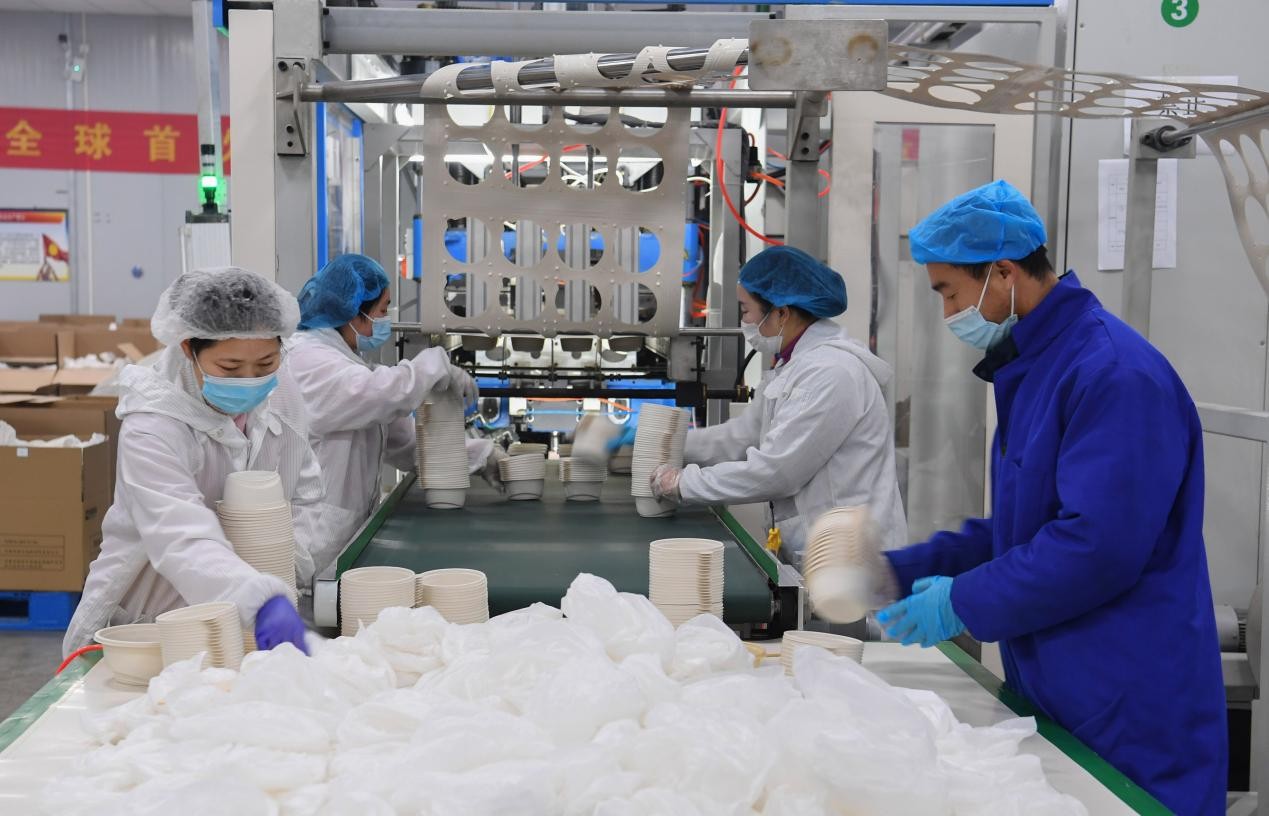
Core Insights - The new materials industry in Bengbu, Anhui, is positioned as a strategic and foundational sector, crucial for building a modern industrial system, with a focus on innovation and integration [1] - The industry has attracted 411 new materials companies, achieving a scale exceeding 66 billion yuan, with a focus on silicon-based and bio-based materials [1] Group 1: Silicon-based New Materials - Bengbu is developing a unique competitive advantage in silicon-based new materials, supported by national innovation centers and laboratories [2] - The city aims to establish itself as "China's Glass Valley," being the only city capable of producing all glass varieties needed for the display industry [2] - Local silicon-based materials are widely used in electronics and renewable energy, contributing significantly to high-end glass material independence [2] Group 2: Bio-based New Materials - Bio-based new materials represent a distinctive industry with innovative advantages in Bengbu, featuring a complete industrial chain from lactic acid bacteria to polylactic acid products [3] - The industry is led by Fengyuan Group, which produces biodegradable tableware and has been recognized as a key supplier for major events like the Beijing Winter Olympics [5] - Bengbu has implemented a plastic ban and promotes the use of bio-based products, enhancing the application scenarios for these materials [5] Group 3: Chemical New Materials - The chemical new materials sector in Bengbu is supported by two provincial chemical parks, focusing on fine chemicals, biomedicine, and chemical new materials [6] - The region has significant market shares in vitamin products and specialized chemicals, with companies like Yishitong leading in lithium battery separator materials [6][8] - Yishitong has a global market share of 43% in its field and has developed numerous patents, pushing forward green and low-carbon projects [6] Group 4: Industry Development Ecosystem - Bengbu's new materials industry benefits from a robust support system, with 46 provincial-level innovation platforms established [8] - The city has nurtured a range of high-quality enterprises, including national champions and specialized "little giant" companies, fostering a gradient development of the industrial cluster [8] - In the first nine months of 2024, the new materials industry in Bengbu achieved a production value of 56.595 billion yuan, reflecting a year-on-year growth of 12.6% [8]