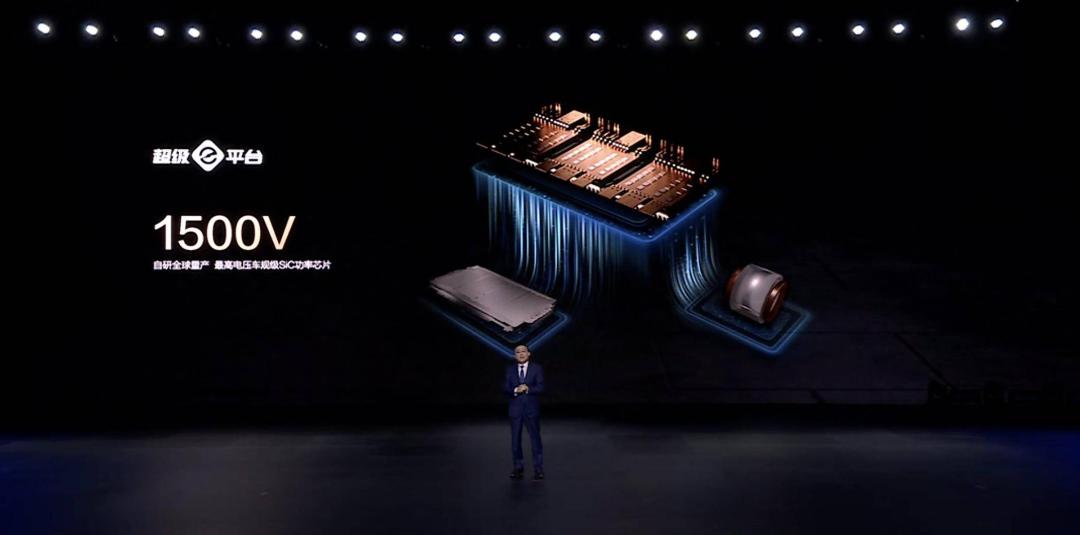
碳化硅逆变器

Search documents
英飞凌:FY26Q1 业绩点评及业绩说明会纪要:收购 ams OSRAM 强化传感器版图,提前投入 5 亿欧元 Capex 扩产全面加码 AI
Huachuang Securities· 2026-02-06 07:48
Investment Rating - The report assigns a positive outlook for Infineon Technologies, indicating a potential for growth in the upcoming quarters, particularly driven by AI-related applications and strategic investments [4][30]. Core Insights - Infineon reported a revenue of €3.662 billion for CY25Q4, reflecting a 7% decrease quarter-over-quarter but a 7% increase year-over-year, aligning with seasonal trends and reaching the upper limit of guidance [2][8]. - The adjusted gross margin improved to 43.0%, up 2.3 percentage points from the previous quarter and 1.9 percentage points year-over-year, indicating operational efficiency [2][9]. - The company has a backlog of orders amounting to approximately €21 billion, showing a continuous improvement trend over the past six months [2][9]. Summary by Sections Overall Performance - Infineon achieved a revenue of €3.662 billion in CY25Q4, with a quarter-over-quarter decline of 7% and a year-over-year growth of 7%, which is close to 14% when adjusted for fixed exchange rates [2][8]. - The adjusted gross margin was reported at 43.0%, reflecting a quarter-over-quarter increase of 2.3 percentage points and a year-over-year increase of 1.9 percentage points [2][9]. - The segment result was €655 million, with a segment margin of 17.9%, remaining stable compared to the previous quarter [2][10]. Departmental Performance 1. **Automotive Segment (ATV)**: Revenue of €1.821 billion, down 5% quarter-over-quarter but up 4% year-over-year, with a segment margin of 22.1% [3][12]. 2. **Green Industrial Power Segment (GIP)**: Revenue of €349 million, down 21% quarter-over-quarter, with a segment margin of 8.9% [3][18]. 3. **Power and Sensor Systems Segment (PSS)**: Revenue of €1.171 billion, down 3% quarter-over-quarter, with a segment margin of 17.4% [3][22]. 4. **Connected Secure Systems Segment (CSS)**: Revenue of €321 million, down 13% quarter-over-quarter, with a segment margin of 7.2% [3][24]. Performance Guidance - For CY26Q1, Infineon expects revenue of approximately €3.8 billion, with a projected segment margin in the mid to high double-digit percentage range (15%-19%) [4][27]. - For FY2026, the company anticipates revenue growth compared to FY2025, with an adjusted gross margin expected to be slightly above 40% [4][28]. - The company plans to invest €500 million in AI-related capital expenditures to support the rapid growth of AI power business, with total capital expenditures expected to be around €2.7 billion for FY26 [4][30].
碳化硅迎高速增长拐点 四大高增长产业驱动万亿赛道崛起
Cai Fu Zai Xian· 2025-12-11 09:21
Core Insights - Silicon Carbide (SiC) is emerging as a key material in high-growth sectors such as renewable energy, AI, communication, and AR, driven by its superior physical properties [1][2] - The global demand for SiC substrates is projected to reach 16.76 million pieces by 2030, with a supply gap of approximately 12 million pieces expected by 2025, indicating significant market potential [1] Group 1: Material Performance and Industry Applications - SiC's unique properties, including high voltage tolerance, high temperature resistance, rapid heat dissipation, low energy loss, and high switching frequency, enable breakthroughs in various industries compared to traditional silicon materials [2] - In the renewable energy sector, SiC is crucial for achieving "high efficiency and energy saving" [2] - In the AI industry, SiC supports high-voltage power distribution and addresses advanced packaging heat dissipation challenges [2] - In the AR sector, SiC's high refractive index aids in upgrading terminal devices [2] - In RF communication, SiC's excellent heat dissipation and high-frequency performance align with the demands of 5G-A and 6G technologies, fostering collaborative development across four major industries [2] Group 2: Growth Drivers in Renewable Energy - The 800V high-voltage platform is becoming mainstream in electric drive systems, significantly reducing charging time to under 15 minutes compared to traditional 400V platforms, alleviating "range anxiety" for users [3] - Vehicles equipped with SiC inverters can achieve a CLTC range increase of 6.3%-6.9%, with lower conduction and switching losses compared to silicon-based devices [3] - The demand for high-voltage DC charging stations is rising as companies like Huawei, BYD, and Tesla invest in megawatt fast charging, acting as a catalyst for SiC demand [3] - In photovoltaic and energy storage sectors, SiC devices play a key role in efficiently converting unstable DC to standard AC and enhancing energy conversion efficiency in storage systems [3] Group 3: New Opportunities in AI, Communication, and AR - The rapid growth of the AI industry raises demands for power supply and heat dissipation technologies, with SiC devices supporting voltage architectures of 800V and above [4] - SiC is positioned to expand into substrate and heat sink applications, with global SiC substrate demand potentially exceeding 30 million pieces by 2030 [4] - In communication, the transition from 5G-A to 6G increases frequency requirements, with GaN-on-SiC solutions addressing GaN's heat dissipation issues while leveraging its high-frequency advantages [4] - The AR industry's demand for lightweight and full-color solutions presents new opportunities for SiC, which can significantly reduce the weight and thickness of AR devices while enhancing performance [4] Group 4: Market Outlook and Growth Structure - The demand explosion is driving rapid expansion in the SiC industry, with a balanced supply-demand situation expected by 2027, potentially leading to capacity constraints [5] - The core growth drivers are identified as AI intermediary layers, electric vehicles, and AR glasses, with projected demand shares of 37%, 26%, and 23% respectively by 2030 [5] - SiC is evolving from power devices to applications in heat dissipation materials and optical substrates, indicating the emergence of a trillion-dollar market and ongoing innovation in the global semiconductor materials industry [5]
碳化硅功率模块:从技术突破到普惠性核心硬件的产业跃迁
3 6 Ke· 2025-09-16 05:28
Core Insights - The adoption of silicon carbide (SiC) power modules is transitioning from a high-performance option to a core hardware driving the energy revolution, evidenced by Tesla's Model 3 and BYD's cost reductions [2][4] - SiC's superior physical properties enable its application across various sectors, including electric vehicles, photovoltaic energy storage, and industrial motors, leading to a more efficient and reliable electronic power system [2][4] - The industry is on the brink of explosive growth, shifting focus from usability to cost-effectiveness and stability, with China leveraging its large renewable energy market and strong policy support [2][4] Group 1: Efficiency Revolution - SiC is redefining power electronics through its wide bandgap and superior thermal and electrical properties, allowing for higher efficiency and performance in applications like photovoltaic inverters [4][5] - SiC devices can operate at temperatures above 200°C and have a breakdown field strength ten times that of silicon, significantly enhancing system performance [4][5] Group 2: Multi-Scene Empowerment - SiC's influence extends beyond electric vehicles to include photovoltaic systems, energy storage, and AI data centers, showcasing its versatility and efficiency improvements [6][7] - In the electric vehicle sector, SiC MOSFETs can enhance driving range by approximately 5% and enable rapid charging capabilities [6][7] Group 3: Flywheel Model - The development of the SiC industry follows a flywheel model where technological advancements lead to cost reductions, which in turn promote application penetration and scale demand [9][10] - The transition from 6-inch to 12-inch wafers is a key driver for reducing manufacturing costs by 30-40%, facilitating broader market adoption [9][10] Group 4: Multi-Polar Application Demand - The growth of the SiC market is driven by diverse applications, including electric vehicles, photovoltaic energy systems, and industrial energy upgrades, creating a synergistic effect that accelerates technology iteration and cost reduction [21][22] - The penetration of SiC in electric vehicles is expected to reach 20% by 2025, with significant adoption across various vehicle models [22][24] Group 5: Global Landscape and Competitive Dynamics - The global SiC market is dominated by US, European, and Japanese companies, with significant market shares and competitive strategies focused on technology patents and price competition [34][35] - Chinese companies are rapidly advancing in the SiC industry, achieving notable progress in substrate materials and module packaging, although challenges remain in high-end chip design and manufacturing [37][38] Group 6: Future Outlook and Investment Strategies - The SiC industry is expected to continue its rapid growth, with a focus on technological breakthroughs, cost control, and ecosystem collaboration as key competitive factors [54][55] - Investment strategies should prioritize companies with established competitive advantages, strong customer relationships, and the ability to scale production effectively [51][52]