
碳基特种燃料

Search documents
【展望二〇二六】构筑能源强国新格局
Jing Ji Ri Bao· 2026-01-31 23:03
Core Viewpoint - The development of a strong energy nation is crucial for China's economic and social progress, emphasizing the need for comprehensive enhancement of energy technology, industrial chains, and system capabilities to boost international competitiveness and support sustainable development [1]. Group 1: New Energy System Construction - The new energy system is the main focus in building a strong energy nation, with a shift from top-level design to comprehensive construction during the "14th Five-Year Plan" and "15th Five-Year Plan" periods [2]. - The goal is to significantly increase the share of non-fossil energy, with plans to add over 20 million kilowatts of wind and solar power capacity annually by 2026 [2]. - The development of clean energy sources such as wind, solar, hydro, and nuclear power will be prioritized, while also promoting biomass, geothermal, and marine energy as supplementary sources [2]. Group 2: Clean Utilization of Fossil Energy - The transition to cleaner and more efficient use of fossil energy is essential during the transitional period, with coal power being upgraded to serve as a flexible and stable backup for renewable energy [3]. - By 2026, initiatives will be implemented to enhance coal power's low-carbon development through technology upgrades and innovative mechanisms [3]. - A new electric power system will be established to ensure efficient distribution and utilization of clean energy, including the construction of high-voltage lines and smart grids [3]. Group 3: Challenges in New Energy Development - The rapid growth of new energy capacity has led to challenges in the power system, including difficulties in transmitting green electricity from western regions to eastern cities and the volatility of renewable energy generation [6]. - The National Energy Administration aims to promote integrated development of new energy by 2030, enhancing reliability and market competitiveness [6][7]. - The optimization of power system regulation capabilities is crucial, with a goal to significantly improve these capabilities by 2027 to support the integration of over 20 million kilowatts of new energy annually [8]. Group 4: Coal Consumption Trends - Coal consumption in China has shown signs of decline, with a negative growth rate for the first time since 2017, but short-term demand is expected to remain resilient due to the need for coal in power generation and chemical industries [10]. - The long-term trend indicates a gradual reduction in coal consumption as part of the carbon peak strategy, with coal's role shifting from a primary energy source to a backup energy source [11]. - The integration of coal and new energy is emphasized, with initiatives to develop renewable energy in coal-producing regions and promote clean energy alternatives [11][12]. Group 5: Future Energy Technologies - The "15th Five-Year Plan" highlights the importance of future industries such as hydrogen energy and nuclear fusion, which are seen as key components for ensuring energy security and sustainable development [14]. - Hydrogen energy is recognized for its potential but faces challenges in achieving market competitiveness due to a lack of sufficient application scenarios [15]. - The development of nuclear fusion is positioned as a long-term goal, with significant investments and research needed to overcome technical and commercial hurdles [16]. Group 6: Overall Energy Strategy - Building a strong energy nation is a strategic task for the "15th Five-Year Plan" and is essential for China's modernization efforts, requiring collaboration among government, enterprises, and society [17].
中经评论:煤炭与新能源不是单选题
Jing Ji Ri Bao· 2025-11-13 00:14
Core Viewpoint - The National Energy Administration's guidance emphasizes the integration of coal and renewable energy, promoting a balanced approach to energy supply and low-carbon transition, recognizing coal's ongoing role in energy security despite the push for cleaner alternatives [1][2]. Group 1: Development Strategy - The guidance aims to leverage coal mining areas for renewable energy development, utilizing existing infrastructure and land to support solar and wind energy projects, thereby reducing construction costs and enhancing efficiency [2][3]. - The integration of coal and renewable energy is seen as a necessary response to the changing energy market, where traditional coal consumption is declining, pushing companies to seek new growth avenues [2][3]. Group 2: Implementation Measures - Production integration involves accelerating the construction of solar power stations in coal mining regions and exploring geothermal energy and distributed solar heating to utilize local resources effectively [3][4]. - Consumption integration focuses on electrifying key coal production processes, replacing traditional energy sources with renewables, and establishing smart microgrids to enhance green energy usage in mining areas [3][4]. Group 3: Industry Transformation - Coal companies are encouraged to invest in clean and efficient power generation and transition towards comprehensive energy service providers, enhancing the value of coal through innovative products [4]. - The successful transformation of traditional energy sectors, as demonstrated by Germany's Ruhr area, illustrates the potential for sustainable development through strategic industry restructuring [4].
下周A股领涨板块可能大变样?别错过这些重要事件
Mei Ri Jing Ji Xin Wen· 2025-11-09 05:23
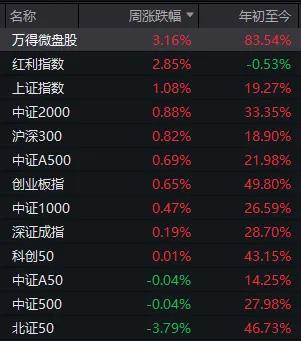
Core Viewpoint - The A-share market experienced a rebound during the week of November 3 to 7, maintaining a high-level fluctuation pattern, with micro-cap and dividend stocks performing notably well while other indices showed mixed results [1][3]. Market Performance - The performance of major indices for the week and year-to-date is as follows: - Wind Micro-Cap Index: Weekly increase of 3.16%, Year-to-date increase of 83.54% - Dividend Index: Weekly increase of 2.85%, Year-to-date decrease of 0.53% - Shanghai Composite Index: Weekly increase of 1.08%, Year-to-date increase of 19.27% - CSI 2000: Weekly increase of 0.88%, Year-to-date increase of 33.35% - CSI 300: Weekly increase of 0.82%, Year-to-date increase of 18.90% - ChiNext Index: Weekly increase of 0.65%, Year-to-date increase of 49.80% - CSI 1000: Weekly increase of 0.47%, Year-to-date increase of 26.59% - Shenzhen Component Index: Weekly increase of 0.19%, Year-to-date increase of 28.70% - Sci-Tech 50: Weekly increase of 0.01%, Year-to-date increase of 43.15% - CSI 50: Weekly decrease of 0.04%, Year-to-date increase of 14.25% - CSI 500: Weekly decrease of 0.04%, Year-to-date increase of 27.98% - North Exchange 50: Weekly decrease of 3.79%, Year-to-date increase of 46.73% [2]. Stock Movement - The number of stocks that rose during the week increased slightly compared to the end of October, but overall, the market remained mixed with both gains and losses [5]. - On November 7, the number of stocks that rose was 2,977, while 2,423 stocks fell, compared to 2,861 rising and 2,523 falling on October 31 [6]. Sector Rotation - The market saw sector rotation due to the narrow fluctuation of indices without significant volume breakthroughs, with recent hot sectors experiencing ups and downs, while long-term low-performing sectors showed signs of recovery [7]. - The leading sectors for the week included power generation, chemicals, and certain regional stocks, while the sectors that declined were primarily those that had performed well in the previous week, such as pharmaceuticals and AI applications [7]. Investment Recommendations - Short-term investment advice suggests a balanced allocation towards sectors with upward policy and industry trends, such as new energy (wind power, energy storage, solid-state batteries), machinery (robots), non-ferrous metals, media (gaming), computing (AI applications), and pharmaceuticals [10]. - Sectors that may benefit from the "14th Five-Year Plan" and potential marginal improvements in fundamentals include consumption (food, retail), military (commercial aerospace), electronics (AI hardware), and communications (computing power) [10]. External Demand Concerns - There is a growing discussion regarding the weakening of external demand, which may lead to increased focus on domestic demand themes in the upcoming week [12]. - In October, China's total import and export value was 3.7 trillion yuan, a slight increase of 0.1%, with exports at 2.17 trillion yuan, down 0.8%, marking the first negative growth in monthly export growth since the second half of this year [12][13]. Upcoming Events - Important upcoming events include the China Robot Industry Development Conference on November 10, the International Summit on Battery New Energy Industry in Suzhou on November 11, and the World Power Battery Conference on November 12, among others [17].

国家能源局:支持煤炭跨界新能源 开辟综合能源新赛道
2 1 Shi Ji Jing Ji Bao Dao· 2025-11-08 02:54
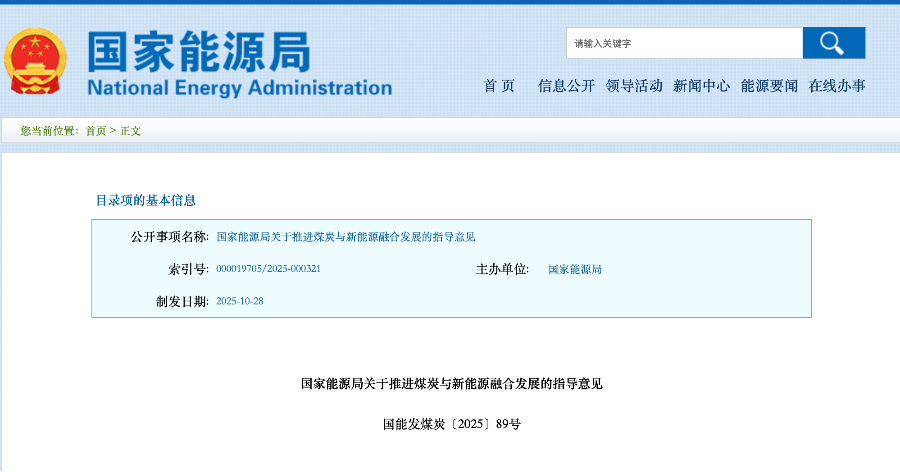
Core Viewpoint - The National Energy Administration's "Guiding Opinions" aim to promote the integration of coal and renewable energy, outlining seven key tasks to enhance the green transformation of the coal industry and achieve significant results by the end of the 14th Five-Year Plan [1][2]. Group 1: Key Tasks and Goals - Accelerate the development of photovoltaic and wind power industries in mining areas, and promote clean energy alternatives [1]. - By the end of the 14th Five-Year Plan, the integration of coal and renewable energy is expected to yield significant results, with a mature development model for coal mining area photovoltaic and wind power industries [1]. - The National Energy Administration will strengthen industry coordination and improve support policies and standards to facilitate high-quality development [1]. Group 2: Opportunities for Coal Enterprises - The "Guiding Opinions" provide a clear blueprint for the green transformation of traditional energy, particularly benefiting coal enterprises in the eastern and central regions [2]. - Developing photovoltaic and "photovoltaic+" models can revitalize idle resources in mining areas, transforming them into clean energy sources and creating new revenue streams [2][3]. - The "self-generated and self-used" model can significantly reduce electricity costs in high-energy-consuming production processes [3]. Group 3: Clean Energy Utilization and Electrification - The "Guiding Opinions" outline multiple action paths for clean energy alternatives in mining areas, including accelerating electrification in key coal production processes [3][4]. - The focus on electrification aligns with the national strategy to promote energy consumption electrification across society [3]. Group 4: Transition to Comprehensive Energy Service Providers - The "Guiding Opinions" encourage coal enterprises to extend their industrial chain and promote synergy with renewable energy development, gradually transitioning to comprehensive energy service providers [6]. - This transition requires coal enterprises to expand their business scope beyond coal production to include comprehensive energy services, covering various energy forms [6]. Group 5: Technological Innovation and Product Development - The "Guiding Opinions" emphasize the need for technological innovation and industrial chain extension, supporting projects that utilize green electricity and carbon capture technologies [7]. - Coal enterprises are encouraged to develop innovative products such as carbon-based special fuels and biodegradable materials, which align with carbon neutrality goals and market demands [7].
国家能源局:支持煤炭跨界新能源,开辟综合能源新赛道
2 1 Shi Ji Jing Ji Bao Dao· 2025-11-08 02:53
Core Viewpoint - The National Energy Administration's "Guiding Opinions" aims to promote the integration of coal and renewable energy, outlining seven key tasks to enhance the green transformation of the coal industry and achieve significant results by the end of the 14th Five-Year Plan [1][2]. Group 1: Key Tasks and Goals - The guiding opinions emphasize accelerating the development of photovoltaic and wind power industries in mining areas, promoting clean energy alternatives, and enhancing the synergy between coal and renewable energy [1][2]. - By the end of the 14th Five-Year Plan, the integration of coal and renewable energy is expected to yield significant results, with a mature development model for coal mining area photovoltaic and wind power industries [1][2]. Group 2: Opportunities for Coal Enterprises - The development of mining area photovoltaic and "photovoltaic+" models can revitalize idle resources, utilizing mining subsidence areas and reclaimed land to generate clean energy and create new revenue streams [2][3]. - Implementing a "self-generated and self-used" model can significantly reduce electricity costs in high-energy-consuming production processes [3]. - The "photovoltaic+" approach allows for the integration of agriculture and aquaculture, promoting land use efficiency and ecological restoration [3][4]. Group 3: Technological and Economic Considerations - The transition to clean energy in mining areas involves electrification of key production processes and increasing the electrification ratio of end-use equipment [4][5]. - The economic feasibility of electrification projects is crucial, as they often require significant investment in new infrastructure and equipment upgrades [4][5]. Group 4: Industry Transformation and Innovation - The guiding opinions encourage coal enterprises to extend their industrial chain and promote the integration of coal and renewable energy, transitioning towards comprehensive energy service providers [6][7]. - This transformation requires a shift from merely supplying coal to providing a range of energy services, including heat, electricity, and gas, necessitating a comprehensive upgrade in business scope and energy management capabilities [6][7]. Group 5: Development of Innovative Products - Coal enterprises are encouraged to develop innovative products such as carbon-based specialty fuels and biodegradable materials, aligning with carbon neutrality goals and market demands [8]. - The potential for growth in carbon-based specialty fuels and renewable energy materials is significant, with opportunities in high-value sectors like aerospace and agriculture [8].