
秦科保

Search documents
陕西保险业保障能力持续提升
Shan Xi Ri Bao· 2026-02-27 00:35
Core Insights - The insurance industry in Shaanxi Province is projected to achieve a total premium income of 141.17 billion yuan by the end of 2025, marking a year-on-year growth of 5.81%, which is an increase of 1.18 percentage points compared to the same period in 2024 [1] - Total claims expenditure across various insurance types is expected to reach 57.36 billion yuan, reflecting a year-on-year increase of 7.3% [1] - The industry will provide risk protection amounting to 94.67 trillion yuan, with property insurance contributing an additional coverage of 82.07 trillion yuan and life insurance adding 12.6 trillion yuan [1] Property Insurance Market - The property insurance sector is anticipated to generate a premium income of 35.73 billion yuan in 2025, with a year-on-year growth of 1.41% [2] - Motor vehicle insurance is expected to account for 22.56 billion yuan in premium income, showing a growth of 2.7%, and will provide risk protection of 29.33 trillion yuan [2] - New insurance products such as "Qin Family Insurance" and "Qin Science Insurance" have been successfully launched, enhancing coverage for technology and environmental risks [2] Life Insurance Market - The life insurance sector is projected to achieve a premium income of 105.43 billion yuan in 2025, with a year-on-year increase of 7.38% [3] - Total claims expenditure in the life insurance sector is expected to reach 33.62 billion yuan, reflecting a year-on-year growth of 13.63% [3] - Benefits paid out at maturity are projected to be 17.80 billion yuan, an increase of 2.04 billion yuan compared to the previous year, while annuity payments are expected to reach 9.04 billion yuan, up by 2.35 billion yuan [3]
科技和金融加快“双向奔赴”
Shan Xi Ri Bao· 2026-02-09 00:15
Group 1 - Shaanxi has a strong endowment of educational and scientific resources, with an innovation output index projected to reach 87.59% by 2025, ranking fourth nationally [1] - The province has implemented the "Qin Ke Bao" policy insurance product to support technology enterprises, with over 2000 contracts signed in less than a month [1][2] - The "Qin Ke Bao" insurance covers various risks including property, R&D equipment, intellectual property, cybersecurity, project delays, and project failures, with a premium subsidy mechanism providing over 70% support for eligible tech companies [1] Group 2 - The Qin Chuang Yuan Technology Innovation Investment Co., Ltd. has established a mechanism for joint screening of technological achievements with local universities, identifying 847 projects with potential for commercialization [3] - The company has initiated due diligence on seven projects with an expected investment of 168 million yuan to support provincial technological innovation [3] - The province's technology loan balance is projected to reach 882.15 billion yuan by the end of 2025, reflecting a 12.41% increase from the beginning of the year [4] Group 3 - The provincial government emphasizes the integration of technology and finance to promote innovation, with a focus on three reforms and the establishment of a comprehensive technology finance system [5] - The government has introduced 50 measures to enhance technology finance, aiming to eliminate barriers in the integration of technology, industry, and finance [5]
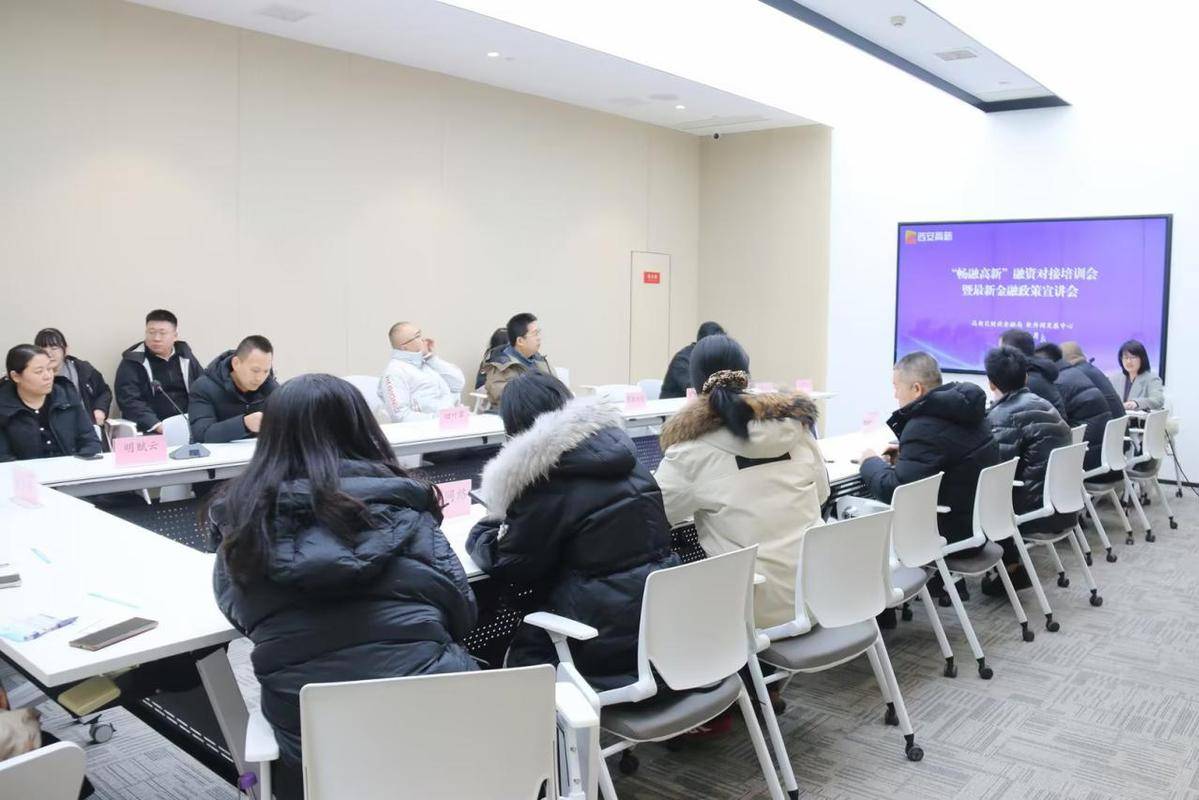
抢开局促发展 “畅融高新”融资对接暨金融政策宣讲会成功举办
Sou Hu Cai Jing· 2026-02-01 07:42
Group 1 - The event aimed to accelerate the construction of "Four High New" and enhance the role of the "Changrong High New" financing platform to support the innovation and growth of technology enterprises [1] - The focus was on expanding financial credit supply and activating market vitality, injecting momentum into regional economic growth [3] - Over 20 technology enterprises participated, engaging in lively discussions about financing challenges and policy applicability with financial institutions [4] Group 2 - The event provided a systematic interpretation of the latest financial support policies from national and provincial levels, including loan interest subsidies for equipment updates and small and micro enterprises [3] - Financial institutions introduced customized financial products to address the financing pain points of technology enterprises, with credit limits for "Science and Technology Innovation Special Loans" potentially increasing up to 40 times [3] - The event established an efficient platform for policy transmission and resource connection, promoting precise financial support to the real economy [4]

科技金融激发创新活力
Shan Xi Ri Bao· 2026-01-29 23:26
Core Viewpoint - The article highlights the growing importance of data asset financing in supporting technology-driven companies in Shaanxi, with a focus on the innovative financial products being developed to address the challenges faced by these companies in monetizing their data assets [1][3]. Group 1: Company Developments - Shaanxi Kunxiang plans to expand its smart parking service market and has successfully secured a data asset pledge loan of 4.95 million yuan from SPD Bank, marking a significant step in utilizing data assets for financing [1]. - The company has developed various intelligent products, including a smart parking client and a city-level static traffic management platform, accumulating substantial parking data resources [1]. - R&D expenditures account for over 60% of the company's total costs, indicating a strong commitment to innovation [1]. Group 2: Financial Innovations - SPD Bank's Xi'an branch has provided loans to 990 technology companies in 2025, reflecting a net increase of 158 companies since the beginning of the year, showcasing the bank's role in supporting tech innovation [3]. - The bank has established a collaborative mechanism involving banks, exchanges, enterprises, and professional institutions to address challenges related to data asset valuation and financing [1][2]. - The bank utilizes blockchain technology to ensure data security during the asset valuation and pledge registration process [2]. Group 3: Regional Financial Initiatives - In 2025, Shaanxi introduced 50 measures to promote technology finance, aiming to support the transformation of technological achievements and address the financing difficulties faced by tech companies [3]. - The Shaanxi Provincial Science and Technology Innovation Fund was established with an initial scale of 10 billion yuan, focusing on strategic emerging industries and future industries [4]. - The fund has already approved investments in 12 sub-funds, with a total commitment of 5.7 billion yuan, indicating strong interest from top investment institutions [4]. Group 4: Overall Financial Growth - By the end of 2025, the balance of technology loans in Shaanxi reached 882.215 billion yuan, reflecting a growth of 12.41%, which is significantly higher than the average growth rate of other loans [5]. - The establishment of AIC pilot funds in the province has led to the launch of 9 funds with a total scale of 8 billion yuan, supporting small and micro technology companies [5].

向新赛道“变轨” 科技保险加速走向台前
Bei Jing Shang Bao· 2026-01-19 08:22
Core Viewpoint - The development of technology insurance is accelerating under the dual drive of policies and industries, showcasing its important value in supporting high-level technological self-reliance and innovation [1][2]. Group 1: Industry Growth and Policy Support - Technology insurance is increasingly recognized as a foundational tool in the technology financial system, with a reported 30% year-on-year growth in premium income for the first three quarters of 2025 [2]. - The Chinese government has issued policies to enhance the insurance product and service system covering the entire lifecycle of technology enterprises, aiming for expansion, quality improvement, and efficiency enhancement in technology insurance over the next five years [2][3]. Group 2: Local Initiatives and Innovations - Various local governments are actively supporting the implementation of technology insurance, with Shanghai introducing a unique "Shanghai Science Points" system for precise pricing based on innovation capabilities [3]. - New products such as "Qin Science Insurance" in Shaanxi and premium subsidies for major technological equipment in Beijing are examples of localized efforts to enhance technology insurance offerings [3][4]. Group 3: Challenges and Market Demand - Despite advancements, there are challenges such as weak awareness of insurance among technology enterprises, which often prioritize financing over risk management [5]. - The supply side faces issues like product homogeneity and insufficient customized offerings for emerging technologies, indicating a misalignment between service capabilities and market needs [6]. Group 4: Future Directions and Innovations - To overcome development bottlenecks, technology insurance must enhance its capabilities across multiple dimensions, including talent development, technology investment, and product innovation [6][7]. - The industry is encouraged to create more adaptable and customized insurance products while exploring collaborative risk-sharing platforms involving government, research institutions, and enterprises [7][8]. Group 5: Transitioning Roles in Risk Management - Insurance companies are urged to shift from being mere risk bearers to proactive risk managers, integrating risk reduction services into their offerings [8]. - Establishing deep collaborative mechanisms with cybersecurity firms and technology enterprises is essential for real-time risk monitoring and embedding risk prevention measures into operational processes [8].
向新赛道“变轨”,科技保险加速走向台前
Bei Jing Shang Bao· 2026-01-18 13:24
Core Insights - The development of technology insurance is accelerating under the dual drive of policies and industries, showcasing its important value in supporting high-level technological self-reliance and innovation [1][3] - The core value of technology insurance lies in risk dispersion and providing certainty to reduce trial-and-error costs for technology innovation [3][5] Policy and Industry Support - Official data indicates that technology insurance premium income in China grew by 30% year-on-year in the first three quarters of 2025 [3] - The Chinese government has positioned technology insurance as a foundational tool in the technology financial system, with policies aimed at creating a comprehensive insurance product and service system covering the entire lifecycle of technology enterprises [3][4] Local Initiatives - Various local governments are actively supporting the implementation of technology insurance, with Shanghai introducing an innovative "Shanghai Science Points" system for precise pricing based on innovation capabilities [4] - In Beijing, a subsidy of up to 80% on premiums for major technological equipment insurance is available, with a maximum annual subsidy of 2 million yuan per enterprise [4] Product Innovation and Market Demand - Insurance institutions are responding to policy support by innovating products and upgrading services, leading to a broadening of coverage and enhancement of protection for technology enterprises [5] - New insurance products are emerging in cutting-edge fields such as artificial intelligence and biomedicine, with several "first orders" being issued [5] Challenges and Barriers - Despite progress, challenges remain, including weak awareness of insurance among technology enterprises and a lack of customized products for emerging technologies [6][7] - The industry faces issues with product homogeneity and insufficient risk assessment capabilities, particularly in new technology sectors [7] Future Directions - To overcome development bottlenecks, technology insurance needs to enhance its capabilities in talent, technology, products, and services [7][8] - Insurance companies should develop more adaptable and customized insurance products and explore collaborative risk-sharing platforms involving government, research institutions, and enterprises [8] Role Transformation - Insurance companies are encouraged to transition from being mere risk bearers to active risk managers, providing proactive risk reduction services to empower technology innovation [9] - Establishing deep collaborative mechanisms with cybersecurity firms and technology enterprises is crucial for integrating risk management into the development and operational processes of technology companies [9]


陕西金融监管局:推动陕西政策性科技保险“秦科保”落地
Bei Jing Shang Bao· 2026-01-16 09:19
Core Viewpoint - The Shaanxi Financial Regulatory Bureau has launched a policy-oriented technology insurance program called "Qin Ke Bao" to support technology enterprises in the region, marking the introduction of the first inclusive technology insurance product in the country [1] Group 1: Product Offerings - Two innovative products have been introduced: "Qin Ke Pu Hui Bao" and "Qin Ke Yan Fa Bao," designed to meet the basic risk protection and research and development risk protection needs of technology enterprises [1] - "Qin Ke Pu Hui Bao" is the first fixed-amount insurance product in the country specifically targeting small and micro technology enterprises, characterized by comprehensive coverage, ease of application, and low costs [1] Group 2: Financial Support Mechanisms - A premium subsidy mechanism has been established, with subsidy funds shared between provincial and municipal levels at a ratio of 6:4, allowing the same policyholder to receive up to 1 million yuan in premium subsidies in the first year [1] - A technology insurance co-insurance body has been formed to jointly underwrite "Qin Ke Yan Fa Bao," with insurance companies covering 50% of the share [1] Group 3: Risk Management Initiatives - A risk compensation mechanism has been established to enhance underwriting enthusiasm and address the challenges of reluctance to insure [1]
陕西印发科技保险“秦科保”试点方案
Shan Xi Ri Bao· 2026-01-01 00:06
Core Insights - The "Qin Ke Bao" pilot scheme aims to establish a technology insurance policy system in Shaanxi Province, supporting high-level technological self-reliance and innovation [1][2] Group 1: Pilot Scheme Overview - The pilot scheme introduces two innovative products: "Qin Ke Pu Hui Bao" and "Qin Ke Yan Fa Bao" [1] - "Qin Ke Pu Hui Bao" focuses on affordability and broad coverage, addressing risks related to R&D personnel, equipment, cybersecurity, intellectual property, and natural disasters [1] - "Qin Ke Yan Fa Bao" specifically protects against project delays and failures in technology R&D activities [1] Group 2: Financial Support and Market Development - A premium subsidy mechanism is established, offering over 70% subsidy on the first-year premium for eligible technology enterprises, reducing the financial burden on companies [1] - The pilot scheme aims to accelerate the development of the technology insurance market in Shaanxi Province [1] Group 3: Unique Features of "Qin Ke Bao" - The pilot scheme is characterized by four main features: a pioneering policy-oriented technology insurance concept, innovative product design, comprehensive coverage, and risk diversification through a provincial co-insurance body [2] - "Qin Ke Yan Fa Bao" is the first of its kind in the country, focusing on outcome-based insurance [2] - The dual approach of "high-end + inclusive" insurance products is designed to meet the diverse needs of technology enterprises [2] Group 4: Future Directions - The Provincial Financial Office plans to collaborate with relevant departments to enhance the technology financial service system, providing stronger financial support for technological innovation [2]