
投资业

Search documents
短期美元仍是人民币汇率的主导因素|宏观晚6点
Sou Hu Cai Jing· 2026-02-27 10:29
Group 1 - The People's Bank of China has decided to lower the foreign exchange risk reserve ratio for forward foreign exchange sales from 20% to 0% effective March 2, 2026, to promote the development of the foreign exchange market and support enterprises in managing exchange rate risks [1] - The central bank will continue to guide financial institutions in optimizing exchange rate hedging services for enterprises and maintain the basic stability of the RMB exchange rate at a reasonable and balanced level [1] Group 2 - Hunan Province has implemented 19 measures to boost private investment confidence, focusing on high-quality development of private investment [2] - The measures include optimizing project application and approval processes, enhancing private capital participation in project evaluations, and simplifying accounting for private capital holdings [2] - For projects requiring provincial-level approval in sectors such as agriculture, energy, transportation, and high-tech industries, private capital holding ratios can exceed 10%, with no upper limit for highly market-oriented projects [2]
德国1200吨黄金急着要回,欧洲集体抛美债,金融霸权或将崩塌?
Sou Hu Cai Jing· 2026-01-31 11:46
Core Viewpoint - The article discusses the rising concerns over the security and credibility of gold reserves held by countries, particularly Germany, in the context of the U.S. dollar's dominance and the potential risks associated with it [1][4][14]. Group 1: Gold Reserves and Trust Issues - Gold prices have surpassed $5000, reflecting a shift in perception regarding wealth and financial security, particularly in Europe [1]. - Germany's demand to repatriate its gold reserves is driven not by financial need but by fears that their gold may have physically disappeared or been misappropriated [3][6]. - The U.S. delayed the repatriation of Germany's gold for seven years, raising suspicions about the integrity of the gold reserves [4][6]. Group 2: Political and Financial Implications - The discovery that the serial numbers of the gold bars returned to Germany did not match the original records has led to allegations of misappropriation by the U.S. [4][6]. - The urgency expressed by German officials for the return of their gold indicates a looming crisis and a lack of confidence in the U.S. financial system [7][16]. - European pension funds, traditionally conservative investors, have begun to sell off U.S. Treasury bonds, signaling a significant shift in market sentiment and trust in U.S. financial stability [9][10]. Group 3: Changing Dynamics in Global Finance - The total value of global central bank gold reserves is projected to surpass that of U.S. Treasury holdings by the end of 2025, indicating a fundamental shift in asset preference [13]. - The Bretton Woods system, which relied on the dollar's backing by gold, is being questioned as countries increasingly favor gold over paper assets [14]. - The internal conflict within European leadership regarding trust in the U.S. reflects deep-seated anxieties about financial security and geopolitical stability [16].


科技金融激发创新活力
Shan Xi Ri Bao· 2026-01-29 23:26
Core Viewpoint - The article highlights the growing importance of data asset financing in supporting technology-driven companies in Shaanxi, with a focus on the innovative financial products being developed to address the challenges faced by these companies in monetizing their data assets [1][3]. Group 1: Company Developments - Shaanxi Kunxiang plans to expand its smart parking service market and has successfully secured a data asset pledge loan of 4.95 million yuan from SPD Bank, marking a significant step in utilizing data assets for financing [1]. - The company has developed various intelligent products, including a smart parking client and a city-level static traffic management platform, accumulating substantial parking data resources [1]. - R&D expenditures account for over 60% of the company's total costs, indicating a strong commitment to innovation [1]. Group 2: Financial Innovations - SPD Bank's Xi'an branch has provided loans to 990 technology companies in 2025, reflecting a net increase of 158 companies since the beginning of the year, showcasing the bank's role in supporting tech innovation [3]. - The bank has established a collaborative mechanism involving banks, exchanges, enterprises, and professional institutions to address challenges related to data asset valuation and financing [1][2]. - The bank utilizes blockchain technology to ensure data security during the asset valuation and pledge registration process [2]. Group 3: Regional Financial Initiatives - In 2025, Shaanxi introduced 50 measures to promote technology finance, aiming to support the transformation of technological achievements and address the financing difficulties faced by tech companies [3]. - The Shaanxi Provincial Science and Technology Innovation Fund was established with an initial scale of 10 billion yuan, focusing on strategic emerging industries and future industries [4]. - The fund has already approved investments in 12 sub-funds, with a total commitment of 5.7 billion yuan, indicating strong interest from top investment institutions [4]. Group 4: Overall Financial Growth - By the end of 2025, the balance of technology loans in Shaanxi reached 882.215 billion yuan, reflecting a growth of 12.41%, which is significantly higher than the average growth rate of other loans [5]. - The establishment of AIC pilot funds in the province has led to the launch of 9 funds with a total scale of 8 billion yuan, supporting small and micro technology companies [5].

站上4800美元!一国央行宣布,再买150吨黄金
Zhong Guo Ji Jin Bao· 2026-01-21 03:43
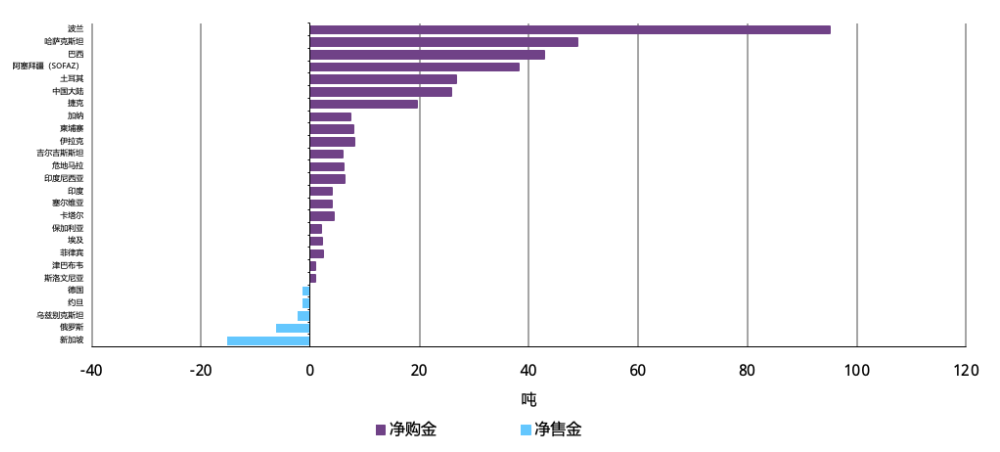
Group 1 - Gold prices continue to soar, with both spot and futures gold surpassing $4800 per ounce, reaching a new historical high on January 21 [1][5] - The Polish central bank has announced a plan to purchase up to 150 tons of gold, which would increase its total gold reserves from 550 tons to 700 tons by the end of 2025, positioning Poland among the top ten countries in terms of gold reserves [2][4] - Adam Glapinski, the governor of the Polish central bank, emphasized that gold is a zero-credit-risk asset, unaffected by other countries' monetary policies, and provides strong resilience against financial shocks, thereby enhancing Poland's economic stability [2][4] Group 2 - The demand for gold from central banks is rising in response to economic tensions and geopolitical changes, with 95% of surveyed central banks expecting their gold reserves to continue growing over the next 12 months [4] - As of January 21, COMEX gold was reported at $4820.3 per ounce, reflecting a 1.14% increase, while London gold was at $4819.24 per ounce, up 1.18% [5][6] - Geopolitical risks, such as recent U.S. tariffs on European countries, are increasing market risk aversion, which is expected to support gold prices, although short-term volatility may arise due to profit-taking [8]
打造长三角金融改革新高地 宁波金融“活水”浇灌新质生产力
Zhong Guo Zheng Quan Bao· 2026-01-05 20:16
Core Viewpoint - Ningbo is enhancing its financial ecosystem to support technological innovation and industrial upgrading, focusing on integrating financial resources with the real economy, particularly advanced manufacturing and future industries [1] Group 1: Financing and Direct Financing Expansion - Ningbo's financial system aims to solve financing challenges for the real economy, achieving a dual increase in social financing scale [2] - The city has supported major project financing of 146 billion yuan by mid-2025 through digital platforms like "Yongjin Tong" [2] - Direct financing channels are being expanded, with 8 new domestic and foreign listed companies since 2025 and a direct financing scale of 281.28 billion yuan from January to November [2] Group 2: Capital Empowerment for Advanced Manufacturing - Over 80% of Ningbo's 152 listed companies are in manufacturing, positioning the sector as a backbone for high-quality development [3] - The "Phoenix Action" plan is implemented to nurture potential listed companies, with 128 new companies added to the cultivation database in 2025 [3] - 15 out of 19 newly listed companies in 2023 are from the manufacturing sector, highlighting a focus on "hard technology" [3] Group 3: Comprehensive Services Beyond Financing - Ningbo's government actively coordinates to resolve development challenges for companies through large-scale visits and special policies for technology financing [4] - By the end of Q3 2025, loans to technology-based SMEs reached 381.14 billion yuan, a 27.19% increase from the beginning of the year [4] Group 4: Mechanism Innovation for Future Industries - Ningbo is enhancing financial service inclusivity and resilience to address the high-risk, long-cycle nature of future industries like AI and hydrogen energy [5] - A multi-party risk-sharing system has been established to support "light asset, high R&D" tech companies, with over 51.5 billion yuan in loans supported by small loan guarantee insurance [6] Group 5: Encouraging Patient Capital Investment - Ningbo is promoting early-stage investments in technology through special policies, attracting a significant number of private equity funds, with 583 registered fund managers managing 698.2 billion yuan [7] - The establishment of a 10 billion yuan angel investment guidance fund is underway, aiming to create a deep coupling of capital, industry, and talent [7]
中国美债持仓创17年新低!多元化战略背后的深意
Sou Hu Cai Jing· 2025-12-20 08:24
Core Viewpoint - China's holdings of U.S. Treasury bonds have fallen to their lowest level since 2008, indicating a significant shift in investment strategy and a potential diversification of foreign reserves [1][3][4]. Group 1: Current Holdings and Trends - As of October 2025, China reduced its U.S. Treasury holdings by $11.8 billion, bringing the total to $688.7 billion, the lowest since October 2008 [3][4]. - Since early 2025, China's Treasury holdings have decreased by over 9%, continuing a trend that began in April 2022 when holdings fell below $1 trillion [3][4]. - In comparison, Japan and the UK have increased their holdings, with Japan adding $10.7 billion and the UK $13.2 billion, while Canada has seen a significant reduction of $56.7 billion [6]. Group 2: Strategic Considerations - The reduction in U.S. Treasury holdings is part of China's broader strategy to diversify its foreign reserves, which includes a consistent increase in gold reserves, reaching 74.09 million ounces by the end of October 2025 [8]. - Geopolitical risks and concerns over U.S. policy have influenced China's decision to reduce its Treasury holdings, particularly in light of the longest government shutdown in U.S. history and rising national debt, which surpassed $38 trillion [11]. - The structure of China's Treasury holdings is also evolving, with a higher proportion of short-term securities, indicating a focus on liquidity and reduced long-term risk exposure [11]. Group 3: Future Outlook - Analysts predict that China's holdings of U.S. Treasury bonds may continue to decline gradually, reflecting ongoing changes in U.S.-China relations and a trend towards diversifying foreign reserve assets [15]. - The shift in China's investment strategy may serve as a reference for other emerging economies, emphasizing the importance of foreign reserve diversification in maintaining financial security amid global economic uncertainties [15][17]. - The ongoing reduction in U.S. Treasury holdings by China symbolizes a broader transformation in the global financial landscape, moving away from a dollar-dominated system towards a more balanced international monetary framework [17].

《华尔街日报》酸评:中国正用我们的武器打败我们,中国是最大赢家?
Sou Hu Cai Jing· 2025-11-04 13:12
Core Insights - The Federal Reserve's decision to cut interest rates by 25 basis points amid a $38 trillion debt crisis indicates a significant shift in U.S. monetary policy, contrasting with China's successful issuance of $4 billion in sovereign bonds that attracted $40 billion in global capital [1][3][5] Group 1: U.S. Economic Challenges - The U.S. is facing a systemic crisis with a projected debt-to-GDP ratio of 133% by 2025, the highest since World War II, while the Federal Reserve struggles between raising and lowering interest rates [7][11] - The Fed's attempts to create dollar scarcity through quantitative tightening have backfired, as global liquidity remains stable due to China's actions [15][35] Group 2: China's Strategic Moves - China's issuance of sovereign bonds is not merely a financial maneuver but a strategic play to challenge U.S. dollar dominance, effectively positioning itself as a more reliable source of liquidity for countries in need [5][17][22] - The successful $4 billion bond issuance in Hong Kong reflects China's ability to attract international capital, showcasing its financial stability and credibility [20][46] Group 3: Global Capital Flows - There is a noticeable shift in global capital flows towards China, with significant foreign investment in Chinese assets, driven by favorable valuations and stable policies [28][30] - Countries like Argentina and Turkey are increasingly looking to China for financial support, indicating a growing reliance on Chinese financial mechanisms over traditional U.S. dollar-based systems [19][32] Group 4: Future Implications - If China continues to normalize the issuance of dollar-denominated sovereign bonds, it could reshape global dollar liquidity and reduce the Federal Reserve's control over global interest rates [35][42] - The evolving financial landscape suggests a transition towards a more multipolar and equitable global financial order, with China leading through cooperation rather than coercion [38][48]
如何影响股市、金价、人民币?
Sou Hu Cai Jing· 2025-10-30 05:44
Core Viewpoint - The Federal Reserve has lowered the federal funds rate target range by 25 basis points to between 3.75% and 4.00%, while signaling a cautious approach towards future rate cuts due to economic uncertainties [2][4][6]. Group 1: Economic Conditions - Current U.S. economic activity is experiencing moderate growth, with a slight increase in unemployment and inflation levels remaining high despite a decrease from earlier in the year [4][6]. - The September Consumer Price Index (CPI) showed a year-on-year increase of 3%, lower than the expected 3.1%, indicating a mixed inflation outlook [6][9]. Group 2: Federal Reserve's Decision-Making - The decision to cut rates was supported by 10 out of 12 voting members, indicating some internal disagreement on the extent of the cut [6]. - Future rate adjustments will depend on the latest economic data and the balance of various risks, with the Fed prepared to adjust policies if new risks emerge [4][9]. Group 3: Impact of Government Shutdown - The ongoing government shutdown has delayed the release of key economic data, complicating the Fed's decision-making process [9][14]. - The Congressional Budget Office warned that the shutdown could reduce U.S. GDP growth by 1 to 2 percentage points in the fourth quarter, leading to significant economic losses [9]. Group 4: Market Reactions - The Fed's rate cut is expected to weaken the dollar, potentially leading to a relative appreciation of the Chinese yuan and affecting global capital flows [16][18]. - The cut is likely to lower U.S. Treasury yields, making U.S. dollar-denominated assets less attractive, which could increase the appeal of Chinese assets [16]. Group 5: Future Projections - Analysts predict that the Fed may continue to lower rates until early 2026, but concerns about inflation may limit the extent of future cuts [13][14]. - The Fed's decision to stop balance sheet reduction on December 1 is seen as a move to ease liquidity in the market [11][12].

不做郑氏第三代接班人?郑裕彤长孙郑志刚要“自我发展”
Di Yi Cai Jing· 2025-09-24 02:40
Core Viewpoint - Zheng Zhigang, a member of the Zheng family, is establishing a new investment company named "Hong Kong Shanghe Development," focusing on digital sectors and emerging markets, while continuing to operate and develop the K11 brand [1][5]. Group 1: Business Developments - Zheng Zhigang's new investment company will cover various industries, including culture, entertainment, sports, traditional Chinese medicine globalization, and finance [1]. - The concept for this new business has been in development for two years, with plans to announce more projects soon [3]. - Zheng Zhigang has prior experience in investment, having co-founded a private investment platform in 2017 and invested in companies like SenseTime, SHEIN, Xiaopeng Motors, and NIO [3]. Group 2: K11 Brand Management - Zheng Zhigang has retained control over the K11 brand, having signed an agreement for the sale of shares related to K11 operations for HKD 209 million, while also establishing a 30-year trademark licensing agreement [5]. - K11 by AC Group, under Hong Kong Shanghe Development, will manage retail assets and cultural art districts, serving multiple stakeholders [5]. Group 3: Corporate Restructuring - Zheng Zhigang has stepped down from various positions within the Zheng family’s companies, including New World Development and Chow Tai Fook, marking a significant shift in his career focus [4][6]. - Following his resignation as CEO of New World Development in September 2024, he has gradually distanced himself from family business roles, culminating in his departure from all positions within the family enterprises [6].

最高法、司法部联合发布规范涉企执法司法行政复议、行政诉讼典型案例
Xin Hua Wang· 2025-09-17 06:21
Core Viewpoint - The Supreme People's Court and the Ministry of Justice have released 10 typical cases to standardize the enforcement of laws related to enterprises, providing guidance for courts and administrative review bodies in handling administrative cases involving the private economy [1][2] Group 1: Administrative Review Cases - A case from Jiangsu Province involved the housing and urban-rural development department revoking qualifications from 656 construction companies, totaling 768 qualifications, due to non-compliance with asset and professional standards [1] - 103 companies whose qualifications were revoked filed for administrative review, claiming they did not receive necessary notifications, which led to a significant procedural violation in the revocation process [1] - The administrative review body found that the evidence provided by the respondent did not prove effective delivery of relevant documents to the affected companies, leading to the revocation of the qualification withdrawal decision [1] Group 2: Licensing Issues - An investment company obtained rental rights through public bidding and completed renovations, but faced refusal from a local police bureau for a special industry license based on the property’s designated use [1] - The investment company argued that the local government had changed the property’s operational requirements after the renovations were completed, claiming the new conditions violated higher legal standards [2] - Following discussions between the court, provincial public security department, and local police bureau, the relevant document was adjusted, allowing the investment company to obtain the special industry license and subsequently withdraw its lawsuit [2] Group 3: Future Implications - The Supreme Court indicated that courts and administrative review bodies will ensure fair hearings and effectively resolve administrative disputes involving enterprises, promoting strict and fair law enforcement by administrative agencies to support the healthy and high-quality development of the private economy [2]