空气源热泵

Search documents
新三板掘金周报第十五期:新质生产力“小巨人”出海,关注全球主流车企零部件磐吉奥与空气源热泵热立方-20260329
KAIYUAN SECURITIES· 2026-03-29 13:12
Group 1: New Companies Listed - Five new companies were listed this week, with an average revenue of 640 million yuan and a median of 719 million yuan for 2024, and an average net profit of 57.3 million yuan with a median of 43.9 million yuan [3][14] - The companies include Panguiao, a "small giant" in automotive parts and precision molds, and Helifang, a "small giant" in air source heat pumps [3][13] - Panguiao's main products include power system components, interior and exterior functional parts, and precision molds, serving major global automotive brands [15][17] - Helifang specializes in air source heat pumps, with products exported to multiple countries and a projected market share increase from 5.74% in 2023 to 8.21% in 2024 [4][39] Group 2: Market Dynamics - The total number of companies listed on the New Third Board is 5,933, with 2,257 in the innovation layer and 3,676 in the basic layer [5] - The total market value of listed companies reached 25,856.35 billion yuan, with a month-on-month increase of 13.17 billion yuan [5][4] - The trading volume for the week included significant transactions, with Zhongxin Jingyuan and Xinda Materials leading in trading amounts [5][12] Group 3: Industry Trends - The air source heat pump market is projected to grow significantly, with the European market expected to reach 14.2 billion USD in 2024 and 16.8 billion USD in 2025, with a compound annual growth rate of 19.3% from 2025 to 2034 [4][38] - The global heat pump market is anticipated to see an increase in installation capacity, with projections of over 3,000 GWth by 2035 under the STEPS scenario [38] - The demand for energy-efficient heating solutions is rising, driven by global energy transition policies and the push for carbon neutrality [25][31]
2023年全球热泵行业数据发展报告
中国制冷学会· 2026-03-23 05:55
Investment Rating - The report does not explicitly state an investment rating for the industry Core Insights - The report highlights the growth trends and market dynamics of the air source heat pump industry in China from 2021 to 2023, indicating a significant increase in market size and application areas, particularly in heating and hot water applications [20][22][34]. Summary by Sections 1. Market Overview - The air source heat pump market in China has shown a steady growth rate, with a market size reaching approximately 350 billion yuan in 2023, reflecting a growth rate of 17.8% compared to 2022 [21]. - The report categorizes heat pump applications into hot water, heating, and special applications, with notable growth in heating applications, especially in northern China [22][34]. 2. Domestic Market Analysis - The domestic market for air source heat pumps is segmented into various categories, including commercial heat pumps, household heat pumps, and hot water machines, with the commercial segment showing robust growth [24][25]. - Monthly sales data for 2023 indicates a consistent demand for air source heat pumps, although specific figures are not provided in the report [26]. 3. Heating Market Analysis - The northern heating market has become a focal point for the air source heat pump industry, with significant growth observed in both household and commercial heating applications [34][36]. - The report emphasizes that the northern heating market will continue to drive the overall growth of the air source heat pump sector, with expectations for increased product diversity and energy-efficient systems [34]. 4. Export Market Analysis - The report notes a decline in exports to the European market, despite growth in other regions such as Asia-Pacific, indicating a shift in demand dynamics [40]. - The European market's stringent requirements for refrigerants and standards are expected to impact Chinese manufacturers, necessitating faster adaptation to local market needs [42]. 5. International Market Insights - The overseas market analysis reveals varying growth rates across different regions, with Australia, the US, and Europe showing distinct trends in heat pump product demand [44][46]. - The report highlights the need for Chinese companies to enhance their overseas market strategies to meet local demands and standards effectively [42][40].
刚刚!IPO审1过1
梧桐树下V· 2026-03-17 09:30
Core Viewpoint - Zhejiang Oulun Electric Co., Ltd. has received approval for its IPO application from the Beijing Stock Exchange, indicating a positive outlook for the company's future growth in the environmental regulation equipment sector [1]. Basic Information - The company focuses on the research, design, manufacturing, sales, and service of environmental regulation equipment, including dehumidifiers, mobile air conditioners, car refrigerators, and air source heat pumps, aiming to provide comprehensive air environment control solutions [3][4]. - The company was established in December 2009 and transitioned to a joint-stock company in October 2022, with plans to be publicly traded by October 16, 2024 [4]. Major Shareholders and Control - The controlling shareholders are Chen Xianyong and Zhan Xiaoying, who collectively hold 98.88% of the company's shares, indicating a high concentration of ownership [5][16]. Performance During Reporting Period - The company's revenue for the reporting period was as follows: 971.71 million yuan in 2022, 1.23182 billion yuan in 2023, 1.62328 billion yuan in 2024, and projected at 1.24227 billion yuan for the first half of 2025. The net profit figures were 85.10 million yuan, 133.64 million yuan, 204.50 million yuan, and 146.14 million yuan respectively [7][11]. - In 2025, the company expects a revenue increase of 25.46% compared to 2024, with net profit projected to grow by 10.25% [9][15]. Financial Metrics - As of June 30, 2025, total assets were approximately 1.979 billion yuan, with total equity of about 804.59 million yuan. The asset-liability ratio was 58.54% [8][13]. - The company reported a gross profit margin of 24.86% for the first half of 2025, with a net profit margin of 12.02% [13]. Market Position and Competitors - Midea Group is identified as a key competitor and the largest supplier, with procurement amounts from Midea representing 18.62% to 21.22% of total purchases over the past four years [17][20]. - The company has a significant international presence, with over 54% of its revenue coming from overseas markets, primarily in Europe, North America, and Asia [21]. Key Concerns - Despite revenue and net profit growth, the net cash flow from operating activities saw a significant decline of 66.81% in 2025, raising questions about the sustainability of cash flow management [11][15]. - There are inquiries regarding the authenticity of operating performance, particularly concerning the business model and sales to related parties [23].


对标千亿巨头?欧伦电气“巧”选同行!
IPO日报· 2026-03-17 00:32
Core Viewpoint - Oulun Electric is preparing for its IPO on the Beijing Stock Exchange, with scrutiny expected on its performance slowdown and the appropriateness of its comparable companies, which include major appliance giants like Gree and Midea [1][9]. Company Overview - Oulun Electric, established in 2009, focuses on the research, design, manufacturing, sales, and service of environmental regulation equipment, including dehumidifiers and mobile air conditioners [4]. - The company has a significant international presence, exporting to countries such as the UK, Germany, Italy, Japan, South Korea, the USA, France, and Spain [4]. Financial Performance - Oulun Electric has shown continuous high growth, with revenues of 972 million yuan, 1.232 billion yuan, and 1.623 billion yuan from 2022 to 2024, reflecting year-on-year growth rates of 26.8% and 31.8% for 2023 and 2024, respectively [5]. - However, growth is expected to slow in 2025, with projected revenues of 2.04 billion yuan, a 25.5% increase, and net profit of 230 million yuan, a mere 10.6% increase [5]. - The company’s revenue growth rate in the first half of 2025 is projected to drop to single digits, raising concerns about potential revenue recognition issues [5]. R&D and Profitability - Oulun Electric's R&D expense ratio was 3.6% in 2022, higher than Gree and Hisense, but still lower than most comparable companies [6]. - The company’s gross margin is at the lower end compared to its peers, raising questions about its competitive positioning despite its growth [6]. Comparison with Competitors - Oulun Electric has positioned itself against major players like Gree, Hisense, and Midea, claiming superior revenue growth rates in 2023 and 2024 [9]. - The company’s revenue growth significantly outpaced its competitors, with Oulun Electric achieving a 38.48% increase in the first half of 2025, while its peers experienced declines or minimal growth [9][10]. - The scale of Oulun Electric is much smaller, with 2024 revenues of only 1.623 billion yuan compared to Gree's 407.15 billion yuan, highlighting the vast differences in business scale and operational models [10]. Future Outlook - Oulun Electric anticipates continued revenue growth slowdown, projecting Q1 2026 revenues between 551 million and 609 million yuan, with net profits expected to grow only modestly [11]. - The company’s ability to maintain profitability and growth will be a focal point during the IPO review process [11].




这公司IPO,实控人控制98%的股份,2025年经营活动产生的现金流量净额同比下降67%
梧桐树下V· 2026-03-16 06:33
Core Viewpoint - Zhejiang Oulun Electric Co., Ltd. is preparing for an IPO on the Beijing Stock Exchange, focusing on integrated business in environmental regulation equipment, with a strong emphasis on product development and sales [1] Financial Performance - In 2025, the company expects a revenue of approximately 2.03653 billion yuan, a year-on-year increase of 25.46%, and a net profit attributable to the parent company of about 0.23007 billion yuan, up 10.60% from the previous year [4][6] - The company reported a significant decline in net cash flow from operating activities, which fell by 66.81% to 0.07868 billion yuan in 2025, despite revenue and net profit growth [6][4] - The company achieved operating revenues of 0.9717 billion yuan, 1.2318 billion yuan, and 1.6233 billion yuan in 2022, 2023, and 2024 respectively, with net profits of 0.0917 billion yuan, 0.1418 billion yuan, and 0.2068 billion yuan [2] Shareholding Structure - The company's shareholding is highly concentrated, with the actual controllers, Chen Xianyong and Zhan Xiaoying, holding a combined 98.88% of the shares [7] Industry Comparison - Midea Group is identified as a comparable company in the industry and is also the largest supplier to Oulun Electric, accounting for 18.62%, 21.22%, 19.09%, and 11.66% of total procurement from 2022 to the first half of 2025 [8][11] International Revenue - The company has a significant international revenue share, exceeding 54%, with major sales regions including Europe, North America, and Asia [12]

广东芬尼股份IPO进入问询阶段,年入15亿,中信证券保荐
Sou Hu Cai Jing· 2026-02-05 13:13
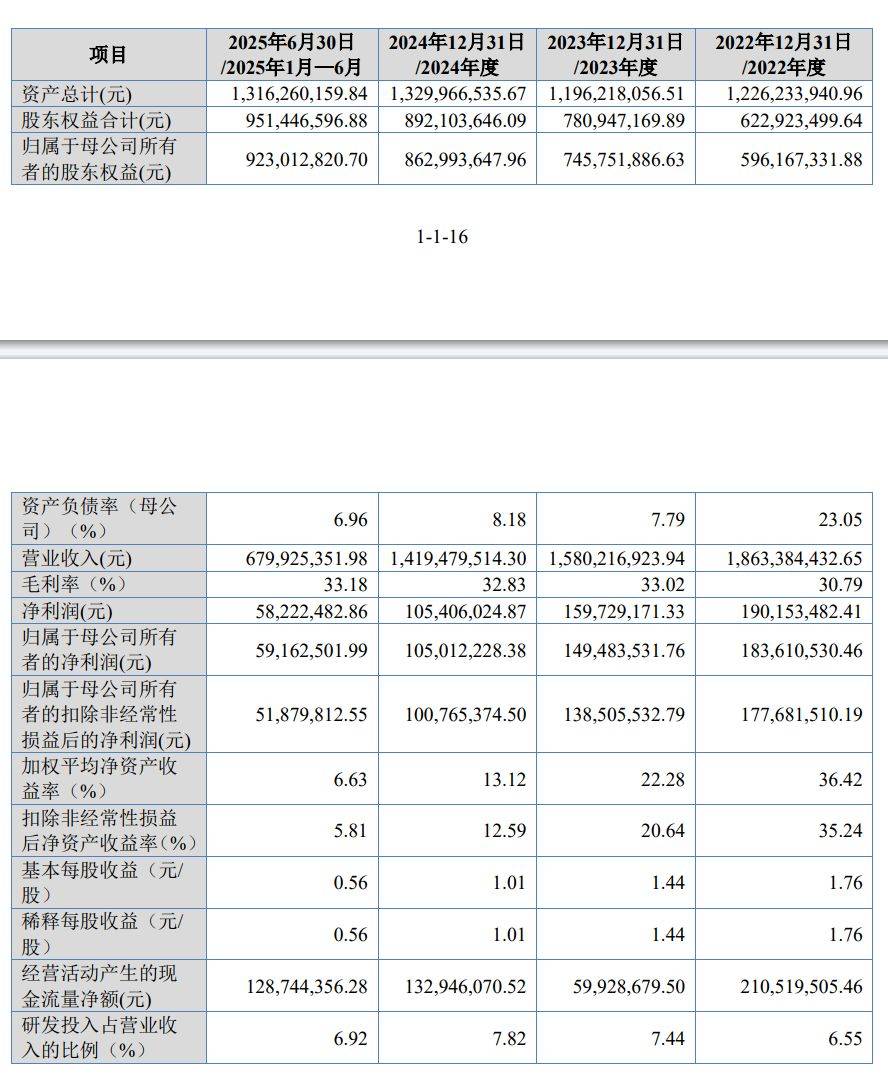
Company Overview - Finni Technology Co., Ltd. is located in Guangzhou, Guangdong Province, focusing on the research, production, sales, and service of heat pump products, primarily air source heat pumps and related products [2] - The company's products are categorized into four main functions: swimming pool temperature control, heating (cooling), domestic hot water, and drying products, serving residential, commercial, and agricultural sectors [2] Financial Performance - From 2022 to the first half of 2025, the company's revenue figures were 1.863 billion yuan, 1.58 billion yuan, 1.419 billion yuan, and 680 million yuan respectively, with net profits of 190 million yuan, 160 million yuan, 105 million yuan, and 58.22 million yuan [3] - As of June 30, 2025, total assets amounted to approximately 1.316 billion yuan, with total equity of about 951 million yuan [4] - The company's debt-to-equity ratio was 6.96% as of June 30, 2025, indicating a low level of financial leverage [6] Product Segmentation - The main business revenue is categorized by product or service, with heat pumps and related products accounting for 91.42% of the total revenue in the first half of 2025 [7] - The gross profit margin for heat pumps and related products was 33.65% in the first half of 2025, with specific margins for different product categories such as 32.47% for heating (cooling) products and 37.16% for swimming pool temperature control products [7] Major Clients and Suppliers - The top five clients in the first half of 2025 included FLUIDRA GROUP, Beijing Zhongneng Hengye Energy Technology Co., Ltd., and HAYWARD Group, with total sales to these clients accounting for 21.14% of the total revenue [8] - Major suppliers included Guangdong Longfeng Precision Copper Tube Co., Ltd. and Zhuhai Gree Electric Appliances Co., Ltd., with total purchases from the top five suppliers representing 24.93% of the total procurement in the first half of 2025 [10] Competitive Landscape - Finni Technology competes with companies like NIBE INDUSTRIER AB, BOSCH, and ATLANTIC, which are established players in the heating technology sector [12][13] - The company is positioned within a competitive market that includes both domestic and international manufacturers, with a focus on heat pump technology [11] Shareholding Structure - The largest shareholders are Zhang Li and Zong Yi, who collectively control 56.44% of the company, ensuring stable control over corporate decisions [15][16] - Zhang Dawei, the son of Zhang Li, has been recognized as a co-controlling person since October 2024, further solidifying the family's influence in the company [15][16]

供热行业向“新”逐“绿”
Zheng Quan Ri Bao· 2026-01-23 16:25
Core Viewpoint - The heating industry in China is undergoing a significant transformation towards cleaner, smarter, and more efficient energy solutions, driven by the dual carbon goals and the need for green transition as outlined in national planning documents [1][11]. Group 1: Industry Transformation - The heating sector is shifting from high carbon reliance to clean and diversified energy sources, emphasizing smart management and quality improvement [1]. - The share of combined heat and power (CHP) in the heating system is currently 46%, while renewable and other clean energy sources account for only 19% [2]. - From 2013 to 2023, the area of centralized heating increased by 61%, while energy consumption and carbon emissions grew by only 20% and 17.3%, respectively, indicating effective environmental upgrades and technological advancements [2]. Group 2: Technological Advancements - New technologies such as low-nitrogen combustion have improved boiler efficiency to 90%, achieving ultra-low emissions through advanced treatment processes [3]. - The upgrade of older boilers to new circulating fluidized bed steam boilers has resulted in over a 15% increase in thermal efficiency [3]. - The implementation of smart heating systems, including IoT sensors and intelligent control centers, has transformed traditional heating management into a proactive, self-optimizing system [7][8]. Group 3: Clean Energy Expansion - The use of middle water source heat pumps can provide zero-carbon heating for 3.1 million square meters, saving approximately 40,000 tons of standard coal and reducing CO2 emissions by about 110,000 tons annually [4]. - The largest nuclear heating demonstration project in China, "Warm Nuclear No. 1," has expanded its service to additional cities, enhancing clean heating availability [4]. - The potential for clean energy replacement is significant, with estimates suggesting that replacing 100 million tons of standard coal could reduce CO2 emissions by 260 million tons [5]. Group 4: Future Market Potential - The smart heating market in China is projected to exceed 480 billion yuan by 2030, with clean energy expected to account for over 50% of the energy mix [11]. - Companies like Huashun Heating Group plan to invest 240 million yuan in projects such as geothermal heat pumps and distributed photovoltaics, aiming to add 2.92 million GJ/year of clean heating capacity [11]. - The growth logic of the heating industry is shifting from scale expansion to efficiency enhancement and value extension [11].

比传统热源更灵活、绿色、智慧天津探索公共机构能源托管新范式
Xin Lang Cai Jing· 2026-01-20 20:57
Core Viewpoint - The implementation of energy management in public institutions in Tianjin's Dongli District is demonstrating significant benefits in energy efficiency, cost savings, and environmental impact, showcasing a model that can be replicated in other regions and sectors [1][4][6]. Group 1: Energy Management Implementation - The energy management project in Dongli District, managed by State Grid (Tianjin) Integrated Energy Service Company, is set to begin operations in November 2025, focusing on a new distributed heating system that is flexible, green, and intelligent [1]. - The project aims to achieve dual benefits of energy savings and emissions reduction, with a significant potential for replication and promotion [1][4]. Group 2: Enhanced Heating Effectiveness - The energy management system has improved heating conditions in public institutions, such as Liu Tai Primary School, where the indoor temperature is now consistently above 18°C, leading to better student health and comfort [3][4]. - The use of air source heat pumps has resulted in a notable increase in heating efficiency, with schools reporting an average temperature rise of over 5°C compared to the previous year [4][5]. Group 3: Economic and Environmental Benefits - The first batch of pilot projects is expected to save over 2,300 tons of standard coal and reduce carbon dioxide emissions by more than 5,000 tons annually, while improving energy efficiency in public institutions by over 5% [5][6]. - The project has also led to a reduction in energy costs, with Liu Tai Primary School saving over 40,000 yuan annually [3][5]. Group 4: Future Expansion and Replication - The energy management model is anticipated to expand to more public institutions, including schools and nursing homes, enhancing public service capabilities and promoting technological advancements [6][7]. - Other regions, such as Hubei and Hangzhou, are also adopting similar energy management practices to address energy waste and improve efficiency in public institutions [6][7].
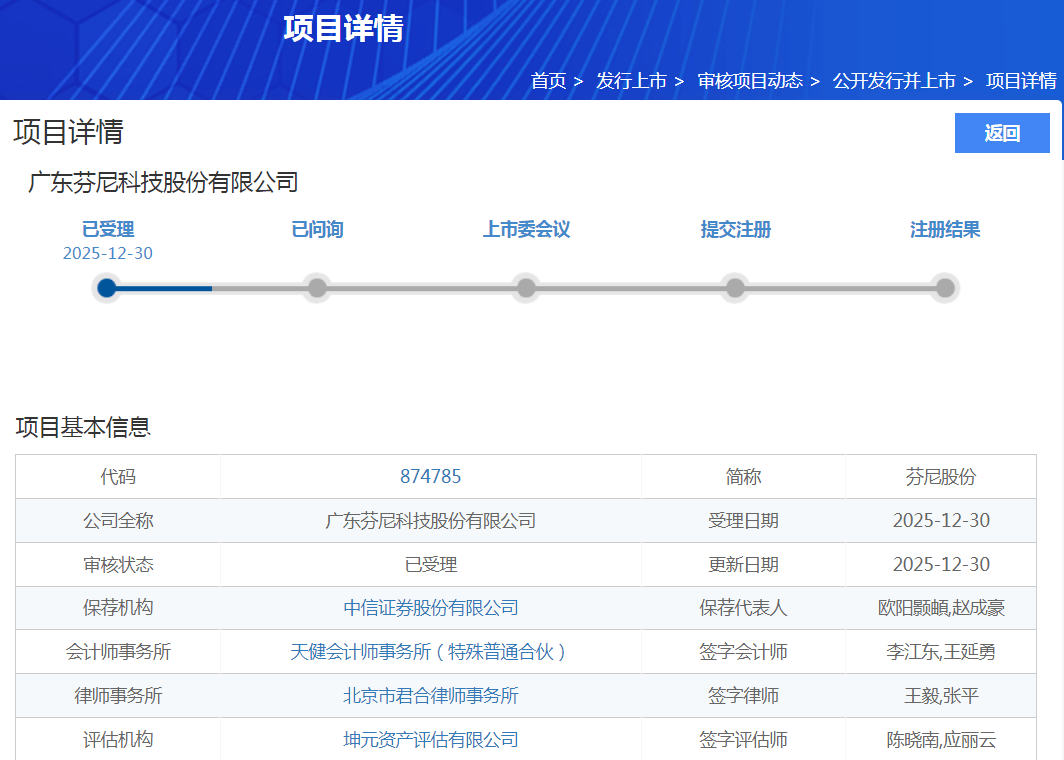
IPO雷达丨芬尼股份北交所IPO获受理,ODM订单下滑,净利润两年连降,存货应收账款双高
Sou Hu Cai Jing· 2025-12-31 08:51
Core Viewpoint - Guangdong Finney Technology Co., Ltd. (Finney) has received acceptance for its IPO on the Beijing Stock Exchange, aiming to raise a total of 850 million yuan [1] Company Overview - Finney was established in 2011 and transformed into a joint-stock company in 2015, headquartered in Nansha District, Guangzhou [4] - The company focuses on the heat pump industry, primarily engaged in the R&D, production, sales, and service of air source heat pumps and related products, applicable in heating, hot water, and drying scenarios [4] Financial Performance - Revenue from 2022 to June 2025: 1.863 billion yuan, 1.580 billion yuan, 1.419 billion yuan, and 680 million yuan respectively [4] - Net profit attributable to the parent company for the same period: 184 million yuan, 149 million yuan, 105 million yuan, and 59 million yuan respectively [4] - Non-recurring net profit figures: 178 million yuan, 139 million yuan, 101 million yuan, and 51 million yuan, indicating a continuous decline over two years [4] - Gross margin maintained above 30%, with figures of 30.79%, 33.02%, 32.83%, and 33.18% across the reporting periods [4] - As of June 2025, total assets were 1.316 billion yuan, with equity attributable to the parent company at 923 million yuan and a debt-to-asset ratio of 32.92%, up from 27.72% at the end of 2022 [4] - Positive cash flow with a net cash flow from operating activities of 129 million yuan in the first half of 2025, equating to 1.26 yuan per share, which is 2.2 times the net profit for the same period [4] Sales and Market Strategy - A significant portion of Finney's sales comes from overseas, primarily through the ODM model, with sales figures of 1.224 billion yuan, 811 million yuan, 806 million yuan, and 418 million yuan during the reporting periods, representing 65.86%, 51.54%, 57.24%, and 61.81% of main business revenue respectively [5] - Major clients include international brands such as HAYWARD, FLUIDRA, and EVO [5] Inventory and Receivables - High levels of inventory and accounts receivable, with inventory values of 314 million yuan, 237 million yuan, 267 million yuan, and 210 million yuan, accounting for nearly 30% of current assets [5] - Accounts receivable values were 88.2 million yuan, 181 million yuan, 199 million yuan, and 180 million yuan across the reporting periods [5] Risks and Challenges - Fluctuations in raw material prices significantly impact costs, with direct material costs exceeding 74% of main business costs [6] - Potential changes in tax incentives for high-tech enterprises could directly affect net profits [6] - The company has developed proprietary technologies in key areas, but there is a risk of failure in new product development impacting profitability [6] - The global heat pump market is influenced by macroeconomic conditions, international trade tensions, exchange rate fluctuations, and changes in overseas subsidy policies [6]
市场占有率证明:发现增长瓶颈,寻找突破方向-中金企信发布
Sou Hu Cai Jing· 2025-12-30 04:10
Group 1 - The electric heater industry is defined as entities that convert electrical energy into thermal energy, consisting of electric heating elements combined with control units and other components [4] - The development of electric heating elements is closely linked to the electric heater industry, which has evolved through four stages: nascent, growth, popularization, and maturity [5] - The upstream of the electric heating element industry includes raw materials such as hardware, stainless steel strips, electrical components, and magnesium oxide powder, while the downstream encompasses sectors like household appliances, commercial appliances, and industrial equipment [6] Group 2 - The global electric heating element market has seen revenue growth from $8.164 billion in 2017 to $10.452 billion in 2024, with a compound annual growth rate (CAGR) of 3.6% [9] - China's electric heating element market is projected to grow from $3.130 billion in 2017 to $4.294 billion in 2024, with a CAGR of 4.6% [11] - The air source heat pump, which accounts for approximately 90% of the heat pump market, is expected to reach a market size of about $31.53 billion in China by 2024, with a CAGR of approximately 15.75% from 2021 to 2024 [8] Group 3 - Market share proof is essential for enterprises applying for titles such as "single champion," "specialized and innovative," and "small giant," requiring comprehensive data, clear logic, reliable sources, and professional calculation methods [13] - The value of market share proof lies in its direct impact on the weight of enterprises in applications, enhancing competitiveness and ensuring the accuracy and effectiveness of market share claims [13]