
网球鞋

Search documents
【干货】网球产业链全景梳理及区域热力地图
Qian Zhan Wang· 2026-01-22 03:14
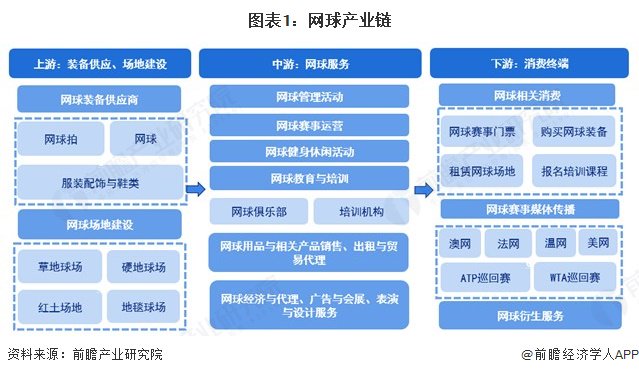
Core Insights - The article discusses the development and structure of the tennis industry in China, highlighting the formation of a complete ecosystem within the industry [2][3]. Industry Structure - The tennis industry chain consists of three main segments: upstream (equipment supply and venue construction), midstream (tennis services), and downstream (consumer end) [2][3]. - Upstream focuses on equipment suppliers, including domestic brands like 红双喜 and Teloon, and international brands like YONEX and DUNLOP. Apparel and footwear brands include Nike, ANTA, and LI-NING [3]. - Midstream services include tennis management, event operations, fitness activities, venue management, and training services, acting as a bridge between suppliers and consumers [2][3]. - Downstream consumption encompasses ticket sales, equipment purchases, venue rentals, and training course registrations, along with media dissemination and derivative services [2][3]. Regional Distribution - The majority of tennis industry chain enterprises are concentrated in Guangdong Province, followed by Beijing, Jiangsu, and Zhejiang [5][8]. - Guangdong is identified as a core hub for manufacturing, particularly for tennis equipment, with a significant number of sports manufacturing companies located in Huizhou [5][8]. - The distribution of enterprises correlates with regional economic vitality, with eastern provinces being the primary concentration areas due to their developed economies [10]. Training Institutions - As of 2024, there are 5,592 market-oriented tennis training institutions in China, with Guangdong having the highest number at 1,463 [12]. Company Performance - The number of listed companies in the tennis industry is limited, with key players including 金陵体育, 兰生股份, 李宁, and 安踏体育. ANTA Sports, a major player, reported a revenue of 70.826 billion yuan in 2024 [13]. Recent Developments - ANTA Sports has launched a tennis strategy, renewed its sponsorship of the China Open, and appointed a top-ranked Chinese tennis player as its brand ambassador. The company is focusing on product innovation and channel upgrades to enhance its competitive edge in the tennis sector [17]. - LI-NING is a significant sponsor of the 2025 Chengdu Open and showcased its full range of tennis products at the event [17]. - Other companies like 浙江天龙网球股份有限公司 and 深圳市弘金地体育集团有限公司 are actively participating in exhibitions and expanding their training offerings [19].


中国网球赛关注度攀升,网球鞋会重新流行吗?
3 6 Ke· 2025-10-09 01:35
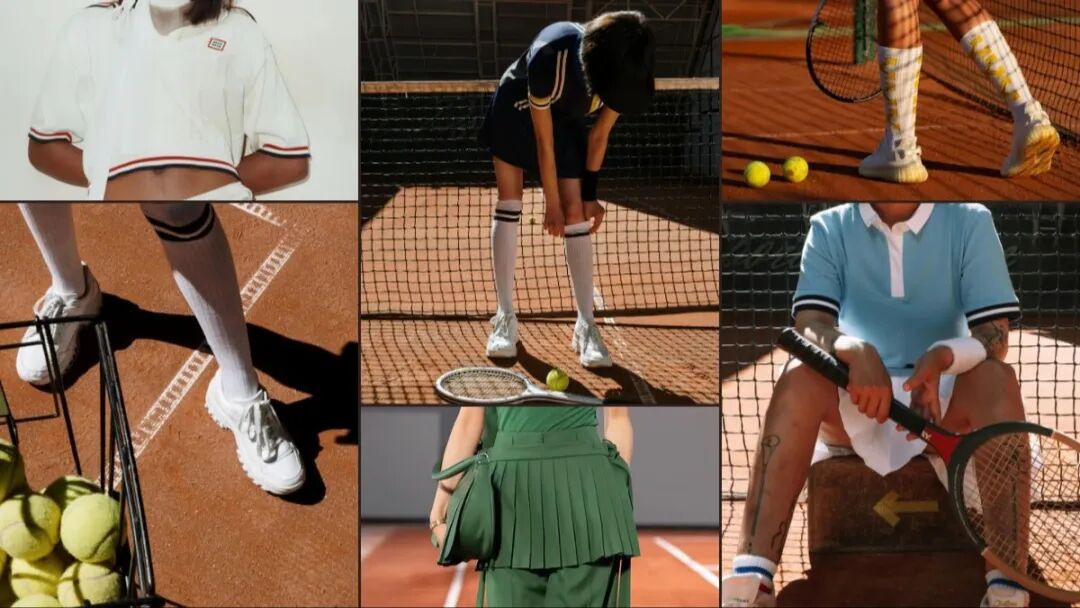
Group 1 - Tennis is becoming a popular urban sport in China, driven by the success of athletes like Zheng Qinwen and major events like the China Open and Shanghai Masters, which have generated significant attendance and revenue [1][6] - The resurgence of tennis has led to increased sales for tennis brands, with Wilson and FILA seeing notable growth in their tennis shoe offerings, which are now popular among new players and fashion enthusiasts alike [2][5] - The popularity of tennis has also resulted in a surge in demand for tennis-related products, including shoes, apparel, and equipment, with many items selling out quickly due to high consumer interest [6][10] Group 2 - The design and functionality of tennis shoes are tailored to the specific demands of the sport, differentiating them from other types of athletic footwear like running or basketball shoes [11][16] - Tennis shoes are essential for players, with many considering it standard to own multiple pairs to accommodate different playing surfaces and conditions [11][20] - The trend of tennis shoes is evolving, with brands increasingly focusing on both performance and style, making them suitable for various occasions beyond just playing tennis [21][24]

网球怎么练?这份指南送给初学者(健身视野·服务站)
Ren Min Ri Bao· 2025-07-09 22:32
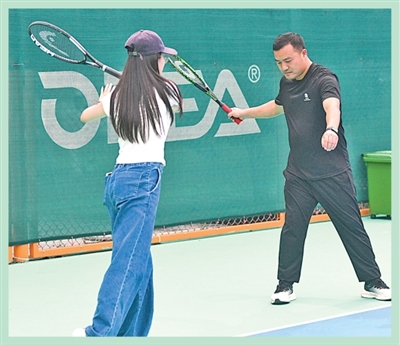
Group 1 - The article discusses the rising popularity of tennis in China, highlighting the sport as a new fitness trend due to the success of Chinese tennis players [3][4] - It emphasizes the importance of proper training techniques for beginners, including developing ball sense, mastering technical movements, and improving body movement [4][9] - The article outlines a three-stage training method for beginners to quickly achieve consistent rallying, focusing on building ball sense, footwork coordination, and engaging in simple matches [10] Group 2 - Common misconceptions among beginners include prioritizing speed over technique, inadequate foot movement before hitting the ball, and lacking a long-term training plan [12] - The article advises beginners to regularly record their practice sessions to identify areas for improvement and suggests a structured training schedule to develop a consistent practice habit [12] - It also highlights the significance of proper warm-up and recovery routines to prevent injuries, recommending dynamic stretching and hydration [13] Group 3 - The article provides guidance on selecting appropriate tennis equipment, such as choosing a racket with a larger head size and moderate weight for easier handling [14] - It stresses the importance of wearing suitable tennis shoes to prevent injuries, recommending shoes with good grip and support [14] - Additional accessories like sweat-absorbing grips and wrist supports are suggested to enhance performance and reduce injury risks [15][16]
白话拆解|是谁让美国两大港口“无人问津”?
Sou Hu Cai Jing· 2025-05-07 10:12
Core Viewpoint - The impact of high tariffs imposed by the U.S. government is leading to a significant decline in container traffic at the Port of Los Angeles and the Port of Long Beach, which together account for 40% of the nation's total container volume [1][4]. Group 1: Container Traffic Decline - The Port of Los Angeles has seen about 20% of ships scheduled to arrive in May canceled, with cargo volumes down approximately 35% compared to the same period last year [2]. - The Port of Long Beach, which was the largest container port in the U.S. in Q1 2025, anticipates a decline in throughput by 35% to 40%, with only 3 ships arriving this week instead of the usual 17, representing a reduction of over 50% [3]. Group 2: Impact on Importers - U.S. importers are struggling to place orders for consumer goods such as furniture, toys, and clothing due to high tariffs and unpredictable tariff policies, leading to a significant drop in demand [4]. - Approximately 125,000 importers operate around the Port of Los Angeles, none holding more than 5% market share, and many are unable to afford the increased costs of imports, which have risen by 2.5 times [5]. Group 3: Consumer Effects - Many imported goods are currently stuck in China, and consumers are facing price increases; for example, a pair of tennis shoes priced at $175 could rise to about $350 due to tariff changes [6]. - American consumers are likely to experience shortages and high prices for essential goods, as many retailers have only one to two months' worth of inventory left [8]. Group 4: Broader Economic Impact - The reduction in container volumes will lead to decreased logistics and retail activity, potentially resulting in job losses and lower incomes across the supply chain [10]. - The high tariffs are causing a ripple effect throughout the U.S. economy, impacting not just ports but also the broader industrial landscape, as companies reliant on imported materials face production challenges [10].