
美团电商

Search documents
美团食杂零售瘦身:关停快递电商、美团优选 小象线下开大店
2 1 Shi Ji Jing Ji Bao Dao· 2025-12-22 12:29
Core Viewpoint - Meituan is undergoing significant restructuring in its grocery and snack business, focusing on expanding its successful offline stores while shutting down underperforming segments like Meituan E-commerce and Meituan Youxuan [1][2][7] Group 1: Business Adjustments - Meituan is closing its e-commerce operations and Meituan Youxuan, while expanding its successful Xiaoxiang supermarket chain, which has opened its first large offline store in Beijing [1] - The decision to halt the Tuanhaohuo business reflects a shift towards exploring new retail formats, as the existing B2C e-commerce model has not gained significant traction among users [2][6] - Meituan Youxuan, a major loss-making segment, is being scaled back, with reports indicating its closure in most regions, which could help reduce overall losses in Meituan's new business sector [7][9] Group 2: Performance and Strategy - The Xiaoxiang supermarket, which evolved from Meituan's previous grocery initiatives, has expanded to over 30 cities and is now positioned as a comprehensive instant retail platform [1][10] - Meituan's new business losses narrowed to 7.3 billion yuan in 2024, a 63.9% reduction year-on-year, indicating a positive trend following the adjustments made to underperforming segments [9] - The new Xiaoxiang store features a diverse product range and aims to enhance customer experience, positioning itself similarly to high-end competitors like Sam's Club and Hema [10][11]


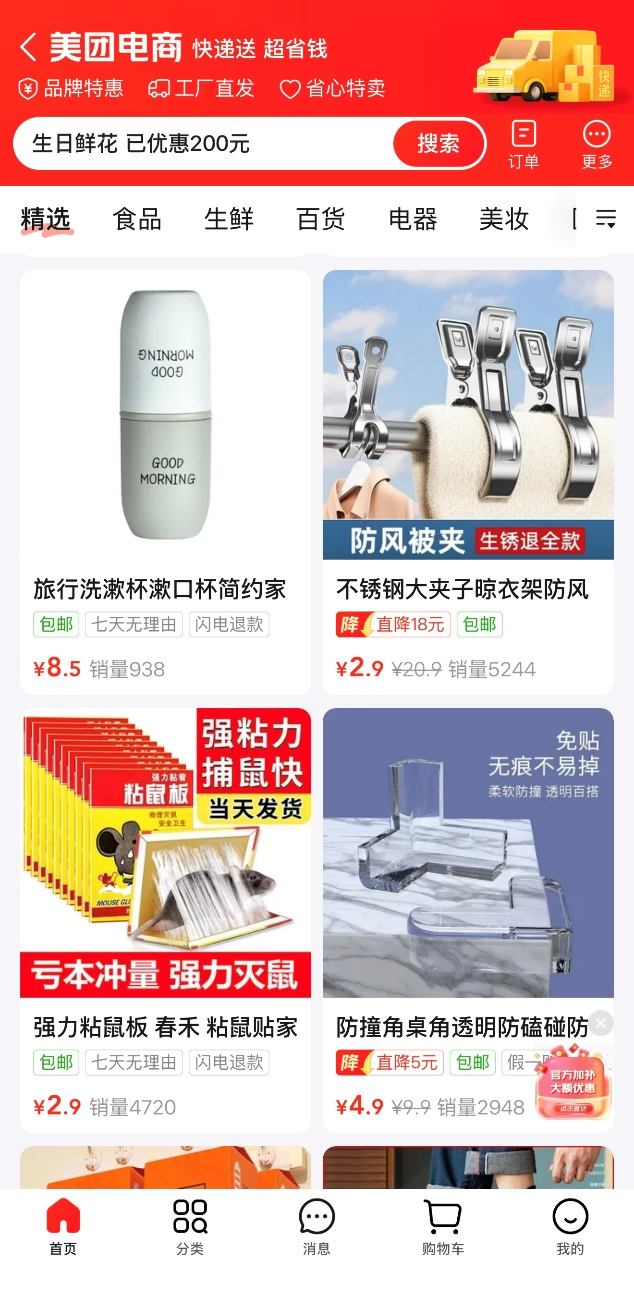
暂停这项业务!美团宣布
Sou Hu Cai Jing· 2025-12-17 03:44
Group 1 - The core point of the article is that Meituan has decided to suspend its "Tuan Hao Huo" business to focus on exploring new retail formats in response to market changes [1][5]. - Tuan Hao Huo, launched in August 2020, was a B2C e-commerce initiative by Meituan that quickly gained traction by leveraging a "direct delivery from origin + low-price group buying" model, achieving over 100,000 daily orders and covering 18 product categories [3][5]. - Meituan's e-commerce strategy is shifting towards instant retail while downplaying traditional express e-commerce, as the latter struggles to meet the demands of instant retail users [5][6]. Group 2 - Instant retail is defined as a new retail model where consumers place orders on local platforms, and nearby stores deliver products within one hour, combining the advantages of traditional retail and online convenience [7]. - The growth of instant retail is reshaping the competitive landscape of the retail industry, with both comprehensive and vertical platforms increasing their investments in this area due to policy support and market demand [7][8]. - Instant retail enhances the operational radius of physical stores and increases order volume, contributing to a positive cycle of consumption and investment while promoting local industries [8].
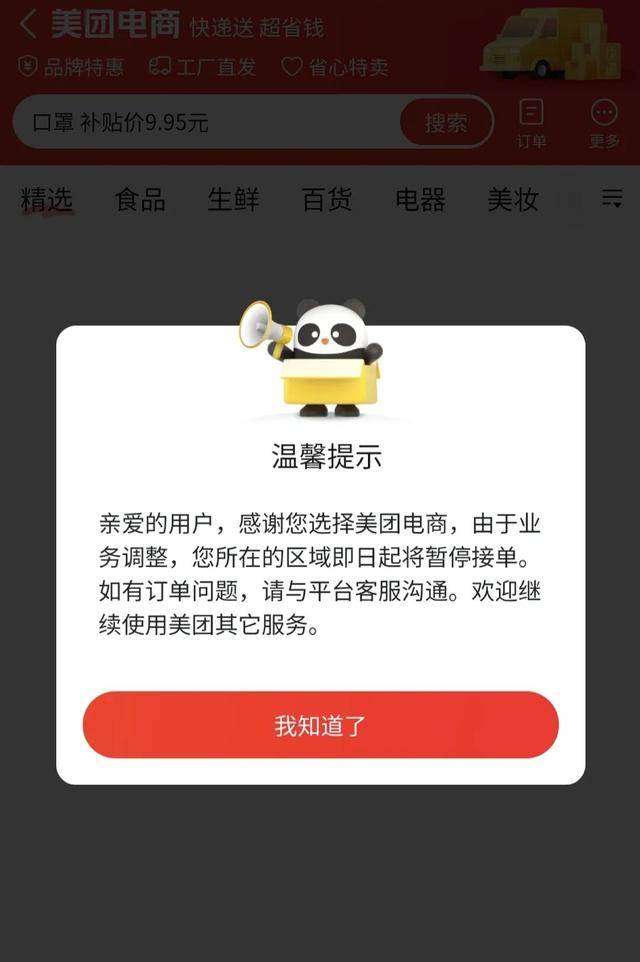
美团暂停“团好货” 曾尝试用外卖导流电商
Bei Jing Shang Bao· 2025-12-15 05:10
Core Insights - Meituan has decided to suspend its "Tuan Hao Huo" business to focus on exploring new retail formats, indicating a strategic shift in its operations [2] Group 1: Business Overview - "Tuan Hao Huo" was launched in August 2020 as a B2C e-commerce initiative and was later integrated into the Meituan app as a primary entry point [2] - The business aimed to accumulate experience in product retail but faced challenges in meeting the demands of instant retail users in the evolving grocery retail sector [2] Group 2: Strategic Shift - Since 2025, Meituan has been intensifying its exploration of new retail formats, aiming for a strategic transformation in retail [2] - In June, Meituan announced plans to expand its instant retail offerings, including the continued diversification of its flash purchase business and the gradual expansion of "Xiang Supermarket" to all first- and second-tier cities [2] - Currently, "Xiang Supermarket" has established a service network covering over 30 cities, including major urban centers like Beijing, Shanghai, Guangzhou, and Shenzhen [2]
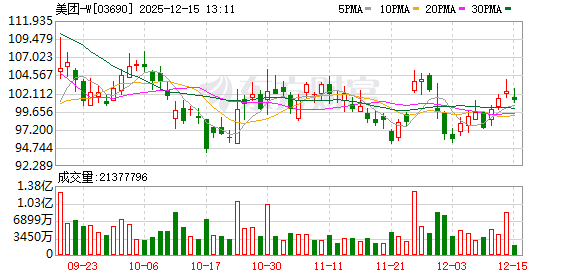
美团暂停“团好货”,曾尝试用外卖导流电商
Bei Jing Shang Bao· 2025-12-15 04:54
Core Viewpoint - Meituan has decided to suspend its "Tuan Hao Huo" business to focus on exploring new retail formats, responding to the evolving demands of the grocery retail industry [1] Group 1: Business Decision - The internal email from Meituan's grocery retail management team indicates that the decision to pause the Tuan Hao Huo business was made after thorough research and discussion [1] - Tuan Hao Huo, initially launched in August 2020 as a B2C e-commerce initiative, was integrated into the Meituan app in December 2020 and later rebranded as Meituan E-commerce [1] - The email states that while Tuan Hao Huo has accumulated experience in product retail, the rapid innovation in the grocery retail sector has made it challenging for express e-commerce to meet the immediate retail needs of users [1] Group 2: Strategic Shift - Since 2025, Meituan has been intensifying its exploration of new retail formats, aiming for a strategic transformation and upgrade in retail [1] - In June, Meituan announced plans to fully expand into instant retail, including the continued diversification of its flash purchase business and the gradual expansion of its "Xiaoxiang Supermarket" to all first- and second-tier cities [1] - Currently, Xiaoxiang Supermarket's service network covers over 30 cities nationwide, including major cities like Beijing, Shanghai, Guangzhou, Shenzhen, Wuhan, Nanjing, and Xi'an [1]
大厂副业加盟6个月闭店,我踩过的7个坑和3条血泪教训
Hu Xiu· 2025-07-20 07:28
Core Insights - The article discusses the challenges and lessons learned from opening a physical store after working in the internet industry for several years, highlighting the difficulties faced in the process and the importance of thorough market research and personal involvement in business operations [1][3][60]. Group 1: Reasons for Opening a Store - The company sought to explore a secondary income stream due to the downturn in the internet economy and the desire for a second growth curve [5][6]. - Previous attempts at various online projects yielded minimal results, leading to the decision to venture into physical retail [6][7]. Group 2: Financial Overview - Initial startup costs included a franchise fee of 50,000 yuan, renovation costs of 33,000 yuan, and equipment purchases totaling 35,000 yuan [10]. - Monthly operational expenses included salaries, rent, utilities, and high-cost consumables sourced from the franchisor [12][13]. Group 3: Market Research and Location Selection - Insufficient market research led to a lack of understanding of the wellness industry, particularly the specific needs of an acupuncture store, such as the necessity for a restroom [17][20]. - The chosen location was highly competitive, with numerous similar businesses nearby, which was underestimated during the selection process [23][25]. Group 4: Store Setup and Management Challenges - The company faced significant challenges during the store's renovation, particularly regarding air circulation systems necessary for the business [27][30]. - Recruitment of qualified staff proved difficult, with high salary expectations in the local market and a lack of understanding of the necessary qualifications for the role [34][36]. Group 5: Customer Acquisition and Marketing Issues - Initial customer flow was strong, but it declined sharply as the season changed, revealing a lack of effective marketing strategies to maintain customer interest [44][45]. - The reliance on a third-party team for customer acquisition led to high costs and poor customer experiences, damaging the store's reputation [47][51]. Group 6: Franchise System Limitations - The franchisor's operational model was found to be detrimental to the store's profitability, with low pricing strategies that attracted non-loyal customers [53][55]. - The franchise system was perceived as exploitative, prioritizing its own profit over the success of individual franchisees [57][59]. Group 7: Key Lessons Learned - The necessity for active involvement in store operations was emphasized, as absentee ownership typically leads to failure [60][62]. - The importance of recognizing the ongoing costs associated with running a business, including time and effort, was highlighted as a critical factor for success [68][71]. - The article concluded that the skills and experiences from the internet sector are not directly transferable to physical retail, suggesting a need for entrepreneurs to align their ventures with their strengths [80].