羽衣甘蓝轻咖

Search documents
“寄生咖啡”门店突破1万家,独立加盟商遭“背刺”?
阿尔法工场研究院· 2025-12-16 05:23
Core Viewpoint - Nova Coffee has rapidly expanded its store count to over 10,000 globally, leveraging a "store-in-store" model to penetrate lower-tier markets and differentiate itself from competitors like Starbucks and Luckin Coffee [4][5][10]. Expansion Strategy - Nova Coffee's store count reached over 10,000 as of December 11, with a presence in over 300 cities in China and expansion into Australia and Southeast Asia [5]. - The company has achieved a remarkable growth rate of over 400% year-on-year by 2025 [7]. - Nova Coffee's monthly store openings peaked at 1,800, making it the fastest-growing coffee brand globally [8]. - The "store-in-store" model allows Nova to minimize costs and share customer traffic, with 46.2% of its stores located within Meiyijia convenience stores [15][16]. Market Positioning - In 2022, 70% of Nova Coffee's stores were located in lower-tier cities, indicating a strategic focus on underserved markets [12]. - The brand has positioned itself to avoid direct competition with established players by targeting the night economy, with 60% of consumer spending occurring at night [19]. - Nova Coffee has established a strong online presence, with 75% of its revenue coming from delivery services [20]. Product Differentiation - The company emphasizes health-oriented products, offering low-calorie options and avoiding price wars, with an average cup price of 15 yuan [21][22]. - Nova Coffee has signed a partnership with athlete Wu Yanni to promote its health-focused image [22]. Supply Chain and Operational Efficiency - Nova Coffee has built a robust supply chain with 15 distribution centers, enhancing operational efficiency and supporting its rapid expansion [24]. - The introduction of Nova Coffee in convenience stores has significantly boosted coffee sales, with some partners achieving a return on investment in just three months [25]. Competitive Landscape - Despite rapid growth, Nova Coffee faces increasing competition and potential risks associated with its store-in-store model, which may pressure independent store operators [26]. - The overall coffee market in China is becoming more competitive, with over 254,000 coffee shops and a net increase of 38,000 stores in the past year [28]. - The founder emphasizes that reaching 10,000 stores is just the beginning, focusing on supporting partners and franchisees for future growth [29]. Future Outlook - The coffee industry is projected to exceed 1 trillion yuan by 2025, and the sustainability of Nova Coffee's "store-in-store" model will be tested in the competitive market [30].


后瑞幸时代,挪瓦咖啡凭什么冲击行业第二?
远川研究所· 2025-12-11 13:10
Core Viewpoint - After defeating Starbucks, Luckin Coffee's success raises the question of who will be the next leader in the affordable coffee chain industry, with Nova Coffee emerging as a strong contender due to its rapid growth and innovative business model [5]. Group 1: Nova Coffee's Growth and Market Position - Nova Coffee has achieved a compound annual growth rate of over 100% in its first five years, with a year-on-year growth rate exceeding 400% this year [5]. - The company opened 1,800 new stores in a single month, leading the industry in growth, and has surpassed 10,000 total stores while expanding into international markets [5]. - Nova Coffee's success is attributed to its unique approach of "not following trends, but creating" [5][13]. Group 2: Business Model Innovation - The scale is crucial for affordable coffee, allowing for cost reduction through economies of scale, but most players struggle to enter the market due to high operational costs [7]. - Nova Coffee has restructured its business model to focus on low-cost expansion through a combination of delivery and partnership with existing retail outlets, such as convenience stores and bakeries [8][9]. - The company has capitalized on the rapid growth of the Chinese delivery market, with a projected increase in order volume from 1 billion to approximately 2 billion by 2025 [8]. Group 3: Health-Conscious Product Development - In response to consumer health concerns, Nova Coffee has launched a "nutritional choice" labeling system and developed healthier products, including the world's first zero-fat latte [17]. - The company has introduced various health-focused beverages, which have quickly gained popularity, contributing significantly to sales [18]. - Nova Coffee's brand image as a health-conscious option has allowed it to collaborate with fitness brands and events, further expanding its market reach [19]. Group 4: Sustainable Business Practices - Unlike many competitors, Nova Coffee avoids price wars and focuses on sustainable business practices, with most products priced between 9.9 and 15 yuan [24]. - The company has invested heavily in its supply chain, establishing coffee plantations and roasting facilities to ensure quality and cost efficiency [26]. - Nova Coffee's approach emphasizes the importance of self-sustaining growth, which is essential for long-term success in the competitive coffee market [26]. Group 5: Future Outlook - Nova Coffee has completed six rounds of financing, attracting significant investment from notable firms, indicating strong confidence in its business model and operational capabilities [27]. - The company aims to continue its rapid expansion, with expectations to exceed 10,000 stores, marking the beginning of a new growth phase rather than an endpoint [27].

茶饮IP联名大降温,咖啡联名却“杀疯了”
东京烘焙职业人· 2025-11-22 08:33
Core Insights - The article discusses the contrasting trends in the collaboration strategies of the tea and coffee industries in China, highlighting a significant decline in tea collaborations while coffee collaborations are thriving and expanding rapidly [4][6]. Group 1: Market Trends - In 2025, the number of new tea drink collaborations dropped from 149 in the same period of 2024 to 72, representing a decline of over 50% [7]. - Conversely, coffee brands increased their collaboration activities, with major brands initiating 92 collaborations from 2024 to July 2025, and Luckin Coffee leading with 24 collaborations in 24 months [7][9]. Group 2: Reasons for Coffee Collaboration Growth - The coffee market in China is growing at an annual rate exceeding 30%, indicating significant untapped potential. Collaborations serve as an effective means for coffee brands to reach new customers and enhance brand visibility [9]. - Coffee brands are targeting younger consumers, particularly the Z generation (ages 18-35), who are willing to pay a premium for limited edition products, with 35% of them participating in events specifically for exclusive merchandise [9]. Group 3: Evolution of Collaboration Strategies - The approach to collaborations has shifted from merely leveraging traffic to creating value through deep co-creation. This includes a focus on IP strategies that prioritize emotional connections and cultural relevance [10][18]. - Local IPs are gaining prominence, with over two-thirds of summer collaborations utilizing domestic IPs, reflecting a cultural shift among younger consumers who prefer content that resonates with their identity [11]. Group 4: Long-term Collaboration Models - The collaboration model has transitioned to long-term co-creation, reducing costs and enhancing emotional connections with consumers. For instance, Luckin Coffee's ongoing partnership with the "Red Mansion" ballet demonstrates this shift [18][21]. - Traditional models where IPs only provided image licensing have been replaced by deeper involvement in product development and marketing strategies, as seen in collaborations between brands like Blue Bottle Coffee and Marimekko [22].


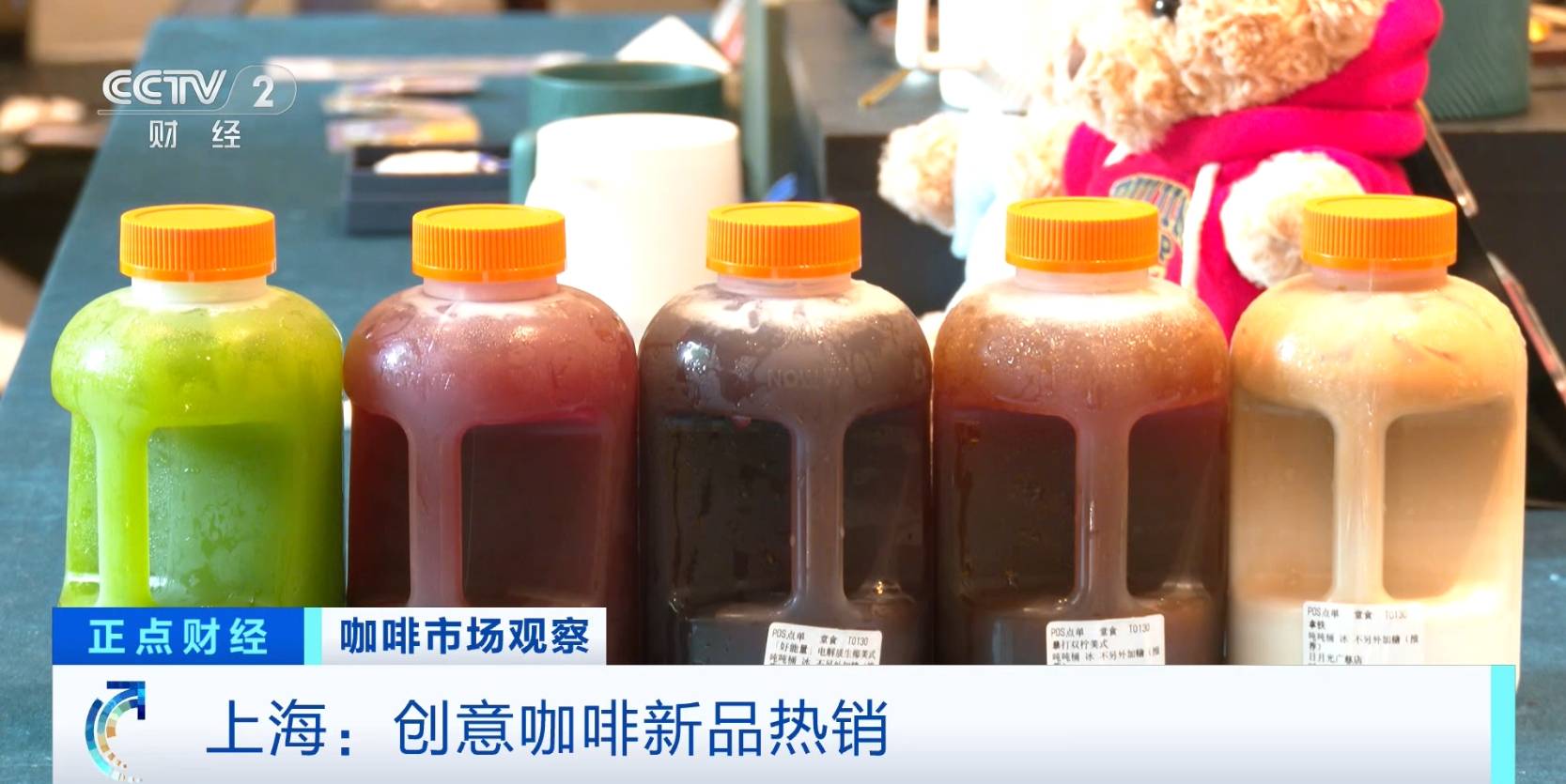
麻酱拿铁、啤酒咖啡...上海创意咖啡新品热卖,咖啡器具需求激增
Sou Hu Cai Jing· 2025-06-26 11:23
Core Viewpoint - The coffee consumption market in China is expanding rapidly, driven by local cultural influences and consumer preferences, leading to innovative product offerings that enhance market appeal and pricing power [1]. Group 1: Market Trends - The introduction of localized coffee products, such as "Sauce Latte," "Sesame Coffee," and "Beer Coffee," is attracting a younger demographic and diversifying flavor options beyond traditional milk coffee [3]. - Sales of innovative coffee products can account for over 50% of daily sales in some cafes, indicating strong consumer interest and demand for new flavors [5]. Group 2: Equipment Demand - There is a growing demand for home coffee equipment, with consumers increasingly investing in coffee machines and grinders, reflecting a shift towards home brewing [7]. - The sales of manual coffee brewing equipment have reportedly increased by over five times from 2020 to the present, showcasing a healthy market expansion [11]. Group 3: Market Projections - In the home coffee machine market, imported machines currently hold a 68% market share, while domestic machines account for 32%. However, projections suggest that by 2028, domestic machines could dominate with a 68% share [13].
连锁茶咖品牌,正忙着给饮品里加"超级植物"
3 6 Ke· 2025-04-28 11:08
Core Viewpoint - The trend of incorporating "super plants" into beverage menus is gaining momentum among various tea and coffee brands, driven by consumer demand for healthier options and the nutritional benefits of these ingredients [2][11][14]. Industry Trends - The term "super plants" is derived from the Western concept of "superfoods," referring to nutrient-dense plants rich in vitamins [2]. - A report indicates that super plants are expected to be a significant trend in new tea beverages for 2024, with brands like Heytea and Nayuki introducing products featuring ingredients like kale, beetroot, and kiwi [2][10]. - The popularity of super plants is reflected in the increasing search index, which saw an 84.09% year-on-year growth, and a 166.10% increase in the comprehensive index [13]. Product Innovations - Various brands are launching new products featuring super plants, such as Tims' "Beetroot and Ginseng Energy Bottle" priced at 25 yuan, and NOWWA's "Beetroot and Purple Cabbage Americano" priced at 28 yuan [7][9]. - Nayuki's "Slim Green Bottle" and Heytea's "Beetroot Beauty Bottle" have also gained popularity, with significant sales figures reported [15]. Consumer Demand - The health trend is driving consumer interest in beverages that offer natural flavors and nutritional benefits, as opposed to traditional drinks that may contain artificial additives [11][14]. - The demand for plant-based beverages is expected to create growth opportunities in the tea and coffee market, as consumers increasingly seek healthier options [11][14]. Challenges - The use of fresh plant ingredients presents challenges such as short shelf life and higher spoilage rates, which can increase costs for beverage brands [14]. - As more brands enter the super plant beverage market, there is a risk of product homogenization, which could impact differentiation and market share [14].