
老绿瓶

Search documents
让历史成为生产力:西凤酒的“经典产业”新答卷
Sou Hu Wang· 2026-01-26 05:17
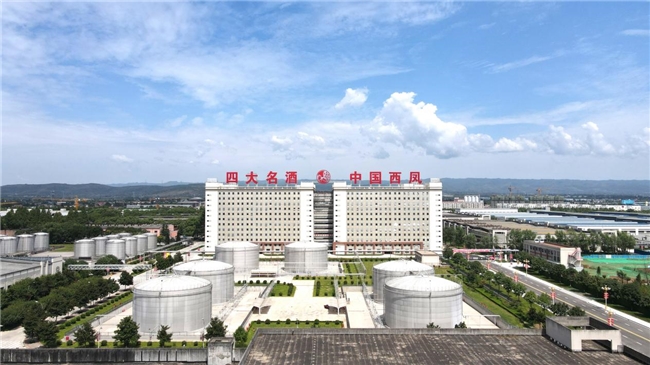
Core Viewpoint - The article discusses how Xifeng Liquor, a representative of Fengxiang-style liquor and one of China's four famous liquors, is navigating the transition from a traditional industry to a modern economic system by integrating intangible cultural heritage with modern management practices [2][3]. Group 1: Cultural and Competitive Asset Transformation - The core challenge for historical classic industries is to effectively transform deep-rooted "cultural assets" into sustainable "competitive assets" [3]. - Xifeng Liquor's 3,000-year brewing history serves as an irreplaceable cultural reference point, providing a solid quality moat and brand premium [3]. - The integration of national-level intangible cultural heritage techniques with modern technology, such as digital twin technology and MES systems, enhances standardization and controllability in production processes [3][5]. Group 2: Industry Collaboration and Ecosystem Development - Xifeng Liquor emphasizes the importance of industry collaboration, aiming to build a high-quality development ecosystem for the liquor industry [5]. - As a "chain leader," Xifeng has fostered a collaborative industrial cluster in Baoji, involving 24 liquor companies and 34 supporting enterprises, which reduces costs and strengthens the brand effect of "China Fengxiang Liquor City" [5]. Group 3: Strategic Repositioning - Xifeng Liquor is transitioning from being a "category leader" to an "ecosystem leader" in the liquor industry [6]. - The launch of the Hong Xifeng Lu Yi Ba product in 2025 exemplifies a significant value leap for Fengxiang-style liquor, showcasing innovative brewing techniques that enhance flavor complexity and drinking comfort by 40% [6]. Group 4: Product Innovation and Market Adaptation - Xifeng Liquor is responding to trends of diversified, youthful, and health-conscious consumption by developing low-alcohol product lines and enhancing the drinking experience [8]. - The introduction of new products at the "2025 China Liquor Industry Development Seminar" aims to create a "value galaxy" that covers various price ranges and consumption scenarios [8]. Group 5: Capital Efficiency and Cultural Integration - From a capital market perspective, Xifeng Liquor's "1257 strategy" and "Golden Network Project" address the need for modernized organization, channels, and marketing while preserving cultural roots [9]. - The establishment of a 600,000-acre raw grain base ensures quality and cost control, enhancing risk resilience and financial stability [9]. - Cultural initiatives, such as the "Sealing Ceremony" and support for major events, serve as effective brand capital investments, linking the brand to national cultural narratives [9]. Group 6: Balanced Wisdom for High-Quality Development - Xifeng Liquor's practices provide a model for high-quality development in historical classic industries, emphasizing the need for a balance between traditional values and modern market dynamics [11].

酒行业周度市场观察-20260125
Ai Rui Zi Xun· 2026-01-25 03:02
Investment Rating - The report does not explicitly provide an investment rating for the industry Core Insights - The Australian wine market is reshaping the Chinese imported wine market after a year and a half of absence, with a significant initial increase in imports followed by a decline in sales due to inventory issues and economic pressures [2] - The low-alcohol beverage category is rapidly growing, appealing to younger consumers, but faces challenges such as brand homogenization and declining repurchase rates [2] - The white liquor industry is experiencing a shift in market dynamics, with top brands competing fiercely and some companies facing their first quarterly negative growth in nearly a decade [4] - New beverage products are emerging, with brands like Xiaojin Wine and Guoli Fang successfully capturing market share through innovative approaches [5] - The industry is expected to return to rationality in 2026, focusing on consumer needs and product quality, while smaller companies may face elimination [6] Industry Environment - The Australian wine market is seeing a resurgence in China due to the removal of anti-dumping taxes, but initial sales have not met expectations, leading to inventory issues and price reductions [2] - The low-alcohol market is projected to grow from 20 billion yuan in 2020 to 57 billion yuan by 2024, but faces challenges in brand differentiation and consumer loyalty [2] - The white liquor market is undergoing structural changes, with companies like Shanxi Fenjiu surpassing others in revenue, indicating a competitive landscape [4] - The introduction of innovative products is crucial for the industry's transformation, with a focus on low-alcohol and health-oriented offerings [5] - The industry is moving towards a more rational approach, emphasizing product quality and consumer experience, as it transitions from a bubble phase to a healthier growth period [6] Top Brand Dynamics - Guizhou Zhenjiu is upgrading its "Dazhen" product to enhance quality and market positioning, aiming to compete with top brands like Moutai [8] - Wuliangchun is celebrating its 30th anniversary with a marketing campaign that deepens emotional connections with consumers [9] - Xifengjiu is focusing on quality and cultural empowerment to drive its revival in the competitive white liquor market [10] - Moutai is launching a new product structure to meet diverse consumer needs and stabilize its market presence [14] - Niulanshan is evolving its product strategy to maintain its position in the mass market while enhancing emotional connections with consumers [18]





2025中国酒业发展研讨会暨西凤酒新品上市发布会召开
Sou Hu Cai Jing· 2025-10-25 04:31
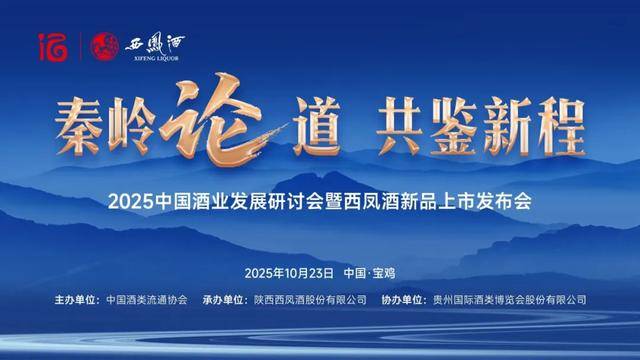
Core Viewpoint - The 2025 China Liquor Industry Development Seminar and the launch of new products from Xifeng Liquor were held in Baoji, emphasizing the importance of adapting to economic and demographic changes in the liquor industry [1][4]. Industry Insights - The liquor industry's adjustment is fundamentally a spiral development influenced by economic and population factors, necessitating a shift from self-directed to user-directed innovation to unleash emotional value in quality and brand culture [4]. - The current phase of the Chinese liquor industry is characterized by a combination of policy guidance, consumption upgrades, and industrial transformation, with changing consumption scenarios, user demands, and market competition [9]. Company Developments - Xifeng Liquor aims to connect the historical and future aspects of Chinese liquor through its unique value derived from three thousand years of uninterrupted heritage, focusing on new product innovation and quality upgrades [4]. - The company has committed to a "quality upgrade without price increase" promise, ensuring that the benefits of quality improvements reach every consumer [9]. - The launch event featured the unveiling of new products, including the upgraded "Old Green Bottle" and "Red Xifeng·Gongyuan 618," which emphasize cultural and quality empowerment through traditional craftsmanship [15][18]. Government and Local Support - Baoji city has implemented policies and allocated funds to support the liquor industry, resulting in a cluster of 24 liquor enterprises and 34 supporting companies, with Xifeng Group as the leading entity [5].
西凤酒再喊三年200亿!“隐藏”营收的张正,又画“大饼”?| 酒业内参
新浪财经· 2025-04-23 00:58
Core Viewpoint - The company West Fen Liquor aims to achieve a revenue target of 20 billion in three years, but faces significant challenges in reaching this goal due to past performance and market conditions [2][20]. Group 1: Revenue Goals and Historical Context - At the 2024 global dealer conference, West Fen Liquor's chairman Zhang Zheng reiterated the goal of "breaking through 20 billion" in revenue [2]. - In 2021, the company had previously set a target of achieving a minimum of 20 billion by the end of the 14th Five-Year Plan, but has not disclosed its revenue for the previous year [2][6]. - The company only recently surpassed the 10 billion revenue mark in 2023, making the goal of doubling revenue seem unlikely [2][20]. Group 2: Market Challenges and Product Confusion - The liquor industry is currently experiencing a contraction, with issues such as price cuts and high inventory levels affecting all players, including West Fen Liquor [7]. - There is significant confusion among consumers regarding the various product lines of West Fen Liquor, with many unable to distinguish between core and developed products [7][8]. - The reliance on a buyout model has led to a bloated product matrix, causing internal competition among similarly priced products [8][11]. Group 3: Pricing and Market Position - The flagship product, Hong Xifeng, is positioned in the 1,000 yuan price range, but market feedback indicates that it often sells below this price, leading to a serious price inversion [12][16]. - West Fen Liquor struggles with brand recognition outside its home province, making it less competitive against other well-known brands [16][18]. - The company has attempted to expand its market presence by adding 100,000 new retail outlets and establishing experience stores in major cities, but high-end and nationwide strategies require more time to develop [16][18]. Group 4: Marketing and Brand Image Issues - Recent marketing missteps, such as the "Sima Nan Head" incident, have damaged West Fen Liquor's brand image and highlighted its weak market control [18]. - The company has faced backlash from consumers due to poor marketing decisions, which have led to a decline in brand perception [18][21]. Group 5: Future Outlook and Growth Challenges - To achieve the 20 billion revenue target by 2028, West Fen Liquor would need to maintain an average annual growth rate of 14.87%, which is challenging given the industry's projected growth of only 5% [20][22]. - The company must address product confusion and restore its brand authority to avoid being trapped in a situation where it is recognized as a famous liquor but operates primarily in regional markets [20][22].
西凤酒再喊三年200亿!“隐藏”营收的张正,又画“大饼”?| 酒业内参
新浪财经· 2025-04-23 00:58
文 | 酒业内参 张奥 作为游离在主流外的老四大名酒,西凤酒又开始"画大饼"了? 此前召开的西凤酒 2024 年度全球经销商大会上,西凤集团党委书记、董事长、股份公司 董事长张正明确了"三年突破 200 亿"的发展目标。 但值得注意的是,早在 2021 年末,西凤酒就曾放出过"要在十四五末实现保底 200 亿"的 豪言。如今已是规划的最后一年,虽然西凤酒尚未公布去年营收规模,但按照 2023 年才 刚刚迈过百亿大关的速度看,想翻倍可能性很小。 同时,经销商引发的"黄渤诉讼事件""司马南夹头酒风波"等,也让西凤酒多次陷入舆论困 境。 此时,张正再次喊起了口号,但愿意相信的经销商与投资者可能已经寥寥无几。 6 年来首次未公布营收, 董事长在藏什么? 同样是"老四大名酒",茅台、泸州老窖、汾酒早已迈入高端白酒头部,只剩西凤酒带着名 酒基因跌跌撞撞。 去年同期,西凤酒官宣 2023 年实现销售收入 103.4 亿元,同比增长 23% 。作为跨 过"百亿大关"后的第二年,西凤酒的业绩表现成为了行业关注的焦点。 然而,张正却并未透露具体销售数据," 2024 年公司营收稳中有进,达到了预期目 标。"这也是他上任六年来第一 ...