自适应机器人

Search documents
通用智能机器人研发制造商非夕科技完成新一轮融资,国际长线资本领投
机器人圈· 2026-03-11 10:19
Core Insights - Flexiv, a developer and manufacturer of general-purpose intelligent robots, has recently completed a new round of financing led by Invus, with participation from Atma Capital and other institutional investors [1][3]. Financing and Investment - The funds from this round will primarily be used for the continuous development of the general-purpose intelligent platform, core technology research, scaling up general robot products, enhancing the global sales and service system, and expanding into key industry scenarios [3][4]. - Invus, the lead investor, is a global investment firm with over $12 billion in assets under management, known for its long-term investment strategy and support for enterprise growth over decades [5][6]. - Atma Capital focuses on long-term investments in the fields of intelligence, automation, and capital integration, supporting breakthrough technologies from concept to large-scale application [5][6]. Technological Development - Flexiv is not just manufacturing another robotic arm but is pioneering a new category of adaptive robots that integrate AI and advanced force control technology, enabling machines to perceive, adapt, and operate with human-like dexterity [6][8]. - The company is redefining the paradigm of intelligent automation by building a "general-purpose intelligent platform" that combines advanced force control technology with hierarchical AI, allowing robots to perform dexterous operations in unstructured environments [8]. Market Application and Vision - Flexiv's products are widely applied across various industries, including mobility, electronics, general manufacturing, fast-moving consumer goods, commercial services, and biomedicine, becoming a crucial platform for many large enterprises and unicorn companies in the field of embodied intelligence [8]. - The founder and CEO of Flexiv emphasizes a commitment to long-termism and the belief that general-purpose intelligent robots will be the core engine driving future productivity leaps in society [8].

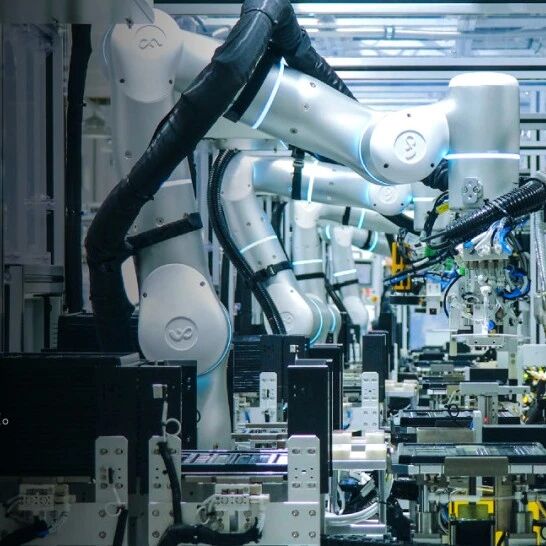
对话独角兽 | 非夕科技引领自适应机器人产业发展:聚焦技术突围,拓展场景落地
Di Yi Cai Jing· 2026-02-26 06:36
Core Insights - The global industrial robot market is expanding, with China maintaining its position as the largest market, showcasing significant industry scale and resilience [1] - Non-Xi Technology, established in 2016, focuses on industrial-grade force control and AI integration, leveraging a core R&D team from Stanford University [1][3] - The company has achieved rapid growth, with revenue expected to reach 500 million yuan by 2025, supported by significant funding for capacity enhancement and new product development [4] Industry Trends - The industrial robot sector is evolving, facing challenges from traditional position control technologies, which struggle in complex scenarios [3][8] - There is a growing trend towards humanoid robot development, but many companies are caught in a "form over function" dilemma, hindering scalable commercial applications [3] Company Innovations - Non-Xi Technology adopts a unique approach by focusing on "human-like" capabilities, enhancing robots' adaptability and precision through advanced force control technology [3] - The company has developed proprietary sensors achieving a force perception accuracy of 0.03 Newtons, significantly surpassing existing products by 10-100 times [3] Market Applications - Non-Xi Technology is expanding its applications from industrial manufacturing to consumer services, addressing flexible production needs in sectors like automotive and electronics [5] - The company has successfully integrated its adaptive robots into the supply chains of major automotive manufacturers such as Tesla and Mercedes-Benz [5] Financial Growth - Over the past three years, Non-Xi Technology has experienced annual revenue growth of 2-3 times, with a successful Series C funding round completed in June 2025 [4] Strategic Positioning - The company is addressing industry challenges, including high technical barriers and reliance on imported components, by innovating across hardware, algorithms, and production processes [8] - Non-Xi Technology is expanding its global footprint, particularly in Southeast Asia and North America, while developing a collaborative approach with local enterprises [8] Future Outlook - The market potential for adaptive robots is expected to grow as the manufacturing sector continues its smart transformation and the embodied intelligence industry rises [9] - Non-Xi Technology is poised to lead the upgrade of adaptive robot categories, driving the domestic robot industry towards higher-end, intelligent, and scalable development [9]

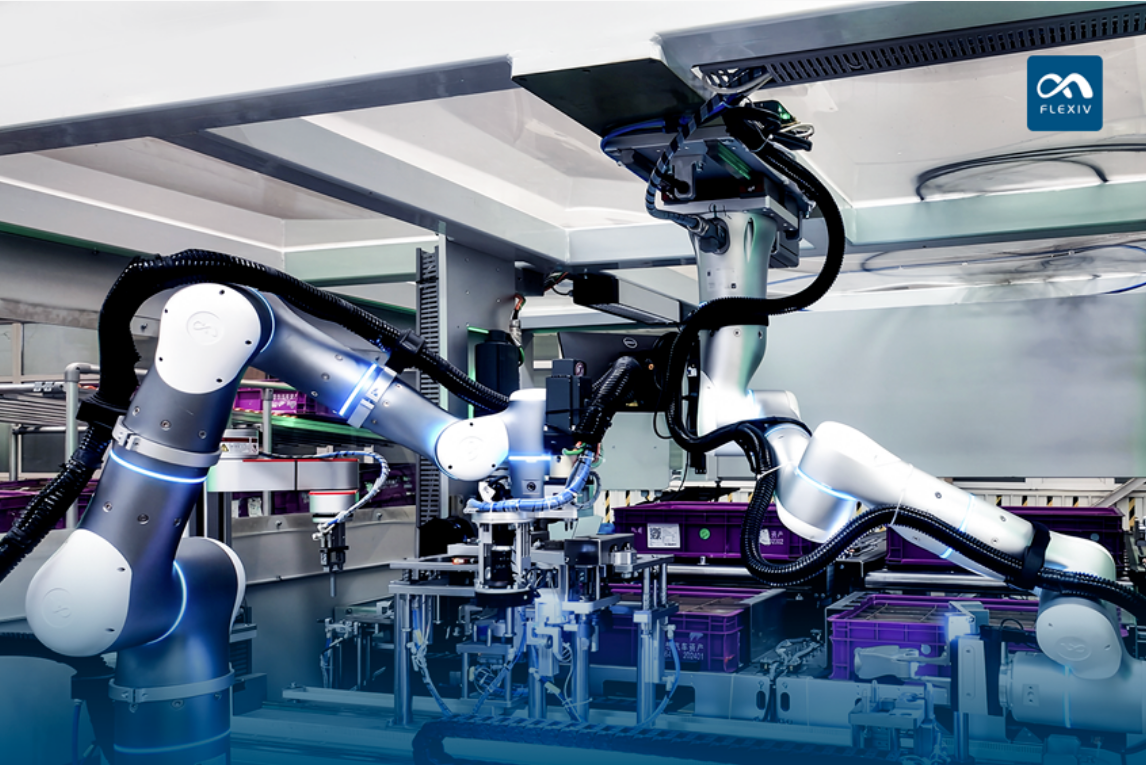
穿越周期的力量:在“双高地”验证专精特新“小巨人”的进化逻辑
Xin Lang Cai Jing· 2026-01-23 04:27
Core Insights - The Ministry of Industry and Information Technology has issued a revised management approach for cultivating high-quality small and medium-sized enterprises (SMEs), expanding the scope to include technology-based SMEs and refining the criteria for specialized and innovative SMEs and "little giant" enterprises [1] - The new regulations aim to enhance the demonstration and foundational roles of quality SMEs, promoting a more scientific and standardized cultivation process [1] - As of October 2025, Shanghai has surpassed 1,000 "little giant" enterprises, contributing nearly 14% of profits despite representing only 3.5% of the total number of industrial SMEs in China [1] Group 1: Company Highlights - Feixi Technology is pioneering a new category of adaptive robots, focusing on flexible manufacturing challenges by integrating industrial-grade force control, computer vision, and advanced AI [2][4] - Benyao Technology has rapidly evolved into a key player in intelligent research transformation, utilizing laboratory robots to enhance efficiency in life sciences and new materials research [5][6] - Shuli Innovation has developed a non-invasive brain-machine interface technology that has shown potential in clinical applications, marking a significant advancement in the field [10][12] Group 2: Industry Trends - The cultivation of "little giant" enterprises is a response to the evolving industrial landscape, emphasizing quality over quantity during a critical transition period [1] - The integration of AI and automation in various sectors, such as healthcare and manufacturing, is driving significant efficiency improvements and redefining traditional processes [6][14] - Shanghai's robust industrial ecosystem and supportive policies are fostering the growth of high-tech SMEs, positioning them as key players in the global value chain [15][16]
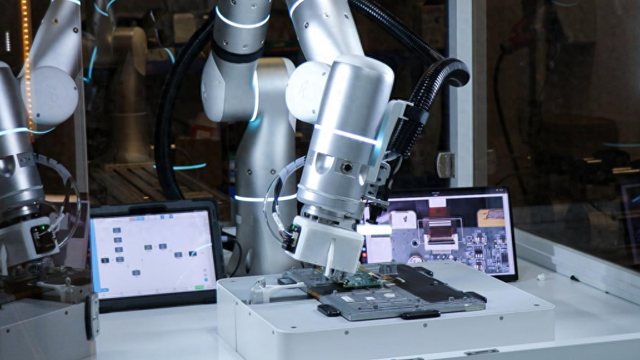
机器狗搜救、AI诊室、具身智能……这届外滩大会人工智能含量“爆表”
Xin Hua She· 2025-09-12 08:41
Group 1 - The 2025 Bund Conference in Shanghai showcases advancements in artificial intelligence across various sectors, featuring nearly 200 companies and over 30 new technology products [1] - Fudan University's Fuxi meteorological model provides global weather forecasts for the next 15 days, aiding agricultural production with precise data on temperature, wind speed, and precipitation [2] - AI is expected to significantly reshape society and drive industrial upgrades and economic structural changes, as stated by Zhang Hongjiang, a partner at Source Code Capital [2] Group 2 - AI is enhancing healthcare with applications like Fourier's "Smart Rehabilitation Port," which uses upper limb rehabilitation robots, and Ant Group's AI health application AQ, which mimics a doctor's diagnostic process [2] - Ant Group's CEO, Han Xinyi, emphasizes that AI in healthcare aims to provide personalized and accurate recommendations, although AI will not replace doctors in the foreseeable future [2] - Experts at the conference noted the deep integration of AI across various industries and sectors [2] Group 3 - The integration of AI and robotics is giving rise to the embodied intelligence industry, which involves three stages: perception, planning, and control [4] - Future AI is expected to learn through real-world interactions, evolving from a data-driven learner to an experiential explorer [4] - Challenges in embodied intelligence development include data collection and quality issues, as well as difficulties in aligning models with robotic control modalities [4] Group 4 - The current state of AI is likened to a desert with only a few opportunities, indicating a potential for explosive growth in the field [5] - The conference featured demonstrations of robots engaging in activities like boxing, showcasing the practical applications of AI and robotics [5]
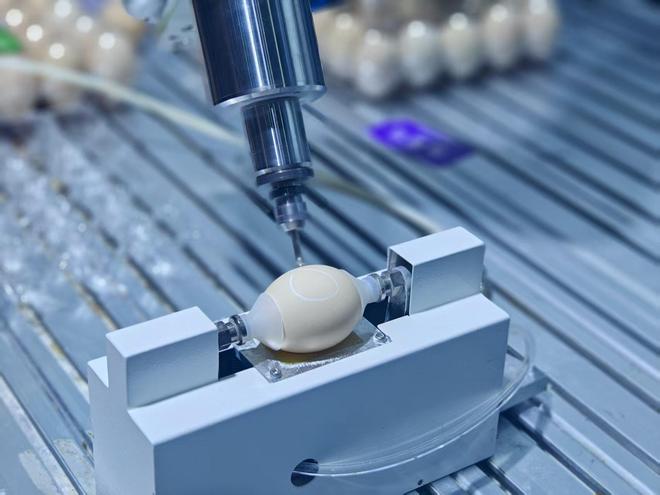
非夕科技星穹论坛暨北京新址启幕在京举办:聚焦全球科技趋势,打造生态增长引擎
机器人大讲堂· 2025-08-21 10:11
Core Viewpoint - The article highlights the launch of the new office of Feixi Technology in Beijing and the "Starry Sky Forum," focusing on the latest trends in intelligent manufacturing and embodied intelligence, emphasizing the company's commitment to advancing adaptive robotics and general intelligent robotics technology [1][3][9]. Group 1: New Office and Ecosystem Development - The new office in Beijing integrates display, research, engineering, and service functions, leveraging the city's advantages in policy, research, talent, and industrial ecosystem to accelerate the development of adaptive robotics [3][5]. - The office features an advanced robot display area showcasing the latest adaptive robots and typical application cases, as well as research and testing spaces focused on technology validation and scenario adaptation for the northern market [5][8]. Group 2: Technological Advancements and Market Position - Feixi Technology's founder and CEO, Wang Shiquan, emphasized the company's long-term focus on the core concept of "human-like" robotics, enhancing robots' capabilities to handle complex tasks through a hierarchical intelligent system [9][10]. - Over the past nine years, Feixi has developed a comprehensive technology stack covering adaptive robot bodies, hierarchical intelligence, and operating system ecosystems, establishing a versatile platform for general robotics applications [10][11]. Group 3: Industry Applications and Future Prospects - Feixi's unique value proposition lies in its ability to meet diverse automation needs across various industries, including automotive, home appliances, consumer electronics, food, and healthcare, with scalable application scenarios [11]. - The company aims to continue collaborating with ecosystem partners to explore new business opportunities and enhance production capabilities for end customers [11]. Group 4: Forum Insights and Industry Challenges - During the forum, discussions highlighted the current automation rate in the automotive industry, which is only 10%-15%, indicating significant room for improvement through adaptive robotics and AI-enhanced perception [24]. - Key challenges in industrial automation include achieving high success rates, maintaining quality standards, and improving production pace to meet customer demands [18]. Group 5: Ecosystem Collaboration and Future Directions - Feixi's platform serves as a foundation for nurturing a diverse ecosystem, with partners from various sectors sharing insights on how to tackle challenges in food processing and other industries using general robotics technology [19][22]. - The roundtable discussion emphasized the importance of returning technology to practical applications and building a thriving symbiotic ecosystem to identify explosive growth opportunities [22].

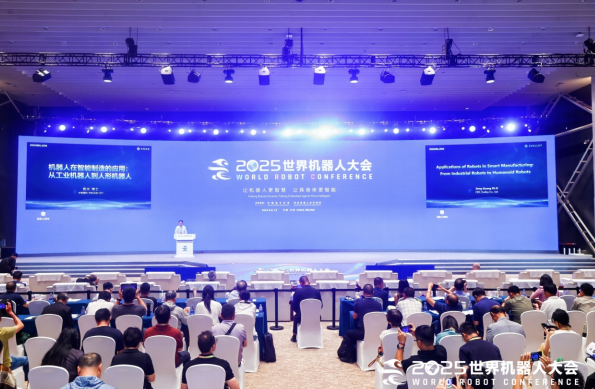
从工业机器人到人形机器人,中联重科世界机器人大会秀成果
Jing Ji Wang· 2025-08-12 08:44
Core Insights - The 2025 World Robot Conference was held in Beijing from August 8 to 12, showcasing the advancements in industrial and humanoid robots by Zoomlion, a leader in equipment manufacturing [1] - Zoomlion presented its latest achievements in embodied intelligent humanoid robots and future plans in smart manufacturing, providing a new model for the intelligent transformation of the manufacturing industry [1] Group 1: Company Innovations - Zoomlion is the only publicly listed complete machine enterprise in A-shares and the only Chinese company featured in the innovation application section of the conference [2] - The company was one of the first in the construction machinery industry to adopt robotic technology, introducing programmable industrial robotic arms in 2006 for welding crane components [2] - Since 2019, Zoomlion has extensively utilized adaptive robots with perception and mobility capabilities, including visual and tactile recognition robotic arms and autonomous mobile robots (AMRs) [2] Group 2: Smart Manufacturing Implementation - Zoomlion's Smart Industrial City in Changsha integrates over 300 intelligent manufacturing production lines and employs more than 2,000 industrial robots, enabling full lifecycle traceability and scheduling through QR codes [2] - The factory operates like a symphony orchestra, where thousands of robots work in harmony, allowing for flexible production of different product models, achieving unprecedented agile manufacturing of heavy equipment in small batches [2] Group 3: Humanoid Robot Applications - Currently, dozens of humanoid robots are operational in Zoomlion's factories, participating in machining, logistics, assembly, and quality inspection [4] - In logistics, humanoid robots assist in material handling and assembly, while in quality inspection, they utilize their visual systems to detect component defects [4] Group 4: Future Vision and Strategy - Zoomlion has established a humanoid robot training facility with nearly 100 workstations for large-scale data collection and has developed the Zhongke Yungu embodied intelligence platform, which connects all industrial and humanoid robots [5] - The company envisions a future factory model where industrial and humanoid robots collaborate, evolving from agile manufacturing to personalized customization, aligning with national priorities on embodied intelligence [5] - Zoomlion aims to integrate industrial internet, big data, artificial intelligence, and robotics to expand the boundaries of smart manufacturing and reshape the development paradigm of the construction machinery industry and Chinese manufacturing [5]

从工业机器人到人形机器人中联重科世界机器人大会秀成果
Xin Lang Cai Jing· 2025-08-11 04:39
Core Insights - The 2025 World Robot Conference was held in Beijing from August 8 to 12, focusing on making robots smarter and enhancing embodied intelligence [1] - Zoomlion is the only publicly listed complete machine enterprise in A-shares participating in the conference, showcasing its advancements in robotics [1] Group 1: Company Innovations - Zoomlion has been an early adopter of robotic technology in the construction machinery industry, introducing programmable industrial robotic arms as early as 2006 for welding crane components [1] - Since 2019, Zoomlion has significantly utilized adaptive robots with perception and mobility capabilities, including visual and tactile recognition robotic arms and autonomous mobile robots (AMRs) [1] - The company has developed three types of humanoid robots, including two wheeled and one bipedal version, and has begun exploring their use in factories starting in 2024 [1][2] Group 2: Humanoid Robot Applications - Currently, dozens of humanoid robots are operational in Zoomlion's factories, performing tasks in machining, logistics, assembly, and quality inspection [2] - The company has established a training facility for humanoid robots with nearly 100 workstations to conduct large-scale data collection [2] - Zoomlion's vision for future factories involves a new production model where industrial and humanoid robots work collaboratively, necessitating a reevaluation of manufacturing processes and management systems [2] Group 3: Strategic Alignment - The strategic direction of Zoomlion aligns with national priorities as embodied intelligence is recognized as a key future industry focus [2] - The company aims to continuously integrate industrial internet, big data, artificial intelligence, and robotics technology to advance both industrial and humanoid robots [2]

非夕科技CEO王世全:让机器人学会“自适应”
Shang Hai Zheng Quan Bao· 2025-07-29 17:53
Core Insights - The article discusses the innovative advancements of Flexiv Technology in the field of adaptive robotics, highlighting its unique capabilities and market potential [3][4][6]. Company Overview - Flexiv Technology focuses on developing adaptive robots that can adjust to various operational objects and environmental changes, showcasing a significant leap from traditional robotics [4][5]. - The company has successfully completed a Series C funding round, indicating a strong financial backing and a commitment to accelerating its commercialization efforts [6][7]. Technological Innovation - The core technology of Flexiv's adaptive robots lies in their mechanical arm's force control and high-frequency response capabilities, allowing them to intelligently perceive and adapt to uncertainties during tasks [4][5]. - Flexiv's robots utilize a biomimetic design, reducing reliance on precise positioning and enabling them to perform multiple tasks with minimal tooling, thus lowering costs for small-batch production [5]. Market Applications - Flexiv's robots are being applied across various industries, including automotive, electronics, food processing, and healthcare, demonstrating versatility in tasks such as precision assembly and delicate food handling [7][8]. - The company has established partnerships with notable firms like Meituan, TCL, and Siemens, expanding its market reach and collaborative ecosystem [7][8]. Business Growth - Since 2022, Flexiv has experienced significant growth, with revenue and order volume increasing by 2 to 3 times annually, reflecting a successful transition from initial deployment to broader application [6][7]. - The company aims to maintain a long-term strategy focused on refining its technology and exploring new applications, including consumer service scenarios [8].

中国智造闪耀国际机器人展
Ren Min Wang· 2025-07-02 03:04
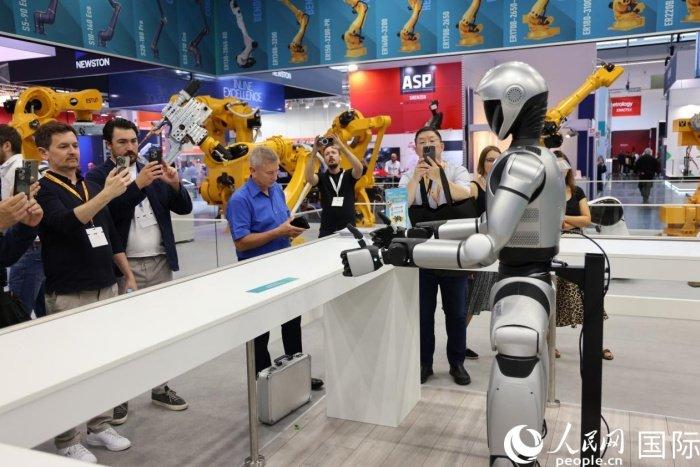
Group 1 - The 2025 Munich International Robot and Automation Exhibition showcased the entire automation industry chain with approximately 900 exhibitors from 40 countries [1] - Over 100 Chinese robotics companies participated, highlighting advancements in Chinese manufacturing on an international stage [1] - Estun Company holds a 10% market share in China and aims to expand its overseas business, with one-third of its revenue coming from international markets [1] Group 2 - Grede Harmonic's core product, the harmonic reducer, achieves a 100:1 reduction ratio and is well-received in the market, with plans to increase overseas business to over 50% [3] - Feixi Robotics introduced an adaptive robot with a seven-axis design, integrating industrial force control, machine vision, and advanced AI technology for complex tasks [5] - Utree Robotics offers cost-effective humanoid robots and robotic dogs, currently covering nearly 80% of German universities and research institutions [6] Group 3 - The collaboration between China and Germany is emphasized, with German companies increasingly sourcing high-quality mechanical components from China due to cost advantages [9] - The acceptance of Chinese manufacturing in the German market is growing, reflecting a positive perception of China's economic development [9]
【RimeData周报06.21-06.27】人形机器人领域又现大额融资
Wind万得· 2025-06-28 22:19
Core Insights - The article provides an overview of the financing events in the primary market, highlighting a total of 104 financing events this week, with a total estimated amount of approximately 6.729 billion yuan, marking an increase from the previous week [4][5]. Financing Overview - This week, there were 62 disclosed financing events, a decrease of 7 from the previous week. The distribution of financing amounts remained relatively stable, with notable increases in certain ranges [5]. - The financing events included 22 instances with amounts of 100 million yuan or more, a decrease of 1 from last week [4]. Notable Investment Events - Human-shaped robots: Beijing Galaxy General Robot Co., Ltd. completed a new round of financing amounting to 1.1 billion yuan, led by CATL Capital and Puxuan Capital [7]. - Industrial robots: Feixi Technology announced the completion of a C-round financing in the hundreds of millions of dollars, aimed at expansion and R&D [7]. - Lithium battery materials: Puxin Crystal New Energy Materials completed nearly 500 million yuan in B+ round financing for production line preparations [7]. - Autonomous driving: Yikong Zhijia announced over 400 million yuan in D-round financing for product development and international market expansion [7]. Industry Distribution - The financing events spanned 13 industries, with the top five being equipment manufacturing, information technology, healthcare, consumer goods and services, and electronics, accounting for 71.15% of total events [12]. - In terms of financing amounts, equipment manufacturing led with a total of 5.91 billion yuan, influenced by the significant financing event in human-shaped robots [14]. Regional Distribution - The top five regions for financing events were Jiangsu, Beijing, Guangdong, Shanghai, and Zhejiang, accounting for 77.88% of total events [18]. - In terms of financing amounts, Shanghai, Beijing, Guangdong, Jiangsu, and Fujian accounted for 91.69% of the total financing [18]. Financing Rounds - Early-stage financing (seed and angel rounds) accounted for 77.88% of the total events, with A-round financing having the highest amount share at 32.10% [23]. Investment Institutions - A total of 145 investment institutions participated this week, with notable activity from Beijing Guoguan and Zao Xingren Venture Capital [25]. Exit Situation - There were 36 public exit cases this week, an increase of 1 from the previous week, with notable activity in mergers and acquisitions [29][31].