臻有钱

Search documents
30岁已成“职场高龄”?哈啰的招聘红线,刺痛了谁
凤凰网财经· 2026-02-28 13:08
Core Viewpoint - The article discusses the recent controversy surrounding Hello's recruitment practices, particularly the age discrimination allegations, and examines the company's financial performance and strategic positioning in the competitive mobility service market [1][2][10]. Group 1: Recruitment Controversy - Hello's job posting for an "Operations Management" position included a strict age requirement, stating candidates should be born in 1998 or later, which sparked public outrage and accusations of age discrimination [2][5]. - The company's response indicated that recruitment practices are a matter of corporate discretion, and the local labor department stated that such practices could be reported if deemed discriminatory [2][9]. Group 2: Company Background and Market Position - Founded in September 2016, Hello started with bike-sharing and has expanded into various mobility services, including ride-hailing and Robotaxi, with over 800 million registered users [8]. - The company has strategically focused on lower-tier cities to avoid intense competition and has managed to survive in a challenging market where many competitors have failed [12][14]. Group 3: Financial Performance and Challenges - Hello has faced significant financial challenges, with cumulative losses exceeding 4.8 billion yuan from 2018 to 2020, and a failed IPO attempt in 2021 [15]. - The company is heavily reliant on its ride-sharing segment, which has been profitable since its inception, contributing significantly to overall revenue [17]. Group 4: Future Prospects and Innovations - Hello's ride-sharing service has shown strong growth, with a projected industry scale of over 600 billion yuan, aiming for over 50% market share in the future [18]. - The company is also exploring financial services to enhance profitability, although it has faced criticism regarding its lending practices and user privacy issues [18].


3500元到账,10天后要还4970元:App Store竟成高利贷温床?
Sou Hu Cai Jing· 2026-01-04 09:04
Core Insights - The article highlights the emergence of high-interest loan applications like "Zhen You Qian" on the App Store, which bypassed Apple's stringent review process and charged exorbitant interest rates, raising concerns about the platform's security and compliance standards [2][3][4]. Group 1: App Store Compliance Issues - The "Zhen You Qian" app was able to secure a loan of 3,500 yuan with a repayment of 4,970 yuan in just 10 days, reflecting a daily interest rate of approximately 4.2% and an annualized rate exceeding 1500%, far above the legal limit [2]. - Despite Apple's claim of a rigorous review process, the app managed to evade scrutiny, indicating a significant gap in the platform's ability to detect and prevent illegal lending practices [3][4]. - The compliance of such apps often relies on superficial measures, such as submitting a standard privacy agreement, which allows them to pass through both automated and manual reviews without addressing core compliance issues [4]. Group 2: Broader Regulatory Challenges - Apple's App Store, a key revenue source, is facing increasing external pressures from global regulatory bodies, leading to a potential reevaluation of its business model and revenue-sharing practices [7][8]. - The European Union's Digital Markets Act has forced Apple to reduce its commission rates, while similar regulatory actions are emerging in Japan and Brazil, indicating a global trend towards breaking Apple's distribution monopoly [8][9]. - In contrast, the Chinese market remains relatively unchanged, with Apple maintaining its existing commission structure, but the global trend towards openness and reduced fees may necessitate a strategic shift in China [9]. Group 3: Opportunities for Improvement - The incident with high-interest loan apps should serve as a catalyst for enhancing governance in global app distribution platforms, focusing on collaboration with financial regulatory bodies and improving transparency in app review standards [11]. - Implementing advanced technologies, such as AI, could help identify predatory lending practices and ensure compliance with legal standards, thereby rebuilding user trust in the App Store [11][12]. - The transition from being merely a "gatekeeper" to a "responsible guardian" of user safety is essential for maintaining long-term trust and adapting to the evolving regulatory landscape [12][13].


苹果应用商店App被曝高利贷风险,用户权益引关注
Jing Ji Guan Cha Wang· 2025-12-29 10:49
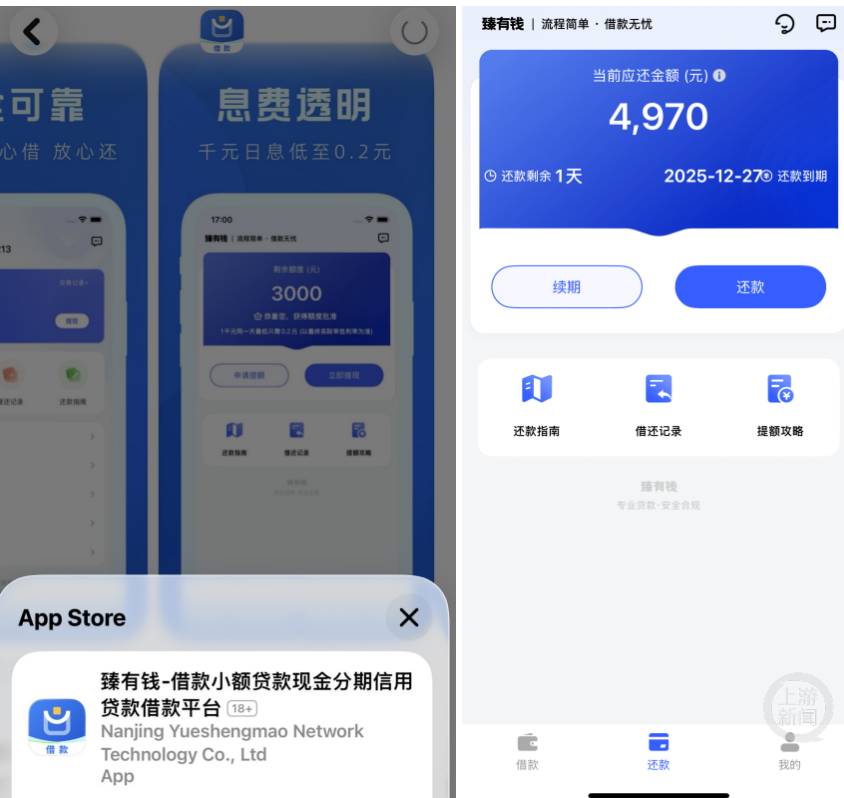
Core Viewpoint - Recent concerns have arisen regarding certain lending applications in the Apple App Store that are suspected of offering usurious services, highlighting potential regulatory violations and consumer protection issues [2][3]. Group 1: Company Information - The lending app "Zhen You Qian" was downloaded by a user who received a loan of 3,500 yuan with a repayment amount of 4,970 yuan due in 10 days, resulting in a daily interest rate of approximately 4.2% and an annualized rate exceeding 1,500%, which far exceeds the legal interest rate cap set by the government [2]. - The developer of "Zhen You Qian," Nanjing Yueshengmao Network Technology Co., Ltd., was established in March 2023 with a registered capital of 1 million yuan but has a paid-in capital of zero. The company is linked to 15 other enterprises that have all been deregistered [2][3]. Group 2: Regulatory Environment - The company has been listed in the business anomaly directory by market regulatory authorities due to the inability to contact the company at its registered address, indicating potential legal issues [3]. - The People's Bank of China and the National Financial Regulatory Administration issued guidelines stating that the annualized comprehensive financing cost for new loans should not exceed 24%, which the app's interest rates clearly violate [3]. Group 3: Consumer Protection and Industry Concerns - The user also downloaded another app named "Yun Dou Hua," which exhibited similar characteristics, including forced loan disbursement and lack of customer service, raising further concerns about the integrity of lending applications on the platform [4]. - Apple has acknowledged the reports of these applications and is conducting investigations, but this incident has raised questions about the effectiveness of the app review process on the Apple App Store [4].

苹果应用商场现“高利贷”APP,还没申请就强制放款,借3500元10天后要还4970元!开发公司被列入经营异常名录!
Mei Ri Jing Ji Xin Wen· 2025-12-28 08:23
Core Viewpoint - A citizen from Chengde, Hebei, reported that a loan app named "Zhen You Qian" disbursed a loan of 3,500 yuan without any verification process, raising concerns about potential usury practices [1][4]. Group 1: Loan App Details - The loan amount of 3,500 yuan requires repayment of 4,970 yuan within 10 days, indicating a high-interest rate [4][6]. - The annualized interest rate calculated from this loan is over 1500%, with a daily interest rate of approximately 4.2% [5][6]. Group 2: Regulatory Concerns - The app's lending practices exceed the regulatory threshold set by the People's Bank of China and the Financial Regulatory Bureau, which mandates that loan costs should not exceed 24% [6]. - The app's developer, Nanjing Yueshengmao Network Technology Co., Ltd., has been listed in the operating abnormality directory due to uncontactable business premises [7][8]. Group 3: Customer Service and Response - The customer attempted to contact support but was directed to download another app that is not available in the Apple App Store, raising further suspicions about the legitimacy of the service [3][7]. - Apple has acknowledged the report regarding the loan app and is currently investigating the matter [8].
从Robotaxi“撞人”到金融业务“撞墙”:哈啰深陷双重困境
Sou Hu Cai Jing· 2025-12-15 14:01
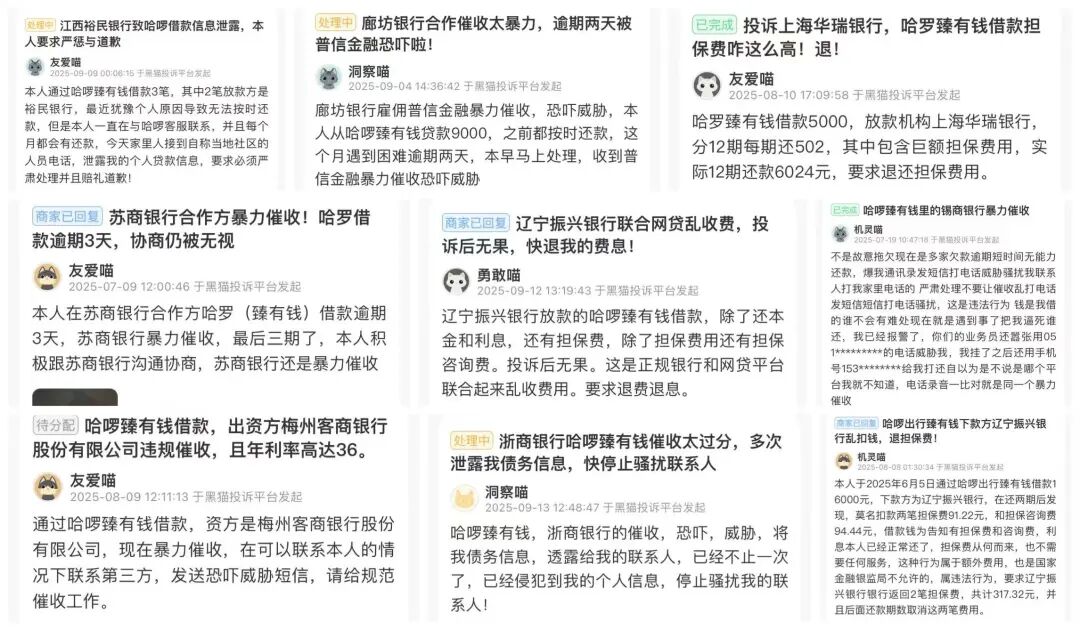
Core Viewpoint - The company, Hello Chuxing, is facing a dual crisis involving safety issues with its Robotaxi service and compliance risks in its financial operations, which could jeopardize its business model and growth prospects [4][22]. Group 1: Robotaxi Safety Issues - On December 6, 2025, a Hello Robotaxi in Zhuzhou hit two pedestrians, leading to serious injuries and the suspension of operations in several cities just four months after launching [2]. - The company's aggressive strategy aimed to achieve in two years what competitors took a decade to accomplish, but this rapid expansion has resulted in significant safety oversights [5][7]. - Prior to the December incident, there were reports of another collision involving a Hello Robotaxi, indicating ongoing safety concerns [9]. Group 2: Financial Compliance Risks - Hello Chuxing's financial operations, which have grown to a scale of 40 billion yuan, are now at risk due to the implementation of new regulations that require proper licensing, which the company lacks [10][11]. - The "Assisted Loan New Regulations" that took effect on October 1, 2025, restrict partnerships with unlicensed entities, threatening the company's financial partnerships and operations [14]. - Users have reported high hidden fees and aggressive collection practices, raising concerns about the company's compliance and customer trust [21][15]. Group 3: Strategic Misalignment - The simultaneous crises in both the Robotaxi and financial sectors reflect a broader issue of strategic misalignment and overextension in the company's growth strategy [22]. - Hello Chuxing has failed to build core competencies while diversifying into multiple sectors, leading to a lack of competitive advantage in each area [28]. - The company's past focus on rapid expansion without securing necessary licenses has left it vulnerable to regulatory changes, highlighting the risks of a growth-at-all-costs mentality [30].

助贷新规临近,哈啰金融或将“伤筋动骨”
3 6 Ke· 2025-09-18 01:56
Core Viewpoint - The article discusses the challenges and risks faced by Hello's financial service platform "Zhen You Qian" as it approaches the implementation of new lending regulations, highlighting its reliance on a loan facilitation model without direct lending licenses, and the implications of high interest rates and personal data handling practices [2][3][19]. Group 1: Business Model and Regulatory Challenges - Hello has been operating its financial service "Zhen You Qian" for six years but lacks key licenses for direct lending, relying instead on a loan facilitation model [3][19]. - The company has a loan balance exceeding 400 billion yuan, positioning it in the upper-middle tier of the loan facilitation industry [3]. - With the upcoming implementation of the "Lending New Regulations," Hello's current partnerships may be deemed non-compliant if it does not make it onto the "white list" of approved institutions [7][19]. Group 2: Partnerships and Collaborations - Hello collaborates with a wide range of financial institutions, including 16 financing guarantee agencies and around 70 third-party institutions, indicating a broad but complex partnership network [4][5]. - Despite having multiple partnerships, only a few institutions have officially recognized Hello as a compliant partner, raising concerns about the sustainability of its business model [7]. Group 3: Interest Rates and Financial Practices - The platform's annualized interest rates range from 4.9% to 36%, with the latter exceeding the judicial protection limit of 24%, raising ethical and legal concerns [8][10]. - Complaints from users indicate that the total cost of borrowing, including various fees, can significantly exceed the advertised interest rates, leading to accusations of predatory lending practices [11][13][14]. Group 4: Data Privacy and Compliance Issues - Hello has faced scrutiny over its handling of personal data, with reports indicating violations related to the collection and sharing of user information without proper consent [17][18]. - The company has been flagged for not adequately informing users about the extent of data collection and for sharing personal information with numerous third parties [17][18]. Group 5: Future Outlook and Risks - The company's aggressive financial strategies, driven by pressure to achieve profitability amid stagnant growth in its core bike-sharing business, may lead to increased regulatory scrutiny and potential penalties [11][19]. - The acquisition of a controlling stake in a listed company does not provide Hello with direct lending capabilities, leaving it vulnerable to regulatory changes that could impact its financial operations [20].