二氯二氢硅

Search documents
高市早苗错误言论影响日本多个产业,旅游业只是开始
Xin Lang Cai Jing· 2026-01-28 07:41
Core Viewpoint - The Chinese government has implemented a series of diplomatic and economic countermeasures against Japan following controversial remarks made by Japanese Prime Minister Sanae Takaichi regarding Taiwan, which are expected to significantly impact Japan's economy, particularly its tourism, retail, and manufacturing sectors [1]. Group 1: Impact on Tourism - The tourism sector is the most affected, with a warning issued by the Chinese government advising citizens against traveling to Japan, leading to a 47.2% cancellation rate of flights from mainland China to Japan as of January 26, 2026 [1]. - In 2025, Japan saw a record 42.68 million foreign visitors, with 9.09 million (21.3%) coming from mainland China. However, after the travel warning, the number of Chinese visitors plummeted to 330,400 in December 2025, a 45.3% decrease compared to the same month in 2024 [1]. - JTB, Japan's largest travel agency, forecasts a 2.8% decline in foreign visitors in 2026, attributing the slow recovery of Chinese tourists as a key reason [4]. Group 2: Economic Consequences - Analysts predict that the number of Chinese visitors to Japan could be halved in 2026, potentially leading to a 4% decline in total foreign visitors and a 0.2 percentage point reduction in Japan's GDP growth [2]. - The consumption by Chinese tourists in Japan was approximately 1.64 trillion yen from January to September 2025, with projections suggesting it could exceed 1.85 trillion yen for the entire year [4]. - The Japan Department Store Association reported a 17.1% year-on-year decline in tax-free sales in December 2025, indicating a direct correlation with the drop in Chinese tourists [4]. Group 3: Export Controls and Industrial Impact - On January 6, 2026, China announced comprehensive export controls on over 900 dual-use items to Japan, including critical materials like rare earths and semiconductor equipment, which could severely impact Japan's industrial sector [5]. - Japan's reliance on Chinese rare earths remains high, with approximately 70% of its imports coming from China, particularly for essential materials used in electric vehicles and advanced technologies [6]. - If the export restrictions on rare earths persist for three months, Japan could face direct production losses of about 660 billion yen (approximately 28.9 billion RMB), with a potential GDP decline of 0.11%. If the restrictions last a year, losses could reach 2.6 trillion yen (approximately 114 billion RMB), leading to a 0.43% GDP decline [6]. Group 4: Political and Social Reactions - Following the controversial remarks by Prime Minister Takaichi, there have been public protests in Japan, with criticism directed at the government's stance as detrimental to the economy and public welfare [7]. - Various opposition parties have expressed discontent with the government's military spending plans, arguing that it compromises social welfare in favor of political agendas [8].


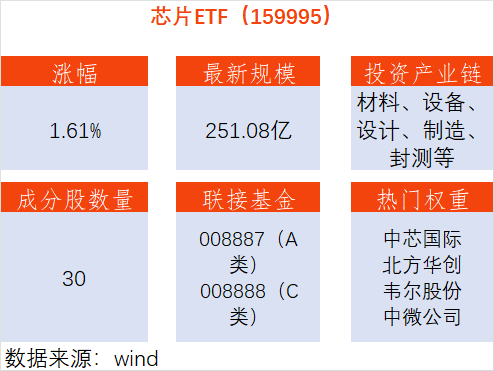
半导体国产替代大势所趋,机构看好国产厂商份额提升,芯片ETF(159995)上涨1.61%
Sou Hu Cai Jing· 2026-01-16 02:27
Group 1 - A-shares indices collectively rose on January 16, with the Shanghai Composite Index increasing by 0.49%, driven by gains in sectors such as electric equipment, non-ferrous metals, and electronics, while media and social services sectors faced declines [1] - The chip technology sector showed strength, with the chip ETF (159995.SZ) rising by 1.61% as of 9:45 AM, and notable increases in component stocks such as Zhongwei Company (up 5.19%), Jing Sheng Machinery (up 4.20%), Changdian Technology (up 4.18%), Huahai Qingke (up 4.04%), and Northern Huachuang (up 3.60%) [1] Group 2 - The Ministry of Commerce has initiated an anti-dumping investigation into imports of dichlorodihydrosilane from Japan, a key material used in the chip manufacturing process for thin film deposition [3] - Dichlorodihydrosilane is essential for producing various types of chips, including logic, memory, and analog chips, and is also used in synthesizing silicon-based precursors and polysilazane [3] - In the context of ongoing tensions in Sino-Japanese relations, the reliability of Japanese supply chains is declining, leading to an urgent demand for domestic alternatives in equipment and materials, prompting a recommendation to focus on opportunities within the equipment and materials sector [3] - The chip ETF (159995) tracks the Guozheng Chip Index, which includes 30 leading companies in the A-share chip industry across materials, equipment, design, manufacturing, packaging, and testing, featuring firms like SMIC, Cambricon, Changdian Technology, and Northern Huachuang [3]
联泓新科(003022.SZ):公司无二氯二氢硅产品
Ge Long Hui· 2026-01-15 10:44
Core Viewpoint - The company, Lianhong Xinke (003022.SZ), has confirmed that it does not produce dichlorodihydrosilane products [1] Company Information - Lianhong Xinke has clarified its product offerings on the investor interaction platform, specifically stating the absence of dichlorodihydrosilane in its product line [1]

公司问答丨金宏气体:公司目前已顺利实现超纯氨、高纯氧化亚氮、电子级正硅酸乙酯、高纯二氧化碳等一系列关键材料的进口替代
Ge Long Hui A P P· 2026-01-15 09:17
Core Viewpoint - The company is focused on the localization and industrialization of specialty gases for the electronic semiconductor sector, aiming to replace imports from Japan and meet international standards [1] Group 1: Product Development - The company has successfully developed and achieved import substitution for several key materials, including ultra-pure ammonia, high-purity nitrous oxide, electronic-grade ethyl silicate, and high-purity carbon dioxide [1] - Upcoming products such as difluoromethane, octafluorocyclobutane, and hexafluorobutadiene are set to begin production soon, while dichlorodihydrosilane and hexachlorosilane are currently in trial production [1] Group 2: Industry Impact - The production of these gases will significantly support the semiconductor chip manufacturing sector and other strategic emerging fields, contributing to a self-sufficient supply chain for the domestic industry [1]

金宏气体:公司目前已顺利实现超纯氨、高纯氧化亚氮、电子级正硅酸乙酯、高纯二氧化碳等一系列关键材料的进口替代
Jin Rong Jie· 2026-01-15 09:03
Core Viewpoint - The company is focused on the localization and industrialization of specialty gases for the semiconductor industry, aiming to replace imports from Japan with domestically produced alternatives [1] Group 1: Product Development - The company has successfully achieved import substitution for several key materials, including ultra-pure ammonia, high-purity nitrous oxide, electronic-grade ethyl silicate, and high-purity carbon dioxide [1] - Upcoming products such as difluoromethane, octafluorocyclobutane, and hexafluorobutadiene are set to begin production soon [1] - Currently, dichlorodihydrosilane and hexachlorosilane are in trial production, indicating ongoing advancements in product development [1] Group 2: Industry Application - The newly developed products will be widely used in semiconductor chip manufacturing and other strategic emerging fields [1] - The production of these gases will provide strong support for the domestic supply chain, ensuring self-sufficiency and control [1]
国信证券晨会纪要-20260115
Guoxin Securities· 2026-01-15 01:02
Macro and Strategy - The US December CPI data shows overall CPI at 2.7% year-on-year, with core CPI at 2.6%, indicating a stabilization in inflation [7] - China's December export growth was 6.6% year-on-year, with imports growing by 5.7%, resulting in a trade surplus of $114.14 billion [7] Industry and Company - The semiconductor industry is experiencing unexpected prosperity, with price increases across multiple segments and anticipated growth in AI glasses [3][7] - The chemical industry is facing challenges due to the cancellation of export tax rebates for certain pesticides, which may accelerate the exit of outdated production capacity [3][15] - The media sector is seeing a restructuring of traffic and content service ecosystems driven by AI applications, indicating a new growth cycle [3][19] - The mechanical industry is optimistic about growth opportunities in humanoid robots, AI infrastructure, and commercial aerospace sectors [3][28] Semiconductor Industry Insights - The semiconductor sector has seen a 3.82% increase in the Shanghai Composite Index, with electronic stocks rising by 7.74% [7] - AI-driven demand is pushing prices up in upstream electronic components, with significant shortages in storage and high-end PCB supply chains [7] - The CES 2026 showcased advancements in AR glasses, indicating a trend towards enhanced communication and computing capabilities in smart glasses [9] Chemical Industry Insights - The cancellation of export tax rebates for certain pesticides is expected to squeeze profit margins for companies like grass ammonium glyphosate, potentially leading to price increases in the short term [15][16] - The pesticide formulation export value is projected to rise, as the market shifts towards higher-value products [16] Media Industry Insights - The media sector's performance in December lagged behind the market, with a 1.60% decline in the media index [17] - The number of game licenses issued in December reached a record high, indicating a robust pipeline for new game releases [17][19] - The AI application in media is expected to enhance overall sector valuations, with a focus on AI marketing and content creation [20] Mechanical Industry Insights - The mechanical industry index rose by 8.59% in December, outperforming the Shanghai Composite Index [25] - The sales of excavators in December increased by 19.2% year-on-year, indicating strong demand in the construction sector [25] - The focus on humanoid robots and AI infrastructure is expected to drive long-term investment opportunities in the mechanical sector [28][34] Investment Recommendations - Recommended stocks in the semiconductor sector include companies like SMIC, Aojie Technology, and Demei Li [13] - In the media sector, companies such as Giant Network and Bilibili are highlighted for their growth potential [20] - The mechanical sector suggests focusing on companies involved in humanoid robots and AI infrastructure, such as Flywheel and Weichuan Technology [28][35]
和远气体:二氯二氢硅是公司已规划的产品之一
Zheng Quan Ri Bao· 2026-01-13 09:37
Core Viewpoint - He Yuan Gas is in the process of developing dichlorodihydrosilane, which is currently in the pilot production stage and has not yet reached stable or mass production due to safety and technical reasons [2] Group 1 - The product dichlorodihydrosilane is one of the planned products by the company [2] - The company indicates that the production capacity for this product is relatively small [2] - The impact of this product on the company's future profitability is expected to be minimal [2]
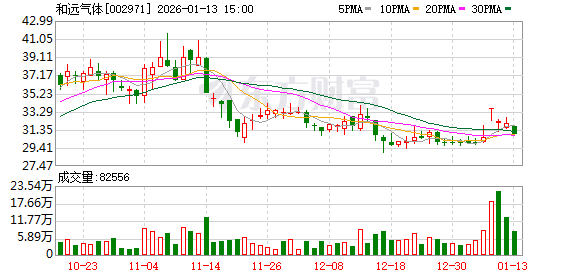
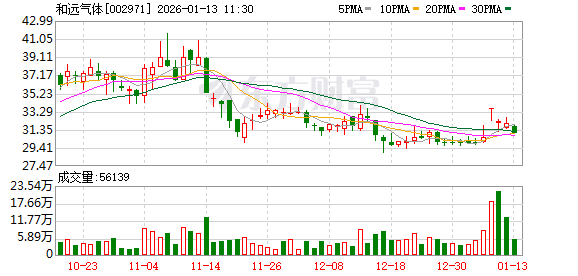
和远气体(002971.SZ):二氯二氢硅是公司已规划的产品之一,目前处于建成试生产阶段
Ge Long Hui· 2026-01-13 07:34
Core Viewpoint - He Yuan Gas (002971.SZ) is in the trial production stage for its planned product, dichlorodihydrosilane, but it has not yet achieved stable or mass production due to safety and technical reasons, indicating a longer timeline for customer certification and sales [1] Group 1 - The product dichlorodihydrosilane is one of the planned products by the company [1] - The current production capacity for dichlorodihydrosilane is small, which will have a minimal impact on the company's future profitability [1] - The company is still in the process of trial production and has not yet reached stable production levels [1]
对日二氯二氢硅反倾销调查启动,中石化与中航油实施重组
Huaan Securities· 2026-01-13 07:10
Investment Rating - The industry investment rating is "Overweight" [3] Core Insights - The chemical industry is expected to continue its differentiated trend in 2026, with recommendations to focus on synthetic biology, pesticides, chromatography media, sweeteners, vitamins, light hydrocarbon chemicals, COC polymers, and MDI [6][7] - The arrival of a pivotal moment in synthetic biology is anticipated, driven by the adjustment of energy structures, which may disrupt fossil-based materials and favor low-energy products [7] - The implementation of quota policies for third-generation refrigerants is expected to lead to a high prosperity cycle, with demand remaining stable due to market expansion in Southeast Asia [8] - The electronic specialty gases market is characterized by high technical barriers and value, presenting significant opportunities for domestic substitution [10] - The trend of light hydrocarbon chemicals is becoming global, with a shift towards lighter raw materials in the olefin industry, which is expected to lead to a revaluation of leading companies in this sector [10] - The industrialization process of COC polymers is accelerating, with domestic companies likely to break through supply bottlenecks and expand market space [11] - Potash fertilizer prices are expected to rebound as the industry enters a destocking cycle, with supply pressures easing due to production cuts by major companies [12] - The MDI market is characterized by oligopoly, with a favorable supply structure expected to develop as demand gradually recovers [13] Industry Performance - The chemical sector's overall performance ranked 12th with a weekly change of 5.03%, outperforming the Shanghai Composite Index by 1.21 percentage points [5][22] - The top three performing sub-sectors were inorganic salts (10.92%), modified plastics (9.94%), and oil and gas refining engineering (8.67%) [25] Company Performance - The top three performing companies in the chemical sector for the week were Pulit (42.59%), Dawi Technology (35.34%), and Sanfu Co., Ltd. (32.29%) [29][30] - The companies with the largest declines included Hangzhou High-tech (-11.24%), Yahua Group (-6.59%), and Wind God Co., Ltd. (-5.48%) [31][32] Industry Dynamics - A recent anti-dumping investigation has been initiated against imports of dichlorodihydrosilane from Japan, which is expected to impact the domestic industry [38] - The restructuring of Sinopec and China Aviation Oil is a significant event in the state-owned enterprise reform landscape, aiming to enhance competitiveness in a complex international environment [38]

和远气体:二氯二氢硅是公司已规划的产品之一,目前处于建成试生产阶段,还没有达到稳产和量产
Mei Ri Jing Ji Xin Wen· 2026-01-13 04:04
Core Viewpoint - The company is in the process of developing and testing the production of dichlorodihydrosilane, which is still in the trial production phase and has not yet reached stable or mass production [2] Group 1: Production Status - Dichlorodihydrosilane is one of the products planned by the company [2] - The production is currently in the trial phase due to safety and technical reasons [2] - The company anticipates a significant amount of time before achieving customer certification and sales [2] Group 2: Capacity and Impact - The production capacity for dichlorodihydrosilane is relatively small [2] - The impact on the company's future profitability from this product is expected to be minimal [2]