苹果汽车

Search documents
分析师:苹果(AAPL.US)陷“增长窘境”,高估值难觅新支点
Zhi Tong Cai Jing· 2025-12-31 09:08
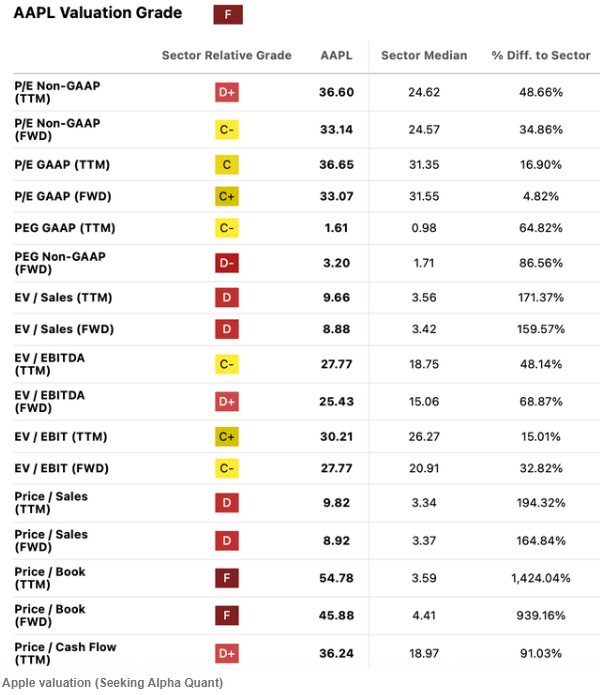
Core Viewpoint - Apple (AAPL.US) is one of the few large U.S. tech stocks underperforming in 2025, with an 8.5% increase lagging significantly behind the S&P 500 index. The company's lack of revenue growth, negative free cash flow, insufficient AI strategy, and perceived failures in recent product launches contribute to this underperformance [1][2]. Financial Performance - Apple has not achieved revenue growth, and its free cash flow has shown negative growth. The company reported a revenue of $416 billion, meaning a $1 billion product launch only represents a 0.2% growth, highlighting the challenges of scaling for such a large company [2][8]. - The stock is currently trading at a price-to-earnings (P/E) ratio of 36, which implies a yield of 2.77%, lower than the 10-year Treasury yield of 4.14%, indicating that without growth, the stock is overvalued [7][8]. Competitive Position - Apple maintains a strong competitive position due to its brand strength, integrated ecosystem, and loyal customer base. The brand is often ranked as the most valuable globally, allowing for significant pricing power [4]. - The integrated ecosystem of Apple products enhances user experience, making it a preferred choice for consumers seeking seamless functionality across devices [4]. - The loyal fan base contributes to brand strength and marketing advantages, as they actively promote Apple products through social media and reviews [4]. Investment Outlook - Despite being a great company, Apple is rated as "neutral" due to its growth challenges and high valuation multiples. The stock's P/E ratio of 36 and price-to-sales ratio of 9.8 indicate extreme premiums compared to sector medians [5][6]. - The company faces difficulties in finding new investment opportunities that can significantly alter its growth trajectory, as seen with the setbacks in projects like Apple Vision Pro and the Apple Car [2][9]. - Long-term revenue growth is conservatively estimated at 6.4%, which does not justify the current valuation, leading to the conclusion that the stock is overvalued at its current price [8][9].


传言理工男CEO上位!苹果汽车又有戏了?
Sou Hu Cai Jing· 2025-12-08 10:31
Group 1 - The core viewpoint of the article highlights the transition in leadership at Apple from Tim Cook to John Ternus, emphasizing Ternus's technical background and potential to drive innovation [1][5][12] - Under Tim Cook's leadership, Apple achieved record sales and market value, but faced criticism for a lack of technological innovation, with significant updates only appearing in the iPhone 17 [3][7] - John Ternus, the current Senior Vice President of Hardware, is recognized for his role in major product developments, including the transition to self-developed M-series chips and contributions to the iPad and MacBook Pro [5][9] Group 2 - There are strong rumors that Ternus will initiate the development of Apple's electric vehicle (EV) project, which had previously been abandoned due to its similarity to Tesla's offerings [7][9] - Apple is expected to enter the EV supply chain, providing components such as smart cockpit and intelligent driving systems to other EV brands, following Huawei's success in the Chinese market [10][12] - This new approach is anticipated to yield higher profit margins compared to direct vehicle manufacturing, potentially leading Apple into a new era of high-value and high-performance products [12]
高管“投敌” 苹果“换血”
Jing Ji Guan Cha Bao· 2025-12-07 07:04
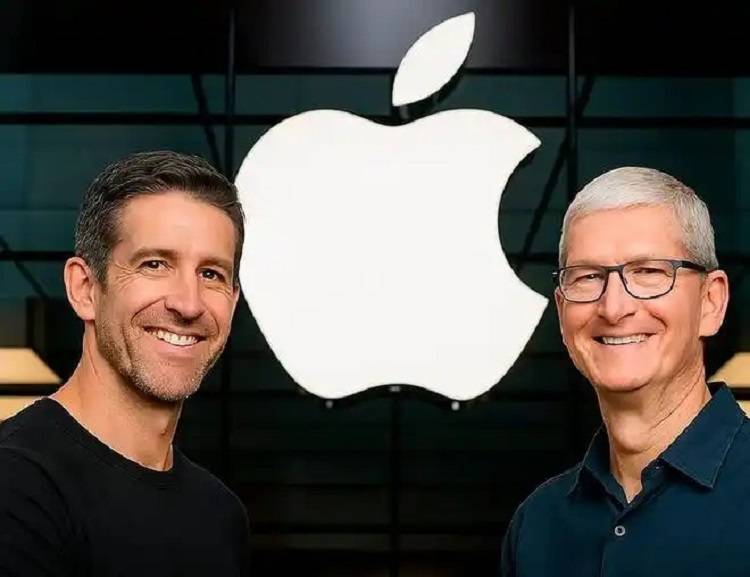
Group 1 - Apple is facing significant executive turnover as it approaches its 50th anniversary, marking a challenging period in the "post-Jobs era" with several high-profile departures across key departments such as industrial design, software engineering, cloud computing, and hardware technology [1][3] - Notable recent departures include AI chief John Giannandrea, policy chief Lisa Jackson, and legal counsel Kate Adams, with hardware technology SVP Johny Srouji considering leaving, which would be a major loss given his role in Apple's chip strategy [2][3] - The departure of key executives, many of whom have been with Apple for over a decade, raises concerns about the company's ability to maintain its innovation and competitiveness, particularly in the AI sector, as top talent moves to competitors like Meta and OpenAI [4][5] Group 2 - The reasons behind the executive turnover include a cultural shift at Apple post-Steve Jobs, moving from a design and technology-driven company to one focused on operational efficiency and financial metrics, which has left some long-time executives feeling marginalized [5][6] - The complexity of Apple's organizational structure and internal politics may have exacerbated tensions, leading to further departures [6][7] - As Apple shifts its focus towards new areas such as services, augmented reality, and autonomous driving, some veteran executives may find their skills misaligned with the company's new strategic direction [7][8] Group 3 - The ongoing executive changes pose challenges for Apple, including potential disruptions to long-term projects like the anticipated Apple Car and AR headset development, as well as the loss of institutional knowledge and relationships [7][8] - There are perspectives suggesting that some turnover could be beneficial, injecting fresh ideas and approaches into the company, especially in rapidly evolving fields like AI and machine learning [7][8] - CEO Tim Cook is reportedly considering enhanced compensation packages to attract and retain key employees while also exploring the possibility of granting more responsibilities to certain executives amid rumors of his own potential departure [7][8]
老登被干掉了
表舅是养基大户· 2025-12-02 13:34
Group 1 - The article discusses the potential impact of AI mobile assistants like Doubao on the application ecosystem and the competitive landscape for companies like Apple, which has struggled to innovate its AI assistant Siri [1][2] - The retirement of Apple's AI head, John Giannandrea, is highlighted as a significant change, indicating a shift in the company's AI strategy [1][3] - The article critiques Apple's decision not to enter the automotive industry, suggesting that the company is missing out on a major market opportunity despite having a loyal customer base that values integration with Apple products [2][3] Group 2 - The global market is experiencing volatility, with Japan's bond yields reaching historical highs, impacting risk assets worldwide [8][9] - A-share market saw a correction after a previous period of stability, with notable declines in stocks like Chip Original and ZTE, indicating a cooling off in previously hot sectors [14][16] - The article notes that the Hong Kong stock market is facing challenges in the automotive sector due to the impending withdrawal of government subsidies, which may lead to increased sales pressure for car manufacturers [18][19] Group 3 - The article discusses the recent performance of Hong Kong dividend stocks, which have shown resilience and are expected to remain a foundational asset for institutional investors [23][31] - A significant change in ETF naming conventions is mentioned, which could enhance brand recognition and marketing for fund managers, potentially impacting investment flows [26][28] - The article highlights a peculiar corporate governance issue where a chairman voted against his own compensation proposal, raising questions about board dynamics [35]