
藏红花

Search documents
未知机构:除了原油还有什么-20260304
未知机构· 2026-03-04 02:50
Summary of Key Points from the Conference Call Industry Overview - The discussion centers around the agricultural sector, particularly the impact of rising energy prices on food prices due to geopolitical conflicts [1][3]. Core Insights and Arguments 1. **Energy-Agriculture Transmission Chain**: The current rise in food prices is primarily driven by the "energy-agriculture" transmission chain being activated by war [1][3]. 2. **Bioenergy Substitution Effect**: The surge in crude oil prices due to geopolitical conflicts has directly enhanced the economic viability of biofuels such as ethanol and biodiesel [1][3]. 3. **Historical Correlation**: There is a high historical correlation of 81% between Brent crude oil prices and CBOT soybean oil settlement prices [2][4]. 4. **Impact on Corn**: Approximately 40% of corn produced in the U.S. is used for ethanol production, linking corn prices directly to oil price fluctuations [4]. 5. **Ethanol Demand**: Rising oil prices stimulate ethanol demand, which in turn drives up corn futures prices [5]. 6. **Impact on Oilseeds**: As biodiesel feedstocks, the increase in oil prices directly raises the price levels of oilseeds such as palm oil and soybean oil [5]. Additional Important Content 1. **Cost Increases**: - **Fertilizer and Agricultural Inputs**: Natural gas is a primary raw material for nitrogen fertilizers, and the Gulf region is a significant exporter of urea [5]. - **Logistics Disruptions**: Blockages in the Strait of Hormuz could lead to global fertilizer supply chain tensions, directly increasing planting costs [5]. - **Shipping Costs**: The surge in shipping costs will raise the landed costs of imported grains (e.g., soybeans, corn), thereby supporting domestic spot prices [5]. 2. **Trade Flows and Sentiment**: - **Iran Factor**: Although Iran exports very little grain, the disruption of its specialty agricultural products (90% of global saffron, 20% of pistachios) could elevate prices for specific commodities [5]. - **Panic Buying**: Iran, being a net importer of food (85% self-sufficient in staple grains, 15% imported), may trigger panic buying due to conflict, exacerbating global tensions [5]. 3. **Supply Chain Restructuring**: The war has led to a rise in global trade protectionism, increasing the emphasis on "food security" among nations, which in turn elevates the strategic valuation of seed and planting industries [5].
未知机构:伊朗禁止出口所有食品和农产品据新华社2026年3月3日报道-20260304
未知机构· 2026-03-04 02:45
Summary of Conference Call Notes Industry Overview - **Iran's Export Ban on Food and Agricultural Products**: Iran has temporarily banned the export of all food and agricultural products to ensure the availability of essential goods for its citizens until further notice [1] - **Global Supply Position of Iranian Agricultural Products**: - **Saffron**: Accounts for over 90% of global production and 80% of global trade, nearly monopolizing the supply [1] - **Pistachios**: Represents approximately 35% of global production and 7% of global trade [1] - **Dates**: Contributes about 15-20% of global production and 21.5% of global trade, ranking as the top exporter [1] - **Raisins**: Accounts for 20-27% of global production and 11.3% of global trade, ranking third globally [1] - **Tomatoes**: Represents about 3% of global production and 3% of global trade [1] Company Insights - **Shouxiangu (603896)**: The only listed company in China that has achieved industrialized and standardized cultivation of saffron. The export ban from Iran may lead to a direct increase in saffron prices due to China's reliance on imports, which exceeds 90% [2] - **Langyuan Co. (300175)**: A core enterprise in China's raisin processing and export sector. The company’s main products include apples, raisins, and pine nuts, with raisins sourced primarily from the Turpan region of Xinjiang. It ranks first among domestic companies in raisin exports. The export restrictions from Iran, the third-largest raisin exporter, may lead to a direct increase in international raisin prices [2]
人到中年,家里达到3个条件,你已经超越90%的家庭了
洞见· 2026-02-02 04:00
Core Viewpoint - The article emphasizes the importance of health and wellness, particularly for individuals over 40, highlighting the need to take care of oneself to support family responsibilities and well-being [5][8][9]. Group 1: Health and Wellness - Individuals over 40 who have healthy parents and a stable family are considered to be at the top of the social pyramid [5]. - Taking care of one's health is not just a personal matter but a significant concern for the entire family [9]. - True wellness is described as a long-term commitment rather than a temporary trend or luxury [11]. Group 2: Yunnan Baiyao Brand - Yunnan Baiyao is presented as a century-old national brand, established in 1902, known for its quality and trustworthiness [15][16]. - The brand has a rich history, having been recognized and supported by historical figures, including Premier Zhou Enlai [18]. - Yunnan Baiyao's products are based on a secret formula that has been validated by generations of users, establishing a strong reputation [21]. Group 3: Product Offerings - The article promotes various health products, including broken wall ganoderma spore powder, western ginseng, and saffron, available at discounted prices during a live broadcast event [13][28]. - The broken wall ganoderma spore powder is highlighted for its high bioavailability and health benefits, including immune support and anti-aging properties [40][41]. - The article also mentions the three-seven powder, which is known for its blood circulation benefits, and emphasizes its quality through rigorous testing [54][56]. Group 4: Promotional Event - A promotional live broadcast event is scheduled for February 4, featuring significant discounts on health products, encouraging early reservations [27][28]. - The event aims to provide affordable health solutions, with prices as low as 9.9 yuan for certain products, making them accessible to a wider audience [28][29]. - The article encourages participation in the live event to secure exclusive offers and learn about the products from experts [27][76].



金色地毯番红花
Xin Lang Cai Jing· 2026-01-26 06:40
Core Insights - The cultivation of saffron, derived from the Crocus sativus flower, has a rich history dating back to ancient Persia and has become a luxury commodity due to its labor-intensive harvesting process [3][4] - Saffron's unique characteristics, including its vibrant color and aroma, have made it highly sought after, leading to its widespread use in various culinary and medicinal applications [3] - The industry has evolved significantly, with the introduction of new saffron varieties through hybridization, enhancing their size, longevity, and color diversity, thus establishing saffron cultivation as an important industry [4] Industry Overview - Saffron is cultivated globally, with over 70 varieties, and is particularly noted for its high market value as the most expensive spice [3] - The process of harvesting saffron is labor-intensive, requiring the collection of 400,000 stigmas from approximately 140,000 flowers to produce just 1 kilogram of usable spice, taking around 40 hours [3] - The introduction of saffron bulbs for home gardening has increased consumer interest, allowing individuals to grow and appreciate various saffron flower colors [4]
山东广饶“掘金”特色农业
Zhong Guo Jing Ji Wang· 2025-12-24 14:42
Group 1 - The core focus of the articles is on the agricultural transformation in Guangrao County, emphasizing the development of high-value specialty crops like saffron and the utilization of organic waste through innovative farming practices [1][2][3] - The white star flower beetle is highlighted as a resource insect that converts agricultural waste into high-quality organic matter, significantly benefiting rice cultivation when its excrement is used as fertilizer [1] - Guangrao County is actively promoting the saffron industry as a key element in agricultural structural adjustment, utilizing a year-round production model that enhances land use efficiency and ensures stable quality of saffron [2] Group 2 - The county has established 95 agricultural leading enterprises, 928 farmer cooperatives, and 958 family farms, indicating a robust framework for rural industrial revitalization and economic development [3] - The introduction of new varieties and standardized cultivation methods for crops like carrots, strawberries, and blueberries has significantly increased their market value, contributing to farmers' income [2] - The development of emerging sectors such as edible fungi and medicinal herbs is also noted as part of the county's diverse agricultural industry growth strategy [2]
探访约旦首家藏红花农场
人民网-国际频道 原创稿· 2025-11-24 03:32
Core Viewpoint - The establishment of saffron farming in Jordan represents a significant agricultural opportunity, driven by favorable local conditions and government support for the development of this high-value crop [1][2]. Group 1: Saffron Farming Development - The first saffron farm in Jordan, located in Mafraq province, has expanded from 200 square meters to 5 hectares, indicating a successful scaling of operations [1]. - The local climate and geography are suitable for saffron cultivation, with existing wild varieties already present in the region [1]. - The Jordanian government has initiated a saffron-specific program, distributing saffron bulbs to farmers and providing financial and technical support [2]. Group 2: Economic Impact - The saffron harvest season occurs from October to November, providing a vital source of income for rural women involved in the harvesting process [2]. - The government plans to host the first saffron festival in 2024 to encourage broader participation in the saffron industry [2].
杨凌农高会外商“带货”记:从“轻装”到“满载”
Zhong Guo Xin Wen Wang· 2025-10-26 04:35
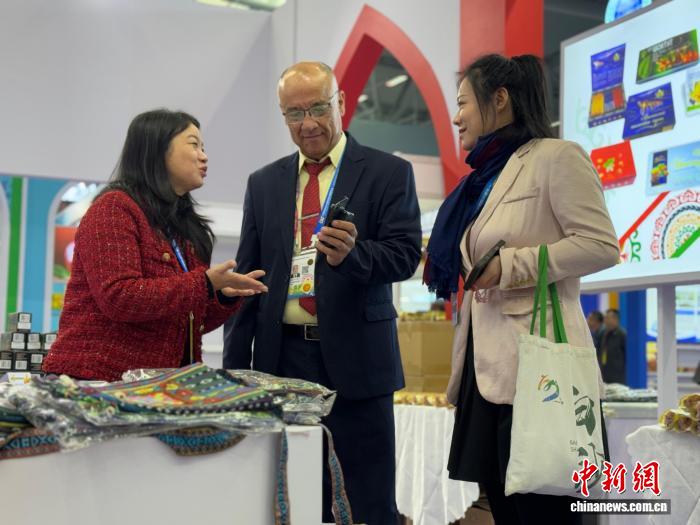
Core Insights - The Yangling Agricultural High-tech Achievements Expo has attracted international exhibitors, showcasing a diverse range of products and enhancing trade opportunities [1][3][6] - Exhibitors from various countries, including Afghanistan, Sri Lanka, Pakistan, and Tajikistan, have significantly increased their product offerings and participation levels compared to previous years [1][4][6] Group 1: Exhibitor Experiences - An Afghan exhibitor, Anif, has progressed from bringing only two suitcases of products three years ago to nearly one ton of goods this year, including carpets and jewelry [1] - Sri Lankan exhibitor Anura has expanded his offerings to over a hundred types of tea, responding to customer feedback and aiming to strengthen ties with the Chinese market [3] - Pakistani exhibitor Ali has seen his product range grow from four or five simple jade items to a wide array of nearly fifty, reflecting the growing interest from Pakistani merchants in the expo [4] Group 2: Event Significance - The expo serves as a vital platform for trade and cultural exchange among the member countries of the Shanghai Cooperation Organization (SCO), with over 100 institutions and enterprises participating [6] - The event is positioned as a bridge connecting local markets with international opportunities, fostering economic and cultural collaboration [6]
36氪首发|「新果农业Singrow」完成数百万美元A轮融资,青山资本、Finc International领投
3 6 Ke· 2025-10-15 08:15
Core Insights - Singrow has recently completed a multi-million dollar Series A funding round led by Qingshan Capital and Finc International, with existing investors AgFunder and Ritz Venture Partners participating [1] - The funding will primarily be used for technology research and market expansion [1] - Singrow focuses on developing climate-resilient crop varieties, particularly strawberries, which have been commercialized in multiple regions including Singapore, China, Indonesia, and Thailand [1] Company Overview - Founded in 2019 in Singapore, Singrow leverages molecular breeding technology to develop crop varieties that can thrive under challenging climate conditions [1] - The company’s business model encompasses the entire agricultural value chain, from seedling production to planting solutions and sales management [1] - The founder, Dr. Bao Shengjie, has over 10 years of experience in plant physiology, molecular biology, and crop breeding [1] Market Demand and Product Development - There is a significant demand for high-quality strawberries globally, but many regions lack the necessary growing conditions [3] - Singrow aims to address this gap by developing heat-tolerant strawberry varieties that mimic the flavor and texture of Japanese strawberries while being easier to cultivate [3] - The company has successfully developed eight different strawberry varieties, with some able to flower in temperatures as high as 20 degrees Celsius, compared to the traditional requirement of 8-10 degrees Celsius [3] Business Expansion Strategies - In 2023, Singrow plans to expand its market presence in China by introducing summer strawberry cultivation and offering comprehensive plant factory solutions [4] - The company has achieved an average yield of approximately 3,000 pounds per acre in Shaanxi after one and a half years of cultivation [4] - Singrow aims to form a coalition for summer strawberry cultivation in Northwest China, targeting both domestic and export markets [4] Key Business Segments - Singrow's operations can be categorized into three main areas: climate-resilient strawberry cultivation, comprehensive plant factory solutions, and agricultural service offerings [5] - The plant factory solutions include providing clients with a complete set of services, from seedlings to operational management, allowing clients to focus on initial infrastructure investment [5] - The company is also developing a circular plant factory model in Singapore and Houston, integrating mushroom production with strawberry cultivation to enhance sustainability and reduce costs [5][6] Future Market Focus - The domestic market is currently the primary revenue source for Singrow, but the company plans to expand into the Middle East and Southeast Asia [7] - The Middle East presents a unique opportunity due to its low supply of high-end fruits and vegetables, which Singrow's resilient varieties can help address [8] - The commercial viability of plant factories in these regions is expected to improve as electricity costs decrease, making it an attractive solution for local agricultural production [8]
新华鲜报|欧亚国家驻华使节西藏行 见证发展新气象
Xin Hua Wang· 2025-10-01 01:10
Core Insights - The visit of diplomats from Central Asian countries to Tibet highlights the region's development and modernization, showcasing its natural beauty and cultural diversity [1][2][3] Group 1: Education and Community Development - The diplomats were impressed by the educational conditions in Tibet, noting the provision of 15 years of free education and the emphasis on holistic student development [1][2] - The visit included interactions with local villagers, where the diplomats experienced local cuisine and learned about improvements in living standards [2] Group 2: Environmental and Economic Development - The visit to the Yani National Wetland Park emphasized the importance of protecting natural resources for global ecological health [2] - The diplomats observed the innovation and technological advancements in Tibet, particularly in traditional products like Tibetan medicine and saffron, indicating a growing economic development [2] Group 3: Cultural Exchange and Future Cooperation - The diplomats expressed a desire for cultural exchanges, such as inviting Tibetan artists to perform in Kazakhstan, to strengthen bilateral relations [3] - The visit was seen as a significant step towards enhancing cooperation between Tibet and Central Asian countries, fostering closer ties in various sectors [3]
欧亚国家驻华使节西藏行 见证发展新气象
Xin Hua Wang· 2025-09-30 00:26
Core Viewpoint - The visit of diplomats from Eurasian countries to Tibet highlights the region's development and modernization, showcasing its natural beauty and cultural diversity [1][2][3] Group 1: Diplomatic Visit - A delegation of diplomats from Kazakhstan, Azerbaijan, Armenia, Belarus, Moldova, Tajikistan, and Uzbekistan visited Tibet from September 23 to 27, 2023, at the invitation of the Chinese Foreign Ministry [1] - The diplomats experienced the prosperity and openness of Tibet, particularly in cities like Lhasa and Nyingchi, and appreciated the region's unique cultural landscape [1][2] Group 2: Education and Living Conditions - The delegation visited a school in Nyingchi, where they noted the excellent living and learning conditions for students, including 15 years of free education provided by the region [1][2] - The emphasis on comprehensive student development through cultural, sports, and artistic activities was highlighted by the Kazakh ambassador [1] Group 3: Cultural Exchange and Cooperation - The visit included interactions with local villagers, where the diplomats enjoyed traditional foods and learned about the improved living standards due to enhanced social welfare [2] - The ambassadors expressed interest in cultural exchanges, such as inviting Tibetan artists to perform in Kazakhstan, indicating a desire for deeper cooperation [3] Group 4: Environmental and Economic Development - The diplomats praised the ecological preservation efforts in Tibet, particularly at the Yani National Wetland Park, emphasizing the importance of protecting natural resources for global environmental health [2] - The delegation also explored local industries, including Tibetan medicine and unique products, noting the region's growing innovation and technological development [2]