
藏药

Search documents
西藏自治区发展改革委主任卫强:因地制宜构建高原特色现代化产业体系
Zhong Guo Xin Wen Wang· 2026-02-03 07:28
Group 1: Development of Key Industries - Tibet will vigorously develop characteristic agriculture and animal husbandry, aiming for a grain output of 1.1496 million tons and vegetable, meat, egg, and milk outputs to exceed one million tons by 2025 [1] - The clean energy industry has rapidly developed since the 14th Five-Year Plan, with installed power capacity expected to exceed 33 million kilowatts by 2025, including over 13 million kilowatts already built [2] - The resource processing industry has significant potential, with the Tibetan medicine production value projected to reach 3.4 billion yuan in 2024 [3] Group 2: Modern Service Industry and Logistics - The rural logistics network in Tibet has achieved 100% coverage, with full automation of rural postal routes, enhancing service delivery in remote areas [4] - The region will expand the "free shipping to Tibet" initiative and improve logistics for agricultural products, while also focusing on healthcare, elderly care, and property services [4] Group 3: Cultural and Tourism Integration - Tibet's tourism market is expected to receive 70.7337 million domestic and international visitors by 2025, reflecting a year-on-year growth of 10.71% [5] - The region aims to integrate culture and tourism, enhancing public cultural services and tourism facilities while developing a modern tourism industry with low environmental impact [5] Group 4: Emerging Industries - The low-altitude economy is being cultivated, with 70 companies in the low-altitude aviation sector and a total of 1,738 flight hours projected by 2025 [6] - The region will develop a low-altitude flight testing industry to address unique geographical challenges, expanding applications in areas such as aerial rescue and logistics [6]
780万颗种子蓄力藏药传承
Xin Lang Cai Jing· 2026-01-20 19:55
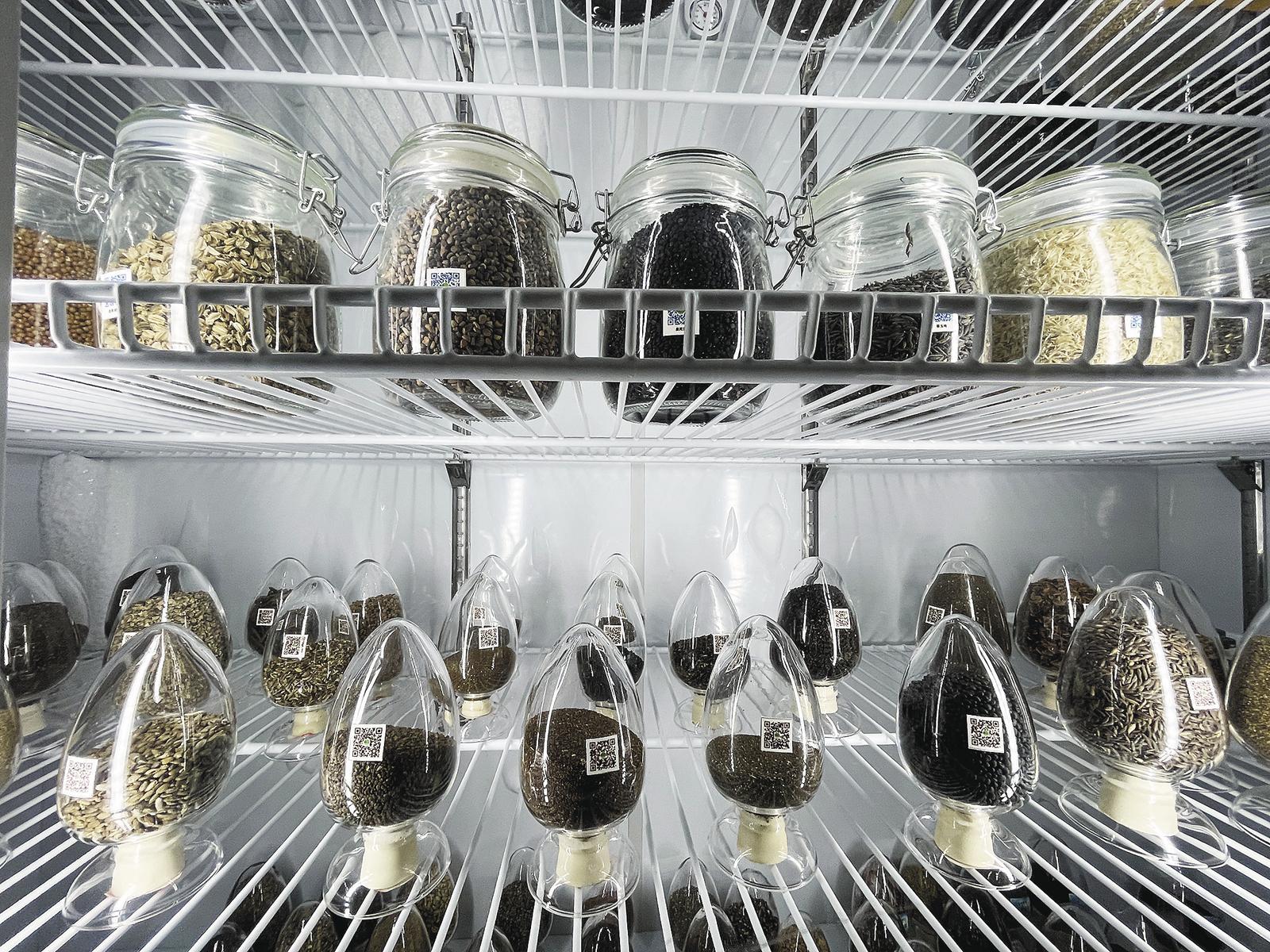
Core Viewpoint - The article highlights the significance of the Xinhai County Tibetan Hospital in preserving Tibetan medicinal plant seeds, with a collection of 7.8 million seeds representing a crucial resource for Tibetan medicine amidst declining wild medicinal plant populations due to climate change and overharvesting [3][4]. Group 1: Seed Preservation and Collection - The Xinhai County Tibetan Hospital has established a Tibetan medicinal seed resource bank containing 7.8 million seeds from 137 rare medicinal plant species, with detailed records of collection locations, times, and growth environments [3][5]. - The hospital's efforts are a response to the scarcity of wild Tibetan medicinal plants, which were once abundant but are now difficult to find due to environmental changes [3][5]. Group 2: Cultivation and Research - The hospital has developed 10 experimental planting fields for cultivating various Tibetan medicinal plants, including Tibetan radish and Rhodiola, with successful cultivation of "Hongjing Tian," which was previously reliant on wild collection [5][6]. - The integration of traditional and modern medical knowledge is emphasized, with the hospital serving as a platform for academic exchanges among Tibetan medicine experts from various regions [6][7]. Group 3: Education and Training - The hospital implements a "master-apprentice" program to train young doctors in both traditional Tibetan medicine and modern research techniques, ensuring the transmission of knowledge and skills [6][7]. - The preservation of Tibetan medicinal resources is deemed essential for the sustainable development of Tibetan medicine and its industry [6][7]. Group 4: Future Implications - The seeds stored in the hospital symbolize not only the preservation of plant life but also the future of ancient medical traditions, reflecting a commitment to balancing tradition with modernity [8][9]. - The hospital's narrative illustrates the potential for small initiatives to drive significant change in the preservation and application of traditional medicine [9].

节气养生正当时
Xin Lang Cai Jing· 2026-01-19 18:12
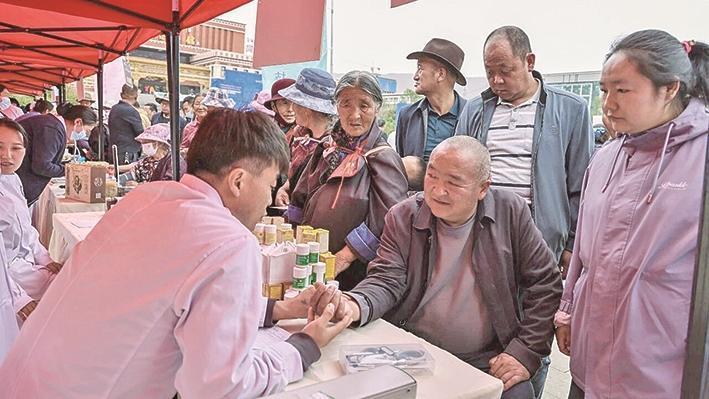
Core Viewpoint - The "Hundred Cities and Thousand Counties" Traditional Chinese Medicine (TCM) Cultural Benefit Activity aims to promote TCM culture and services to grassroots communities, enhancing public health and cultural awareness in Qinghai Province [4][7]. Group 1: Event Overview - The event is organized by the National Administration of Traditional Chinese Medicine from April to October 2025, focusing on delivering quality TCM resources to the public [4]. - Various activities such as free medical consultations, technical experiences, and herbal cuisine demonstrations are conducted to integrate traditional and modern health wisdom [4]. Group 2: Participation and Impact - In Hai Dong City, 82 medical staff provided services to 1,337 people through three offline consultations, addressing health needs in the community [4]. - The event in Hai Xi City featured a unique "TCM Cultural Night Market," allowing citizens to consult with doctors and experience TCM culture in a poetic atmosphere [5]. - In Hai Bei Prefecture, 40 medical personnel conducted seven themed activities, serving 3,042 people and distributing 2,065 boxes of herbal medicine [5]. Group 3: Cultural Integration - Activities in various counties, such as the one in Nangqian County, included drug identification and health exercises, showcasing the unique charm of Tibetan medicine [6]. - The integration of TCM culture with local festivals, such as the Dragon Boat Festival, attracted 600 participants, enhancing cultural appreciation and health awareness [6][7]. - The ongoing activities have significantly improved the public's sense of health and cultural identity, contributing to the "Healthy Qinghai" initiative [7].
金融支持生物多样性标杆企业 助力西藏创建国家生态文明高地
Zhong Guo Xin Wen Wang· 2025-12-15 13:25
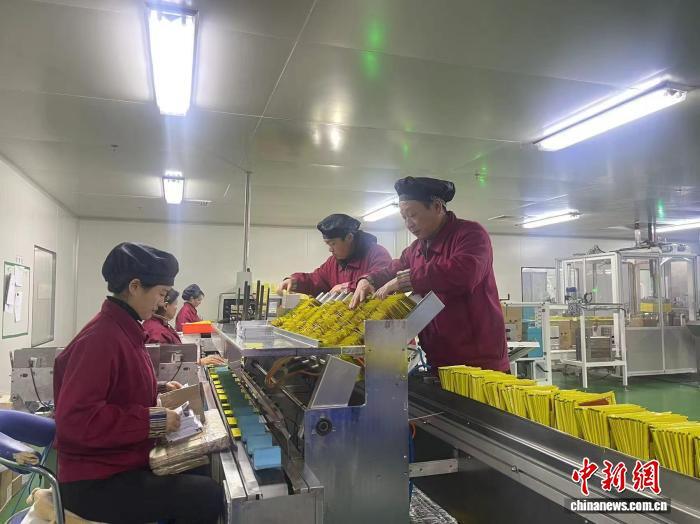
Group 1 - The Agricultural Bank of China (ABC) Tibet Branch and Linzhi Branch provided a financial loan of 10 million yuan to Tibet Qizheng Tibetan Medicine Co., Ltd. for biodiversity development [1] - This loan marks the first special loan focused on biodiversity development in Linzhi City, following the pilot of biodiversity financial standards by the People's Bank of China Tibet Branch [1] - The initiative represents a significant breakthrough in green finance for the ABC Tibet Branch, transitioning from theoretical exploration to practical industry application in biodiversity protection [1] Group 2 - Linzhi, located in the southeastern part of the Tibetan Plateau, is recognized as a key area for biodiversity, often referred to as a "biological gene bank" and "kingdom of flora and fauna" [2] - The loan is aimed at supporting Tibet Qizheng Tibetan Medicine Co., Ltd., a member of the Industrial Biodiversity Protection Alliance and a national green demonstration factory, to deepen cooperation in biodiversity protection [2] - This support not only aims to preserve the wisdom of Tibetan medicine but also seeks to commercialize unique highland plant and animal resources, contributing to the ecological balance and species diversity of the Tibetan Plateau [2] Group 3 - The ABC Tibet Branch established a biodiversity financial leadership group with a four-level institutional linkage to promote biodiversity financial standards tailored to the local context [4] - The initiative includes the development of a pilot program in Linzhi and Changdu, exploring replicable "biodiversity + finance" products or service models [4]

奇正藏药荣膺2025拉姆 查兰管理实践杰出奖 可持续发展模式树立行业标杆
Zheng Quan Ri Bao Wang· 2025-11-02 12:43
Core Insights - The Tibet Qizheng Tibetan Medicine Co., Ltd. won the "Outstanding Award" at the Ram Charan Management Practice Award for its case study on sustainable business models and governance practices [1] Sustainable Business Model - The company emphasizes the importance of biodiversity and environmental protection in the Qinghai-Tibet Plateau, having completed resource surveys for over 120 Tibetan medicinal materials and established standards for over 60 local varieties [2] - Qizheng has developed a functional base system covering wild nurturing, semi-wild planting, artificial breeding of rare and endangered medicinal materials, and industrialized planting, with a total area exceeding 500,000 acres [2] - The company respects the rights of indigenous people and has established a benefit-sharing mechanism, promoting low-carbon concepts and high-standard green production through smart factories [2] - Qizheng's production process is inherently low-pollution and generates less waste, and the company has implemented an environmental management system certified by national standards [2] - The Qizheng Foundation supports Tibetan medicine culture through various projects, creating a mutually beneficial ecosystem with stakeholders including patients, employees, and suppliers [2] Sustainable Governance Practices - Since 2012, the company has been systematically building a sustainable development management system, with plans to upgrade its ESG framework by 2025 [3] - The strategic "Five Trees" model integrates disease, health, technology, products, and brand into a comprehensive layout, ensuring seamless connection between strategy and operational plans [3] - The company enforces a "one-vote veto" system in product development, prohibiting the market introduction of any product relying on endangered or scarce resources without completed resource planning [3] - Qizheng is advancing organizational youthfulness and establishing a modern enterprise management system to attract and cultivate professional talent [3] - The founder of Qizheng received the inaugural Peter Drucker China Management Award in 2019 for promoting sustainable development principles in Tibetan medicine [3]
奇正藏药荣膺2025拉姆·查兰管理实践杰出奖 可持续发展模式树立行业标杆
Zheng Quan Ri Bao· 2025-11-02 12:39
Core Insights - The Tibet Qizheng Tibetan Medicine Co., Ltd. won the "Outstanding Award" at the Ram Charan Management Practice Award for its case study on sustainable business models and governance practices [1] Sustainable Business Model - The company emphasizes the importance of biodiversity and environmental protection in the Qinghai-Tibet Plateau, having completed resource surveys for over 120 Tibetan medicinal materials and established standards for over 60 local varieties [2] - Qizheng has developed a functional base system covering wild nurturing, semi-wild planting, artificial breeding of rare and endangered medicinal materials, and industrialized planting, with a total area exceeding 500,000 acres [2] - The company respects the rights of indigenous people and has established a benefit-sharing mechanism, promoting low-carbon concepts and high-standard green production through smart factories [2] - Qizheng's production process is inherently low-pollution and generates less waste compared to chemical drugs, and it has implemented an environmental management system certified by ISO14001 and received a B-level certificate for environmental standardization [2] - The company promotes Tibetan medicine culture through initiatives like the Qizheng Foundation and the "Hundred Clinics Plan," fostering a mutually beneficial ecosystem with stakeholders [2] Sustainable Governance Practices - Since 2012, Qizheng has been systematically constructing a sustainable development management system, with plans to upgrade its ESG framework by 2025 [3] - The company has established a "Strategic Five Trees" model to create a comprehensive layout linking disease, health, technology, products, and brand, ensuring seamless integration of strategy and operational plans [3] - Qizheng enforces a "one-vote veto" system in product development, prohibiting the market introduction of any strategic products relying on endangered or scarce resources without completed resource planning [3] - The company is advancing organizational youthfulness and building a management foundation centered on modern corporate systems, ensuring that a professional team drives corporate development [3] - The founder of Qizheng, Lei Jufang, received the first Peter Drucker Management Award in China for his sustainable development practices in Tibetan medicine [3]
奇正藏药荣膺2025拉姆・查兰管理实践杰出奖 可持续发展模式树立行业标杆
Zheng Quan Ri Bao Zhi Sheng· 2025-11-02 12:36
Core Insights - The Tibet Qizheng Tibetan Medicine Co., Ltd. won the "Outstanding Award" at the Ram Charan Management Practice Award for its case study on sustainable business models and governance practices [1] Sustainable Business Model - The company emphasizes the importance of biodiversity and natural environment protection in the Qinghai-Tibet Plateau, having completed resource surveys for over 120 Tibetan medicinal materials and established standards for over 60 local varieties [2] - Qizheng has developed a functional base system covering wild nurturing, semi-wild planting, artificial breeding of rare and endangered medicinal materials, and industrialized planting, with a total area exceeding 500,000 acres [2] - The company respects the rights of indigenous people and has established a benefit-sharing mechanism, promoting low-carbon concepts and high-standard green production through smart factories [2] - Qizheng's production process is characterized by low pollution and minimal waste, and it has implemented an environmental management system certified by national standards [2] - The company promotes Tibetan medicine culture through projects like the Qizheng Foundation and the "Hundred Clinics Plan," creating a mutually beneficial ecosystem with stakeholders [2] Sustainable Governance Practices - Since 2012, the company has been systematically building a sustainable development management system, with plans to upgrade its ESG framework by 2025 [3] - Qizheng has established a "Strategic Five Trees" model to link strategy and operational plans seamlessly, covering the entire chain from disease to health, technology, products, and branding [3] - The company enforces a "one-vote veto" system in product development, prohibiting the market introduction of any strategic products relying on endangered or scarce resources without completed resource planning [3] - Qizheng is focused on organizational succession and talent cultivation, promoting a younger workforce and establishing a management foundation centered on modern corporate systems [3] - The founder of Qizheng, Lei Jufang, received the first Peter Drucker Management Award in China for his sustainable development practices in Tibetan medicine [3]
奇正藏药获2025拉姆·查兰管理实践杰出奖 可持续管理模式再获认可
Zheng Quan Shi Bao Wang· 2025-10-31 07:09
Core Insights - The Ram Charan Management Practice Award recognized Qizheng Tibetan Medicine for its outstanding case study on sustainable business models and governance practices [2][4] - The award highlights Qizheng's innovative approaches in the sustainable development of traditional Chinese medicine and ethnic medicine [2] Company Overview - Qizheng Tibetan Medicine has prioritized biodiversity and environmental protection in the Qinghai-Tibet Plateau [2] - The company has conducted resource surveys on over 120 Tibetan medicinal materials and established standards for more than 60 local varieties [2] - Qizheng has implemented research on cultivation techniques for 58 medicinal materials, creating a functional base system covering over 500,000 acres [2] Environmental Practices - The company actively promotes low-carbon principles and high-standard green production [2] - Qizheng has built an intelligent factory and established an environmental management system covering all production stages [2] Cultural and Educational Initiatives - Through the Qizheng Foundation, the company promotes Tibetan medicine culture via grassroots education and clinic initiatives [3] - Qizheng aims to create a symbiotic business ecosystem with stakeholders [3] Strategic Planning - The company has developed a "Strategic Five Trees" model, linking disease, health, technology, products, and brand for seamless strategic and operational integration [3] - Qizheng enforces a "one-vote veto" system in product development, ensuring that any marketable variety relying on endangered resources is not advanced without proper resource planning [3] Organizational Development - Qizheng is advancing organizational youthfulness and establishing a modern management system to attract and cultivate professional talent [3]
奇正藏药获2025拉姆・查兰管理实践杰出奖 可持续管理模式再获认可
Zheng Quan Shi Bao Wang· 2025-10-31 07:01
Core Insights - The company, Qizheng Tibetan Medicine, won the "Outstanding Award" at the Ram Charan Management Practice Award for its case study on sustainable business models and governance practices [1][3] - The award highlights the company's innovative approach to sustainable business practices in the traditional Chinese medicine and ethnic medicine sectors [1] Group 1: Sustainable Practices - Qizheng Tibetan Medicine emphasizes biodiversity and environmental protection, having completed resource surveys for over 120 Tibetan medicinal materials and established standards for more than 60 local varieties [1] - The company has conducted research on cultivation techniques for 58 types of Tibetan medicinal materials and developed a functional base system covering over 500,000 acres [1] - The company actively promotes low-carbon principles and high-standard green production, creating smart factories and implementing an environmental management system across all production stages [1] Group 2: Cultural and Strategic Initiatives - Through the Qizheng Foundation, the company promotes Tibetan medicine culture via projects like folk Tibetan medicine education and a clinic initiative, fostering a symbiotic business ecosystem [2] - The company has developed a "Strategic Five Trees" model, linking disease, health, technology, products, and brand to ensure seamless integration of strategy and operational plans [2] - In product development, the company enforces a "one-vote veto" system, prohibiting the market introduction of any potentially viable products that rely on endangered or scarce resources without completed resource planning [2] Group 3: Management and Recognition - The recent award serves as authoritative recognition of the company's sustainable business model and management practices [3] - In 2019, the founder of Qizheng Tibetan Medicine received the inaugural Peter Drucker Management Award in China for her commitment to sustainable development and social responsibility in the Tibetan medicine sector [3]
新华鲜报|欧亚国家驻华使节西藏行 见证发展新气象
Xin Hua Wang· 2025-10-01 01:10
Core Insights - The visit of diplomats from Central Asian countries to Tibet highlights the region's development and modernization, showcasing its natural beauty and cultural diversity [1][2][3] Group 1: Education and Community Development - The diplomats were impressed by the educational conditions in Tibet, noting the provision of 15 years of free education and the emphasis on holistic student development [1][2] - The visit included interactions with local villagers, where the diplomats experienced local cuisine and learned about improvements in living standards [2] Group 2: Environmental and Economic Development - The visit to the Yani National Wetland Park emphasized the importance of protecting natural resources for global ecological health [2] - The diplomats observed the innovation and technological advancements in Tibet, particularly in traditional products like Tibetan medicine and saffron, indicating a growing economic development [2] Group 3: Cultural Exchange and Future Cooperation - The diplomats expressed a desire for cultural exchanges, such as inviting Tibetan artists to perform in Kazakhstan, to strengthen bilateral relations [3] - The visit was seen as a significant step towards enhancing cooperation between Tibet and Central Asian countries, fostering closer ties in various sectors [3]