
西药

Search documents
通胀超预期背后:宏观物价线索的浮现:【宏观快评】2月通胀数据点评
Huachuang Securities· 2026-03-10 08:42
Group 1: Inflation Data Overview - February CPI increased from 0.2% to 1.3%, exceeding expectations of 0.9%, marking the highest level in three years[2] - Core CPI rose from 0.8% to 1.8%, with an average of 1.3% for January-February, the highest since 2020[2] - PPI narrowed its year-on-year decline from -1.4% to -0.9%, with expectations of -1.2%[2] Group 2: CPI and PPI Drivers - Core CPI's unexpected rise was primarily driven by competitive service prices, contributing approximately 0.26 percentage points to the 0.3 percentage point seasonal increase[3] - PPI's 0.4% month-on-month increase was significantly above the expected 0.1%, driven by input factors from oil and non-ferrous metals, contributing about 0.11 and 0.36 percentage points respectively[5][15] - The ongoing improvement in midstream manufacturing supply and demand has led to a sustained price increase, with PPI in this sector rising approximately 0.4%[6] Group 3: Price Trends and Market Implications - CPI's month-on-month increase of 1% was supported by significant price hikes in travel and entertainment services, as well as durable goods like automobiles and gold[2] - The average month-on-month core CPI for January-February was 0.5%, significantly higher than the past five-year average of 0.2%[3] - The potential for a positive shift in overall price levels is indicated, with government reports suggesting a move from negative to positive price growth this year[6][16] Group 4: Risks and Observations - The ongoing geopolitical uncertainties in the Middle East pose risks to inflation trends[6] - The observed price increases in competitive service sectors may indicate a recovery potential, as these prices have been relatively low since 2022[4][11]
白云山2月6日获融资买入5850.29万元,融资余额10.35亿元
Xin Lang Cai Jing· 2026-02-09 04:09
Group 1 - The core viewpoint of the news is that Guangzhou Baiyunshan Pharmaceutical Holdings Company Limited has shown stable financial performance with a slight increase in revenue and net profit for the first nine months of 2025, alongside notable trading activity in its stock [2][3]. - On February 6, Baiyunshan's stock price increased by 0.23%, with a trading volume of 616 million yuan. The financing buy-in amount for the day was 58.50 million yuan, while the financing repayment was 48.63 million yuan, resulting in a net financing buy of 9.88 million yuan [1]. - As of February 6, the total balance of margin trading for Baiyunshan was 1.037 billion yuan, with the financing balance accounting for 2.88% of the circulating market value, indicating a high level compared to the past year [1]. Group 2 - Baiyunshan's main business segments include traditional Chinese and Western medicine, chemical raw materials, natural medicines, and health management services, with the largest revenue contribution coming from the commercial sector at 69.32% [2]. - For the period from January to September 2025, Baiyunshan achieved an operating income of 61.61 billion yuan, representing a year-on-year growth of 4.31%, and a net profit attributable to shareholders of 3.31 billion yuan, up 4.78% year-on-year [2]. - The company has distributed a total of 10.91 billion yuan in dividends since its A-share listing, with 4.36 billion yuan distributed over the past three years [3].
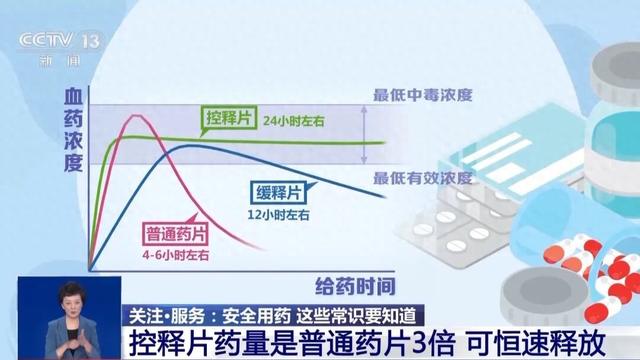
福建一男子把降压药掰开吃,30分钟后昏迷,医生提醒:药名含有“控释”等字样的需整颗药吞下
Xin Lang Cai Jing· 2026-02-06 14:47
Group 1 - A recent incident in Fujian highlights the dangers of improperly taking medication, where a man experienced a severe drop in blood pressure after splitting a controlled-release antihypertensive tablet, leading to a medical emergency [1] - Medications labeled with "controlled-release," "sustained-release," or "enteric-coated" should be swallowed whole, as breaking or crushing them can lead to rapid drug release, potentially causing shock or death [1][2] - Controlled-release tablets are designed to release medication at a constant rate, allowing for once-daily dosing, while regular tablets require multiple doses throughout the day [2] Group 2 - Sustained-release tablets, while having a different manufacturing process than controlled-release tablets, also aim for slow drug release and should not be split, as this can lead to adverse reactions [4] - Enteric-coated tablets are designed to dissolve in the intestines rather than the stomach; splitting them can cause premature dissolution in the stomach, affecting efficacy and potentially irritating the gastric lining [4] - Capsules should not be opened, as this can expose the medication to stomach acid, affecting its release and increasing gastrointestinal side effects [4] Group 3 - Patients should be aware of the proper sequence and timing for taking medications, as this can impact their effectiveness and reduce the risk of adverse reactions [5] - It is advised to space the intake of traditional Chinese medicine and Western medicine by about half an hour, and to take certain medications after meals to minimize gastrointestinal irritation [5] - Storage conditions for medications, including temperature and humidity, are crucial for maintaining their efficacy; for example, insulin must be stored between 2°C and 8°C to remain effective [6][8]

天目药业涨2.05%,成交额2187.86万元,主力资金净流入29.96万元
Xin Lang Zheng Quan· 2026-01-15 06:08
Group 1 - The core viewpoint of the news is that Tianmu Pharmaceutical has shown a positive stock performance with a 3.52% increase year-to-date and a significant rise in revenue and net profit for the first nine months of 2025 [1][2] Group 2 - As of January 15, Tianmu Pharmaceutical's stock price was 17.92 CNY per share, with a market capitalization of 2.182 billion CNY and a trading volume of 21.8786 million CNY [1] - The company experienced a net inflow of main funds amounting to 299,600 CNY, with large orders accounting for 5.87% of total purchases [1] - The company's revenue for the first nine months of 2025 reached 159 million CNY, reflecting a year-on-year growth of 27.48%, while the net profit attributable to shareholders was 14.21 million CNY, up 484.48% year-on-year [2] Group 3 - Tianmu Pharmaceutical's main business revenue composition includes health products (48.01%), circulation goods (23.21%), raw materials (15.98%), traditional Chinese medicine (11.47%), Western medicine (0.89%), training (0.32%), and others (0.12%) [1] - The company has not distributed any dividends in the last three years, with a total payout of 59.6313 million CNY since its A-share listing [3]

白云山1月7日获融资买入1.55亿元,融资余额10.64亿元
Xin Lang Cai Jing· 2026-01-08 01:19
Core Viewpoint - Baiyunshan Pharmaceutical Group's stock experienced a decline of 2.00% on January 7, with a trading volume of 851 million yuan, indicating a significant market activity and investor interest in the company [1]. Financing Summary - On January 7, Baiyunshan had a financing buy-in amount of 155 million yuan, with a net financing buy of 102 million yuan after repayments of 52.73 million yuan [1]. - The total financing and securities balance for Baiyunshan reached 1.066 billion yuan, which is 2.97% of its circulating market value, indicating a high level of financing activity compared to the past year [1]. - Baiyunshan's securities lending on January 7 included a repayment of 18,800 shares and a sale of 1,200 shares, with a total selling amount of 30,500 yuan, reflecting a relatively high level of securities lending activity [1]. Company Overview - Baiyunshan Pharmaceutical Group, established on September 1, 1997, and listed on February 6, 2001, is based in Guangzhou, Guangdong Province, and engages in the research, development, manufacturing, and sales of traditional Chinese and Western medicines, chemical raw materials, and health products [2]. - The company's revenue composition includes 69.32% from large commercial operations, 16.79% from health-related products, and 12.53% from traditional Chinese medicine and other segments [2]. - As of September 30, 2025, Baiyunshan reported a revenue of 61.606 billion yuan, a year-on-year increase of 4.31%, and a net profit attributable to shareholders of 3.31 billion yuan, reflecting a growth of 4.78% [2]. Dividend Information - Since its A-share listing, Baiyunshan has distributed a total of 10.906 billion yuan in dividends, with 4.359 billion yuan distributed over the past three years [3]. Institutional Holdings - As of September 30, 2025, the top ten circulating shareholders of Baiyunshan include China Securities Finance Corporation, holding 47.278 million shares, and Hong Kong Central Clearing Limited, holding 20.0109 million shares, which saw a decrease of 20.4372 million shares compared to the previous period [3]. - Other notable shareholders include Huatai-PB CSI 300 ETF and E Fund CSI 300 Medical ETF, both of which experienced reductions in their holdings [3].
研究报告—药品流通(附发展环境、全景概览、竞争格局及发展前景预测)
Sou Hu Cai Jing· 2025-12-17 09:20
Core Insights - The pharmaceutical distribution industry is a crucial part of the national healthcare system and is essential for public health and safety. The wholesale segment plays a key role in reducing distribution costs and drug prices [1][3]. Market Overview - The pharmaceutical distribution market in China is projected to reach a sales volume of 29,470 billion yuan in 2024, with wholesale sales accounting for 22,970 billion yuan (77.94%) and retail sales for 6,500 billion yuan (22.06%) [1][4]. - The regional distribution of sales in 2024 is as follows: East China 36.3%, Central South 27.0%, North China 15.2%, Southwest 13.4%, Northeast 4.3%, and Northwest 3.8%. The three major regions (East, Central South, North) account for 78.5% of total sales [1][4]. Product Segmentation - In terms of product categories, Western medicine sales dominate with a share of 70.8%, followed by traditional Chinese medicine at 14.6%, medical devices at 7.7%, Chinese herbal medicine at 2.4%, chemical reagents at 0.6%, glass instruments at less than 0.1%, and other categories at 3.9% [1][4]. Industry Structure - The pharmaceutical distribution industry consists of three main segments: upstream (manufacturers of drugs and medical devices), midstream (pharmaceutical distribution companies), and downstream (medical institutions, pharmacies, and consumers) [3][8]. - The industry operates under two primary distribution models: manufacturer-wholesaler-medical institution-consumer and manufacturer-wholesaler-pharmacy-consumer [3][6]. Competitive Landscape - In the first half of 2025, major pharmaceutical distributors such as China National Pharmaceutical Group, Shanghai Pharmaceuticals, China Resources Pharmaceutical, and Jiuzhoutong reported revenues of 286.04 billion yuan, 141.59 billion yuan, 131.87 billion yuan, and 81.11 billion yuan respectively [5]. - The future development of China's pharmaceutical distribution is expected to focus on sustainable growth, ensuring the provision of safe and cost-effective medicines to the public [5].
2025年中国药品流通行业经营模式、行业政策、产业链、直报企业主营业务收入、销售总额、区域分布、产品结构、重点企业经营对比及发展方向分析研判:市场规模保持增长,西药类占据主要份额[图]
Chan Ye Xin Xi Wang· 2025-12-10 01:43
Core Insights - The pharmaceutical distribution industry is a crucial component of the national healthcare system and health industry, significantly impacting public health and safety [1][7] - The industry is experiencing growth due to the implementation of the "two-invoice system" reform and increasing public awareness of healthcare [1][7] Industry Overview - The pharmaceutical distribution market in China is projected to reach a sales volume of 29,470 billion yuan in 2024, with wholesale sales accounting for 22,970 billion yuan (77.94%) and retail sales for 6,500 billion yuan (22.06%) [1][7] - The regional distribution of sales shows that East China accounts for 36.3%, Central South 27.0%, North China 15.2%, Southwest 13.4%, Northeast 4.3%, and Northwest 3.8%, with the top three regions contributing to 78.5% of total sales [9][10] Sales Structure - The sales composition indicates that Western medicine accounts for 70.8% of total sales, followed by traditional Chinese medicine at 14.6%, medical devices at 7.7%, and other categories [9][10] Current State of the Industry - As of the end of 2024, there are 705,400 licensed pharmaceutical businesses in China, including 15,100 wholesale companies and 66,070 retail chain enterprises [3][5] - The total number of retail pharmacies has increased to 683,700, with a notable rise in single retail pharmacies [3][5] Financial Performance - In 2024, the main business income of reported pharmaceutical distribution enterprises reached 22,431 billion yuan, reflecting a 0.8% increase from 2023, while the profit totaled 468 billion yuan with an average gross margin of 7.2% [5][6] Industry Chain - The pharmaceutical distribution industry serves as a critical link in the pharmaceutical supply chain, connecting manufacturers with end-users, including hospitals and pharmacies [11][12] Competitive Landscape - Major players in the pharmaceutical distribution sector include East China Pharmaceutical, Shanghai Pharmaceutical, China National Pharmaceutical Group, and others, with significant revenue contributions from these companies [14][15] Future Development Directions - The industry aims to enhance operational efficiency and inventory management to ensure a stable supply of pharmaceuticals while minimizing financial risks [18][19]



新股前瞻|利润表逆袭vs资产负债表承压:透视龙丰集团IPO的双面故事
智通财经网· 2025-12-08 06:15
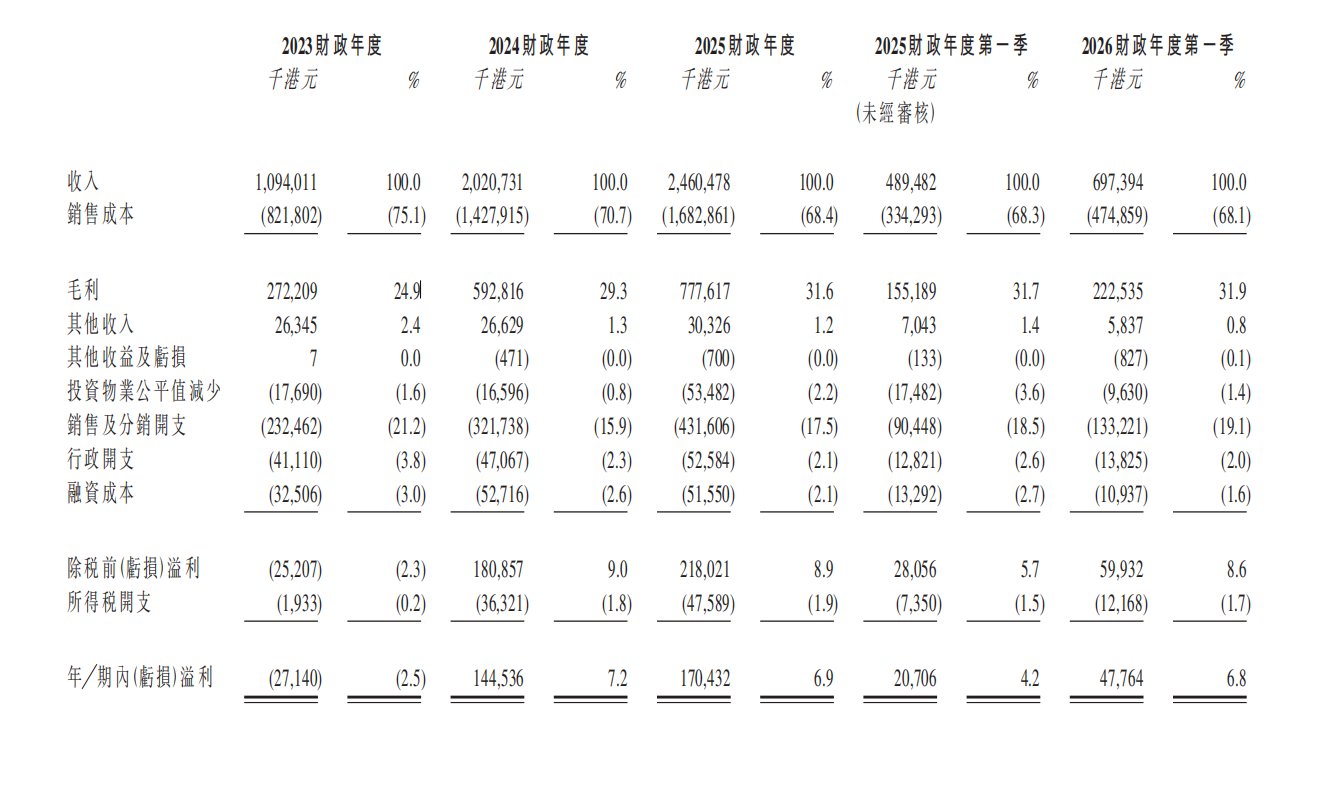
Group 1: Company Overview - Long Fung Group Holdings Limited has submitted its main board listing application to the Hong Kong Stock Exchange, with DBS Asia Capital as the sole sponsor [1] - The company holds a 5.2% market share, making it the largest pharmaceutical retailer in Hong Kong, and also the largest cosmetic retailer by average SKU per store [2][3] Group 2: Business Operations - Long Fung operates 29 retail stores in Hong Kong and various online channels, including its official website and major e-commerce platforms [2] - The company has a diverse product matrix covering 11 categories, including traditional Chinese medicine, Western medicine, health supplements, and cosmetics, with over 46,000 SKUs sold during the reporting period [2] Group 3: Financial Performance - Revenue has shown significant growth from HKD 1.094 billion in FY2023 to HKD 2.460 billion in FY2025, with a gross margin improvement from 24.9% to 31.6% during the same period [3][4] - The company transitioned from a loss of HKD 25.2 million in FY2023 to a profit of HKD 218 million in FY2025, with a tax-pre profit of HKD 59.9 million in Q1 FY2026, reflecting over 100% year-on-year growth [4][5] Group 4: Market Trends - The Hong Kong pharmaceutical market is projected to grow from approximately HKD 57.88 billion in 2020 to HKD 85.08 billion in 2024, with a compound annual growth rate (CAGR) of 10.1% [7] - Key structural trends driving market growth include the integration of traditional Chinese and Western medicine, and the rising demand for personalized healthcare solutions [8] Group 5: Competitive Landscape - The market is highly fragmented, with the top five retailers holding only 14.6% of the market share, indicating ongoing competitive challenges for Long Fung [8] - Rising operational costs, particularly in labor and warehouse rental, are expected to continue impacting profitability [9] Group 6: Strategic Outlook - The company aims to leverage capital market opportunities to strengthen its market position and operational efficiency while exploring new growth avenues [11] - Long Fung's financial performance reflects a complex interplay of growth potential and financial risks, necessitating close monitoring of its liquidity and equity structure [11]
利润表逆袭vs资产负债表承压:透视龙丰集团IPO的双面故事
Zhi Tong Cai Jing· 2025-12-08 06:14
Core Viewpoint - Long Fung Group has submitted its application for a mainboard listing on the Hong Kong Stock Exchange, positioning itself as the largest pharmaceutical retailer in Hong Kong with a market share of 5.2% and the largest beauty retail operator by average SKU per store, reflecting its deep understanding of consumer needs and strategic positioning over the past 30 years [1][2]. Company Overview - Long Fung Group operates a chain of retail drugstores under the "Long Fung" brand, with 29 physical stores and multiple online channels, achieving a market-leading position in Hong Kong's pharmaceutical retail sector [2]. - The company has a diverse product matrix covering 11 categories, including traditional Chinese medicine, Western medicine, health supplements, and beauty products, with over 46,000 SKUs sold during the reporting period [2]. Financial Performance - Revenue has shown significant growth from HKD 1.094 billion in the 2023 fiscal year to HKD 2.460 billion in the 2025 fiscal year, with a notable improvement in gross margin from 24.9% to 31.6% during the same period [3][4]. - The company transitioned from a loss of HKD 25.2 million in the 2023 fiscal year to a profit of HKD 218 million in the 2025 fiscal year, with a tax-pre profit of HKD 59.9 million in the first quarter of the 2026 fiscal year, indicating a remarkable turnaround [4]. Market Dynamics - The Hong Kong pharmaceutical market is projected to grow from approximately HKD 57.88 billion in 2020 to HKD 85.08 billion by 2024, with a compound annual growth rate (CAGR) of 10.1% [7]. - Key structural trends driving market growth include the integration of traditional Chinese and Western medicine and the rising demand for personalized healthcare solutions among consumers [8]. Competitive Landscape - The market is highly fragmented, with the top five retailers holding only 14.6% of the market share, indicating ongoing competitive challenges for Long Fung Group despite its leading position [8]. - Rising operational costs, particularly in labor and warehouse rental, are expected to continue impacting profitability, with average monthly salaries in the retail sector increasing from HKD 19,353.5 in 2020 to HKD 21,471.0 in 2024 [9]. Strategic Outlook - As Long Fung Group approaches its IPO, the focus will be on leveraging capital market opportunities to strengthen its market position and operational efficiency while exploring new growth avenues for sustainable expansion [11]. - The company faces a complex landscape of growth potential intertwined with financial risks, necessitating careful management of its liquidity structure and equity base to ensure long-term stability [11].
龙丰集团递交IPO招股书,为香港最大药妆零售商
Zheng Quan Shi Bao Wang· 2025-12-01 11:39
Core Viewpoint - Long Fung Group Holdings Limited, based in Hong Kong, has submitted a prospectus to the Hong Kong Stock Exchange for a main board listing, positioning itself as a leading retail pharmacy and drugstore operator in Hong Kong with a significant market share in the sector [1] Group 1: Company Overview - Long Fung Group operates under the "Long Fung" brand with 29 retail stores and various online sales platforms, offering a wide range of drugstore products and consumer goods [1] - The company is projected to be the largest pharmacy retailer in Hong Kong by retail sales in 2024, holding a market share of 5.2%, and is also the largest drugstore retailer by average SKU per store, with approximately 6,500 SKUs available [1] - The flagship store located in Mong Kok has a total floor area of about 17,500 square feet, making it the largest drugstore retail store in Hong Kong by floor area in 2024 [1] Group 2: Product Offering and Supplier Relationships - Long Fung Group's product range includes 11 categories such as traditional Chinese medicine, Western medicine, health supplements, skincare, cosmetics, personal care, baby products, food, pet food, and household items, with over 46,000 product SKUs sold during the reporting period [2] - The company collaborates with over 600 suppliers, including local distributors in Hong Kong and major overseas suppliers from Japan, South Korea, Southeast Asia, Europe, and the United States, with a supply chain office established in Fukuoka, Japan [2] - Long Fung Group maintains long-term partnerships with well-known brands, being the largest purchaser of certain products like infant formula from Meiji and specific cold medicine products from Heping Pharmaceutical in Hong Kong [2] Group 3: Financial Performance and Growth - For the fiscal years 2023 to 2025, Long Fung Group's total revenue is projected to be HKD 1.094 billion, HKD 2.021 billion, and HKD 2.461 billion, respectively, reflecting a strong compound annual growth rate (CAGR) of 50.0% over three years [3] - In contrast, the CAGR for Hong Kong's consumer goods retail sales from 2020 to 2024 is only 3.6%, indicating that Long Fung Group significantly outperforms the market [3] - The net profit is expected to increase from approximately HKD 145 million in the fiscal year 2024 to about HKD 170 million in the fiscal year 2025, representing a growth of 17.9% [3] Group 4: IPO Fund Utilization - The funds raised from the IPO are intended for expanding and optimizing the company's physical and online sales networks, enhancing supply chain capabilities through the expansion of overseas procurement offices in Japan and South Korea, and upgrading IT systems including warehouse management and point-of-sale systems [3] - The company also plans to seek selective strategic investments and acquisition opportunities to further develop its business scale and geographic coverage [3]