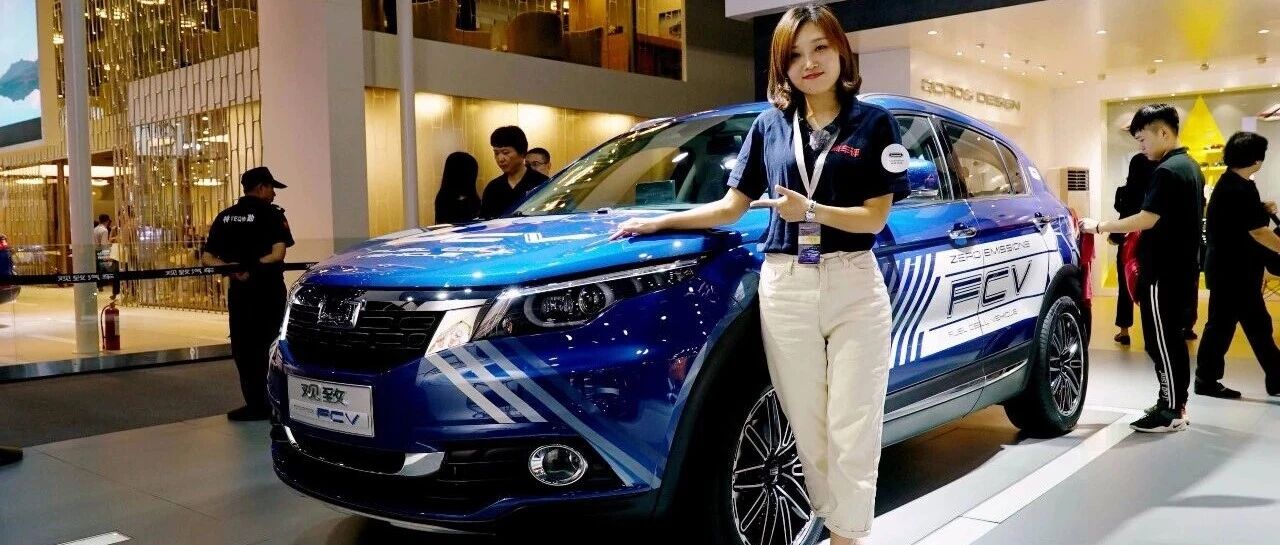
观致3

Search documents
今年要卖12万辆、已有海外订单?宝能披露观致重整后规划
Sou Hu Cai Jing· 2026-01-15 04:53
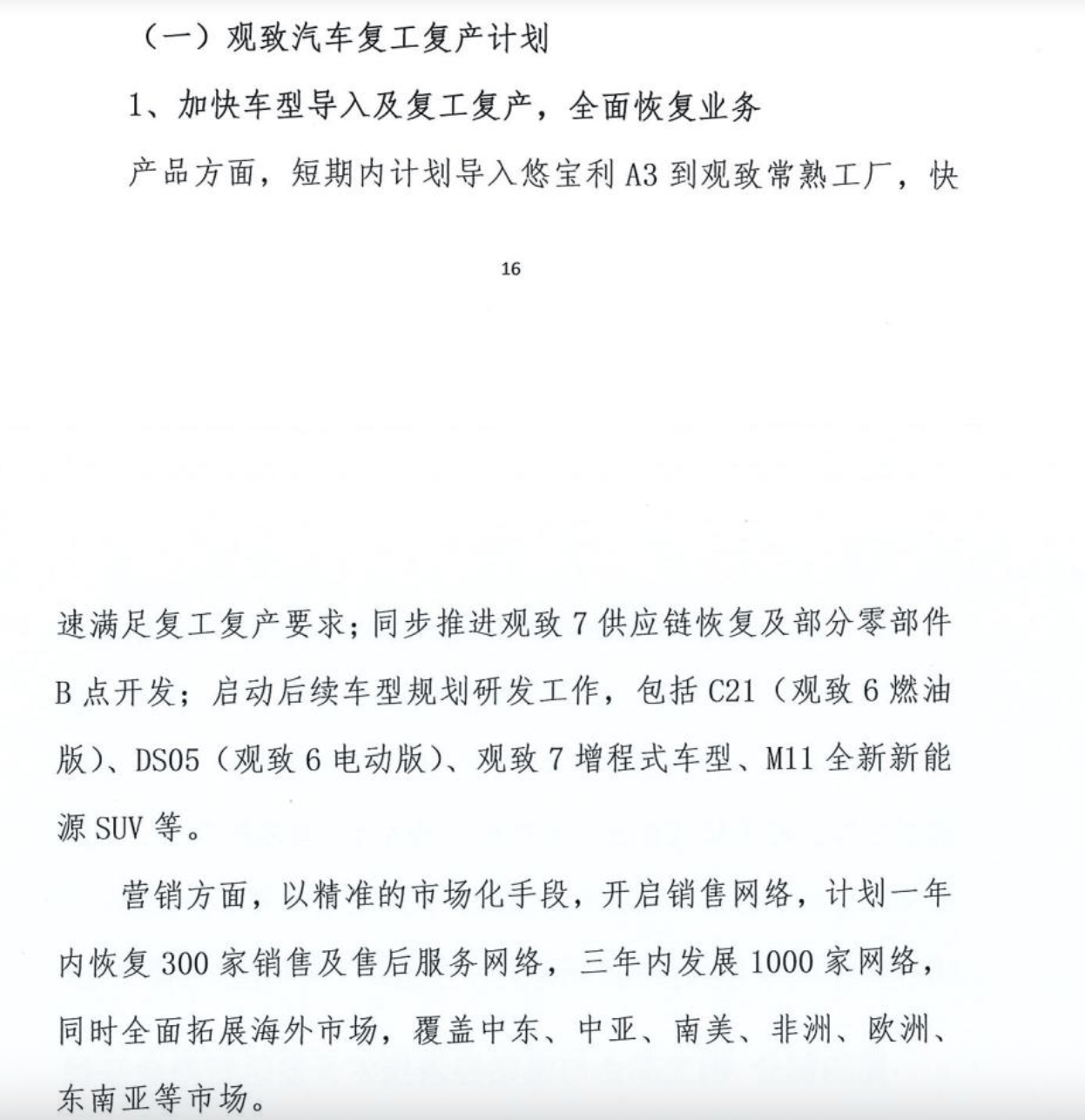
Core Viewpoint - Baoneng Group expresses confidence in the restructuring potential of Qoros Auto, highlighting a feasible recovery plan and the company's retained technological capabilities despite past operational difficulties [2][3]. Group 1: Company Overview - Qoros Auto has a modular vehicle platform that can efficiently adapt to electric or range-extended power systems, supported by over 1,200 patents in key areas such as lightweight body design and intelligent cockpit systems [2]. - Baoneng plans to introduce the Youbaoli A3 model to Qoros' Changshu factory to quickly meet production requirements and is also working on the supply chain recovery for the Qoros 7 model [2][3]. Group 2: Production and Sales Goals - The production and sales target for Qoros Auto is set at 120,000 units by 2026, with projected sales revenue of 10.7 billion yuan and profit of 1.65 billion yuan [3]. - By 2030, the production target is expected to rise to 550,000 units, with sales revenue projected at approximately 70.5 billion yuan and profit around 10.5 billion yuan [3]. Group 3: Market Strategy - Baoneng aims to restore 300 sales and after-sales service networks within a year and expand to 1,000 networks within three years, while also targeting international markets across various regions [3]. - Qoros has obtained export qualifications for 2026 and is negotiating multiple overseas orders, including a notable order for 4,000 fuel vehicles in Egypt [4]. Group 4: Challenges and Historical Context - Qoros has faced significant market recognition issues, with past losses exceeding 6 billion yuan from 2013 to 2016, and a decline in sales to fewer than 1,000 units by 2022 [4][5]. - The company has been criticized for strategic missteps under Baoneng's leadership, including inadequate product investment and excessive expansion without proper funding [5].

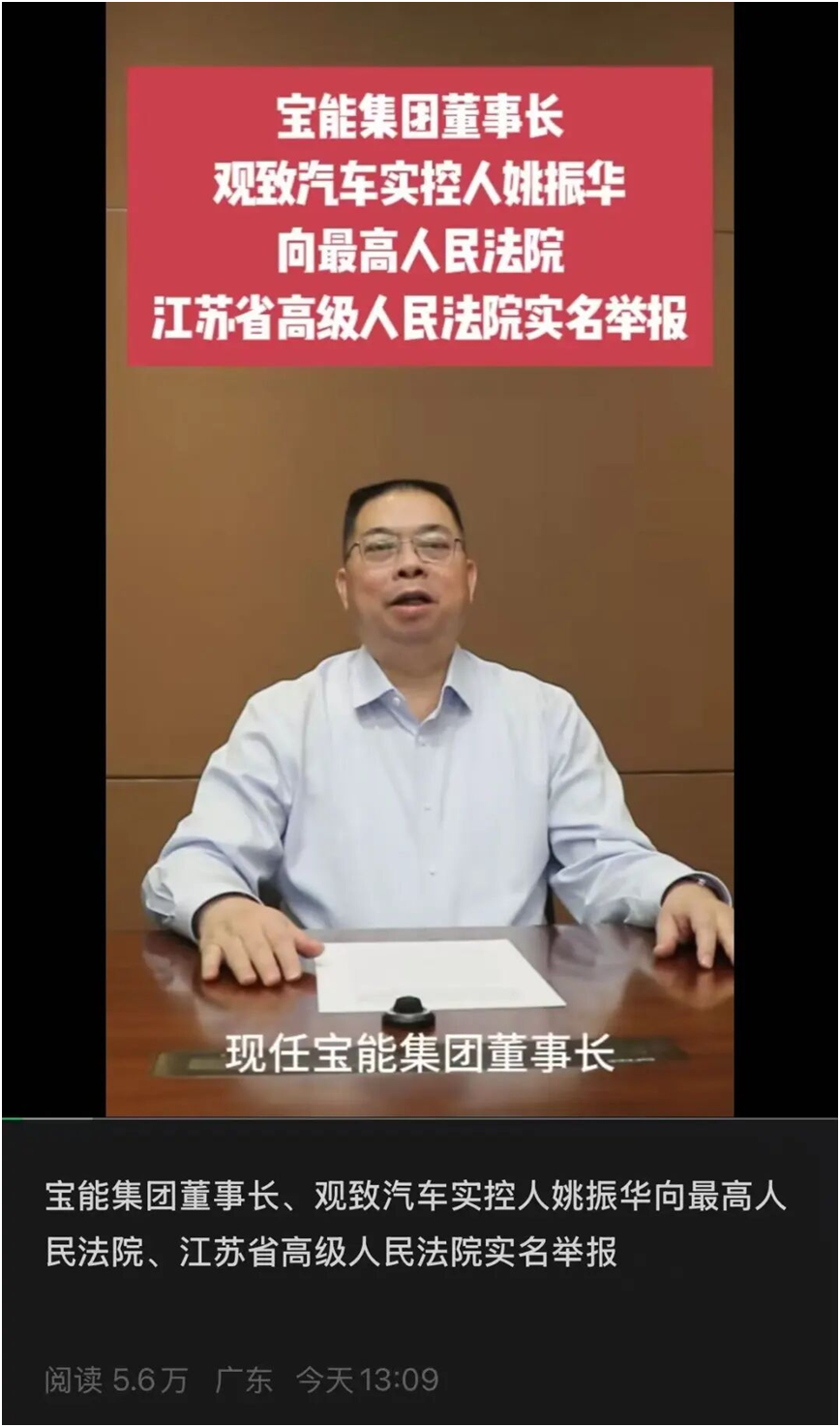
宝能姚振华实名举报!80亿核心资产8.6亿开拍?观致汽车拍卖疑云
Xin Lang Cai Jing· 2026-01-14 10:20
Core Viewpoint - The article highlights the controversy surrounding the low-priced auction of assets belonging to Qoros Auto, with allegations of illegal actions by local authorities leading to a significant undervaluation of the company's core assets [1][4]. Group 1: Allegations and Legal Actions - Yao Zhenhua, chairman of Baoneng Group, has filed a formal complaint against local authorities for allegedly undervaluing Qoros Auto's assets, with a third-party assessment valuing them at 8 billion yuan but set to start at only 860 million yuan [1][4]. - The complaint was initiated after multiple unsuccessful attempts to resolve the issue through communication, aiming to protect the legal rights of shareholders and 1,500 suppliers owed a total of 13.9 billion yuan [4][5]. Group 2: Company Background and Financial Performance - Qoros Auto was established in December 2007 as a joint venture between Chery Automobile and an Israeli group, aiming to create a high-end Chinese automotive brand [6]. - Despite initial promise, Qoros Auto faced poor sales, with cumulative sales of less than 22,000 vehicles from 2014 to 2016, leading to significant financial losses totaling 6.6 billion yuan over three years [6][10]. - Baoneng Group acquired a majority stake in Qoros Auto in late 2017 for 6.63 billion yuan, but subsequent financial difficulties led to a halt in funding and production [6][10]. Group 3: Current Situation and Implications - As of January 2026, Qoros Auto has ceased operations, with assets set to be auctioned, impacting Yao Zhenhua's 26 billion yuan investment and the fate of 1,500 suppliers and their 13.9 billion yuan in debts [10][11]. - The ongoing legal battle and asset auction could set a significant precedent for the handling of distressed assets in China, reflecting the broader challenges faced by private enterprises in the country [11].
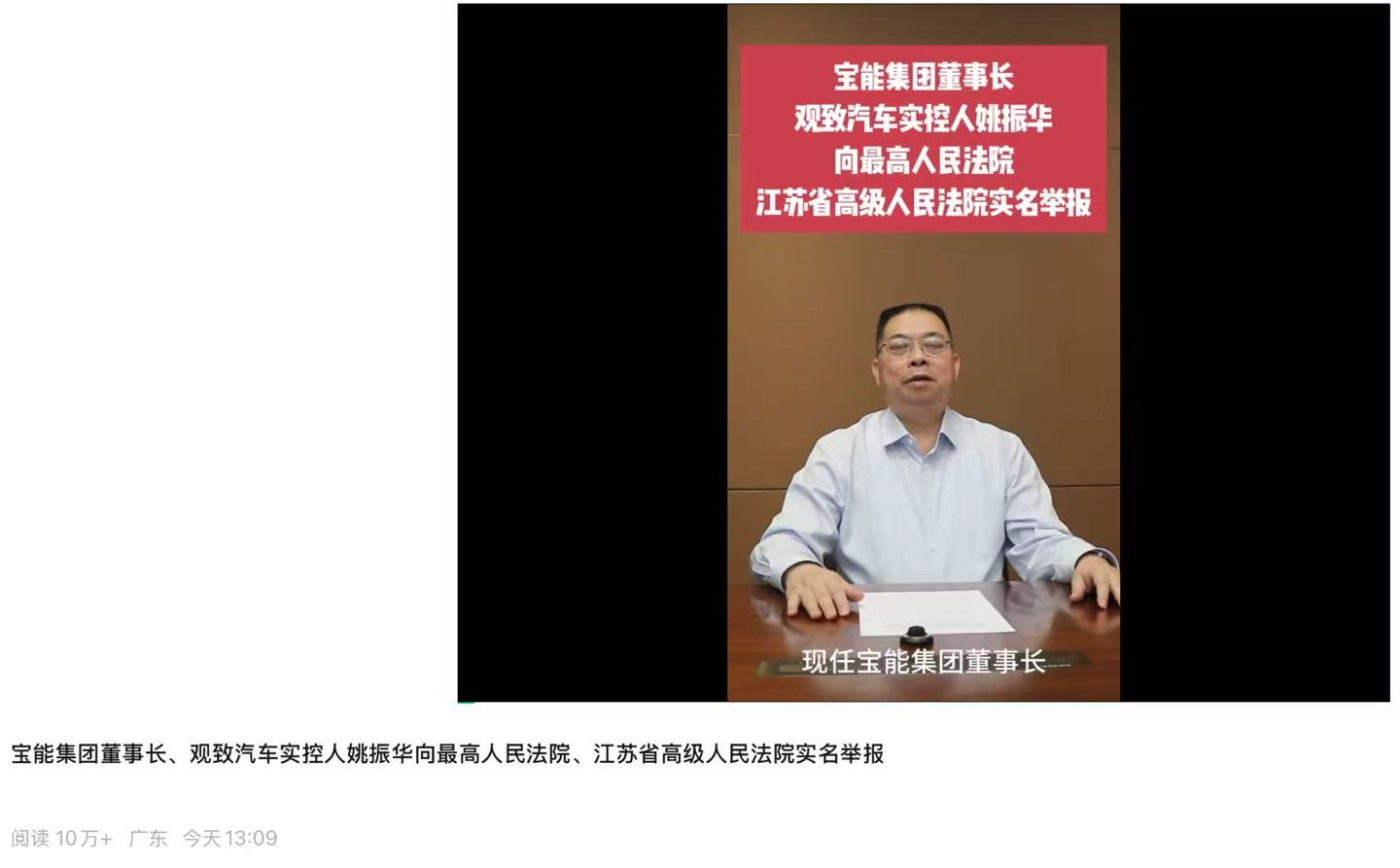
宝能董事长姚振华实名举报,事关观致汽车破产重整
Xin Lang Cai Jing· 2026-01-14 08:16
Core Viewpoint - Yao Zhenhua, chairman of Baoneng Group and actual controller of Qoros Auto, has filed a formal complaint regarding illegal operations in a 270 million yuan enforcement case, which he claims could lead to the undervalued auction of the company's assets [1][3]. Group 1: Allegations and Legal Actions - Yao Zhenhua alleges that the relevant departments in Changshu unlawfully established a liquidation working group, forcibly sealing Qoros Auto's factory and equipment, and overstepping in the enforcement process by seizing core assets [1][3]. - A third-party evaluation indicated that the assets are worth 8 billion yuan, but they have been undervalued at 1.5 billion yuan for auction purposes [1]. - The first auction is scheduled for January 15, 2026, with a starting price of 860 million yuan, raising concerns about asset misappropriation and subsequent bankruptcy liquidation [1][3]. Group 2: Financial Background and Investment - Baoneng Group has invested approximately 26 billion yuan in Qoros from 2018 to 2025, including equity acquisition, interest payments, R&D, and operational costs [3]. - Despite liquidity issues in the second half of 2021, Baoneng continued to support Qoros with a net investment of 2.5 billion yuan to maintain operations and R&D [3]. - Yao Zhenhua emphasized that Qoros still has restructuring value and could resume production within 10 months with an additional investment of 2 billion yuan [3]. Group 3: Bankruptcy and Financial Distress - Qoros Auto has faced significant financial distress, with a bankruptcy review case filed by Shenzhen Xinben Supply Chain Co., Ltd. due to long-standing debt issues [5]. - As of January 14, Qoros Auto has 31 instances of equity freeze totaling over 35 billion yuan and has been listed as a dishonest executor in 34 cases involving over 110 million yuan [5]. - The company has a history of substantial annual losses, with figures reaching 2.2 billion yuan, 2.5 billion yuan, and 1.9 billion yuan from 2014 to 2016 [5].
烧光500亿的“中国宝马”,引爆2026年第一颗雷
3 6 Ke· 2026-01-10 07:18
Core Viewpoint - The article discusses the rise and fall of the Chinese automotive brand Qoros, highlighting its initial success and subsequent bankruptcy, while contrasting it with the current success of domestic new energy vehicle brands at events like CES [1][3][5]. Group 1: Qoros' Rise - Qoros was the first Chinese brand to gain international recognition, breaking the stereotype that Chinese cars could not be of high quality, and was celebrated for its safety features [5][16]. - The brand was established through a joint venture between Chery and an Israeli group, aiming to produce high-end vehicles that could compete with German brands [10][12]. - Qoros' first model, the Qoros 3, received accolades for its design and safety, winning the Red Dot Design Award and achieving high scores in EuroNCAP safety tests [14][16]. Group 2: Qoros' Decline - Despite initial success in Europe, Qoros struggled in the Chinese market due to misaligned pricing and branding strategies, leading to poor sales performance [17][19]. - The brand's attempts to distance itself from Chery and establish itself as an international brand alienated potential customers and hindered its market penetration [21][23]. - Qoros faced significant financial losses, with cumulative losses exceeding 6 billion yuan over three years, leading to its eventual abandonment by Chery [23][24]. Group 3: Attempts at Revival - After being acquired by Baoneng, Qoros attempted to reposition itself as a competitor in the electric vehicle market but failed to capitalize on the growing demand for new energy vehicles [30][32]. - The brand's revival efforts were marred by poor management decisions and a lack of understanding of the Chinese market, resulting in minimal sales and operational challenges [33][40]. - Qoros' experience serves as a cautionary tale for new automotive brands, emphasizing the importance of market alignment and effective branding strategies [42][44].

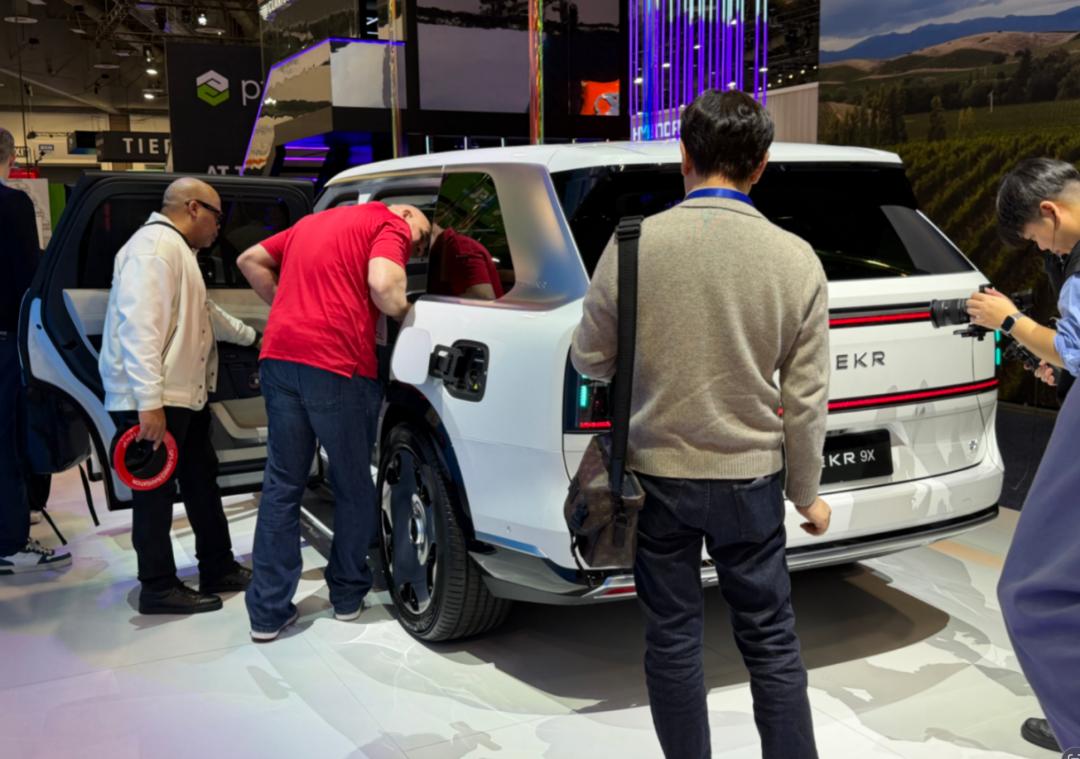
2026年新能源车的第一颗雷,炸了!
Xin Lang Cai Jing· 2026-01-04 12:26
Core Viewpoint - The recent bankruptcy application of Qoros Auto, once hailed as "China's first global car," has resulted in over 35 billion yuan in debt, marking a significant failure in the new energy vehicle sector [1][41]. Group 1: Company Overview - Qoros Auto, established 18 years ago with over 50 billion yuan invested, has failed to survive past 2025 and is now facing bankruptcy [3][41]. - The company has accumulated over 1,000 enforcement cases and more than 350 billion yuan in frozen equity, with over 3,000 associated risk information entries [7][45]. - Qoros was once considered a high-end autonomous brand and had a promising start, but has now become a cautionary tale in the automotive industry [7][43]. Group 2: Market Position and Challenges - The automotive industry is likened to a "survival of the fittest" arena, where only those with strong ecosystems can thrive, while others face rapid collapse [5][43]. - Qoros aimed to position itself as a high-end brand, assembling an international team and targeting German quality standards, but this strategy proved overly ambitious [8][49]. - Despite initial acclaim for its first model, Qoros 3, the company struggled with low sales, selling only 6,967 units in 2014, which led to significant financial losses [12][50]. Group 3: Financial Performance - Qoros reported cumulative losses of 6.6 billion yuan over three years from 2014 to 2016, with annual losses of 2.2 billion yuan in 2014, 2.5 billion yuan in 2015, and 1.9 billion yuan in 2016 [15][54]. - The company faced a liquidity crisis after its major investor, Baoneng Group, also encountered financial difficulties, leading to halted production and a disbanded R&D team [30][69]. Group 4: Industry Implications - The downfall of Qoros signifies a shift in the new energy vehicle market from a "marketplace" model to a "finals" model, where only the strongest survive [34][74]. - The competitive landscape is evolving, with increasing stakes and a clear trend towards the elimination of weaker players [35][76]. - The case of Qoros serves as a reflection of the industry's need for robust strategies, understanding of consumer needs, and adaptability to market changes [73][77].
新势力如何体面地告别?
3 6 Ke· 2025-12-30 02:56
Core Insights - Qoros Auto, once a promising Chinese automotive brand, has filed for bankruptcy after 18 years of operation, primarily due to long-term debts to suppliers and a lack of repayment capability [1][4] - The company, which had a peak valuation with over 35 billion yuan in frozen assets, saw its sales plummet to fewer than 100 vehicles in 2023 [1] - Founded in 2007 as a joint venture between Chery Automobile and Israel's Quantum Group, Qoros aimed to become China's first international premium brand but failed to convert early acclaim into domestic sales [3][4] Company Overview - Qoros Auto was established with high aspirations, launching its first model, the Qoros 3, at the 2013 Geneva Motor Show, which received positive reviews for its build quality and safety [1] - Despite initial praise, the Qoros 3 struggled in the Chinese market, with sales stagnating around 10,000 units annually from 2014 to 2016 [3] Industry Context - The rise of new automotive players in 2014 marked a significant shift in the industry, with companies like NIO, Xpeng, and Li Auto emerging alongside traditional brands [5][9] - The competitive landscape evolved as traditional automakers began to establish their own electric brands in response to the new entrants, leading to a dual competition between established companies and new forces [9][11] - The automotive industry in China has seen a wave of brand creation and elimination, with many new entrants failing due to a lack of sustainable business models and market understanding [12][14] Success and Failure Analysis - Qoros Auto exemplifies the pitfalls of entering the market with high-priced products without aligning with consumer expectations and market demand [14][16] - Successful brands have demonstrated resilience and adaptability, often pivoting their strategies to meet consumer needs and leveraging unique technological advantages [17][19] - The automotive sector's evolution highlights the importance of systemic capabilities, where successful brands build sustainable operations rather than merely producing individual models [19]
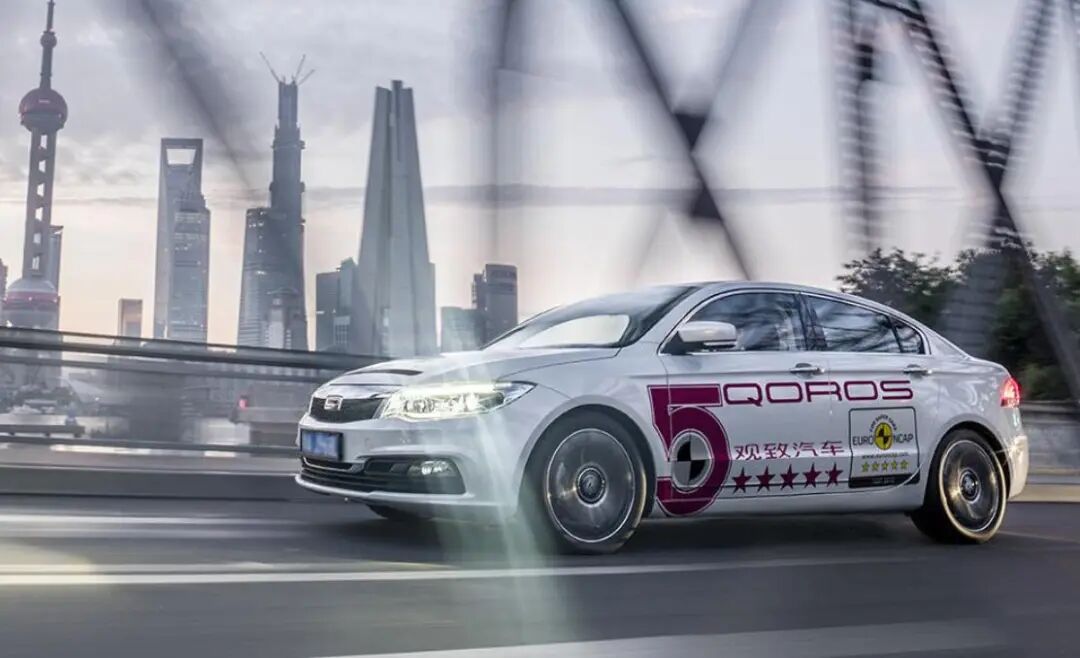
超350亿元股权被冻结 观致汽车被申请破产审查
Xin Lang Cai Jing· 2025-12-30 01:26
Core Viewpoint - The Suzhou Intermediate People's Court has officially accepted the bankruptcy review application for Qoros Auto Co., Ltd. due to long-term debt defaults and inability to repay creditors [1][6]. Group 1: Company Background - Qoros Auto was established in 2007 as a joint venture between Chery Automobile and Israel's Quantum Group, with its first model, the Qoros 3, launched in 2013 [6][11]. - From 2014 to 2016, Qoros maintained annual sales around 10,000 units, while accumulating losses exceeding 6 billion yuan [6][11]. - In late 2017, Baoneng Group acquired a 51% stake in Qoros for 6.63 billion yuan, becoming the controlling shareholder [6][11]. Group 2: Sales Performance - After Baoneng took over, Qoros's sales briefly surged to 63,000 units in 2018, but the company faced a liquidity crisis in Baoneng starting in 2020, leading to a sharp decline in support [6][11]. - Qoros's sales plummeted to 13,100 units in 2020, further dropping to 5,200 units in 2021, and by 2023, annual sales fell to less than 100 units [6][11]. Group 3: Financial and Legal Issues - As of December 23, 2025, Qoros had 31 instances of equity freeze, with a total frozen equity amount exceeding 35 billion yuan, and associated risk information surpassing 3,000 items [1][6].
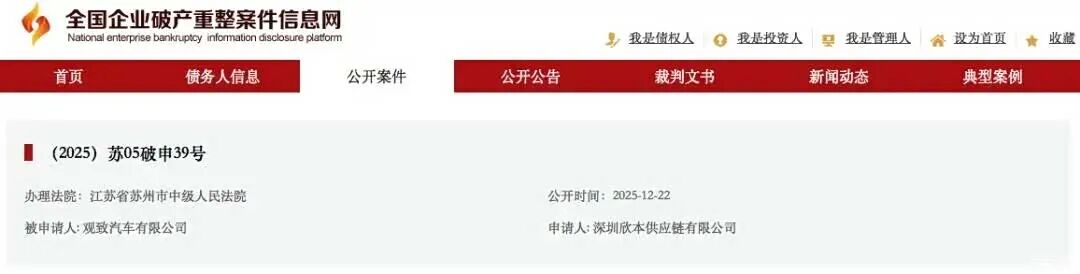
350亿,又一家新势力宣布破产
首席商业评论· 2025-12-29 04:07
Core Viewpoint - The demise of Qoros Auto serves as a warning for the Chinese automotive industry, highlighting the challenges of transitioning from product development to market success in the rapidly evolving new energy vehicle sector [5][7]. Group 1: Qoros Auto's Downfall - Qoros Auto, once seen as a benchmark for high-end domestic brands, has entered bankruptcy proceedings due to long-standing debts and operational failures, marking a significant moment in the transformation of the Chinese automotive landscape [7][9]. - The company faced over 1,000 enforcement actions and a total equity freeze amounting to over 35 billion yuan, reflecting severe financial distress and operational challenges [7][9]. - Despite initial success with its first model, Qoros 3, the brand struggled with high R&D costs and aggressive pricing strategies that alienated potential customers, leading to cumulative losses exceeding 6 billion yuan from 2014 to 2016 [9][11]. Group 2: Lessons for the Industry - Qoros Auto's experience underscores the importance of brand recognition and consumer trust, which are critical for long-term success in the automotive market [13][15]. - The company's failure to adapt to market changes, particularly the shift towards electric vehicles and consumer preferences, highlights the necessity for agility and strategic foresight in a rapidly evolving industry [16][19]. - The case illustrates the need for collaboration within the automotive ecosystem, as independent operations can lead to inefficiencies and increased costs, making it difficult to compete effectively [17][19]. Group 3: Future of the New Energy Vehicle Market - The new energy vehicle sector is entering a critical phase where the focus will shift from mere production capabilities to delivering real value and user satisfaction [21][29]. - Companies must evolve from being "car manufacturers" to "smart mobility technology enterprises," emphasizing the importance of understanding user scenarios and providing tailored solutions [21][23]. - The competitive landscape will increasingly rely on software capabilities and user engagement, necessitating a shift from traditional sales models to a more integrated approach that fosters long-term customer relationships [25][29].
350亿,又一家新势力宣布破产
虎嗅APP· 2025-12-28 14:40
Core Viewpoint - The demise of Qoros Auto serves as a warning for the Chinese automotive industry, highlighting the challenges of transitioning from product development to market success in the rapidly evolving new energy vehicle sector [4][10]. Group 1: Qoros Auto's Decline - Qoros Auto has officially entered bankruptcy proceedings, marking the end of a brand once seen as a benchmark for high-end domestic vehicles in China [6]. - The bankruptcy was initiated by a supplier due to Qoros's long-standing debt issues, with over 1,000 enforcement actions and a total frozen equity amount exceeding 35 billion yuan [6][7]. - The company struggled with high R&D costs and an aggressive pricing strategy that did not resonate with consumers, leading to cumulative losses exceeding 6 billion yuan from 2014 to 2016 [7][8]. Group 2: Industry Implications - Qoros's failure reflects broader systemic issues within the automotive industry, including brand building, market positioning, and technological pathways [10][14]. - The case illustrates that product quality alone is insufficient; establishing brand recognition and consumer trust is a long-term process [10][11]. - Successful brands like Lynk & Co and NIO have differentiated themselves through precise positioning and innovative service models, contrasting with Qoros's approach [11]. Group 3: Strategic Lessons - The trajectory of Qoros emphasizes the importance of strategic consistency and market timing, particularly in a rapidly changing automotive landscape [12]. - The company failed to adapt to the shift towards electric and intelligent vehicles, missing critical opportunities for transformation [12][14]. - Qoros's isolated operational model hindered its ability to leverage supply chain efficiencies and scale, which are crucial in a competitive market [13]. Group 4: Future Industry Trends - The new energy vehicle sector is entering a critical phase where the focus will shift from mere production to delivering value and user experience [16]. - Future differentiation will rely on understanding real-life scenarios and providing tailored solutions rather than just technical specifications [17]. - The industry is moving towards software-defined vehicles, where the value will increasingly come from software capabilities rather than hardware [18]. - Building long-term relationships with customers will become essential, transforming the sales process into a continuous engagement model [19]. - Global expansion will be vital for new players, as domestic markets become saturated, with emerging markets presenting new opportunities [20]. - Sustainable practices are shifting from being optional to essential, as regulatory frameworks increasingly demand low-carbon solutions across the automotive supply chain [20].
350亿,又一家新势力宣布破产
商业洞察· 2025-12-28 09:28
Core Viewpoint - The demise of Qoros Auto serves as a warning for the Chinese automotive industry, highlighting the challenges of transitioning from product development to market success in the rapidly evolving landscape of new energy vehicles [3][5]. Group 1: Qoros Auto's Exit - Qoros Auto has officially entered bankruptcy proceedings, marking the end of a brand once seen as a benchmark for high-end domestic vehicles in China [7]. - The bankruptcy was initiated by a long-time supplier due to Qoros's inability to repay debts, reflecting years of accumulated issues [8]. - By the end of 2025, Qoros had over 1,000 enforcement actions against it, with frozen equity exceeding 35 billion yuan and over 3,000 associated risk notifications [8]. Group 2: Industry Implications - The bankruptcy of Qoros Auto is a significant event in the transformation of the Chinese automotive industry, providing a case study for reflection on brand building, market positioning, and technological pathways [13]. - The case illustrates that while product quality is crucial, establishing brand recognition and consumer trust is a long-term process that cannot be overlooked [13]. - Qoros's experience emphasizes the importance of strategic consistency and market timing, as the company failed to adapt to the rapid changes in consumer preferences and technological advancements [14][15]. Group 3: Future of the Industry - The new energy vehicle sector is entering a critical phase where the focus will shift from merely having vehicles to ensuring they are user-friendly and worth long-term investment [18][19]. - Companies must evolve from being "car manufacturers" to "smart mobility technology enterprises," requiring a comprehensive restructuring of organizational capabilities and business models [19]. - The differentiation in products will increasingly depend on understanding and addressing real-life scenarios rather than just technical specifications [20]. Group 4: Globalization and Sustainability - Global expansion will be essential for new players to break through domestic market saturation, with emerging markets showing strong demand for Chinese supply chains and smart solutions [23]. - Sustainable development is becoming a business necessity, with regulations impacting product entry and cost structures, pushing companies to build low-carbon systems across the entire supply chain [25]. - The future competition will hinge on the ability to create sustainable competitive advantages through technology realization, user engagement, ecosystem collaboration, and global outreach [26].