超级电池

Search documents
70后学霸夫妻非洲卖纸尿裤,年收入32亿元,冲刺港股IPO
2 1 Shi Ji Jing Ji Bao Dao· 2025-10-16 15:25
Core Insights - The meeting between Ghana's Minister of Trade and the SenDa Group in Guangzhou highlights the potential investment opportunities in Ghana, particularly in the manufacturing sector, with a focus on the company LeShuShi, known as the "King of Diapers in Africa" [1] Company Overview - LeShuShi Limited has re-applied for a main board listing on the Hong Kong Stock Exchange after its previous application lapsed in January 2025. The company is backed by a couple who control 64.42% of its shares through Century BVI [2] - The company has established itself as a leader in the African baby diaper and sanitary napkin markets, holding market shares of 20.3% and 15.6% respectively as of 2024 [1] Financial Performance - LeShuShi's revenue is projected to grow from approximately $320 million in 2022 to $454 million in 2024, with a compound annual growth rate exceeding double digits. Net profit is expected to increase from $18 million to $95.1 million during the same period, reflecting a growth rate of over five times [4] - In the first four months of 2025, the company reported revenues of $161 million, a year-on-year increase of 15.5%, and a net profit of $31.1 million, up 12.5% [4] - The gross profit margin has improved significantly, reaching 35.2% in 2024 and 33.6% in the first four months of 2025, attributed to scale effects, product structure optimization, and improved foreign exchange risk management [4][5] Market Positioning - LeShuShi's pricing strategy has allowed it to maintain and even increase prices despite a general decline in average selling prices across its product lines. The company’s flagship diaper brand, Softcare, sells at an average price of 8.78 cents per piece in 2024 [5] - The company has adopted a "volume-driven" approach, with its products priced lower than competitors, which has helped it capture significant market share [5] Strategic Goals - Following the IPO, LeShuShi plans to invest in capacity expansion, production line upgrades, new product development, market expansion, and potential mergers and acquisitions to solidify its market leadership [6] Industry Context - The African market is experiencing strong population growth, with a compound annual growth rate of 1.8% in newborns from 2020 to 2024, presenting significant economic growth potential [8] - China remains Africa's largest trading partner, with trade volume reaching $295.6 billion in 2024, indicating a growing trend of Chinese companies investing in Africa, particularly in manufacturing and local production [8][9] Challenges - Despite its success, LeShuShi faces challenges such as foreign exchange losses, which amounted to $18.3 million from 2022 to 2024, representing 10% of its total net profit during that period [6] - The company currently lacks any currency hedging policies, which may expose it to further risks [6]


70后学霸夫妻非洲卖纸尿裤,年收入32亿元,冲刺港股IPO
21世纪经济报道· 2025-10-16 15:16
Core Viewpoint - The article discusses the investment opportunities and market positioning of Leshu Shi, a leading player in the African diaper and sanitary napkin market, as it prepares for its IPO and expands its operations in Africa [1][4]. Company Overview - Leshu Shi, known as the "King of Diapers in Africa," is seeking to list on the Hong Kong Stock Exchange after a previous application lapsed. The company holds the largest market shares in the African baby diaper and sanitary napkin markets, with 20.3% and 15.6% respectively [1][4]. - The company is controlled by a couple who graduated from Harbin Engineering University, holding 64.42% of the shares through Century BVI [2]. Financial Performance - From 2022 to 2024, Leshu Shi's revenue increased from approximately $320 million to $454 million, with a compound annual growth rate exceeding double digits. Net profit surged from $18 million to $95.1 million, reflecting a growth rate of over five times [4]. - In the first four months of 2025, the company reported revenue of $161 million, a year-on-year increase of 15.5%, and net profit of $31.1 million, up 12.5% [4]. - The gross profit margin improved significantly from 23.0% in 2022 to 35.2% in 2024, attributed to scale effects, product structure optimization, and improved foreign exchange risk management [4]. Market Strategy - Leshu Shi has adopted a "volume-driven" strategy, with its Softcare brand diapers priced at only 8.78 cents per piece in 2024, allowing it to maintain competitive pricing while achieving high gross margins [6][5]. - The company has established local production lines in Ghana since 2018, which has helped reduce costs and enhance competitiveness [5]. Industry Context - The African market is experiencing strong population growth, with a compound annual growth rate of 1.8% for newborns from 2020 to 2024, indicating significant economic potential [9]. - China has maintained its position as Africa's largest trading partner for 16 consecutive years, with trade volume reaching $295.6 billion in 2024, reflecting a growing trend of Chinese companies investing in Africa [9][10]. Challenges and Opportunities - Despite its success, Leshu Shi faces challenges such as foreign exchange losses, which amounted to $18.3 million from 2022 to 2024, and the absence of a currency hedging policy [7]. - The Ghanaian government has initiated a "24-hour economy and export plan" to improve the business environment, which could benefit local manufacturers like Leshu Shi [12].

【环时深度】“务实的性格”让西班牙走近中国
Huan Qiu Shi Bao· 2025-09-15 22:48
Core Viewpoint - Spain is increasingly establishing a pragmatic relationship with China, positioning itself as a key partner in Europe amidst geopolitical tensions, particularly with the United States [1][7][11]. Group 1: Spain's Approach to China - Spain's decentralized governance allows various autonomous regions, like Navarra and Catalonia, to develop their own strategies for engaging with China, focusing on sectors such as renewable energy, AI, and agriculture [2][3]. - Navarra's cooperation strategy with China has been in place since 2019, leading to the establishment of several Chinese enterprises in the region, including clean energy and wine companies [2][3]. - Catalonia has also taken steps to enhance trade and investment with China, including the construction of a new port to facilitate the transport of Chinese electric vehicles to Europe [3][5]. Group 2: Economic and Technological Collaboration - Spain's openness to Chinese investment is evident in the establishment of joint ventures, such as the Ebro factory by Chery and Ebro in Barcelona, which marks a significant step in automotive production [5][6]. - The collaboration between Chinese companies and Spanish firms is seen as a way to access advanced technologies while avoiding European tariffs, positioning Spain as a gateway to Latin America for Chinese investors [6][8]. - Spain's historical context, including a lack of direct conflict with China, contributes to a more pragmatic and less ideologically driven approach to economic relations [6][8]. Group 3: Public Perception and Political Context - Recent surveys indicate a shift in public sentiment in Spain, with a growing favorable view of China compared to the United States, reflecting dissatisfaction with U.S. policies [9][10]. - Spain's diplomatic stance is characterized by a blend of pragmatic engagement with China while maintaining a balance with its commitments to the EU and NATO [7][11]. - The Spanish public generally views China as a stable economic partner, with less political tension compared to other international issues that are more easily politicized [8][10].
全国首个100%绿电直供零碳产业园在山东东营加速推进
Zhong Guo Jin Rong Xin Xi Wang· 2025-07-29 02:22
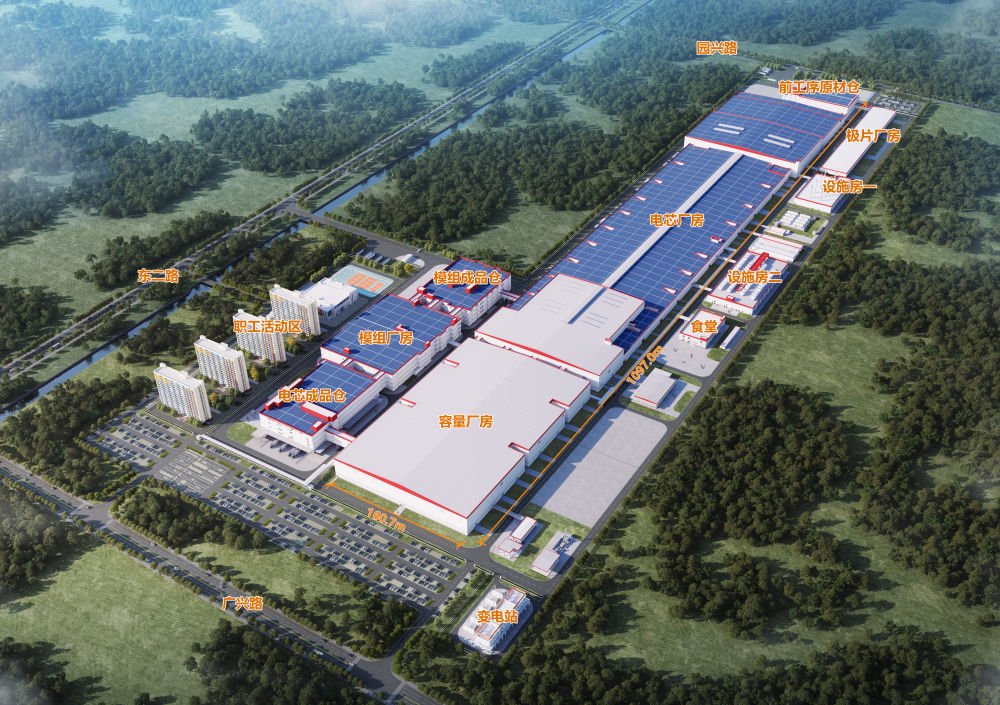
Core Viewpoint - The Dongying Times Zero Carbon Industrial Park is the first 100% green electricity connected off-grid zero carbon industrial park in China, featuring a core project of an 80 billion yuan lithium battery green manufacturing base with an expected annual output value of 26 billion yuan and tax revenue of 1.2 billion yuan by 2026 [1][3]. Group 1: Project Overview - The industrial park's core project involves an investment of 80 billion yuan and aims to produce 40 GWh of lithium batteries, with a projected annual output value of 26 billion yuan and tax revenue of 1.2 billion yuan upon completion in 2026 [1]. - The park utilizes a "green electricity direct connection" model, where electricity generated from wind and solar is directly supplied to factories, creating a self-loop for power generation, distribution, consumption, and storage [1]. Group 2: Technological Innovations - To address the instability of wind and solar energy, the company has developed a "super battery" paired with an intelligent scheduling system to achieve smart matching of power generation and consumption [1]. - The technology relies on wind-solar coupling and grid-structured technology to balance the distribution of renewable energy, ensuring over 8,000 hours of stable energy usage annually for enterprises [1]. Group 3: Strategic Location and Resources - Dongying's abundant wind and solar resources are highlighted, with renewable energy generation expected to reach nearly double the total electricity consumption by the end of the year [3]. - The park is strategically located within 50 kilometers of key lithium battery raw materials, including cathodes, anodes, electrolytes, and separators, with local companies already integrated into the supply chain [3]. Group 4: Development Goals - Dongying aims to create a trillion-yuan-level green lithium battery industry chain cluster, promoting the deep integration of "new energy industrialization" and "industrial new energy" [3]. - The local government has demonstrated proactive engagement with potential partners, facilitating rapid project development from negotiation to construction within a few months [3].