
超薄硅片

Search documents
招商证券:北美启动光伏扩产 国产受益供应链中重视辅材
智通财经网· 2026-02-24 07:11
Core Viewpoint - Tesla and SpaceX plan to build 100GW of solar capacity in the U.S. over the next three years, which will lead to a revaluation of related domestic auxiliary materials, equipment, and leading manufacturing companies, particularly emphasizing the opportunities in auxiliary materials [1][2] Group 1: North American Solar Expansion - North America is expected to initiate solar manufacturing capacity expansion, with Tesla and SpaceX's plans potentially yielding significant returns due to tariff protections and FEOC subsidies [2] - The anticipated demand for ground-mounted solar in North America is projected to support a capacity of 100GW, driven by natural growth and future data center needs [2] Group 2: Supply Chain Opportunities - The ground solar expansion in North America will create opportunities for Chinese supply chains, while space solutions are still evolving [3] - SpaceX is likely to favor the P-HJT route for solar technology, with HJT and perovskite equipment manufacturers expected to benefit [3] Group 3: Auxiliary Materials - The ground auxiliary materials supply chain is expected to benefit with high certainty and sustainability, while space auxiliary materials may experience significant inflation due to extreme conditions [4] - Tesla's collaboration with domestic auxiliary material companies suggests that ground solar expansion will likely utilize existing supply chains, with light asset auxiliary materials gradually being matched to North American factories [4]


下一个光伏大风口:不是地面,而是太空
3 6 Ke· 2026-02-12 11:19
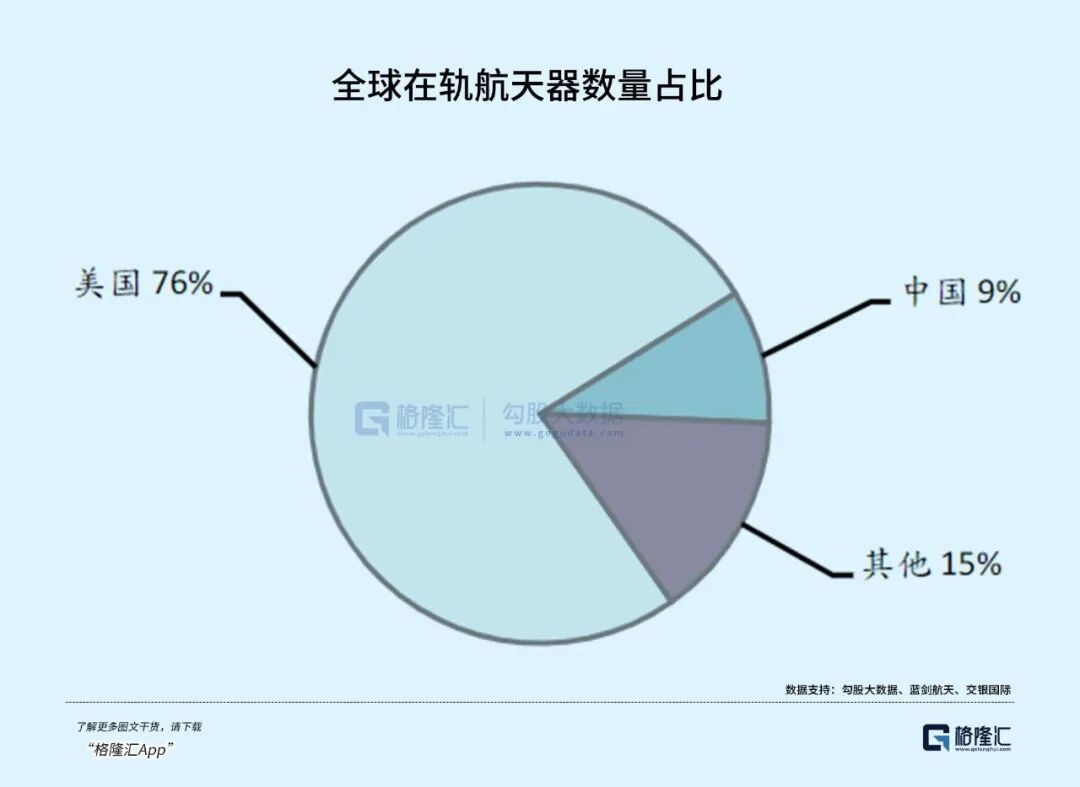
Core Viewpoint - The global commercial space industry is experiencing rapid growth, driven by the explosive demand for AI computing power, which has highlighted the potential of space photovoltaic technology as a cost-effective energy solution for space activities [1][2][4]. Group 1: Commercial Space Industry Growth - The global commercial space sector has entered a high-growth phase, with the US and China as the leading countries. By the end of 2024, the number of operational spacecraft is expected to exceed 11,605, with the US holding a 76% market share and China around 9% [2][4]. - In the first half of 2025, China's satellite launches are projected to increase by 92% year-on-year, significantly surpassing the global average. The Chinese government continues to support commercial space initiatives, integrating them into national production strategies and emphasizing space energy technology as a core focus [4][7]. Group 2: Advantages of Space Photovoltaics - Space photovoltaics offer significant advantages over terrestrial solar power, including better light conditions, with sunlight intensity being 36% higher in space. A 1W solar cell on Earth can achieve 1.3W in space, and space photovoltaics can generate 5-12 times more energy annually compared to ground systems [8][11]. - Space photovoltaic systems do not occupy land resources and can directly supply power to space data centers, eliminating transmission losses. Theoretically, capturing just 1% of sunlight could meet hundreds of times the global energy demand [10][11]. Group 3: Market Potential and Future Growth - The current market for space photovoltaics is limited due to high launch costs, but it is expected to grow steadily. From 2026 to 2030, the annual market space for global space silicon and perovskite photovoltaic batteries is estimated at approximately 3 billion yuan, increasing to 12 billion yuan from 2030 to 2035, and further to 25 billion yuan from 2035 to 2040 [13][16]. - The future market potential for space photovoltaics is heavily dependent on the reduction of launch costs. Currently, SpaceX charges $3,600 per kilogram for launching low Earth orbit satellites. If costs drop to $200-300 per kilogram, the demand for space photovoltaics could surge, potentially reaching a market size of 500 billion yuan annually, comparable to the current global photovoltaic market [16][17]. Group 4: Industry Opportunities - The high demand in the commercial space sector will benefit photovoltaic equipment manufacturers, particularly those specializing in HJT and perovskite battery technologies, as well as ultra-thin silicon wafer cutting companies. SpaceX plans to establish 100GW of photovoltaic manufacturing capacity within three years, with domestic companies leading in HJT production [18]. - Key areas of focus include HJT and perovskite battery equipment, ultra-thin silicon wafer cutting, and the development of ultra-thin HJT batteries, which are expected to see significant growth as industry demand increases [18].

下一个光伏大风口:不是地面,而是太空!
格隆汇APP· 2026-02-12 08:47
Core Viewpoint - The global commercial space industry is experiencing rapid growth, driven by the explosive demand for AI computing power, with space photovoltaic technology emerging as a promising investment opportunity due to its cost-effectiveness and advantages over terrestrial solar power [5][10]. Group 1: Industry Growth and Policy Support - The commercial space sector is entering a high-growth phase, with the number of satellites in orbit expected to exceed 11,605 by the end of 2024, dominated by the US at 76% and China at around 9% [6]. - In the first half of 2025, China's satellite launches are projected to increase by 92% year-on-year, significantly outpacing the global average, supported by government policies that emphasize the importance of commercial space [8]. - The Chinese government has included commercial space in its "new quality productivity" category and has committed to developing space energy technologies, providing clear policy support for space photovoltaic technology [8][10]. Group 2: Advantages of Space Photovoltaics - Space photovoltaics have significant advantages over terrestrial solar power, including better sunlight conditions, with solar intensity in space being 36% higher, and the ability to generate power continuously without the need for energy storage systems [12]. - The technology for space photovoltaics is evolving, with three main types of solar cells: gallium arsenide, crystalline silicon, and perovskite, each with distinct advantages and challenges [14]. Group 3: Market Potential and Economic Viability - The current market for space photovoltaics is limited due to high launch costs, but it is expected to grow steadily, with projections indicating a market space of approximately 3 billion yuan from 2026 to 2030, increasing to 12 billion yuan from 2030 to 2035, and further to 25 billion yuan from 2035 to 2040 [17]. - A significant factor for the future market potential of space photovoltaics is the reduction in launch costs, which currently stand at $3,600 per kilogram. If costs can be reduced to $200-$300 per kilogram, the demand for space photovoltaics could see explosive growth, potentially reaching a market size of 500 billion yuan annually [19]. Group 4: Investment Opportunities - The growth of space photovoltaics is directly linked to the high demand in the commercial space sector, with photovoltaic equipment manufacturers, particularly those specializing in HJT and perovskite technologies, expected to be the biggest beneficiaries [21]. - Companies involved in the production of HJT and perovskite battery equipment, as well as ultra-thin silicon wafer cutting, are recommended for investment as the industry demand continues to rise [21].

高测股份:公司已具备小批量交付60-80μm硅片能力
Zheng Quan Ri Bao Wang· 2026-01-28 10:45
Core Viewpoint - The company is focusing on the photovoltaic silicon wafer cutting segment, leveraging its "equipment + consumables + process" technology closed-loop advantage to lead the thin wafer trend in the industry [1] Group 1: Product Development - In 2022, the company launched an 80μm ultra-thin silicon wafer, followed by a 60μm ultra-thin silicon wafer in 2023, and recently introduced a 50μm ultra-thin silicon wafer [1] - The mainstream thickness for mass-produced silicon wafers remains between 100-130μm, but the company has developed the capability for small batch delivery of 60-80μm silicon wafers [1] Group 2: Market Demand - Several leading battery customers and research institutions have requested sample testing for the 50μm silicon wafers, indicating a growing interest in ultra-thin silicon wafers [1] - The application of ultra-thin silicon wafers is expected to expand with the use of flexible HJT (Heterojunction Technology) solar cells in space [1] Group 3: Technical Challenges and Innovations - The scaling of ultra-thin silicon wafer cutting technology presents significant technical barriers, requiring advanced cutting equipment, diamond wire, and cutting processes [1] - The company has planned a pathway to continuously improve the yield of ultra-thin silicon wafers, supporting the industry's efforts to accelerate mass production [1] - The company is also closely monitoring cutting-edge technologies such as perovskite and has actively laid out related product developments [1]

高测股份:超薄硅片的需求预计将随着太空光伏超薄柔性HJT电池的应用逐步打开
Ge Long Hui· 2026-01-28 08:08
Core Viewpoint - The company is focusing on the photovoltaic silicon wafer cutting segment, leveraging its "equipment + consumables + process" technology closed-loop advantage to lead the thin wafer trend in the industry [1] Group 1: Product Development - In 2022, the company launched an 80μm ultra-thin silicon wafer, followed by a 60μm ultra-thin silicon wafer in 2023, and recently introduced a 50μm ultra-thin silicon wafer [1] - The demand for ultra-thin silicon wafers is expected to grow with the application of space photovoltaic ultra-thin flexible HJT batteries [1] Group 2: Technical Barriers and Industry Position - The cutting technology for ultra-thin silicon wafers has relatively high technical barriers, requiring advanced cutting equipment, diamond wires, and cutting processes [1] - The company has laid out and planned a path for continuous improvement in the yield of ultra-thin silicon wafers, aiding the industry in accelerating the mass production pace of ultra-thin silicon wafers [1]
高测股份(688556.SH):超薄硅片的需求预计将随着太空光伏超薄柔性HJT电池的应用逐步打开
Ge Long Hui A P P· 2026-01-28 07:52
Core Viewpoint - The company is focusing on the photovoltaic silicon wafer cutting segment, leveraging its "equipment + consumables + process" technology closed-loop advantage to lead the thin wafer trend in the industry [1] Group 1: Product Development - In 2022, the company launched an 80μm ultra-thin silicon wafer, followed by a 60μm ultra-thin silicon wafer in 2023, and recently introduced a 50μm ultra-thin silicon wafer [1] - The demand for ultra-thin silicon wafers is expected to grow with the application of space photovoltaic ultra-thin flexible HJT batteries [1] Group 2: Technical Barriers and Industry Position - The cutting technology for ultra-thin silicon wafers has relatively high technical barriers, requiring advanced cutting equipment, diamond wires, and cutting processes [1] - The company has laid out and planned a path for continuous improvement in the yield of ultra-thin silicon wafers, aiding the industry in accelerating the mass production pace of ultra-thin silicon wafers [1]
琏升科技20260114
2026-01-15 01:06
Summary of the Conference Call for Liansheng Technology Company Overview - **Company**: Liansheng Technology - **Industry**: Solar Energy and Photovoltaics Key Points Strategic Adjustments - Liansheng Technology is expanding from battery cell production to include module production and energy technology sectors, such as photovoltaic power station development, investment, operation, and smart microgrid development, aiming to enhance cash flow and green energy capabilities [2][5][8] Leadership Change - The actual controller has changed to Wang Xin, who has extensive experience in new energy and rare earth sectors, expected to bring new development opportunities to the company [2][5] Technological Breakthroughs - Progress in low-silver content technology, achieving 0DB5 group 3 low-silver content and thin N-type interdigitated back contact (IBC) cells reaching 80μm thickness [2][6] - Development of perovskite tandem technology, with high-efficiency modules reaching 745 watts (210 cells), enhancing product competitiveness [2][6] Space Photovoltaics Focus - Liansheng is focusing on P-type heterojunction technology as a key route for space satellite photovoltaics, with a dedicated team for related R&D and technology accumulation on ultra-thin silicon wafers [2][12] - P-type heterojunctions are preferred in space due to their higher stability and lightweight advantages compared to mainstream TOPCON technology [9] Production Capacity and Market Expansion - Established a 2.8 GW IBC production line and plans to upgrade the pilot line to a 1 GW module production line [3] - Actively expanding in the commercial aerospace sector, engaging with various industry chain companies, including solar wing and satellite launch companies [3] Silver Consumption Reduction - Implemented multiple strategies to reduce silver consumption, including switching from SNBB to LDB and introducing silver-coated copper technology, achieving a reduction in silver usage to below 4 mg per watt [3][17] Overseas Market Strategy - Acquired Xinchu Century to leverage its overseas marketing channels and power station development capabilities, focusing on markets in Central Asia and Africa [3][25] Future Development Directions - Plans to continue expanding from battery cell and module production to energy technology sectors, including solar power station development and smart microgrid development [7][8] Challenges and Considerations - The company faces challenges in reducing silver usage while maintaining component efficiency, with a target to achieve 745 watts in mass production despite lower silver configurations [21] - The need for adjustments in production processes for P-type heterojunctions without significant capital expenditure [18] Packaging and Material Differences - Space applications require different packaging materials compared to ground applications, using ultra-thin UTG glass and materials that can withstand extreme temperatures [24] Efficiency and Thickness Considerations - Current production can achieve 80μm thickness, with actual thickness after processing being 60-65μm, with future goals to further reduce thickness for lightweight requirements [14][16] Conclusion - Liansheng Technology is positioning itself for growth in the solar energy sector through strategic adjustments, technological advancements, and market expansion, particularly in the space photovoltaics domain, while addressing challenges related to material costs and production efficiency [2][3][25]
