
接线盒

Search documents
快可电子:越南工厂年产能约3000万套接线盒,美国工厂年产能约1000万套接线盒
2 1 Shi Ji Jing Ji Bao Dao· 2026-02-27 09:16
Core Viewpoint - The company has established manufacturing facilities in Vietnam and the United States, with significant production capacities for junction boxes [1] Group 1: Manufacturing Facilities - The company's factory in Vietnam was established in 2017, located in the Yen Trung Industrial Park in Bac Ninh Province, with an annual production capacity of approximately 30 million junction boxes [1] - The company's factory in the United States is set to be established in June 2024, located in Houston, Texas, with an annual production capacity of around 10 million junction boxes [1]
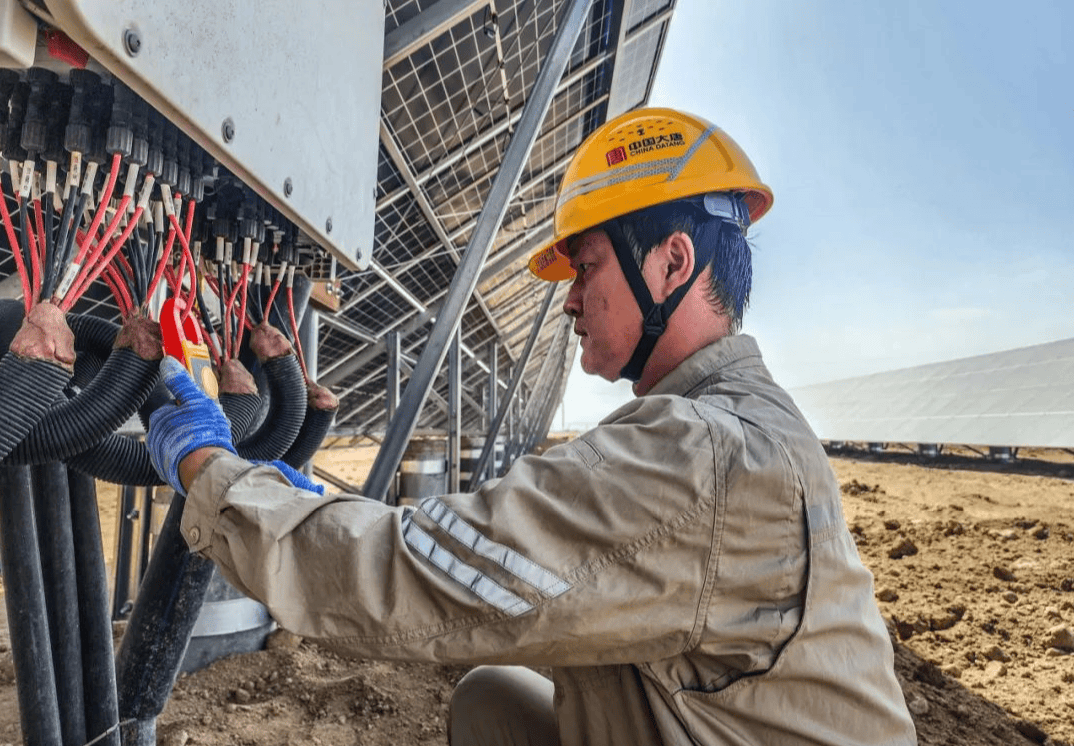
光伏运维工作内容有哪些 产业新趋势下实操解析
Sou Hu Cai Jing· 2026-02-24 10:41
Core Insights - The China Photovoltaic Industry Association released the "China Photovoltaic Industry Development Roadmap (2025-2026)", outlining the current state of the photovoltaic industry and technology trends up to 2035 [1] - By 2025, the new installed capacity of solar photovoltaic in China is projected to reach 315.07 GW, with a cumulative installed capacity exceeding 1200 GW and crystalline silicon module production surpassing 620 GW, reflecting a year-on-year growth of 5.4% [1] Installation and Maintenance - The rapid expansion of photovoltaic installations and the shift towards n-type technology will see n-type monocrystalline silicon wafers accounting for 97% of the market by 2025 [1] - Photovoltaic operation and maintenance (O&M) is crucial for ensuring efficient and stable operation of power plants, covering the entire lifecycle of solar power plants, including daily inspections, equipment maintenance, and fault handling [1] Daily Inspections - Daily inspections are fundamental to identify potential issues in equipment and power plants, preventing minor problems from escalating into major failures [3] - Key inspection targets include photovoltaic modules, inverters, junction boxes, and tracking systems, with specific attention to n-type components for issues like micro-cracks and hot spots [3] Equipment Cleaning - The efficiency of photovoltaic modules is significantly affected by surface cleanliness, with dirt and debris reducing power conversion efficiency [4] - Cleaning methods should be adapted to the local environment, with frequency varying based on regional conditions, such as monthly cleaning in rainy areas and weekly in dust-prone regions [4] Fault Repair - Timely fault repair is essential to minimize downtime and reduce power generation losses, with different equipment requiring specific handling approaches [5] - After repairs, testing is necessary to confirm normal operation and to document the fault and repair process for future reference [5] Data Monitoring and Analysis - The shift towards intelligent O&M emphasizes the importance of real-time data monitoring and analysis to optimize power generation efficiency [6] - Key performance indicators include equivalent utilization hours and LCOE (Levelized Cost of Energy), with data analysis helping to refine operational strategies [6] Record Keeping - Comprehensive record-keeping is vital for maintenance, asset evaluation, and fault tracing, covering all aspects of O&M [7] - Records should include inspection logs, cleaning records, fault repair documentation, and equipment information, ensuring compliance with evolving industry standards [7] Specialized Maintenance for Energy Storage - The integration of photovoltaic and energy storage systems necessitates specialized maintenance for lithium battery systems, focusing on battery status, PCS operation, and temperature control [8] - Regular monitoring of charging and discharging efficiency is essential to enhance the utilization and energy conversion efficiency of storage systems [8] Technology Adaptation - Rapid technological advancements in the photovoltaic industry require O&M personnel to stay updated on new equipment and techniques [9] - Monitoring systems must also be upgraded to accommodate new data analysis needs, ensuring alignment with industry technological developments [9] Compliance Management - O&M must adhere to national policies and industry standards to ensure legal and stable operation of power plants, aligning with the roadmap's goals for high-quality development [10] - Compliance includes maintaining power generation quality, managing waste, and reporting operational statistics as part of the broader energy transition goals [10] Conclusion - Photovoltaic O&M is evolving from basic tasks to a comprehensive role that includes equipment maintenance, data monitoring, energy storage management, technology adaptation, and compliance [11] - Future trends indicate a move towards intelligent, specialized, and refined O&M practices, requiring personnel to possess both traditional maintenance skills and data analysis capabilities to maximize power generation efficiency and support energy transition goals [11]

招商证券:北美启动光伏扩产 国产受益供应链中重视辅材
智通财经网· 2026-02-24 07:11
Core Viewpoint - Tesla and SpaceX plan to build 100GW of solar capacity in the U.S. over the next three years, which will lead to a revaluation of related domestic auxiliary materials, equipment, and leading manufacturing companies, particularly emphasizing the opportunities in auxiliary materials [1][2] Group 1: North American Solar Expansion - North America is expected to initiate solar manufacturing capacity expansion, with Tesla and SpaceX's plans potentially yielding significant returns due to tariff protections and FEOC subsidies [2] - The anticipated demand for ground-mounted solar in North America is projected to support a capacity of 100GW, driven by natural growth and future data center needs [2] Group 2: Supply Chain Opportunities - The ground solar expansion in North America will create opportunities for Chinese supply chains, while space solutions are still evolving [3] - SpaceX is likely to favor the P-HJT route for solar technology, with HJT and perovskite equipment manufacturers expected to benefit [3] Group 3: Auxiliary Materials - The ground auxiliary materials supply chain is expected to benefit with high certainty and sustainability, while space auxiliary materials may experience significant inflation due to extreme conditions [4] - Tesla's collaboration with domestic auxiliary material companies suggests that ground solar expansion will likely utilize existing supply chains, with light asset auxiliary materials gradually being matched to North American factories [4]


未知机构:2026年核心投资主线前期两个板块的股价经过一定回调积蓄了2026年春节后-20260224
未知机构· 2026-02-24 04:10
Summary of Conference Call Records Industry Overview - **Core Investment Themes for 2026**: The stock prices of two sectors have undergone a correction, building momentum for a potential rise after the 2026 Spring Festival, indicating these sectors have upward potential [1][1]. - **Recent Events in Commercial Aerospace**: No significant events occurred during the Spring Festival in the space photovoltaic and commercial aerospace sectors. Key events before the festival include the successful listing of Dianke Lantian on the Sci-Tech Innovation Board on February 10, which accelerates the capitalization of related rocket and satellite companies. Additionally, the successful launch of Long March 10 on February 11 marks the completion of low-altitude demonstration verification and indicates the reusability of the spacecraft [1][1]. Commercial Aerospace Sector Analysis - **Market Performance**: The commercial aerospace sector has seen a significant correction of 30% to 40% since reaching a peak in mid-January 2026, following a rally that began in August 2025 [2][2]. - **Catalysts for Future Growth**: Key catalysts for the commercial aerospace sector include: - Progress in reusable rocket launches and recoveries, with several private companies expected to take action from late February to early March 2026. - IPO progress of companies planning to go public in 2026, including domestic firms like Zhongke Yuhang and Tianming Technology, which could lead to thematic rotation and capital inflow [2][2]. - **Divergence in Sector Performance**: The commercial aerospace sector has corrected while the space photovoltaic sector has continued to rise, driven by a shift in catalysts from the US-China low-orbit satellite arms race to the construction of photovoltaic capacity in the US, addressing local electricity shortages and data center power demands [2][2]. Photovoltaic Capacity Planning - **US Companies' Plans**: Tesla and SpaceX plan a combined photovoltaic capacity of 200 GW, with Tesla focusing on ground-based distributed power stations and storage, while SpaceX targets low-orbit satellites and space-based photovoltaic stations [3][3]. - **Domestic Collaborations**: From late January to early February 2026, Tesla's team conducted research on several domestic photovoltaic companies, while SpaceX engaged with Maiwei and unlisted Huasheng New Energy, indicating a high level of confidentiality in their dealings [3][3]. - **Equipment Sector Opportunities**: The equipment sector is expected to see clear order placements from Q2 to Q3 2026, with significant growth anticipated [3][3]. Key Equipment and Material Targets - **Core Equipment Targets**: Key companies in various segments include: - Silicon material: Dalian Energy - Crystal pulling: Liancheng CNC, Jingsheng Electromechanical - Slicing: Yujing Co., High Measurement Co. - Battery: Jiejia Weichuang, Laplace for TOPCON; Maiwei for heterojunction equipment - Components: Aotewei, Jingshan Qingji for string welding and lamination machines [4][4]. - **Recommended Companies**: Maiwei, Liancheng CNC, Aotewei, and Jingsheng Electromechanical are highlighted as having significant upside potential [4][4]. Supply Chain and Material Insights - **Auxiliary Material Targets**: The auxiliary material sector shows sustained demand, with key companies including: - Silver paste: Dike, Poly - Glue film: Foster, Haiyou - Glass: Yamaton - Junction boxes: Zerun New Energy - Welding strips: Yubang New Materials - The silver paste segment is particularly strong due to rising silver prices and increased demand for heterojunction products [4][4]. - **Main Chain Targets**: GCL Group and Jinko Solar are both in discussions with Tesla regarding collaboration [5][5]. Robotics Sector Developments - **Technological Advances**: Several domestic companies have showcased advancements in humanoid robotics, indicating a pivotal year for the industry in 2026 [6][6]. - **Tesla's Humanoid Robot Plans**: The V3 version of Tesla's humanoid robot is expected to be released in Q1 2026, with mass production targeted for the end of 2026, aiming for an annual capacity of 500,000 to 1 million units [6][6]. - **Investment Recommendations**: The humanoid robot sector is currently weak, but the release of Tesla's V3 version is anticipated to be a significant catalyst. Key investment targets include Weichuang Electric and Keda Li, with a focus on high-value components [7][7].
香港“夺命大火”之前,正泰火灾已警示光伏行业的安全底线
阿尔法工场研究院· 2025-11-28 00:07
Core Viewpoint - The article discusses the increasing safety risks in the photovoltaic manufacturing industry, particularly in light of recent fire incidents, emphasizing the need for stringent safety measures and management practices to prevent accidents [4][28]. Group 1: Recent Incidents - A deadly fire in Hong Kong resulted in 55 fatalities, attributed to the use of flammable materials during construction [5][6]. - A fire at the Yiwu factory of Chint Solar Technology Co., a subsidiary of Chint Group, occurred just days before the Hong Kong incident, raising concerns about safety practices in the industry [7][9]. Group 2: Industry Challenges - The photovoltaic manufacturing sector is facing significant safety challenges due to high operational pressures and cost-cutting measures, which may compromise safety protocols [22][24]. - The industry has experienced rapid growth, leading to high equipment wear and tear, which can increase the likelihood of accidents [23][24]. Group 3: Financial Implications - Chint Group reported a slight decline in revenue but a significant increase in net profit, indicating effective cost and expense management despite industry pressures [26]. - The article highlights the potential trade-offs between maintaining safety standards and achieving cost efficiency, suggesting that cost-cutting may lead to increased safety risks [27][29]. Group 4: Safety Management - The article references the Heinrich's Law, which states that serious accidents are often preceded by numerous minor incidents and warnings, underscoring the importance of proactive safety management [4][28]. - The need for rigorous safety protocols and regular maintenance is emphasized, as neglecting these can lead to catastrophic outcomes [25][29].


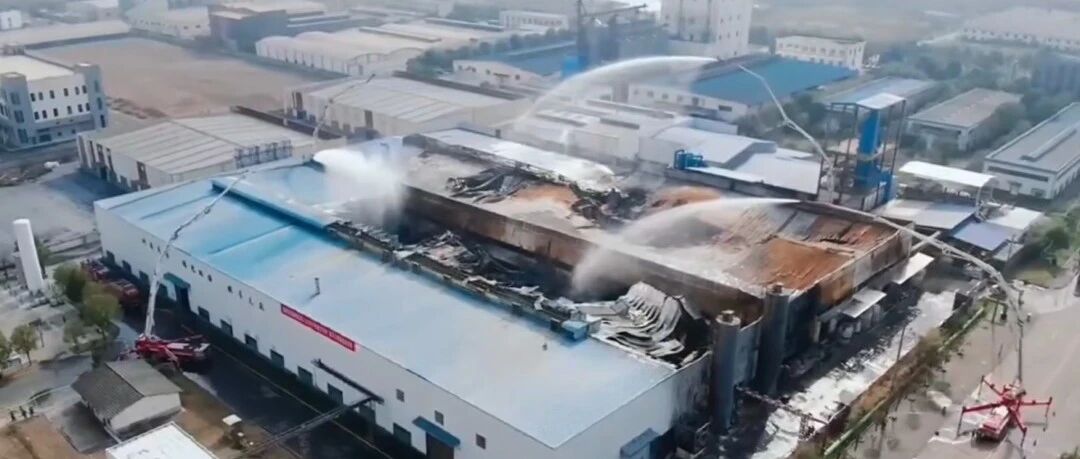
正泰义乌工厂发生火灾,企业回应:火势已得到控制,无人员伤亡
Bei Ke Cai Jing· 2025-11-23 12:37
Core Points - A fire occurred at the factory of Chint Group located in Yiwus Fodang Town, which has been confirmed by local emergency management authorities [1][2] - The fire has been brought under control, and there were no reported casualties; the cause of the fire is under investigation [2] - Chint Group has several subsidiaries in Yiwus, including Yiwus Chint Solar Technology Co., Ltd. and Yiwus Zhengeng Photovoltaic Power Co., Ltd., both registered in the same area [3] Company Overview - Chint Group, founded by Nancunhui, is a well-known private enterprise that started with low-voltage electrical equipment and has recently accelerated its expansion into the renewable energy sector [4] - In 2025, Chint Group ranked 272nd on the Fortune China 500 list with a revenue of approximately RMB 64.6 billion [4] - Chint Electric, a listed company under Chint Group, reported a market value of RMB 59.2 billion as of the latest closing date [4]
快可电子(301278):2025三季报点评:25Q3出口订单增多,业绩环比改善
Soochow Securities· 2025-10-28 13:41
Investment Rating - The investment rating for the company is "Accumulate" (maintained) [1] Core Views - The company reported an increase in export orders leading to improved performance in Q3 2025, with a significant quarter-on-quarter revenue increase of 35.03% [7] - The overall revenue for the first three quarters of 2025 reached 799 million yuan, a year-on-year increase of 7.39%, while the net profit attributable to shareholders was 20 million yuan, a year-on-year decrease of 77.57% [7] - The gross margin improved to 10.33% in Q3 2025, up by 5.10 percentage points from the previous quarter, driven by higher overseas orders [7] - The company has adjusted its profit forecasts for 2025-2026 due to intense competition in the photovoltaic industry, with expected net profits of 31 million yuan in 2025, 53 million yuan in 2026, and 75 million yuan in 2027 [7] Financial Summary - Total revenue forecast for 2023 is 1,284.99 million yuan, with a year-on-year growth of 16.86% [1] - The net profit attributable to shareholders for 2023 is projected at 193.61 million yuan, reflecting a year-on-year increase of 63.48% [1] - The earnings per share (EPS) for 2023 is estimated at 2.16 yuan, with a price-to-earnings (P/E) ratio of 16.41 [1] - The company’s total assets are projected to reach 2,239 million yuan by 2025, with a debt-to-asset ratio of 34.20% [6][8] - The cash flow from operating activities is expected to be negative at -521 million yuan in 2025, indicating potential liquidity challenges [8]
通讯|“加征关税只会让美国能源需求缺口越来越大”——关税战阴影笼罩北美最大清洁能源展
Xin Hua Wang· 2025-09-12 03:30
Group 1 - The imposition of tariffs is expected to exacerbate the energy demand gap in the U.S., as expressed by multiple companies at the RE+ clean energy exhibition [1][2] - The RE+ exhibition, held from September 8 to 11, showcases technologies and products related to solar energy, wind energy, hydrogen, energy storage, smart grids, and electric vehicles [1] - The tariff policies initiated during the Trump administration have raised concerns about the future of the U.S. renewable energy industry, leading to uncertainty among industry professionals [1][2] Group 2 - Companies like Premier Solar and others have reported significant impacts on their operations due to high tariffs on imported components, with some facing tariffs as high as 125% [1][2] - The uncertainty caused by fluctuating tariffs makes it difficult for companies to predict product costs and set stable pricing, affecting their operational forecasts [2] - Chinese companies, such as CATL, are focusing on enhancing product performance to navigate the challenges posed by tariff changes, emphasizing the continued reliance on Chinese supply chains for the U.S. renewable energy sector [3]

“加征关税只会让美国能源需求缺口越来越大”——关税战阴影笼罩北美最大清洁能源展
Zhong Guo Jin Rong Xin Xi Wang· 2025-09-12 02:38
Group 1 - The imposition of tariffs is expected to exacerbate the energy demand gap in the U.S. [1] - The RE+ exhibition highlighted the significant impact of the Trump administration's tariff policies on the renewable energy sector [1][2] - Companies are facing uncertainty in pricing and cost predictions due to fluctuating tariffs, which complicates stable business operations [2] Group 2 - Companies like Premier Solar and others are experiencing severe disruptions in sourcing components due to high tariffs, with some parts facing tariffs as high as 125% [1][2] - The U.S. energy sector is heavily reliant on components and technology from China, despite efforts to promote domestic manufacturing [2][3] - Reports indicate that broad tariffs imposed by the Trump administration could lead to increased energy costs, undermining energy and economic security in the U.S. [3]
光伏组件质量下滑 边框、接线盒合格率低于50% 专家提出六点建议
Xin Lang Cai Jing· 2025-07-24 10:30
Core Insights - The overall quality of photovoltaic (PV) components has significantly declined from 2017 to 2024, particularly noted from the end of 2023, aligning with the industry's cost reduction and price drop efforts [1][2] Group 1: Quality Assessment of PV Components - In a recent survey of 36 companies and 69 batches of PV components, 11 batches were found to be non-compliant, with 5 batches failing mechanical load tests, 8 batches not meeting the efficiency standards set by the Ministry of Industry and Information Technology, and 3 batches failing to meet power output standards [1] - The quality of PV glass, crucial for component safety, has deteriorated since 2022, reverting to early industry levels, with 3 out of 10 batches failing quality tests primarily due to bending strength issues [1] - The compliance rate for frame products has been consistently low, with a recent survey showing a compliance rate below 50%, mainly due to non-compliance in chemical composition and wall thickness [2] Group 2: Specific Product Quality Issues - The quality of solder ribbon products has seen a notable decline, with 26 out of 61 batches failing, primarily due to non-compliance in tin-lead content [2] - Although encapsulant products have historically had high compliance rates, recent surveys indicate issues with peel strength and mass density, with POE and EVA compliance rates around 80% and 85% respectively, while EPE compliance is below 80% [2] - The overall compliance rate for junction boxes in 2025 was reported to be below 50%, with failures concentrated in thermal performance tests of bypass diodes [2] Group 3: Recommendations for Quality Improvement - Six recommendations were proposed to enhance quality, including the establishment of guiding documents for performance indicators, strengthening regulatory sampling across the supply chain, and improving procurement standards to focus on material performance [3] - Increased monitoring and acceptance testing, along with enhanced inspection of existing power plants, were suggested to manage supplier credibility and ratings effectively [3] - Encouragement of outdoor empirical testing and the adoption of new standards and methods for quality control in procurement, acceptance, and inspections was also recommended [3]