AGI通用人工智能

Search documents
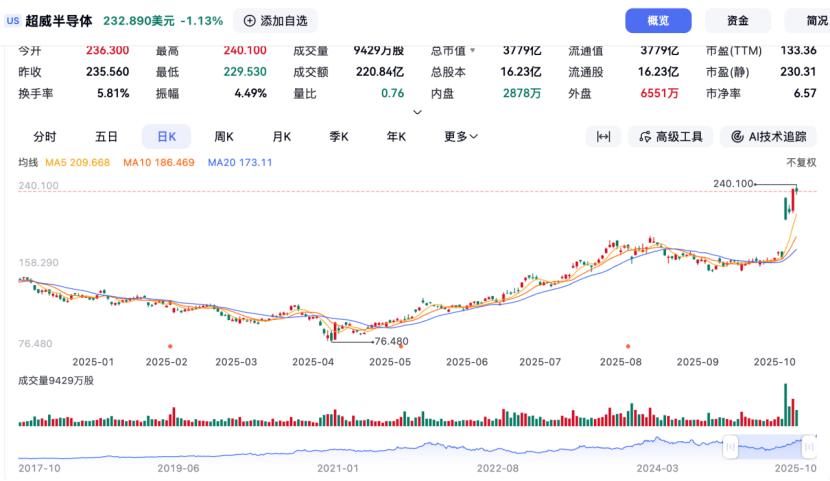
马斯克又干逆天事?核电站级AI算力来了!
Xin Lang Cai Jing· 2026-02-04 12:22
Core Viewpoint - The development of the Colossus 2 supercomputer by Elon Musk represents a significant leap in AI capabilities, emphasizing the importance of energy supply and efficiency management in supporting large-scale AI models, which is now recognized as a critical factor in the AI industry [2][38]. Group 1: Colossus 2 Overview - Colossus 2 is the world's first AI training cluster with a capacity of 1 million kilowatts, serving as a cornerstone for Musk's "automobile + AI + energy" ecosystem [4][40]. - The supercomputer utilizes 555,000 NVIDIA GPUs, achieving a theoretical peak performance of 275-348 EFLOPS, which is more computational power than humanity has used in the past several decades [6][42]. - Colossus 2's construction was completed in just 10 months, showcasing Musk's exceptional engineering execution compared to traditional supercomputing centers that typically take years to build [13][49]. Group 2: Strategic Goals and Applications - The primary goal of Colossus 2 is to support the next-generation Grok 5 model, which aims to enhance AI's ability to understand dynamic video content, a crucial requirement for autonomous driving [4][40]. - The supercomputer is designed to create a closed loop of "data - computing power - model - application," allowing Tesla to optimize its computing resources and reduce costs [8][44]. - Musk's strategy includes leveraging existing NVIDIA GPUs while gradually developing proprietary chips to mitigate risks associated with supply chain dependencies [8][44]. Group 3: Energy Management and Environmental Concerns - Colossus 2 employs a dual power supply system of grid electricity and natural gas turbines to ensure stable energy supply, addressing the significant power demands of the supercomputer [19][55]. - The facility is under scrutiny for its environmental impact, with investigations into emissions from its natural gas turbines, highlighting the ongoing challenge of balancing high energy consumption with environmental compliance [19][57]. - The integration of Tesla's Megapack energy storage system allows for efficient energy management, reducing costs and providing backup power during outages [24][60]. Group 4: Industry Impact and Future Outlook - Colossus 2 is set to redefine the automotive AI landscape, shifting the focus from traditional hardware competition to AI computing power and model capabilities [33][69]. - The advancements made possible by Colossus 2 are expected to accelerate the adoption of full-scene autonomous driving and enhance in-car AI systems, leading to a more intelligent user experience [30][68]. - The competitive edge gained by Musk through Colossus 2 may create significant barriers for other companies in the automotive AI sector, potentially reshaping the industry's competitive dynamics [71][72].



马斯克预警!留给旧世界的时间只剩2000天,中国握着唯一“王牌”
Sou Hu Cai Jing· 2026-01-22 08:05
Group 1 - Musk predicts that the existing social model has about 2000 days left, with AI expected to fundamentally change everything by 2031 [1] - AGI (Artificial General Intelligence) may be realized by 2026, and by 2030, AI's total intelligence could surpass that of all humans combined [1] - The rapid advancement of AI is likened to a snowball effect, with significant implications for various job sectors, particularly for white-collar workers [3] Group 2 - The transition from 3nm to 2nm chips shows diminishing returns, indicating that the limits of Moore's Law are approaching [3] - High-profile job sectors such as law and accounting are at risk, with a Goldman Sachs report stating that 300 million jobs globally could be at risk of replacement [3] - AI's efficiency in tasks like contract review and coding is leading to a shift in job roles, with many workers becoming mere facilitators [3] Group 3 - Musk emphasizes that electricity supply is a critical bottleneck for AI development, with predictions that global AI data centers will consume more electricity than Japan by 2026 [5] - China is projected to have three times the electricity output of the U.S. by 2026, with a significant capacity for data center demands [5] - China's solar power capacity is substantial, with 1500 GW of production annually, contributing to its competitive edge in AI computing [5] Group 4 - China's computing power is ranked second globally, with a market size projected to reach 835.1 billion yuan by 2025, growing over 30% annually [7] - The country is establishing eight major computing hubs and has the highest number of supercomputers globally, accounting for 45% of the total [7] - Policies are being implemented to regulate AI-generated content and ensure data security, fostering a controlled yet vibrant AI development environment [7] Group 5 - Musk expresses optimism about the technological benefits of AI, emphasizing the need for collaboration to avoid resource wastage [9] - China is expected to lead in computing capabilities, with projections of reaching over 450 EFLOPS by 2030 [9] - The shift towards AI in various sectors, including e-commerce and healthcare, is anticipated to create new opportunities, despite the challenges of transitioning from traditional models [9]
马斯克最新预言!3年机器人吊打顶尖医生,10年钱不重要了
Sou Hu Cai Jing· 2026-01-13 08:28
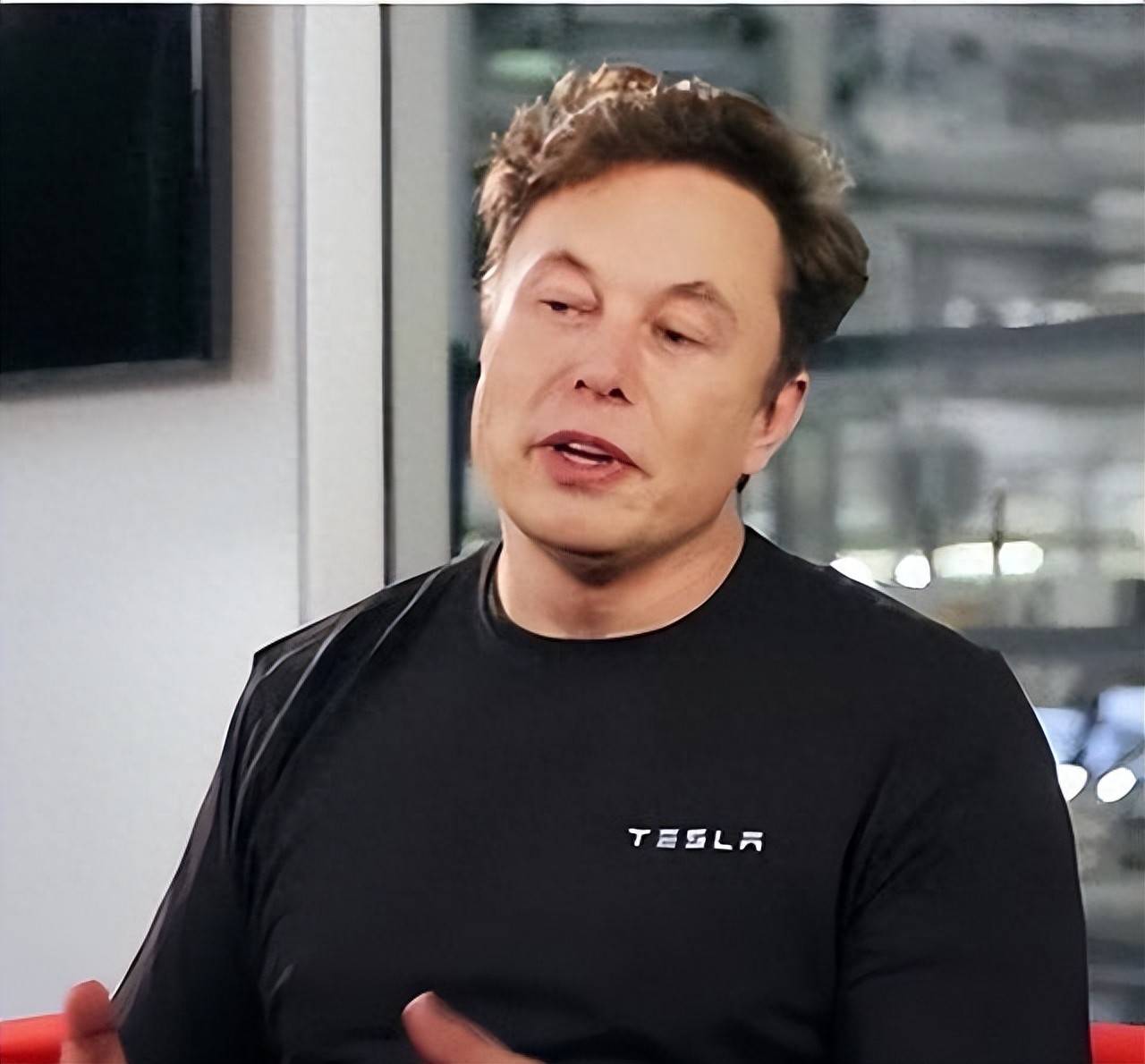
Group 1 - The core idea presented by Musk is that we are on the brink of an AI revolution, with AGI likely to be realized by 2026, and by 2035, AI intelligence will surpass human intelligence [1][3] - Musk predicts that within three years, professions such as doctors will be disrupted, as robotic surgeons will outperform human counterparts due to superior AI intelligence, chip performance, and mechanical dexterity [3][4] - Musk emphasizes that China's AI computing power will soon exceed that of the rest of the world combined, driven by significant increases in electricity generation, rapid advancements in chip technology, and unparalleled execution capabilities [3][4] Group 2 - Musk argues that traditional retirement savings will become obsolete in the next 10-20 years, as AI and robotics will drastically reduce the cost of goods, making traditional currency less relevant [4][6] - He warns that the transition to this prosperous future will be tumultuous, involving technological upheaval, social unrest, and significant prosperity, with energy becoming the new currency [6][7] - Musk provides practical advice for adapting to these changes, including abandoning traditional education models, restructuring financial logic to focus on energy-related skills, and embracing technological advancements [7][9]

张亚勤院士:基础大模型最终不超过 10 个,十年后机器人比人多
Xin Lang Cai Jing· 2025-12-12 01:39
Core Insights - The new wave of artificial intelligence (AI) is characterized by the integration of information intelligence, physical intelligence, and biological intelligence, which is fundamentally a fusion of atoms, molecules, and bits [4][6][31] - The transition from discriminative AI to generative AI, and subsequently to agent-based paradigms, marks a significant evolution in AI capabilities [6][31] - The future battlefield for AI over the next 5-10 years is expected to be the "Internet of Agents," where foundational large models will consolidate globally to no more than ten, replacing most current SaaS and apps [3][30][42] AI Development Trends - Generative AI is evolving towards agent-based AI, with agents showing a doubling in task length and achieving over 50% accuracy, aligning closely with human performance [39] - The scaling law in the pre-training phase has slowed, while post-training and inference stages are gaining momentum, with inference costs decreasing by tenfold over the past year [39][42] - The shift from information intelligence to physical and biological intelligence is underway, with significant milestones in autonomous driving and robotics anticipated in the coming years [40][55] Industry Structure and Opportunities - The foundational large models are likened to operating systems in the AI era, with a projected global landscape of no more than ten major players, split between China and the US [42][55] - Open-source models are expected to dominate the ecosystem, with an estimated 80% of platforms being open-source, fostering broader innovation and application [42] - The emergence of intelligent agents is not just a technological advancement but also signifies the formation of new economic structures, impacting enterprise management and product development [45][52]

张亚勤院士:基础大模型最终不超过10个,十年后机器人比人多
3 6 Ke· 2025-12-11 10:05
Core Insights - The new wave of artificial intelligence (AI) represents a fusion of information intelligence, physical intelligence, and biological intelligence, driven by unified token representation and scaling laws [3][6][24] - AI is transitioning from discriminative models to generative and reasoning models, with significant advancements in efficiency, cost-effectiveness, and open-source ecosystems [3][10] - Generative AI is rapidly evolving into intelligent agents, with task lengths and capabilities increasing, while associated risks are also amplifying [3][11] Industry Trends - The foundational large models are expected to converge globally to no more than ten, resembling operating systems in the AI era, leading to a new industrial structure of "base models + vertical/edge models + intelligent agent networks" [2][14] - The intelligent agent internet is anticipated to be the largest direction in the next 5-10 years and is considered a necessary path toward achieving Artificial General Intelligence (AGI) [5][24] - The development of intelligent agents is not merely a technological advancement but is also creating new economic forms and networks, fundamentally altering enterprise structures and product development [17][21] Future Projections - The transition from information intelligence to physical and biological intelligence is expected to be completed within 15-20 years, with significant milestones such as the emergence of Level 4 autonomous vehicles by 2030 [4][14] - The AI industry is projected to experience a scale of opportunity that is 100 times greater than previous technological eras, driven by the integration of foundational models, vertical models, edge models, and intelligent agents [22][24] - The intelligent agent internet is viewed as the next evolution of connectivity, moving from PC and mobile internet to a new paradigm focused on agent interactions [22][24]

张亚勤院士:基础大模型最终不超过10个,十年后机器人比人多 | MEET2026
量子位· 2025-12-11 09:00
Core Viewpoint - The article discusses the evolution of artificial intelligence (AI) towards a new paradigm characterized by the integration of information, physical, and biological intelligence, driven by advancements in large models and the emergence of intelligent agents [2][12]. Group 1: AI Evolution and Key Milestones - The transition from discriminative AI to generative AI is highlighted, with ChatGPT and DeepSeek identified as significant milestones in this evolution [4][10]. - The concept of "intelligent emergence" is introduced, where AI capabilities expand beyond mere pattern recognition to more complex functions as data and computational power increase [3][11]. - The future of AI is envisioned as an "Internet of Intelligent Agents," where foundational large models will serve as operating systems, with a limited number of global players [6][23]. Group 2: Trends in AI Development - Five key trends in AI development are outlined, including the shift from generative AI to intelligent agents, which are expected to replace traditional SaaS and applications [15][30]. - The scaling law's impact on pre-training has slowed, while post-training and inference stages are gaining momentum, with inference costs decreasing significantly [19][23]. - The integration of visual, language, and action models is anticipated, with advancements in autonomous driving and robotics being pivotal areas of growth [20][21]. Group 3: Future Directions and Implications - The article predicts that the next 5-10 years will see the rise of the intelligent agent internet, fundamentally reshaping industry structures and economic models [23][38]. - The role of intelligent agents in various sectors, including healthcare, is emphasized, with the potential for agents to assist professionals rather than replace them [34][31]. - The development of new algorithmic frameworks and memory systems is deemed essential for achieving artificial general intelligence (AGI) within the next 15-20 years [40][42].

“O链” 已然形成,英伟达也不过是其中一环
3 6 Ke· 2025-10-11 04:17
Core Insights - OpenAI's annual developer conference, DevDay 2025, showcased impressive metrics, including 800 million weekly active users for ChatGPT, over 4 million developers on the platform, and API traffic reaching 60 billion tokens per minute [1] - The conference triggered significant stock price increases for several companies associated with OpenAI, highlighting the company's influence on the market [2][3] Company Performance - AMD's stock surged over 30% on October 6, 2025, reaching a peak of $215 per share, closing up 23.71% [2] - Figma, mentioned in connection with ChatGPT, saw its stock rise by over 16% during the day, ultimately closing up 7.4% [2] - Other companies like Coursera, HubSpot, Salesforce, Expedia, and TripAdvisor also experienced notable stock increases, reflecting the positive market sentiment surrounding OpenAI [2][3] OpenAI's Ecosystem - OpenAI has established an "Open Chain," similar to Apple's supply chain, where companies directly or indirectly associated with OpenAI benefit from its growth [3][4] - Key partners in the "Open Chain" include AMD and Oracle, while application layer companies like Figma, HubSpot, and Salesforce are also part of this ecosystem [3][4] Investment and Financials - NVIDIA announced a substantial investment of up to $100 billion in OpenAI, with the first $10 billion to be deployed after finalizing agreements [4][10] - OpenAI has raised over $50 billion through bank loans and venture capital, with a recent valuation reaching $500 billion [10][11] Future Prospects - OpenAI's strategic vision includes developing AGI (Artificial General Intelligence) and providing personal AI subscription services, which could reshape the industry [11][14] - The launch of Sora 2, a new AI video application, indicates OpenAI's commitment to expanding its offerings, although the energy demands for such applications are significant [13][14] Market Dynamics - OpenAI's model emphasizes controlling the supply chain through substantial demand for computational resources, which could reshape the power dynamics in the industry [14][15] - The interconnectedness of investments and partnerships creates a closed-loop system, raising concerns about potential market bubbles if AI demand wanes [17][20]

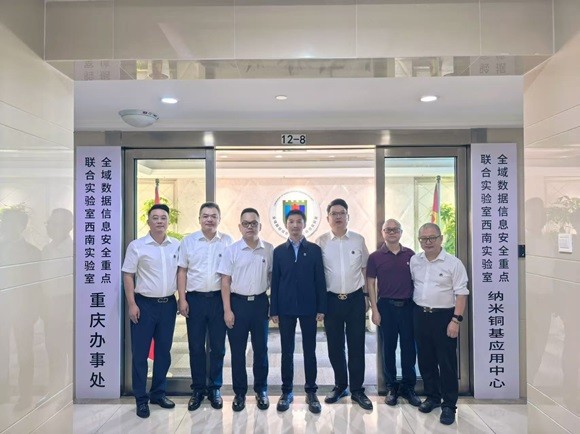
全域西南实验室重庆办事处暨纳米铜基应用中心,在两江新区正式挂牌成立
Zhong Guo Jing Ji Wang· 2025-08-27 08:33
Group 1 - The establishment of the Chongqing office of the Southwest Laboratory of the National Key Joint Laboratory for Data Information Security was successfully held in the Liangjiang New Area of Chongqing on August 26 [1] - Director Lai Yiyang emphasized the strategic significance, mission, and future development direction of the Chongqing office, highlighting the laboratory's achievements in AGI general artificial intelligence and active nano-copper-based new materials [3] - The Chongqing office will undertake regional responsibilities for the national cybersecurity strategy, aligning with the political direction of Xi Jinping's thoughts on socialism with Chinese characteristics for a new era [3] Group 2 - Director Li Rui stressed the importance of team building and the laboratory's national layout, ensuring the technology's autonomy and absolute security as part of the national cybersecurity strategy [3] - The inauguration ceremony was attended by various leaders and guests from different sectors, indicating broad support and collaboration for the laboratory's initiatives [5]