
适老化食品

Search documents
财政部等部委明确:杜绝“玻璃门”排斥这类主体
Xin Lang Cai Jing· 2026-02-02 14:56
Core Viewpoint - The joint measures issued by multiple government departments aim to cultivate the elderly care service industry and promote the silver economy, ensuring fair competition and market vitality in the sector [1][3]. Group 1: Brand Development - Support for the establishment of distinctive branding for chain elderly care service providers to enhance brand recognition [4]. - Encouragement for elderly care service providers to implement trademark strategies and protect their brands [4]. - Promotion of quality elderly care brands through various initiatives to create leading enterprises in the sector [4]. Group 2: Market Supply and Demand - Optimization of elderly care services and products to meet community needs, including home care services and specialized medical assistance [6]. - Development of platforms for supply and demand matching in the elderly care market, enhancing resource utilization and facilitating connections among stakeholders [6]. Group 3: Technological Empowerment - Encouragement for technological advancements in elderly care, including the use of AI, big data, and robotics to enhance service delivery [7]. - Support for the application and testing of smart elderly care products within service institutions to improve user experience [7]. Group 4: Development Environment Optimization - Creation of a fair competitive environment by prohibiting restrictive clauses in government procurement processes for elderly care services [8]. - Establishment of standards and certification systems for elderly care products and services to ensure quality and safety [8]. Group 5: Support Measures - Improvement of government services for elderly care providers, including streamlined licensing processes and access to information on policies and resources [11]. - Provision of land and operational support for elderly care facilities, prioritizing areas based on local aging population needs [11].
促进银发经济发展! 8部门发文培育养老服务经营主体
Nei Meng Gu Ri Bao· 2026-01-14 02:36
Core Viewpoint - The Ministry of Civil Affairs and seven other departments have jointly issued measures to cultivate the elderly care service industry and promote the silver economy, focusing on brand development, supply-demand platform construction, and optimizing the development environment [1][2]. Group 1: Brand Development - The cultivation of trademark brands in elderly care services is crucial for the high-quality development of the silver economy, with measures to support the establishment of branded signage for chain elderly care service providers and encourage provincial civil affairs departments to standardize names and signage [1]. - The document outlines several initiatives to enhance brand recognition and support the creation of well-known brands in the elderly care sector, providing a clear policy path for nurturing leading enterprises [1]. Group 2: Supply-Demand Platform Construction - Various regions are actively addressing supply-demand bottlenecks in silver consumption, with Zhejiang's silver economy industry park generating nearly 2.8 billion yuan and Shaanxi's initiatives driving consumption close to 1.2 billion yuan [2]. - The document emphasizes the need to further unleash silver consumption potential and create an age-friendly consumption environment, including encouraging community-supported home care through chain operations and developing suitable products for the elderly [2]. Group 3: Development Environment Optimization - The document outlines measures to create a fair competitive environment and improve government services, including eliminating hidden barriers for external quality elderly care institutions and exploring electronic certificate applications for the elderly care sector [3]. - By the end of 2025, it is projected that there will be 41,700 elderly care institutions in the country, with 722,000 employees, and private and public-private institutions will account for 71.9% of the total, indicating that social forces are becoming the mainstay of diverse elderly care service supply [2][3].
银发经济规模有望占GDP比重超10%,4 亿银发群体催生电商新机遇
Yang Zi Wan Bao Wang· 2025-11-17 04:10
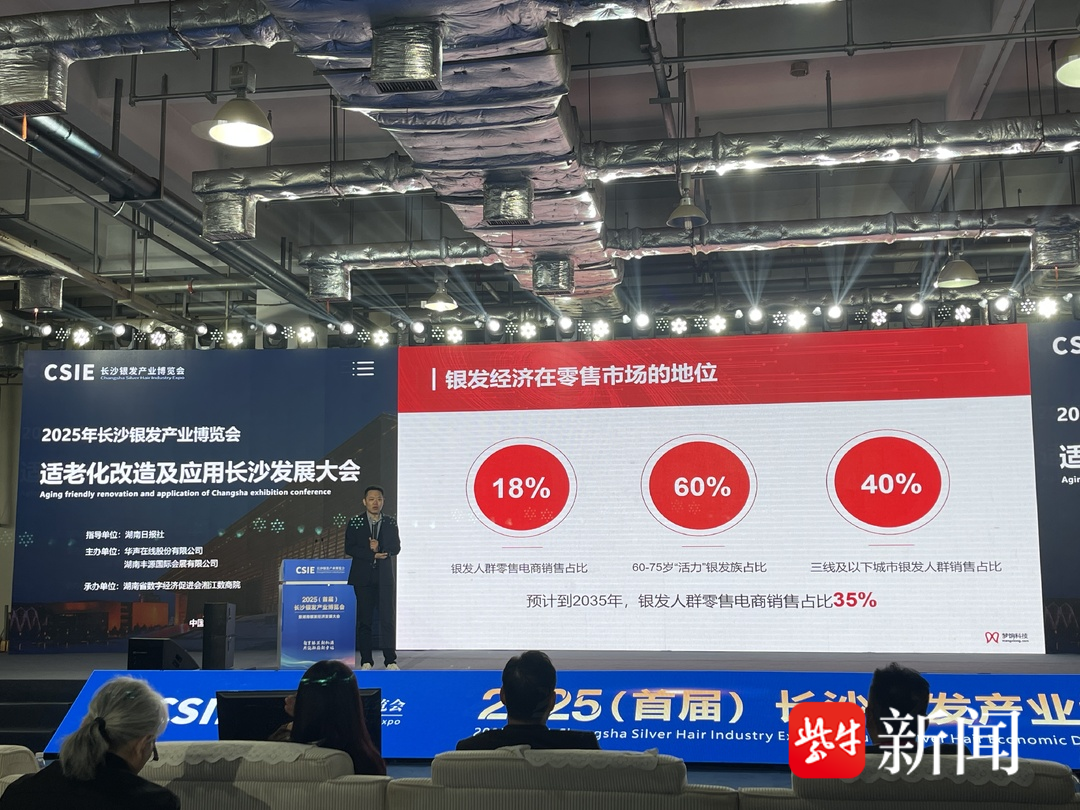
Core Insights - The aging population in China is expected to reach 400 million by 2035, with the silver economy projected to account for over 10% of GDP, becoming a new engine for high-quality development [2][4] - The silver economy is creating eight core opportunity areas: health care, age-friendly home products, elderly care services, smart elderly devices, silver retail, elderly education, senior tourism, and silver finance [4] - The importance of e-commerce for the silver demographic is increasing, with this group currently accounting for 18% of retail e-commerce sales, and the "active silver" group aged 60-75 making up 60% of that [4] E-commerce Opportunities - The silver demographic faces significant challenges in e-commerce, including issues with false advertising, difficult after-sales service, and decision-making difficulties [4] - The current e-commerce platforms are primarily designed for younger users, which complicates the online shopping experience for the elderly [4] - There is a need for a consumption and service ecosystem that is genuinely age-friendly [2] Innovative Practices - Dreamxiang Technology is leveraging a nationwide network of private domain leaders and a mature supply chain to create a service model that combines brand direct supply, leader empowerment, and precise reach [5][7] - The company has established a supply chain covering over 40,000 brands across 16 categories to meet the diverse needs of the silver population [7] - Dreamxiang Technology's approach includes a strict brand selection mechanism to ensure product safety and suitability for the elderly [7] Success Stories - A brand focused on elderly clothing achieved over 10 million yuan in sales within three months by utilizing Dreamxiang Technology's platform and private domain leaders for targeted recommendations [8] - A local pharmacy chain in Hunan successfully reached the silver demographic in county markets through collaboration with Dreamxiang Technology, enhancing local employment and industry income [8] Future Focus - Dreamxiang Technology aims to deepen its engagement in the silver economy by creating age-friendly private domain consumption scenarios and optimizing product display and purchasing processes [9] - The company plans to enhance cooperation with the silver industry to help local brands expand their market presence [9] - The integration of private domain models with the silver economy addresses traditional challenges in channel coverage and supply-demand matching, providing warmer services for the elderly [9]

4亿银发群体催生电商新机遇,梦饷科技打造银发私域服务新模式
Sou Hu Cai Jing· 2025-11-17 03:34
Core Insights - The aging population in China is expected to reach 400 million by 2035, with the silver economy projected to account for over 10% of GDP, becoming a new engine for high-quality economic development [3] - The e-commerce industry is exploring how to effectively promote and develop the silver economy, focusing on creating an age-friendly consumption and service ecosystem [3][6] Group 1: Market Opportunities - Eight core opportunity areas in the silver economy have been identified: health care, age-friendly home products, elderly care services, smart elderly devices, silver retail, elderly education, senior tourism, and silver finance [3] - Currently, the silver demographic accounts for 18% of retail e-commerce sales, with the "active silver" group aged 60-75 making up 60% of this segment [3][6] - By 2035, the proportion of the silver population in e-commerce is expected to rise to 35% [3] Group 2: Challenges in E-commerce - The silver consumer group faces significant challenges in e-commerce, including issues with false advertising, difficulty in after-sales service, and decision-making challenges [5] - Existing e-commerce platforms are primarily designed for younger users, which complicates the online shopping experience for the elderly [5] Group 3: Innovative Solutions by Companies - Dreamxiang Technology is innovating in the silver economy by creating a private domain e-commerce ecosystem tailored for the elderly, utilizing a network of over one million private domain leaders and a robust supply chain [6][8] - The company has developed a comprehensive solution that includes a supply chain covering over 40,000 brands across 16 categories, ensuring a rich variety of products that meet the needs of the elderly [6] - Dreamxiang Technology employs a dual-mode approach combining private domain live streaming and AI hardware to enhance the shopping experience for the elderly [6][8] Group 4: Community Engagement and Support - The company has launched a "Silver Entrepreneurship Program" to support retirees and community workers in starting their own private domain businesses, resulting in thousands of elderly leaders achieving flexible employment [7] - Success stories include a middle-aged store owner who has turned her private domain business into a full-time career, generating over one million in income [7] Group 5: Future Directions - Dreamxiang Technology aims to deepen its focus on the silver economy by creating age-friendly consumption scenarios, enhancing product display and purchasing processes, and fostering collaborations with local brands [8] - The company plans to continue exploring innovative models and quality services to activate the consumption potential of the elderly and promote the silver industry towards scale, quality, and diversification [8]

政策护航未来食品产业 生物技术推动食品工业与农业变革
Zheng Quan Ri Bao Wang· 2025-07-30 08:29
Group 1 - The core viewpoint emphasizes the importance of promoting biotechnology in the food industry to expand agricultural development space and ensure food security [1] - The "14th Five-Year Plan for Biotechnology Development" aims to transition from "solving hunger" to "diverse nutrition," focusing on modernizing agriculture and meeting higher consumer expectations for food [1] - Key areas of focus include biological breeding, bio-fertilizers, bio-feed, and bio-pesticides, with the goal of launching new agricultural bio-products and establishing a demonstration and promotion system for bio-agriculture [1] Group 2 - Recent policies from the Ministry of Industry and Information Technology and the Ministry of Agriculture and Rural Affairs support crop improvement and innovation in agricultural inputs [2] - The future of food is expected to leverage synthetic biology, artificial intelligence, and smart manufacturing, addressing global food supply and safety issues while promoting factory-based production [2] - Investment interest is growing in alternative proteins, functional ingredients, and synthetic biology foods, driven by breakthroughs in biomanufacturing technologies and rising health and sustainability demands [2]