钙钛矿材料

Search documents
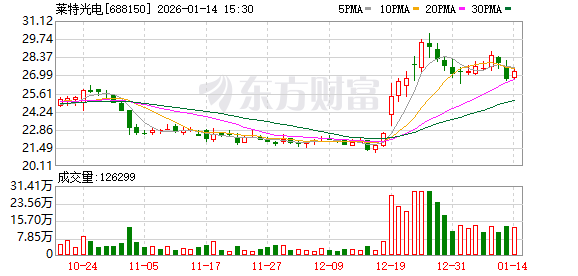
莱特光电:巩固OLED有机材料优势,布局Q布及钙钛矿市场-20260127
China Post Securities· 2026-01-27 07:25
Investment Rating - The investment rating for the company is "Buy" and is maintained [1] Core Insights - The company is consolidating its advantages in OLED organic materials and is expanding into Q fabric and perovskite markets. The successful launch of the 8.6 generation high-end touch OLED production line by BOE ahead of schedule is expected to significantly increase the demand for OLED materials, creating a market potential exceeding 10 billion [3][4] - The company plans to issue convertible bonds to raise up to 766 million yuan, with 500 million allocated for the construction of a new materials production and R&D base [5][8] - Revenue projections for the company are 570 million, 860 million, and 1.15 billion yuan for the years 2025, 2026, and 2027 respectively, with net profits of 250 million, 390 million, and 560 million yuan for the same years [8][10] Company Overview - The latest closing price of the company's stock is 28.83 yuan, with a total market capitalization of 11.6 billion yuan. The company has a total share capital of 402 million shares and a debt-to-asset ratio of 15.8% [2] - The company is led by its largest shareholder, Wang Yalong, and has a price-to-earnings ratio of 68.64 [2] Financial Forecasts - The company is expected to achieve significant revenue growth, with a projected increase of 56.9% in 2024, followed by 21.8% in 2025, and further growth of 50.2% and 33.5% in 2026 and 2027 respectively [10][11] - The EBITDA is forecasted to grow from 277.61 million yuan in 2024 to 732.96 million yuan in 2027, indicating strong operational performance [10][11]

莱特光电(688150):巩固OLED有机材料优势,布局Q布及钙钛矿市场
China Post Securities· 2026-01-27 06:03
Investment Rating - The investment rating for the company is "Buy" and is maintained [1] Core Views - The company is expected to benefit from the production of the 8.6 generation OLED line, which will significantly increase the demand for OLED materials and accelerate domestic substitution [3] - The company is actively expanding into the Q fabric and perovskite materials market, leveraging its core competencies and industry trends [4] - The company plans to issue convertible bonds to raise up to 766 million yuan, with a significant portion allocated for the construction of a new materials production base [5] Company Overview - The latest closing price is 28.83 yuan, with a total market capitalization of 11.6 billion yuan [2] - The company has a total share capital of 4.02 billion shares and a debt-to-asset ratio of 15.8% [2] - The company is led by its largest shareholder, Wang Yalong [2] Financial Projections - Revenue projections for 2025, 2026, and 2027 are 570 million yuan, 860 million yuan, and 1.15 billion yuan respectively, with net profits of 250 million yuan, 390 million yuan, and 560 million yuan [8] - The company anticipates a significant growth rate in revenue and net profit over the next few years, with a projected net profit growth rate of 49.6% in 2025 [10] Financial Metrics - The company is expected to maintain a high gross margin, projected at 74.2% in 2025 and 76.0% in 2027 [11] - The earnings per share (EPS) is projected to increase from 0.42 yuan in 2024 to 1.39 yuan in 2027 [10]
锐财经丨工业经济持续向优向新发展
Ren Min Ri Bao Hai Wai Ban· 2026-01-26 03:07
Group 1: Industrial Growth and Performance - In 2025, the industrial added value of large-scale industries increased by 5.9% compared to the previous year, showing a faster growth rate, up by 0.1 percentage points [2] - The mining, manufacturing, and electricity, heat, gas, and water production and supply industries saw added value growth of 5.6%, 6.4%, and 2.3% respectively [2] - Among 41 major industrial categories, 36 experienced growth, resulting in a growth coverage of 87.8% [2] Group 2: Export Performance - Large-scale industrial enterprises achieved an export delivery value of 15.8 trillion yuan, a 2.2% increase from the previous year, demonstrating strong resilience [2] - The equipment manufacturing sector showed significant export performance, with railway, shipbuilding, aerospace, and specialized equipment exports increasing by 24.2%, 10.2%, and 7.5% respectively [2] Group 3: Profit Structure Improvement - From January to November 2025, profits of large-scale industrial enterprises continued to grow, with the equipment manufacturing sector's profits increasing by 7.7%, contributing 2.8 percentage points to the overall profit growth of large-scale industrial enterprises [2] Group 4: High-tech Manufacturing Growth - In 2025, the added value of high-tech manufacturing increased by 9.4%, the highest growth rate since 2022, contributing 26.1% to the overall industrial growth [5] - Specific industries such as integrated circuit manufacturing, aircraft manufacturing, and biopharmaceuticals saw added value growth rates of 26.7%, 24.8%, and 12.1% respectively [5] Group 5: Digital Product Manufacturing - The added value of the digital product manufacturing industry grew by 9.3% in 2025, contributing 20.3% to the overall industrial growth [7] - Production of communication products like mobile communication base station equipment and 5G smartphones increased by 13.5% and 12.5% respectively [7] Group 6: Technological Innovation and Product Development - Companies are focusing on technological and industrial innovation, with examples like the AI-powered unmanned bulldozer deployed in complex mining environments [4] - New technologies such as perovskite materials and quantum computing are advancing rapidly, with successful prototypes being developed [4] Group 7: Consumer Supply and Market Trends - The industrial sector is adapting to new consumption trends, with a focus on optimizing product supply and enhancing brand development [8] - The integration of 5G, industrial internet, and other technologies into various sectors is expected to support the digital transformation of the economy [8]
太阳翼专家交流
2026-01-26 02:49
Summary of Key Points from the Conference Call Industry Overview - The commercial space market is currently experiencing rapid growth, supported by favorable policies, technological advancements, and significant market opportunities. The market is projected to reach trillions, with specific projects like satellite internet and lunar base construction having clear timelines for development [3][4]. Solar Wing Technology - Solar wings are critical for satellite energy supply, evolving from polycrystalline silicon to triple-junction gallium arsenide (GaAs), with conversion efficiencies increasing from approximately 20%-22% for polycrystalline silicon to 30%-33% for GaAs. New perovskite materials have emerged with efficiencies around 25%, but they require further validation in space environments [2][4]. - Flexible solar wings are becoming a trend due to their lightweight and foldable nature, which aids in satellite weight reduction. However, they currently have lower shock resistance and higher costs compared to rigid solar wings [2][5]. Material Comparisons - Perovskite materials weigh about 100 grams per square meter, significantly lighter than GaAs, which weighs around 600-700 grams per square meter. This weight advantage makes perovskite suitable for flexible solar wings, although its application is still limited and requires more testing [6][20]. - Rigid solar wings offer better shock resistance and lower costs but are bulkier, making them less suitable for multi-satellite launches. Flexible solar wings, while lighter and more adaptable, face challenges in durability and cost [7][21]. Satellite Power Requirements - Different satellite types have varying power requirements, influencing the size and efficiency of solar wings needed. For instance, remote sensing satellites have lower power needs, while communication satellites, like the first-generation Hope satellite, require around 7 kW and approximately 16-17 square meters of solar wing area. High-performance satellites demand even larger and more efficient solar wings [8][18]. Polyimide (PI) Material Usage - Polyimide films are widely used in flexible solar wings due to their lightweight, durability, and insulation properties. They play a crucial role in enhancing the overall performance of flexible solar wings [9][11]. Cost and Market Adoption - The current cost of flexible solar wings is approximately 400,000 to 500,000 yuan per square meter, which limits widespread adoption. However, ongoing advancements and cost-reduction efforts may lead to broader acceptance in the future [21][16]. Future Prospects - The flexible solar wing technology is still maturing but shows potential for cost reduction and efficiency improvements through optimized production processes and design innovations. The demand for flexible solar wings is expected to increase, especially for high-power satellites [23][17]. Conclusion - The transition from rigid to flexible solar wings is anticipated as the industry evolves, with perovskite materials potentially playing a significant role in the future, contingent on further validation and testing [20][22].
工业和信息化领域对经济增长贡献超四成 人工智能产业亮点纷呈
Ren Min Ri Bao· 2026-01-22 00:02
Core Insights - In 2025, China's industrial added value is expected to grow by 5.9% year-on-year, with the manufacturing sector maintaining a stable share of GDP, and the manufacturing scale likely to remain the largest globally for 16 consecutive years [1] Group 1: Industrial and Economic Growth - The industrial and information technology sectors are projected to contribute over 40% to economic growth [1] - The added value of integrated circuits and electronic materials increased by 26.7% and 23.9% respectively, while industrial robot production rose by 28% [3] - New energy vehicle sales reached 16.49 million units, marking a year-on-year growth of 28.2% [3] Group 2: Technological Advancements - The global AI technology is accelerating innovation and integration across various industries, with significant advancements in materials like perovskite and permanent magnet materials [2] - New products such as intelligent robots and biomanufacturing products are rapidly entering the market, supported by new scenarios like "5G+" and "industrial internet+" [2] Group 3: Smart and Green Transformation - The first batch of 15 leading factories has been showcased, achieving an average production efficiency increase of 29% and a reduction in product defect rates by 47% [4] - The average renewable energy utilization rate for national green computing facilities is expected to exceed 70% by 2025 [5] Group 4: Digital Economy Integration - By the end of 2025, China's digital industry revenue is projected to reach approximately 38.3 trillion yuan, with profits of 3.1 trillion yuan, reflecting growth rates of 39.5% and 48.4% respectively compared to 2020 [6] - The number of connected industrial devices has surpassed 100 million, with significant improvements in production capacity and quality due to the integration of digital technologies [7] Group 5: Consumer Goods Sector - The added value of the consumer goods industry is expected to grow by 3.7% year-on-year, accounting for 26.1% of total industrial output [8] - Initiatives to enhance supply and meet consumer demand have led to the release of numerous innovative products and the establishment of a quality safety traceability system for infant formula [8][9]
工信部回应如何平衡AI带来的就业挑战
Xin Lang Cai Jing· 2026-01-21 22:38
Core Insights - The State Council's press conference highlighted that by 2025, the industrial and information sectors will contribute over 40% to economic growth, acting as a stabilizing force for the economy [1] - The Ministry of Industry and Information Technology (MIIT) has outlined new strategies for the development of emerging and future industries, emphasizing the transformation of innovative ideas into market-ready products [1][2] Group 1: Emerging Industries - A number of high-innovation products are emerging, including advanced technologies in perovskite materials, permanent magnets, and power batteries, which are at the international advanced level [1] - New products with promising applications, such as intelligent robots and biomanufacturing products, are rapidly entering the market, supported by new scenarios like "5G+", "Industrial Internet+", and "Beidou+" [1][2] - The MIIT aims to foster a competitive environment for future industries by supporting local governments in establishing pilot zones and increasing government investment funds [2] Group 2: AI and Employment - By 2025, the number of domestic complete machine enterprises is expected to exceed 140, with over 330 humanoid robot products released, marking 2025 as the year of mass production for humanoid robots [3] - The MIIT acknowledges the employment challenges posed by AI development but emphasizes that technological progress will lead to job restructuring rather than job loss, advocating for the enhancement of AI literacy among workers [3] Group 3: Information Communication Services - The MIIT has launched ten initiatives to improve information communication services, resulting in more convenient telecom services and better protection of user rights [4] - Future efforts will focus on enhancing digital service offerings, promoting user-friendly digital products for the elderly and disabled, and improving personal information protection mechanisms [4]


工信部:近期已启动第二阶段6G技术试验,AI已渗透领航级智能工厂70%以上业务场景
Hua Er Jie Jian Wen· 2026-01-21 06:07
Core Viewpoint - The press conference highlighted China's significant advancements in industrial and information technology development, with a focus on 5G and AI, aiming for high-quality growth and innovation by 2025 [1][6]. Group 1: 5G and 6G Development - China has established 4.838 million 5G base stations, covering all towns and 95% of administrative villages, with over 1.2 billion 5G users [3][50]. - The country holds 42% of the global share of essential 5G standard patents, and the first phase of 6G technology trials has been completed, with over 300 key technologies reserved [3][50]. Group 2: AI and Emerging Industries - By 2025, the core AI industry in China is expected to exceed 1.2 trillion yuan, with over 6,000 AI companies anticipated [5][6]. - AI applications have penetrated over 70% of business scenarios in leading smart factories, with more than 6,000 vertical models developed [8][28]. Group 3: Technological Innovations - Innovations in materials such as perovskite, permanent magnet materials, and power batteries are at an internationally advanced level, with significant advancements in quantum technology [4][22]. - The manufacturing sector has seen a 28% increase in industrial robot production and a 28.2% rise in new energy vehicle sales [17][23]. Group 4: Support for Future Industries - The Ministry of Industry and Information Technology (MIIT) plans to support local governments in developing future industries and increase investment from government funds [9][24]. - A focus on training and developing a workforce skilled in both AI and manufacturing is emphasized to address employment restructuring due to technological advancements [10][39]. Group 5: Small and Medium Enterprises (SMEs) - In 2025, the value added by industrial SMEs is projected to grow by 6.9%, with over 14,000 specialized and innovative SMEs cultivated [12][44]. - The MIIT will implement a "14th Five-Year Plan" to enhance the development environment for SMEs and ensure timely payments to them [45][46]. Group 6: Information Infrastructure - The construction of information infrastructure has been prioritized, with significant advancements in mobile and fixed networks, including 5G and gigabit optical networks [49][50]. - The MIIT aims to enhance the application of information infrastructure across various sectors, ensuring continuous upgrades and technological advancements [51].
工信部:支持地方因地制宜建设未来产业,加大政府投资基金投资力度
Zheng Quan Shi Bao Wang· 2026-01-21 02:24
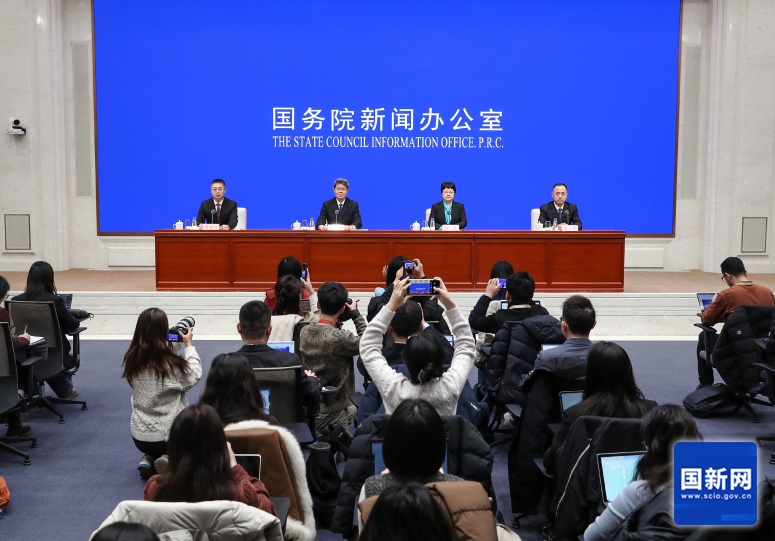
Core Insights - The Ministry of Industry and Information Technology (MIIT) has highlighted significant advancements in industrial and information technology development since the start of the 14th Five-Year Plan, focusing on optimizing traditional industries and fostering emerging sectors [1] Group 1: Innovation and Technology - A series of high-quality innovative outcomes have emerged, with technologies such as perovskite materials, permanent magnet materials, and power batteries reaching international advanced levels [1] - New technologies including emerging networks, high-speed communication, advanced computing, new software, and blockchain are accelerating their iterations [1] Group 2: Market Applications - A range of new products with promising application prospects, such as intelligent robots, are rapidly entering the market, with new scenarios like Industrial Internet+, Robotics+, and Beidou+ being cultivated [1] - These developments provide a broad market space for the rapid industrialization of new products [1] Group 3: Competitive Industries - Several competitive industries have emerged during the 14th Five-Year period, including new energy, automotive, photovoltaic, military equipment, and marine engineering equipment, contributing to a more vibrant image of Chinese manufacturing [1] - The MIIT plans to continue promoting innovative projects and strategic technological initiatives to support local development of future industries [1]
“含新量”不断提升 工信部发布一批新兴产业发展成果
Xin Lang Cai Jing· 2026-01-21 02:15
Core Insights - The press conference held by the State Council Information Office highlighted the achievements in industrial and information technology development by 2025, showcasing a surge of high-innovation results transitioning from laboratory ideas to market-ready products [1][2] Group 1: Technological Advancements - Advanced technologies such as perovskite materials, permanent magnet materials, and power batteries are now at an internationally advanced level [2] - New technologies in networking, high-speed communication, advanced computing, emerging software, and blockchain are accelerating their iterations [2] - Prototypes based on new quantum technologies, including atomic clocks and magnetometers, have been successfully developed [2] Group 2: Quantum Computing and Brain-Machine Interfaces - Superconducting quantum computers and optical quantum computers have achieved quantum superiority, capable of surpassing any classical computer on specific problems [2] - Brain-machine interface technology is rapidly expanding from the medical field into education and industrial sectors [2]
莱特光电:公司在OLED有机材料领域有着深厚技术沉淀及丰富的研发、生产经验
Zheng Quan Ri Bao· 2026-01-14 12:12
Core Viewpoint - The company highlights the synergy between OLED organic materials and perovskite materials, emphasizing their shared chemical foundations and high-purity preparation processes [2] Group 1: Company Developments - The company has deep technical expertise and extensive R&D and production experience in the OLED organic materials sector, which complements its efforts in perovskite materials [2] - The perovskite project is advancing in multiple areas, including material R&D, customer collaboration, intellectual property, and team building [2] - The company is enhancing partnerships with universities and research institutions to promote industry-academia collaboration [2] Group 2: Product and Technology Advancements - The company has achieved significant progress in material design, synthesis processes, and performance optimization for perovskite materials, with two additive products showing promising results in client tests [2] - Strategic cooperation has been established with leading downstream companies in the perovskite photovoltaic industry to drive innovation and industrialization of perovskite materials [2]