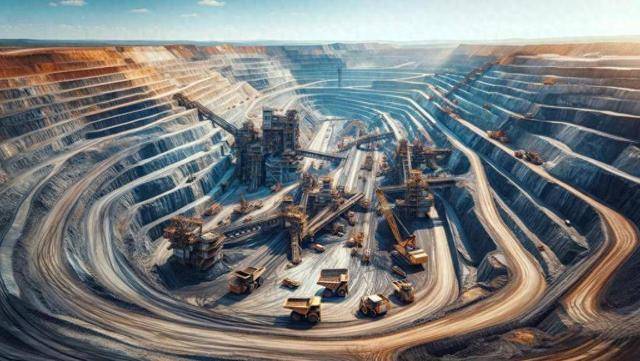
铝矿

Search documents
被多国竞逐,中亚关键矿产家底有多厚?
Huan Qiu Shi Bao· 2026-02-26 06:47
Core Insights - The United States has signed an agreement with Uzbekistan to secure a more stable supply of critical mineral resources, highlighting the strategic importance of these resources in the global energy transition and technological revolution [1] Group 1: Strategic Importance of Critical Minerals - Critical minerals have evolved from mere industrial raw materials to key elements reshaping global industrial and geopolitical landscapes [1] - Central Asia is rich in various critical mineral resources, attracting global attention, with the region being described as "extremely wealthy" by former U.S. President Trump [2][3] Group 2: Mineral Resources in Central Asia - Central Asia has become a significant player in the global strategic resource production, with countries like Kazakhstan, Kyrgyzstan, and Uzbekistan holding substantial reserves of critical minerals [3] - Uzbekistan has identified over 30 types of mineral resources, ranking as the fifth-largest uranium supplier globally and the 11th in copper reserves [4] - Tajikistan's antimony production accounts for 10% of global supply, with the country producing approximately 21,000 tons in 2023 [2] Group 3: Challenges in Mineral Development - The mining sector is a crucial economic pillar for Kazakhstan and Uzbekistan, contributing approximately 17% and 8% to their GDP, respectively [5] - Central Asia faces challenges in mineral development, including outdated geological survey data and limited investment, which hinder resource exploitation [5][7] - The region's reliance on outdated power infrastructure and seasonal electricity shortages poses significant barriers to expanding mining operations [7] Group 4: Future Development Plans - Kazakhstan aims to modernize its mining sector, viewing critical mineral development as a priority, with plans for extensive geological exploration and investment in processing technologies [8][9] - Kyrgyzstan has approved a development plan for critical minerals, targeting an annual export increase to $1 billion by 2030 [9] - Uzbekistan plans to implement a $2.6 billion project for rare metal extraction and processing over the next three years [9]
【环时深度】被多国竞逐,中亚关键矿产家底有多厚?
Huan Qiu Shi Bao· 2026-02-25 22:55
Core Insights - The article discusses the strategic importance of critical mineral resources in Central Asia, highlighting the region's rich deposits and the geopolitical implications of their extraction and trade [1][10]. Group 1: Mineral Resources Overview - Tajikistan's antimony production accounts for 10% of global supply, with an estimated output of 21,000 tons in 2023, representing a quarter of the world's total [4]. - Central Asia is home to significant mineral reserves, with manganese, chromium, lead, zinc, titanium, aluminum, copper, and cobalt having substantial global shares [4]. - Kazakhstan is noted for having the largest chromium reserves globally, estimated at 230 million tons, and is the second-largest producer of chromium [5]. Group 2: Regional Developments - Uzbekistan is rapidly establishing itself as a regional mineral hub, identifying over 30 types of mineral resources, including lithium and molybdenum, and is the fifth-largest uranium supplier globally [6]. - Kazakhstan's geological surveys have revealed a new rare earth metal deposit estimated to exceed 20 million tons, potentially making it the third-largest in the world [5]. - Kyrgyzstan is gaining recognition for its lithium and antimony reserves, which are crucial for battery and electronic device manufacturing [7]. Group 3: Economic Impact and Challenges - The mining sector significantly contributes to the GDP of Kazakhstan (17%) and Uzbekistan (8%), reflecting the region's mining tradition and existing extraction conditions [8]. - Challenges include outdated geological data, limited investment, and a lack of local processing capabilities, which hinder the development of critical mineral resources [9][8]. - The region requires an estimated $20 billion investment by 2030 to upgrade infrastructure and integrate renewable energy for mining operations [9]. Group 4: Future Plans and Concerns - Kazakhstan aims to modernize its mining sector, with plans for extensive geological exploration and the introduction of advanced processing technologies [10]. - Kyrgyzstan's government has set a goal to increase critical mineral exports to $1 billion by 2030 and attract $700 million in foreign direct investment [11]. - Concerns exist regarding the potential for increased dependency on commodity exports and the associated socio-economic inequalities if investments remain focused solely on resource extraction [11].

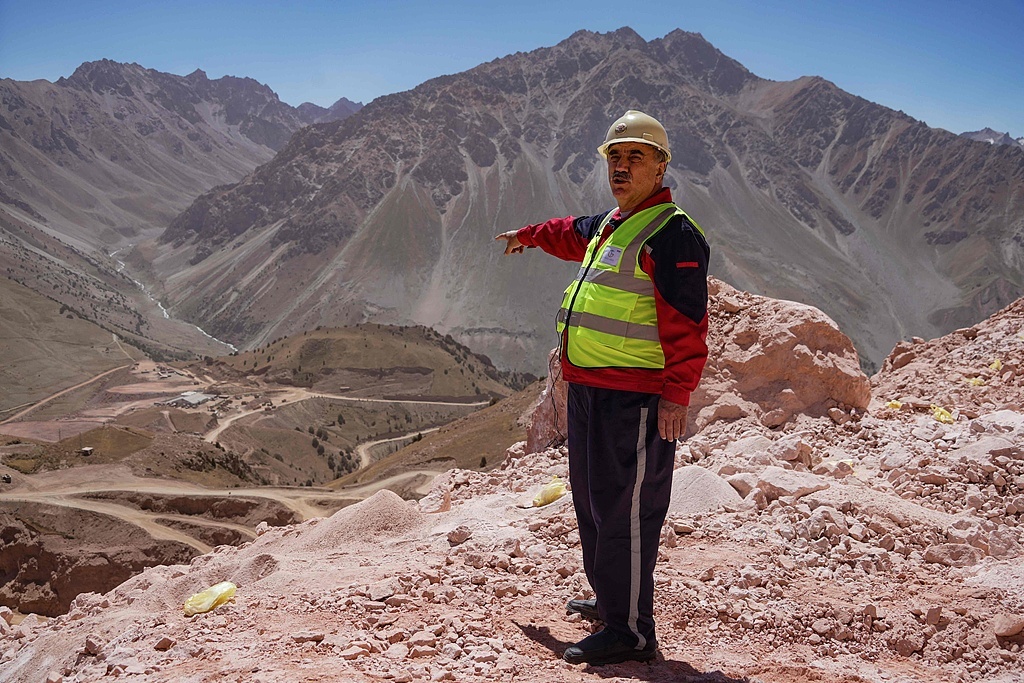
修文县龙场镇歇气坡铝铁矿(改建) 环境影响报告书(征求意见稿)公示
Xin Lang Cai Jing· 2026-01-10 21:36
Group 1 - The report is related to the environmental impact assessment of the renovation project for the Xieqipo Aluminum-Iron Mine in Longchang Town, Xiuwen County, conducted by Guizhou Chujun Aluminum Industry Co., Ltd [1] - The public is invited to provide feedback on the project within 10 working days from the date of the announcement [1] - Contact information for the construction unit and the environmental assessment unit is provided for public inquiries and suggestions [1]
签约37个项目!埃及·重庆沙坪坝投资贸易洽谈会举行
Sou Hu Cai Jing· 2025-10-31 13:39
Core Points - The Egypt-Chongqing Shapingba Investment and Trade Fair was held on October 31, featuring a focus on economic cooperation between China and Africa [2] - A total of 37 projects were signed during the event, with a total contract value of 50 billion yuan for six China-Africa trade cooperation projects [3] - The fair highlighted the strategic importance of Chongqing as a key economic engine in Western China, with a commitment to enhancing cooperation in various sectors including trade, agriculture, and infrastructure [4] Summary by Category - **Investment and Trade Agreements** - 37 projects were signed, including six focused on China-Africa trade cooperation, with a total contract value of 50 billion yuan [3] - The agreements included 30 billion yuan in export contracts for vehicles, motorcycles, and machinery, and 20 billion yuan in imports of agricultural and mineral products from Africa [3] - The 2025 investment signing event included 23 projects with a total contract value of 207.92 billion yuan, and eight manufacturing projects in medical devices with an investment of 7.8 billion yuan [3] - **Strategic Importance of Chongqing** - The event emphasized Chongqing's role as a critical economic hub in Western China, with Shapingba representing the heart of academic, commercial, and cultural activities [4] - The local government aims to leverage the Belt and Road Initiative to enhance trade connections and facilitate the export of Chongqing-made products to African markets [4] - **Cooperation Opportunities** - A list of cooperation opportunities was released, focusing on Chongqing's strengths in automotive, telecommunications, and electronics, alongside Africa's rich resources in minerals and agriculture [3] - The event included promotional efforts from local companies and institutions to encourage investment and collaboration between Chongqing and Egypt [4]

年产1.2亿吨!我国拿下的全球最大铁矿已投产,可破中国铁矿困局
Sou Hu Cai Jing· 2025-08-18 09:52
Core Insights - China imports over 1.4 billion tons of iron ore annually, with 80% sourced from abroad, costing over 3 billion daily [2][4] - The launch of the world's largest iron ore mine in Guinea, with an annual output of 120 million tons, may disrupt the current pricing power held by a few major suppliers [2][23] Group 1: Iron Ore Supply and Pricing - In 2021, China imported over 1.1 billion tons of iron ore, primarily from Australia and Brazil, leading to increased costs for steel companies due to price hikes [4][23] - Domestic iron ore extraction is challenging due to lower quality and higher costs, with local mining costing around 500 yuan per ton compared to 300 yuan for imports [6][8] - The new Simandou mine in Guinea, with over 5 billion tons of reserves and a high grade of 66%, is expected to reduce reliance on Australian imports by 10% [8][23] Group 2: Infrastructure Development - China is investing in infrastructure, including a 670-kilometer railway to facilitate the transport of iron ore from Guinea, which is a complex engineering project [13][21] - The railway will not only support iron ore transport but also significantly reduce shipping costs for local agricultural products, creating 2 million jobs [17][34] - The project is seen as a long-term investment, with a 35-year operational agreement in place, indicating a commitment to sustainable development in the region [34][40] Group 3: Global Impact and Future Prospects - The development of the Simandou mine is expected to alter the global iron ore supply landscape, challenging the pricing power of companies like Rio Tinto and BHP [27][28] - By 2026, when the mine reaches full production, Chinese steel companies could save over 10 billion annually due to reduced import costs [32][40] - The project symbolizes a shift in resource control for developing countries, showcasing that they can manage their resources rather than merely exporting raw materials [38][40]