
铥

Search documents
稀土库存全面告急,英美破防:美媒:中国再不批准,谈判形同作废
Sou Hu Cai Jing· 2026-02-25 07:36
Group 1 - China has gradually strengthened export controls on rare earth elements since 2023, initially targeting dual-use materials like gallium and germanium, which has put pressure on Western companies [1] - By the end of 2023, China banned the export of rare earth extraction and separation technologies, blocking foreign companies from independent processing [1] - In response to the U.S. chip ban, China fully banned the export of strategic minerals such as gallium, germanium, and antimony by the end of 2024, prompting companies to accelerate stockpiling of rare earth resources [1] Group 2 - In April 2025, China's Ministry of Commerce announced an export licensing system for seven heavy rare earth elements, including samarium, gadolinium, terbium, dysprosium, lutetium, scandium, and yttrium, widely used in defense and high-end manufacturing [3] - The immediate cause of this policy was the tariffs imposed by the Trump administration, leading to a surge in rare earth prices, particularly dysprosium, which reached $850 per kilogram in Europe, three times the original price [3] Group 3 - Export approval processes became stricter, requiring exporters to provide detailed usage statements, with military-related requests being denied, complicating transshipment trade [4] - By early May, U.S. defense contractors reported that their inventories could only support one to two months of production needs, severely impacting the production of F-35 engine components and missile guidance systems [4] - Over 80% of U.S. defense components rely on these rare earth minerals, leading to increased costs for wind turbines and electric vehicle batteries in the UK [4] Group 4 - In May 2025, U.S. and China engaged in further negotiations in Geneva, resulting in a temporary 90-day delay of the tariff dispute, but export approvals remained strict, primarily favoring European automotive suppliers and Vietnamese electronics manufacturers [6] - Rare earth prices increased significantly, with some heavy varieties rising nearly tenfold, while certain materials became scarce [6] Group 5 - By May, U.S. companies faced near depletion of inventories, causing production halts for F-35 and missile systems, with samarium prices reaching sixty times normal levels [8] - The fragility of the current supply chain was highlighted, with U.S. dependence on refined rare earths from China reaching critical levels [8] Group 6 - In June 2025, U.S. and China held a second round of talks in London, resulting in a supplemental framework agreement, with China approving some compliant applications while maintaining strict regulations [10] - Despite some adjustments in export pace, the regulatory policies remained tight, with China expanding the control to five additional rare earth elements by October 2025 [10] Group 7 - Defense assessments indicated that F-35 jets require approximately 9,200 pounds of rare earth magnets, with U.S. dependence on China for rare earths reaching 70% for imports [12] - The tight inventory situation led to supply disruptions for contractors, while China approved civilian export licenses to alleviate demand, excluding military enterprises [12] Group 8 - As U.S.-China tensions escalated, media outlets criticized China's rare earth export controls for causing global supply shortages and price surges across various sectors, including smartphones and military equipment [14] - Analysts noted that China's policy is a tactical negotiation strategy aimed at weakening U.S. military capabilities to force concessions [14] Group 9 - Experts predict that the continuation of China's export controls will lead to rising component prices and slow down global production rates, with U.S. defense contractors facing an imminent inventory crisis [15] - Despite increased domestic development efforts in the U.S., the reliance on China's rare earth market is expected to persist for the next decade [15]

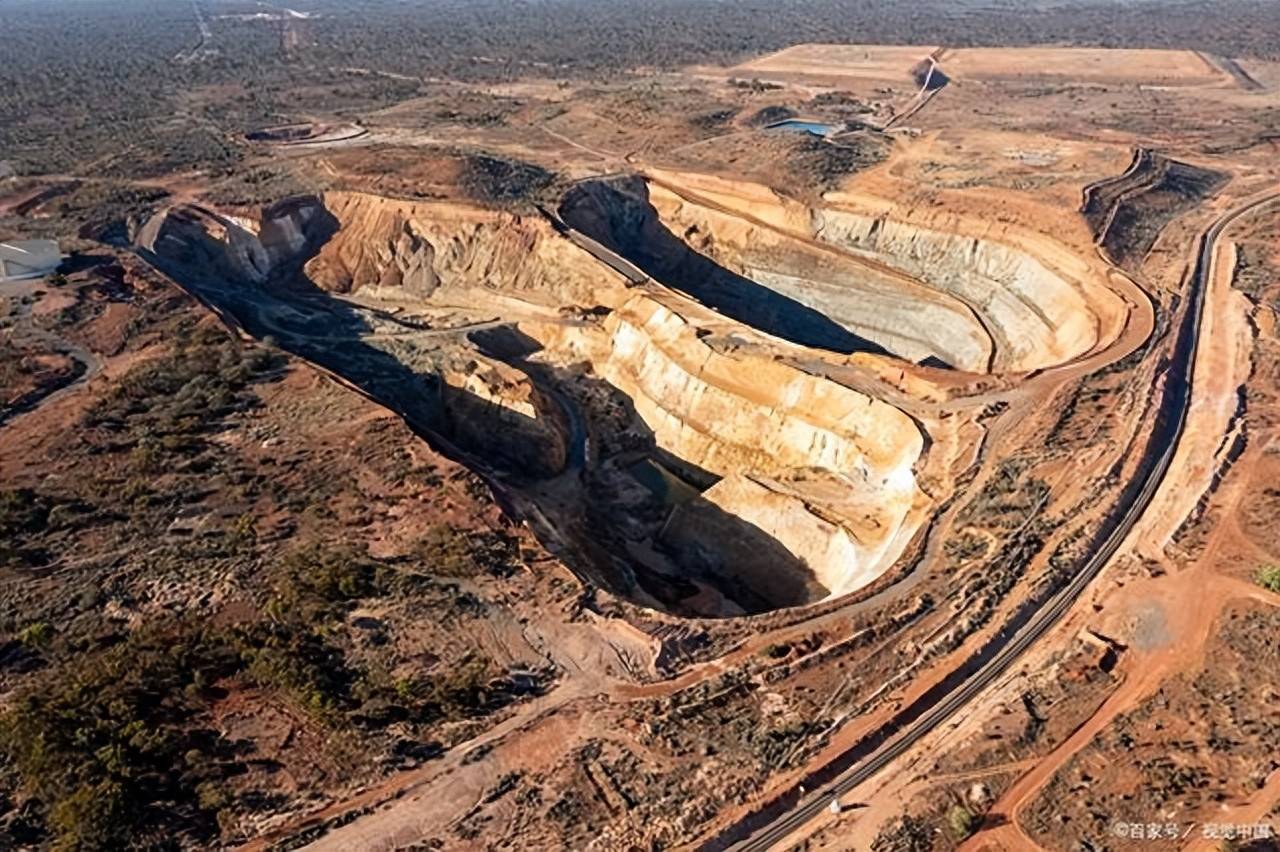
美国最急需的是什么?网友的回复亮了:不是中国稀土,是铥镭铑钼
Sou Hu Cai Jing· 2025-10-21 14:22
Core Insights - The humorous combination of elements "Thulium, Radium, Rhodium, Molybdenum" reflects a serious international competition over key minerals, highlighting China's increasing influence in strategic resource sectors [1][3] - The inclusion of Thulium (Tm) and Molybdenum (Mo) in China's export control list indicates significant challenges for the U.S. high-precision manufacturing industry in accessing these critical materials [3] - China's strategic positioning in the rare earth and key mineral sectors serves as a vital leverage in international competition, marking a shift in the balance of power in resource control [3] Group 1 - The phrase "Thulium, Radium, Rhodium, Molybdenum" has sparked discussions about the critical minerals needed by the U.S., with a focus on the implications of China's export controls [1][3] - The U.S. is facing unprecedented difficulties in obtaining Thulium and Molybdenum, which are essential for its supply chain, due to China's recent export restrictions [3] - China's ability to control access to these two elements demonstrates its strategic planning and strength in resource management, a situation unprecedented in over a century of international relations [3] Group 2 - The viral nature of the phrase underscores the importance of language and chemical knowledge in understanding the complexities of resource competition [4] - The ongoing debate about prioritizing technical knowledge over cultural literacy is seen as shortsighted, as national competition requires both hard technology and soft cultural power [4] - A balanced understanding of both literature and science is essential for grasping the nuances of resource conflicts and maintaining a competitive edge in global discourse [4]

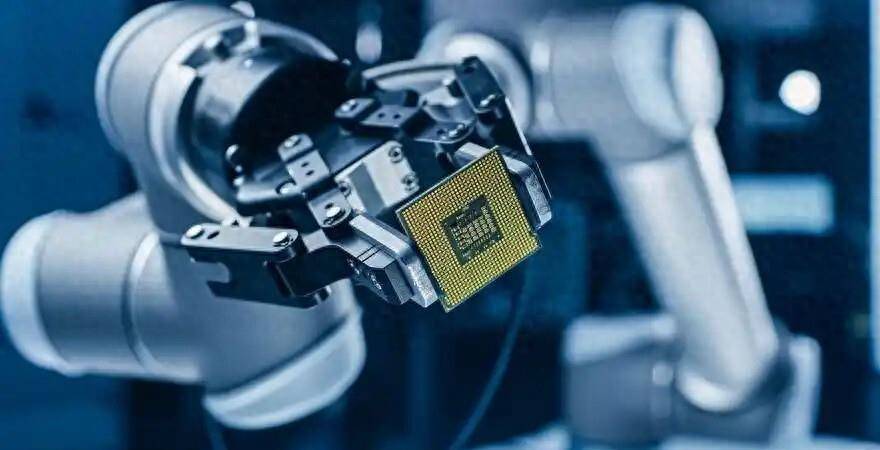
中国一纸矿物质审批,为何能让ASML光刻机产线告急?全球芯片命门浮现
Sou Hu Cai Jing· 2025-10-21 05:49
Core Insights - The Chinese Ministry of Commerce has implemented export controls on foreign items and related technologies containing Chinese mineral components, effective from October 9, 2025, under the principle of "long-arm jurisdiction" [1][3]. Policy and Regulations - The export control applies to products containing 0.1% or more of Chinese heavy mineral components or utilizing Chinese mineral technology, requiring approval from Chinese authorities [3]. - Export applications for military users or those related to the development of weapons of mass destruction will be directly rejected [3]. Impact on Semiconductor Industry - China holds a dominant position in the mineral sector, with 37% of global mineral reserves and over 70% of the refining and separation processes, particularly controlling 87% of the global smelting capacity for high-purity heavy minerals used in lithography machines [5]. - ASML is facing an unprecedented supply chain crisis due to the new regulations, with internal assessments indicating a potential 30% decrease in EUV lithography machine capacity if mineral supply disruptions continue [5][7]. - The delivery cycle for each EUV lithography machine is expected to extend from 24 months to 36 months, impacting major semiconductor manufacturers like TSMC, Samsung, and Intel, which are in critical phases of building next-generation chip factories [7]. Defense Industry Consequences - The U.S. defense industry is also affected, with Lockheed Martin's F-35 radar sensitivity declining by 23% due to a lack of neodymium magnets, and Boeing's MQ-25 drone project facing risks due to shortages of mineral permanent magnet motors [9]. - A significant 78% of guided systems in existing U.S. weapon stockpiles are reported to be facing mineral supply crises [9]. Global Supply Chain Repercussions - The export controls have led to a 60% reduction in global EUV lithography mirror coating capacity, with China being the sole producer of high-purity gadolinium gallium garnet crystals necessary for precise temperature control in lithography machines [11]. - Companies attempting to bypass Chinese minerals face challenges, with alternative materials resulting in a 40% cost increase and a 30% performance decline [9]. Strategic Responses - The Chinese semiconductor industry is exploring unique strategies to overcome external technology blockades, such as the "non-lithography compensation" strategy proposed by New Kai Lai, which aims to optimize DUV lithography processes to achieve EUV-like precision [11][13]. - Domestic development of EUV photoresists and auxiliary materials has seen significant progress, with over 30% of key photoresists achieving domestic production rates [13]. Industry Restructuring - The global semiconductor supply chain is undergoing deep restructuring due to China's mineral controls, with the EU aiming for an 80% self-sufficiency rate in minerals by 2030 and the U.S. Department of Defense investing $90 billion to build a domestic mineral supply chain [15]. - The shift from "efficiency-first" to "security-first" in supply chains poses challenges to ASML's global production model [15]. Technological Challenges - Attempts by Japanese companies to replace critical minerals have shown significant performance degradation, with experiments indicating a 47% performance drop in gallium-based magnets after 3000 hours of operation [17]. - China's dual-review mechanism for export controls requires comprehensive data tracing from mines to finished products for any foreign products using Chinese minerals, increasing supply chain transparency challenges for ASML [17].

明确限制具体目标,严管军事敏感领域,涉稀土出口管制,中方接连出手
Huan Qiu Wang· 2025-10-09 23:08
Core Points - The Chinese government has announced significant upgrades to its export controls on rare earth materials and technologies, specifically targeting military applications and advanced semiconductor production [1][2][4] - The new regulations require overseas exporters using Chinese rare earths to obtain licenses, particularly for materials containing a minimum of 0.1% Chinese-origin rare earth elements [1][2] - Export applications for military users and those related to weapons of mass destruction will generally be denied, while applications for semiconductor-related technologies will be reviewed on a case-by-case basis [2][4] Group 1: Export Control Regulations - The Ministry of Commerce has issued two announcements detailing the new export controls, which include a requirement for licenses for any overseas export activities involving Chinese rare earths [1][2] - The regulations specifically target rare earth materials and technologies, including samarium-cobalt and neodymium-iron-boron magnets, and require licenses for their export [2][3] - The new rules aim to prevent overseas entities from using Chinese rare earths for military purposes, addressing national security concerns [4][5] Group 2: Implications for Global Supply Chains - Analysts suggest that these new restrictions could hinder efforts by the U.S. and other Western countries to establish independent supply chains, as they heavily rely on Chinese materials and processing technologies [6] - The restrictions may also impact the semiconductor industry, as they include case-by-case reviews for rare earth products used in the development of certain computer chips [6] - The Chinese government emphasizes the need for compliance and has set a reasonable transition period for stakeholders to adapt to the new regulations [4][5]