
锅边糊

Search documents
特色小吃串点成线变身“流量密码” “美食+”延伸文旅消费链条
Yang Shi Wang· 2026-02-02 03:46
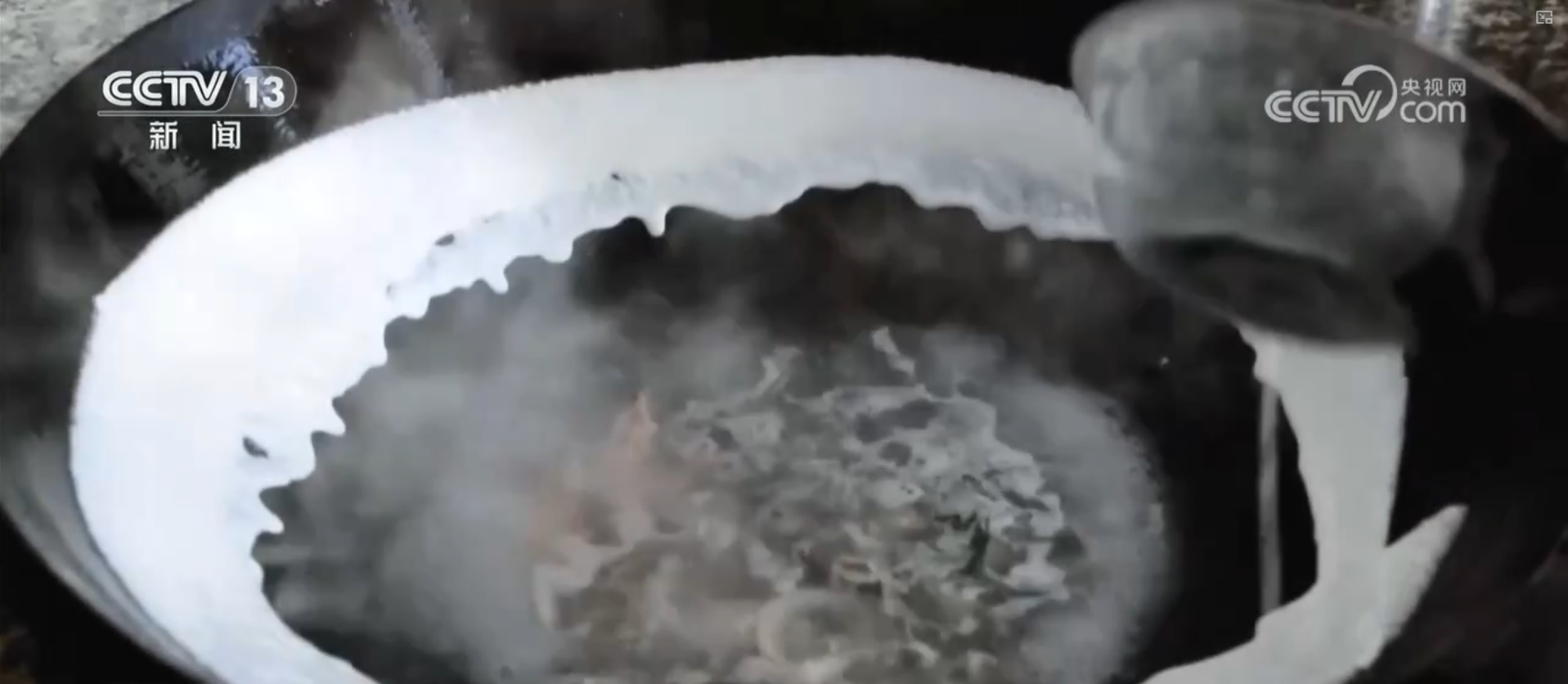
Core Viewpoint - The article highlights the rich breakfast culture in Fuzhou, showcasing traditional dishes like "Guo Bian Hu" and "Xian Lao," which reflect the city's culinary heritage and evolving food scene [1][3][10]. Group 1: Traditional Breakfast Dishes - "Guo Bian Hu," also known as "Ding Bian Hu," is a representative traditional breakfast in Fuzhou, characterized by its clear broth and fresh ingredients [3][5]. - The preparation of "Guo Bian Hu" involves a meticulous process where rice flour is poured around the edge of a hot pot, creating a unique texture and flavor [5][7]. - "Xian Lao," or "Lao Hua," is another traditional breakfast that allows diners to choose from a variety of fresh ingredients cooked in a rich broth, emphasizing the importance of freshness in its preparation [10][12]. Group 2: Culinary Experience and Cultural Heritage - Fuzhou's food scene includes over 60 eateries on the main street of Sanfang Qixiang, featuring 16 time-honored brands, offering a diverse range of breakfast options [16]. - The preparation of "Rou Yan," a local specialty, is recognized as a provincial intangible cultural heritage, with efforts to educate the public about its history and making process through cultural experience centers [18]. - The city promotes a "food + cultural tourism" strategy, linking traditional food experiences with local attractions, enhancing the overall visitor experience [20][22].

藏在寿山石里的福州故事
Ren Min Ri Bao· 2026-01-21 08:02
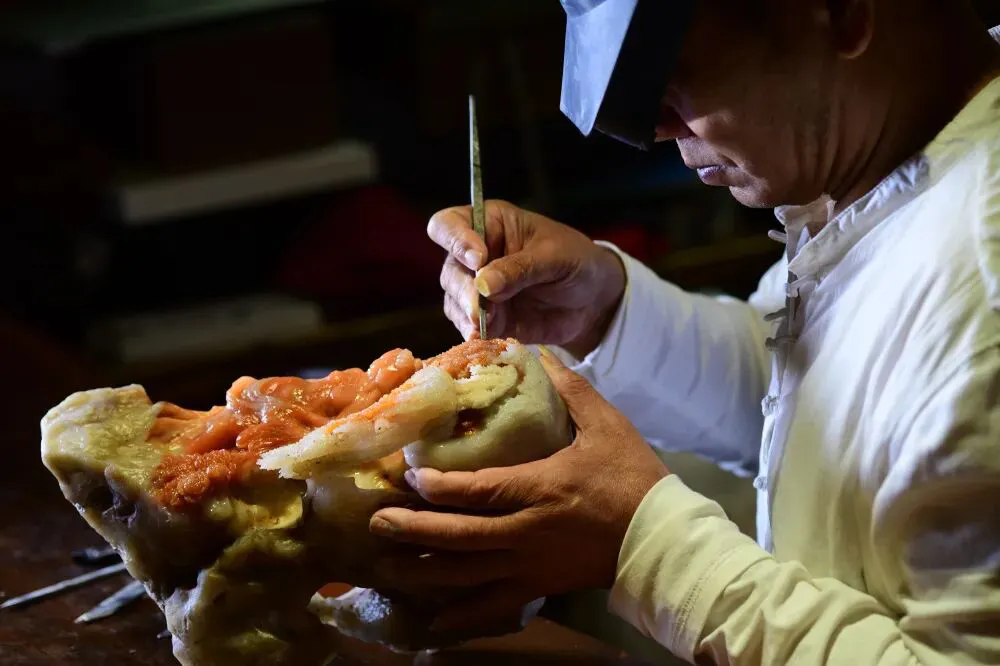
Core Perspective - The essence of Shoushan stone is deeply intertwined with the cultural and historical identity of Fuzhou, reflecting a spirit of craftsmanship, perseverance, and the pursuit of beauty [4]. Group 1: Cultural Significance - Shoushan stone is characterized by its unique qualities, emerging from the natural landscape of Fuzhou, which is defined by mountains and rivers, creating a harmonious environment for artistic expression [1][4]. - The artistry involved in stone carving is not merely technical but also philosophical, where artisans engage in a deep understanding of the stone's nature before making decisive cuts [1][2]. Group 2: Artistic Techniques - Shoushan stone carving encompasses various techniques such as relief, round carving, and透雕 (transparent carving), requiring precision and confidence from the artisans [2]. - Historical figures like Lin Zexu are highlighted as embodiments of the spirit of Shoushan stone, symbolizing resilience and national pride through their actions [2]. Group 3: Artisan Dedication - Local artisans exhibit a profound dedication to their craft, often spending long hours in solitude to connect with the stone, which reflects their inner thoughts and emotions [3]. - The process of creating art from Shoushan stone is likened to culinary arts, where patience and meticulous attention to detail yield rich and complex results [3]. Group 4: Philosophical Underpinnings - The philosophy surrounding Shoushan stone emphasizes continuous effort and the dynamic nature of prosperity, suggesting that true wealth comes from self-awareness and persistent refinement [4]. - The relationship between the stone and the city of Fuzhou is depicted as inseparable, with both embodying a shared spirit of resilience and creativity [4].
查办“幽灵外卖”等违法案件 “守护消费”铁拳行动典型案例公布
Zhong Guo Xin Wen Wang· 2025-08-23 02:55
Core Viewpoint - The article highlights the enforcement actions taken by market regulatory authorities in China to combat illegal activities in the food and beverage sector, focusing on issues such as illegal additives, counterfeit products, and unlicensed operations, thereby ensuring consumer safety and market integrity [1][2][3][4][5][6][7][8][9][10][11][12][13]. Group 1: Illegal Additives and Food Safety - The Jiangxi market regulatory authority investigated a case involving the illegal addition of tadalafil in a liquor product, with a detected concentration of 151 mg/kg, leading to a total value of 1.9386 million yuan for 450 units [1] - In Fujian, a case was uncovered where meat products contained harmful substances like morphine and codeine, with sales exceeding 1 million yuan [2] - In Liaoning, a duck neck shop was found using excessive and unauthorized food additives, with illegal sales exceeding 200,000 yuan [3] Group 2: Ghost Restaurants and Licensing Violations - In Guangxi, a restaurant was penalized for using forged food operation licenses to conduct online delivery services, resulting in a fine of 7,000 yuan [4][5] - In Anhui, a restaurant operated multiple online entities without proper licenses, leading to fines totaling 8,600 yuan for both the restaurant and the third-party platform involved [6] Group 3: Regulatory Actions Against Platforms - In Beijing, two major food delivery platforms were investigated for failing to verify the licenses of their vendors, resulting in fines of 200,000 yuan and the confiscation of illegal earnings [7][8] Group 4: Trademark Infringement and Counterfeit Goods - In Shanghai, a construction company was found selling counterfeit paint products, leading to a total illegal operation value of 32,800 yuan and subsequent penalties [9][10] - The investigation revealed a network of counterfeit production, with significant quantities of infringing goods seized [9][10] Group 5: Compliance in Testing and Measurement - A testing company in Shandong was penalized for issuing reports without valid certification, resulting in fines totaling 81,400 yuan [11] - In Gansu, a gas station was found using tampered fuel dispensers, leading to fines of 788,700 yuan [12] Group 6: Consumer Safety in Household Products - In Jiangsu, a company was penalized for selling substandard gas stoves and hoses, with a total value of 65,000 yuan for the non-compliant products [13]
市场监管总局公布2025“守护消费”铁拳行动典型案例(第一批)
Yang Shi Wang· 2025-08-23 02:18
Core Viewpoint - The State Administration for Market Regulation (SAMR) is intensifying efforts to protect consumer rights and ensure food safety by cracking down on illegal activities in the food industry, including the illegal addition of harmful substances, "ghost takeout" services, and trademark infringements [1][2]. Group 1: Illegal Additives in Food Products - In Jiangxi Province, a case was reported where a company illegally added tadalafil to a liquor product, with a detected concentration of 151 mg/kg, leading to a total value of 1.9386 million yuan for 450 units produced [1]. - In Fujian Province, a business was found to be using meat products containing harmful substances like morphine and codeine, with sales exceeding 1 million yuan [3]. - In Liaoning Province, a duck neck shop was caught using food additives beyond legal limits, with nitrite levels ranging from 1.5 mg/kg to 17 mg/kg, and a total illegal revenue exceeding 200,000 yuan [3][4]. Group 2: Ghost Takeout Services - In Guangxi Province, a restaurant was penalized for operating "ghost takeout" services by using forged food business licenses, resulting in a fine of 7,000 yuan [5]. - In Anhui Province, a restaurant was found to be operating multiple online takeout services without the necessary food business licenses, leading to fines and warnings [6]. - In Beijing, two major food delivery platforms were investigated for failing to verify the licenses of their merchants, resulting in fines totaling 200,000 yuan [7][8]. Group 3: Trademark Infringement - In Shanghai, a construction company was caught selling counterfeit paint products under the "Nippon" trademark, with a total illegal revenue of 32,800 yuan [9]. - The investigation led to the dismantling of three counterfeit production sites, with significant quantities of infringing goods seized [9]. Group 4: Quality Control Violations - In Shandong Province, a gas station was found using modified fuel dispensers, resulting in illegal earnings of 786,800 yuan [10][11]. - In Jiangsu Province, a company was penalized for selling substandard gas stoves and hoses, with a total value of 65,000 yuan for the non-compliant products [12].