雪花球

Search documents
中国制造承包了圣诞节
投资界· 2025-12-26 09:41
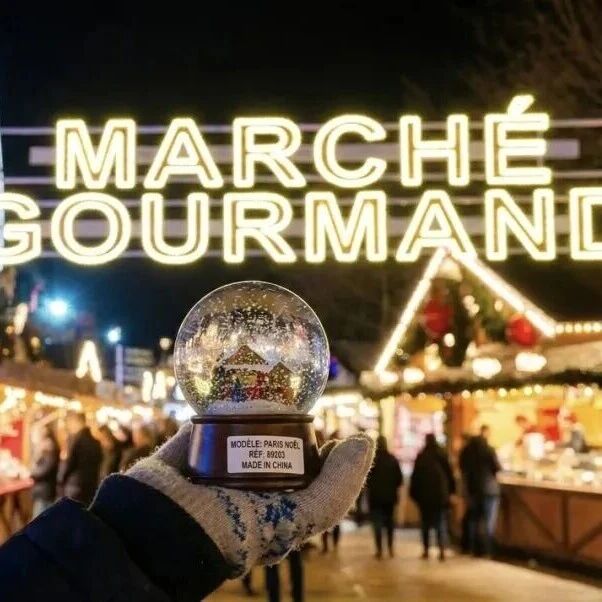
Core Viewpoint - The article discusses the impact of Chinese manufacturing on European Christmas markets, highlighting the significant price differences and the resulting cultural implications [11][12][15]. Group 1: Chinese Manufacturing Influence - Chinese products dominate European Christmas markets, with a notable example being a snow globe sold in Paris for 25 euros, which likely costs less than 20 RMB in Yiwu [4][5]. - Yiwu is identified as the largest production and distribution hub for Christmas products globally, supplying nearly 80% of items for the Christmas season [17]. - The export of Christmas products from Yiwu to the EU saw an increase of over 104% in the first half of 2025, indicating a sharp growth trend [24]. Group 2: Economic and Cultural Implications - The article points out that the rising costs of local artisan goods in Europe have led to a reliance on cheaper Chinese imports, which threatens local craftsmanship [10][21]. - French President Macron expressed concerns that the influx of Chinese goods could undermine the foundation of European manufacturing, leading to a cultural landscape devoid of local industry [26][28]. - The article references David Ricardo's theory of comparative advantage, suggesting that global trade naturally favors countries that can produce goods more efficiently, which currently applies to Chinese manufacturing [30][32]. Group 3: Changing Consumer Behavior - The transparency of information and the availability of Chinese products have diminished the perceived value of local souvenirs for Chinese tourists, leading to a shift in purchasing behavior [49][52]. - Tourists are now more inclined to seek out unique experiences rather than traditional souvenirs, as evidenced by the preference for leaving luggage space for irreplaceable memories rather than mass-produced items [56][63]. - The article highlights a local market in Paris that adheres to strict regulations for handmade goods, contrasting with the prevalence of standardized products from China [58][61].

中国制造正在杀死欧洲圣诞市场?
36氪· 2025-12-26 00:01
Core Viewpoint - The article discusses the impact of Chinese manufacturing on European Christmas markets, highlighting the tension between globalization and local craftsmanship, as well as the economic implications for both regions [12][19][32]. Group 1: Chinese Manufacturing Influence - Yiwu, known as the "second hometown of Santa Claus," supplies nearly 80% of global Christmas products, showcasing its dominance in the market [19]. - In the first half of 2025, Yiwu's exports of Christmas products to the EU increased by over 104%, indicating a significant growth trend [28]. - The efficiency of Chinese factories has led to a situation where local European artisans are marginalized, as they cannot compete with the low prices of Chinese goods [11][26]. Group 2: Economic and Cultural Tensions - French President Macron expressed concerns that China's trade surplus is impacting the heart of European industry, framing it as a zero-sum game for survival [32][34]. - The article notes that while European consumers enjoy lower prices, they simultaneously seek to protect local industries through tariffs, leading to a cycle of trade tensions [43][44]. - The EU's decision to impose tariffs on Chinese electric vehicles has prompted retaliatory measures from China, affecting various sectors, including dairy products [46][48]. Group 3: Changing Consumer Behavior - The article highlights a shift in consumer behavior among Chinese tourists, who are now less inclined to purchase souvenirs due to the availability of similar products at lower prices online [53][57]. - The perception of travel has evolved, with tourists now prioritizing experiences over material goods, leading to a decline in the purchase of traditional local crafts [64][66]. - The article emphasizes the contrast between mass-produced items and authentic local craftsmanship, suggesting that the latter is becoming increasingly rare and expensive [71][73].
中国制造正在杀死欧洲圣诞市场?
虎嗅APP· 2025-12-25 09:43
Core Viewpoint - The article discusses the impact of Chinese manufacturing on European Christmas markets, highlighting the tension between globalization and local craftsmanship, as well as the economic implications for both regions [8][24][32]. Group 1: Globalization and Market Dynamics - The Christmas markets in Europe are increasingly filled with products made in China, leading to a significant profit margin for vendors while marginalizing local artisans [8][13][21]. - Yiwu, known as the "second hometown of Santa Claus," supplies nearly 80% of global Christmas products, showcasing the depth of Chinese manufacturing's penetration into European markets [13][21]. - In the first half of 2025, Yiwu's exports of Christmas products to the EU increased by over 104%, indicating a sharp rise in demand for Chinese goods [18][21]. Group 2: Economic Concerns and Trade Tensions - French President Macron expressed concerns about China's trade surplus impacting European industries, framing it as a zero-sum game for survival [24][32]. - The EU has responded to the influx of Chinese products by imposing tariffs on electric vehicles, which has led to retaliatory measures from China, including tariffs on EU dairy products [34][36]. - This trade friction reflects a broader struggle between efficiency and protectionism, with both sides feeling the pressure of global competition [40][41]. Group 3: Changing Consumer Behavior - The article notes a shift in Chinese tourists' shopping habits in Europe, with a decline in the desire to purchase local souvenirs due to the availability of similar products at lower prices online [42][44]. - The perception of value in travel has evolved, with tourists now prioritizing experiences over material goods that can be easily replicated [48][54]. - The article highlights a small market in Paris that adheres to strict local production rules, representing a last bastion of traditional craftsmanship amidst the globalized landscape [49][51].

中国制造正在杀死欧洲圣诞市场?
3 6 Ke· 2025-12-24 02:55
Core Insights - The article discusses the impact of Chinese manufacturing on European Christmas markets, highlighting how globalization has led to a homogenization of products across various markets in Europe, including Paris, Vienna, and Manchester [4][6][20] - It emphasizes the rising costs of local craftsmanship in Europe, which has forced many vendors to rely on cheaper Chinese goods to remain competitive [6][19] Group 1: Market Dynamics - The Christmas market in Paris is heavily influenced by Chinese manufacturing, with products like snow globes being sold at a significant markup compared to their production costs in China [2][5] - The article notes that Yiwu, a city in China, is responsible for nearly 80% of global Christmas product supply, showcasing its dominance in this sector [6][11] - The export of Christmas products from Yiwu to the EU saw an increase of over 104% in the first half of 2025, indicating a strong growth trajectory [10][11] Group 2: Economic Implications - French President Macron expressed concerns about the impact of Chinese surplus on European industries, indicating a zero-sum game regarding survival space for local manufacturers [14][19] - The article references the classical economic theory of comparative advantage, suggesting that as long as China can produce goods more efficiently, global trade will continue to favor Chinese products [20] - Trade tensions are escalating, with the EU imposing tariffs on Chinese electric vehicles, while China retaliates with tariffs on EU dairy products, highlighting the ongoing trade war [20][21] Group 3: Consumer Behavior - The article notes a shift in consumer behavior among Chinese tourists, who are now less inclined to purchase souvenirs in Europe due to the availability of similar products at lower prices online [24][30] - The perception of value has changed, with tourists preferring to leave luggage space for unique experiences rather than mass-produced items [27][30] - The article concludes that the essence of travel is evolving, with a focus on intangible memories rather than physical souvenirs, as evidenced by the preference for online shopping over traditional market purchases [30][31]