
领航者2号

Search documents
浙江省宁波市海曙区:产业提能升级
Jing Ji Ri Bao· 2025-09-05 06:17
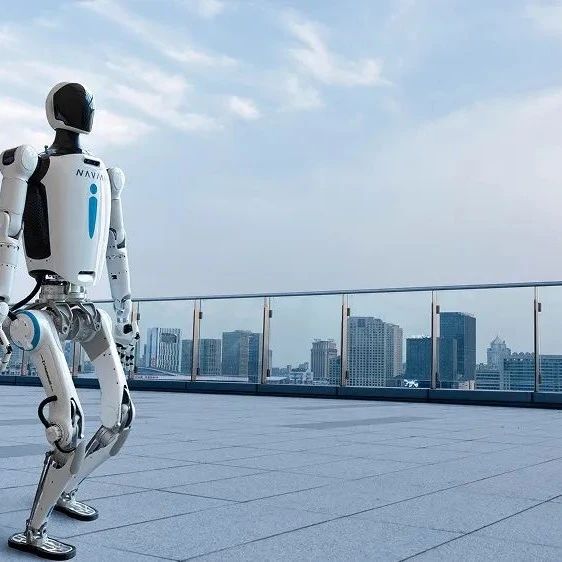
据了解,海曙区全年谋划重大项目336个,年度计划投资354.5亿元,力争新引进亿元以上项目55 个,签约项目当年落地率超80%。 海曙区藕池未来智慧园里,今年年初才落地投用的浙江人形机器人创新中心生产工厂实现"领航者2 号"全面量产。据介绍,这款机器人依托每秒275万亿次运算能力的人工智能算力支持,作业臂操作精度 达0.1毫米,已在科研教育、智慧零售、智能制造等行业应用。 海曙区优良科创生态助力传统制造业提能升级。由浙江云聚智铱数字科技有限公司建设的全国首个 纺织服装数据流通平台在海曙开通运营,赋能200余家纺织服装业中小企业。随着创新要素集聚度的提 高,为了有力打造全域创新活力区,近日,海曙区委书记叶枝利带着科技、经信等部门负责人,与当地 政协委员、智库专家面对面协商营造更优新质生产力发展环境。海曙区政协主席张宁辉说:"企业家委 员与行业专家深入调研,从创新IP、科创产业、科创空间、科创金融、创新人才和科技罗城等角度切 入,提供了6份详尽的调研报告供区委、区政府参考。" 经济日报记者 郁进东 新增一批工改项目,推进科技大市场3.0建设,实现技术交易额24.2亿元……近日,浙江省宁波市海 曙区利好消息不断。随 ...
产业提能升级
Jing Ji Ri Bao· 2025-09-04 22:04
Core Insights - The article highlights the rapid development of the Haishu District in Ningbo, Zhejiang Province, focusing on the integration of technological and industrial innovation to build a modern industrial system and create a vibrant innovation ecosystem [1] Group 1: Technological Advancements - The Zhejiang Humanoid Robot Innovation Center has achieved full-scale production of the "Navigator 2" robot, which boasts an AI computing power of 275 trillion operations per second and an operational arm precision of 0.1 mm, applicable in various sectors including research, education, smart retail, and intelligent manufacturing [1] - The first national textile and apparel data circulation platform has been launched in Haishu, empowering over 200 small and medium-sized enterprises in the textile and apparel industry [1] Group 2: Investment and Project Planning - Haishu District has planned 336 major projects for the year, with an annual investment target of 35.45 billion yuan, aiming to attract 55 projects with investments exceeding 100 million yuan, and achieving an over 80% on-the-ground rate for signed projects [1] - Local government officials, including the district's party secretary, are actively collaborating with industry experts and local entrepreneurs to create a better environment for innovative productivity development, resulting in six detailed research reports for government reference [1]
浙江凭“数智”塑造发展新优势
Hang Zhou Ri Bao· 2025-08-04 03:10
Core Insights - The artificial intelligence (AI) industry in Zhejiang has seen significant growth, with core industry revenue surpassing 300 billion yuan, reflecting a double-digit year-on-year increase [1][3] - The emergence of humanoid robots and AI technologies is exemplified by companies like Yuzhu Technology, which has launched innovative products such as the Unitree H1 and Unitree R1, showcasing the potential for future development [2][3] - Zhejiang's AI sector is characterized by a collaborative ecosystem involving universities, research institutions, and private enterprises, fostering innovation and technological advancements [4][5] Industry Growth - The AI core industry in Zhejiang has achieved a notable revenue growth rate, with sectors like computing services, data services, algorithm models, and smart terminals all maintaining double-digit growth [3] - The provincial government has implemented measures to support AI innovation, aiming for the core industry revenue to exceed 1.2 trillion yuan by 2030 [6] Innovation and Collaboration - A total of 119 joint laboratories have been established between platforms and universities, enhancing research and development capabilities in AI [4] - The establishment of innovation centers, such as the Zhejiang Intelligent Perception Technology Innovation Center, is facilitating collaboration across the AI supply chain [5] Regional Development - Various cities in Zhejiang are leveraging their unique strengths to advance AI initiatives, with Wenzhou attracting over 600 data companies and Huzhou focusing on sectors like renewable energy and semiconductors [7] - The recent World Artificial Intelligence Conference highlighted the market potential for intelligent robotics, with companies like Kandi Technology planning to expand into new product areas [7]
全国六大人形机器人创新中心最新发展情况一览
机器人圈· 2025-05-30 11:30
Core Viewpoint - The article discusses the rapid development of humanoid robot innovation centers across China, highlighting their achievements and contributions to the field of humanoid robotics as they transition from concept to application [1]. Group 1: Beijing Humanoid Robot Innovation Center - Established in November 2023, it is the first provincial humanoid robot innovation center in China, formed by companies like Xiaomi Robotics and UBTECH Technology [2]. - The center developed the "Tiangong" series, the world's first full-size electric humanoid robot capable of running at 12 km/h and adapting to various terrains, with extensive documentation available for secondary development [2]. - The center launched the AI-driven general-purpose intelligent platform "Hui Si Kai Wu," enhancing decision-making and execution capabilities in complex environments [4]. - The "RoboMIND" dataset, a large-scale multi-configurational intelligent robot dataset, has been downloaded over 15,000 times and is used by various universities and companies globally [5]. Group 2: Shanghai Humanoid Robot Innovation Center - Formed in December 2023, this center is a collaboration between state-owned enterprises and leading industry players, with a registered capital of 1 billion yuan [6]. - The center's key achievement is the "Qinglong," the first full-size open-source humanoid robot in China, featuring 43 degrees of freedom and a peak joint torque of 400 N·m [8]. - The "Ge Wu" simulation platform supports automated processes from simulation training to real hardware deployment, facilitating the transition from laboratory to industrial applications [10]. Group 3: Chengdu Humanoid Robot Innovation Center - Officially established in April 2024, it aims to tackle core technologies in humanoid robotics and create public platforms for innovation [12]. - The "Kongka-1," launched in October 2024, is the first ultra-lightweight humanoid robot in China, weighing 25 kg and capable of carrying a load of 5.5 kg [13]. - The center introduced the R-DDPRM model, enhancing task execution capabilities and efficiency while reducing computational and energy costs [15]. - A novel autonomous task planning and execution system was unveiled, allowing robots to operate without human intervention [16]. Group 4: Guangdong Humanoid Robot Innovation Center - Launched in April 2024, this center focuses on the innovation of humanoid robots in various industries, including medical and manufacturing [17]. - The center aims to integrate resources in AI and robotics to foster a collaborative industrial ecosystem [17]. Group 5: Anhui Humanoid Robot Industry Innovation Center - This center is a collaborative platform involving multiple institutions, focusing on the research, design, and market integration of humanoid robots [18]. - The "Qijiang" series includes the "Qijiang-1" and "Qijiang-2," featuring advanced capabilities and improved performance over their predecessor [18]. Group 6: Zhejiang Humanoid Robot Innovation Center - Jointly established by the Ningbo government and Zhejiang University, this center aims to create a comprehensive innovation platform for humanoid robotics [20]. - The "Linghangzhe" series includes models capable of performing various tasks, with the second model entering practical training in factories [21].

中控技术:布局工业AI 为人形机器人注入工业灵魂
Zheng Quan Shi Bao Wang· 2025-05-28 10:57
Core Viewpoint - The company is accelerating its strategic transformation towards becoming an industrial AI company, enhancing its global presence, and entering the humanoid robot market [1][4]. Financial Performance - In the previous year, the company achieved a revenue of 9.139 billion yuan, a year-on-year increase of approximately 6%, and a net profit attributable to shareholders of 1.117 billion yuan, up 1.38% year-on-year [1]. - Excluding the impact of GDR foreign exchange gains and losses, the net profit attributable to shareholders was 1.092 billion yuan, representing a year-on-year growth of 9.60% [1]. Strategic Initiatives - The year 2025 is identified as a critical period for the company's strategic shift, with increased R&D investment in AI technology leading to short-term performance pressure but positioning the company for future growth [1]. - The company has launched innovative products such as the UCS universal control system and the TPT temporal industrial model, aimed at enhancing AI applications in process industries [2]. Product Innovations - The UCS system reduces cabinet room space by 90%, shortens construction time by 50%, and increases communication speed by over 100 times, representing a revolutionary innovation in control systems [2]. - The TPT model achieves a self-control rate of over 95%, reduces nitrogen oxide emissions by 5%, and decreases coal consumption by over 3.1%, providing significant economic benefits to clients [2]. Market Outlook - According to Omdia, the AI software market is expected to experience explosive growth, reaching a scale of 218 billion USD by 2029, driven by the integration of industrial AI models and agents [3]. - The company is actively promoting the development and application of TPT and robotics, anticipating these technologies will drive new growth [3]. Humanoid Robotics - The company has invested in the Zhejiang Humanoid Robot Innovation Center, which has launched two generations of humanoid robots and is moving towards mass production [4]. - The company has introduced the "Plantbot" solution, integrating AI and robotics to enhance perception, decision-making, and execution capabilities [4]. Global Expansion - In 2024, the company's overseas revenue reached 749 million yuan, a year-on-year increase of 118.27%, accounting for 8.25% of total revenue [5]. - The company has established 21 subsidiaries and 5 new 5S stores in various regions, enhancing the global influence of the SUPCON brand [5]. Strategic Partnerships - The company has formed deep collaborations with international clients such as Saudi Aramco and Petronas in various fields including control systems and industrial software [6]. - The company is pursuing acquisitions and partnerships to support its strategic transformation towards industrial AI and robotics [6].

人形机器人:Figure VLA进化,近期产业催化落地详解
2025-02-26 16:51
Summary of Conference Call Notes Industry Overview - The conference focused on the humanoid robot industry, particularly developments in domestic and overseas markets since February 2023, highlighting key changes and investment opportunities in the sector [1][12]. Key Points and Arguments 1. **Overseas Market Developments**: - The overseas market has seen significant advancements, particularly with the introduction of models like Figure AI's Helix, which is believed to lead the humanoid robot sector into a new era of deep learning [1][4]. - The focus has shifted towards end-to-end models and consumer (C-end) applications, marking a departure from previous approaches [1][2]. 2. **Model Architecture Adjustments**: - The new model architecture emphasizes a semi-layered framework that utilizes pre-training and post-training chains, enhancing performance in motion control and voice planning [2][3]. - This dual-layer framework addresses traditional VR model issues, such as large parameter sizes and the balance between slow thinking and fast actions [3][5]. 3. **Collaborative Capabilities**: - Demonstrations showed multiple humanoid robots collaborating, indicating advancements in group intelligence and potential applications in both B-end and C-end markets [4][5]. 4. **Domestic Market Response**: - Domestic companies are expected to follow suit with similar advancements, as seen with Huawei's partnerships and the anticipated developments in humanoid robotics by 2025 [6][7]. 5. **Investment Opportunities**: - The conference highlighted specific companies, such as 1S, which recently launched the Gamma bipedal humanoid robot, targeting the C-end market with a projected annual sales of 1,000 to 1,200 units by 2025 [8][9]. - The design incorporates 3D printing and aims for high safety standards, catering to household applications [9][10]. 6. **Market Dynamics**: - The discussion included insights from industry leaders, such as Wang Xinxin from Yushu Technology, who predicts 2025 as a pivotal year for humanoid robots in service and industrial sectors [13][14]. - The industry is still in the experimental phase regarding hardware solutions, with various companies exploring different joint designs and AI models [15][16]. 7. **Supply Chain Developments**: - The supply chain for humanoid robots is evolving, with companies like Lingqiao and others forming strategic partnerships to enhance their offerings [16][19]. - The focus is on integrating components like joint modules and sensors to improve performance and reduce costs [13][19]. 8. **Technological Innovations**: - Innovations in motor and transmission technologies are crucial, with companies exploring various drive mechanisms and materials to enhance robot capabilities [22][24]. - The emphasis on reducing costs while improving functionality is a key trend in the industry [21][25]. Additional Important Content - The conference also touched on the broader implications of humanoid robots in the manufacturing sector, particularly in metal processing and machine tools, predicting a significant increase in demand for related machinery [36][37]. - The potential for growth in the humanoid robot market is linked to advancements in AI and machine learning, which are expected to drive further innovations and applications in various sectors [12][38]. - The discussion concluded with a call for investors to consider companies with strong fundamentals and innovative approaches in the humanoid robotics space, particularly those positioned to benefit from upcoming technological shifts [49].
